The Concrete Sidewalk Repair: Fixing Trip Hazards
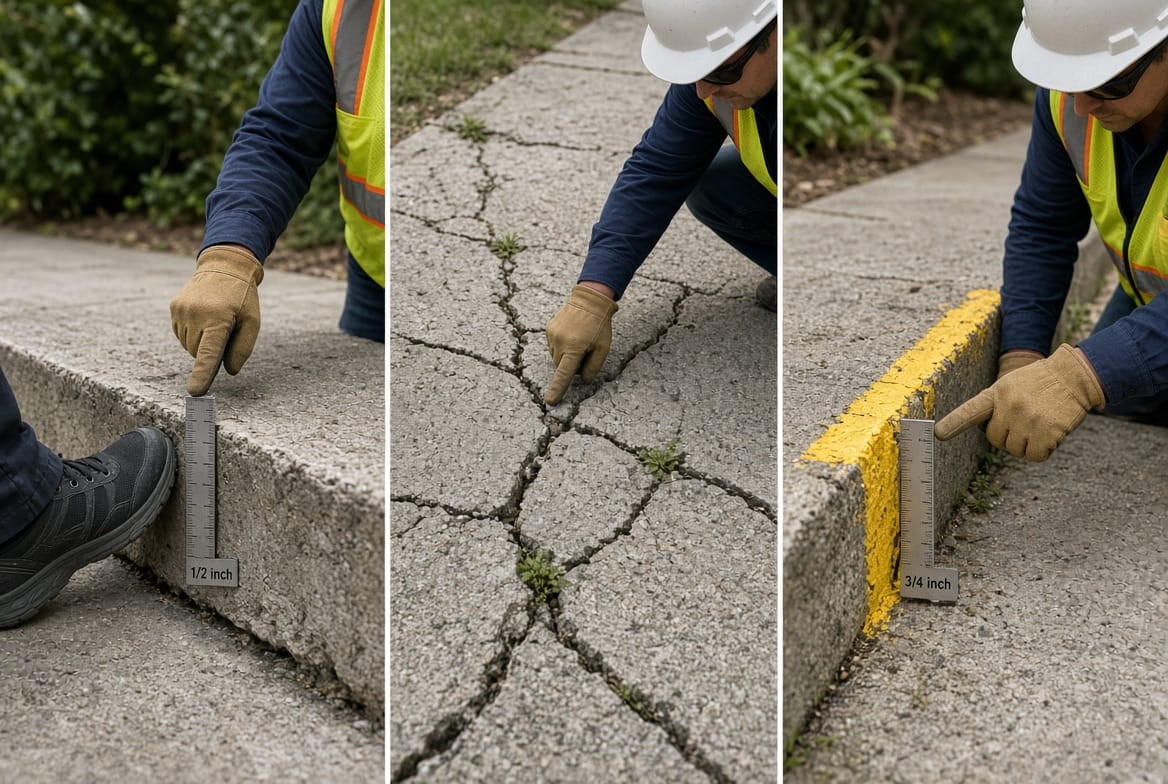
Uneven concrete sidewalks create one of the most common yet overlooked dangers in residential neighborhoods, commercial properties, and public walkways. A single raised edge of only half an inch can catch a shoe, a walker, or a stroller wheel and send someone to the ground. Trip hazards on sidewalks are not minor cosmetic issues. They are genuine safety problems that can produce serious injuries and costly liability claims. The good news is that most uneven sidewalk sections can be repaired effectively without always tearing out the entire slab. Three proven methods—mudjacking, grinding, and full replacement—allow property owners to restore a level, safe walking surface and protect everyone who uses the walkway.
Call Now for Fast Concrete Sidewalk Repair
This guide explains why prompt concrete sidewalk repair matters, how to recognize problem areas, and exactly how each repair method works. The goal is simple: remove the trip hazard, restore safety, and give property owners peace of mind.
Why Sidewalk Trip Hazards Matter for Safety and Liability
Falls on sidewalks rank among the leading causes of outdoor injuries for pedestrians of all ages. Older adults, children, people using mobility aids, and anyone carrying packages or looking at a phone are especially vulnerable. A sudden change in elevation—even a modest raised edge—can cause a person to lose balance, twist an ankle, fracture a wrist, or suffer a head injury. Wet leaves, ice, or low light make the same defect far more dangerous.
Beyond personal harm, property owners carry a legal duty to maintain reasonably safe premises. Municipal codes and common-law principles of premises liability often hold homeowners, businesses, and associations responsible when a known or reasonably discoverable defect causes injury. A documented trip hazard that goes unaddressed can become evidence in a claim. Insurance premiums may rise after a payout, and in some jurisdictions repeated complaints can trigger municipal notices or fines.
Repairing the sidewalk is therefore both a safety action and a risk-management decision. A professionally leveled surface demonstrates reasonable care. It also improves curb appeal and property value. Waiting until someone falls is never the better option.
Recognizing the Warning Signs of Uneven Sidewalks
Not every crack requires immediate action, but certain conditions reliably signal a developing or existing trip hazard:
- Raised edges or lips where one slab sits higher than the adjacent slab
- Open or widening cracks that create an uneven plane
- Settlement that leaves a noticeable drop or “step”
- Spalling or crumbling concrete that produces loose fragments
- Vegetation pushing slabs upward from below
- Water pooling that indicates poor drainage and ongoing movement
Regular visual inspections—especially after freeze-thaw cycles or heavy rain—help catch problems early. A simple test is to walk the sidewalk at a normal pace while looking slightly ahead rather than straight down. If your foot catches or you instinctively adjust your stride, the surface is already a hazard.
Proven Methods for Repairing Uneven Sidewalk Sections
Once a hazard is identified, the appropriate repair depends on the amount of displacement, the condition of the concrete, the soil beneath the slab, and budget. Three established techniques cover the great majority of residential and light-commercial sidewalks.
Mudjacking (Slabjacking)
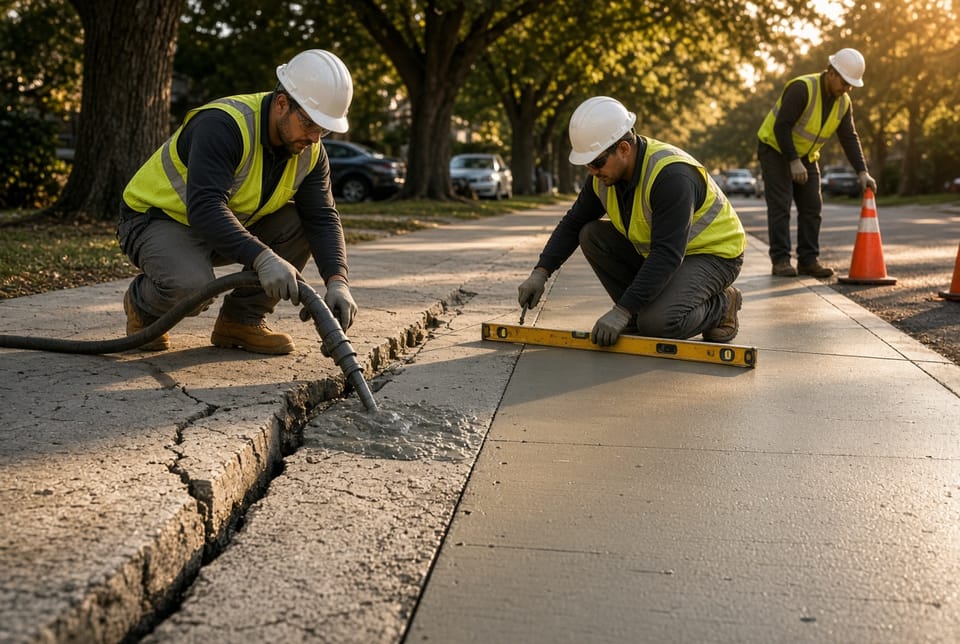
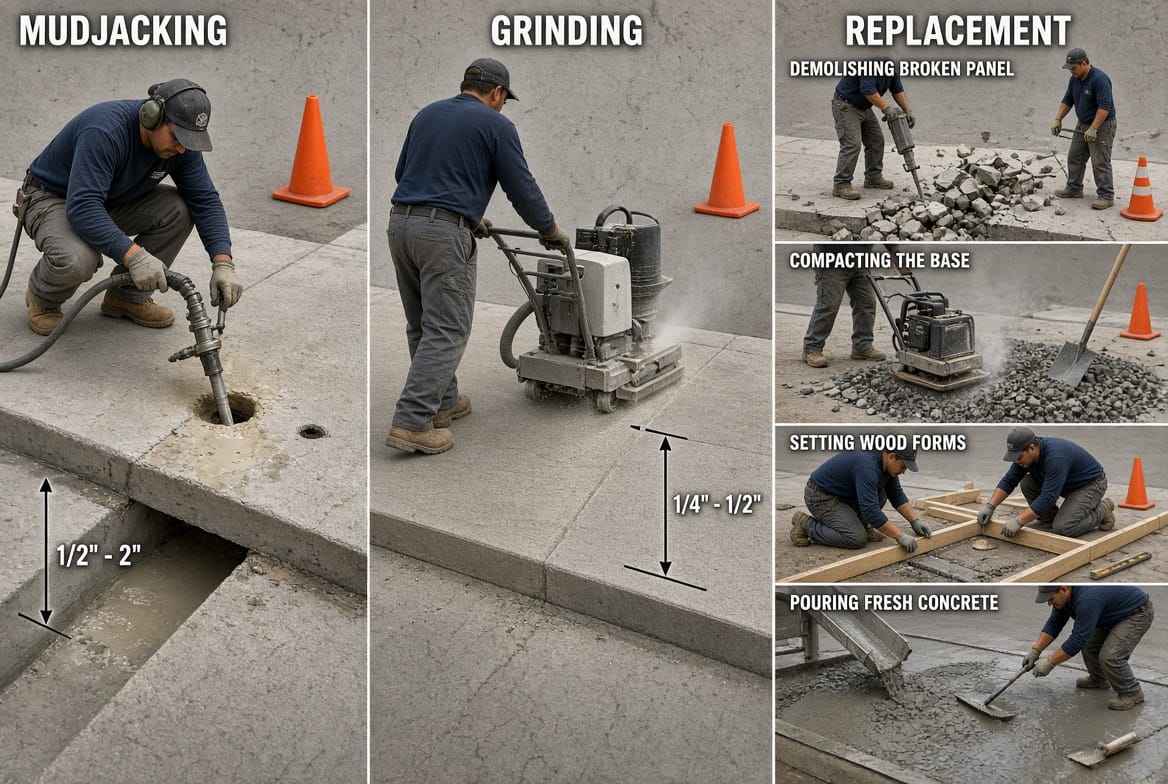
Mudjacking is a lifting process that restores the original elevation of a sunken or tilted slab without removing it. Technicians drill a series of small, strategically placed holes through the concrete. A cementitious slurry—typically a mixture of soil, sand, cement, and water—is then pumped under pressure through those holes. The slurry fills voids, displaces water, and gently raises the slab until it sits flush with neighboring sections.
The method works well when the concrete itself remains structurally sound and the problem is primarily settlement caused by soil erosion or poor compaction. Advantages include relatively modest cost, limited disruption, and preservation of the existing slab. Most walkways can be used again within 24 hours. Limitations appear when the concrete is badly cracked, scaled, or too thin; in those cases the slab may not lift evenly or may crack further under pressure.
Modern variations sometimes use polyurethane foam instead of traditional slurry. Foam expands and cures quickly, requires smaller holes, and adds less weight. Both approaches share the same goal: lift the existing concrete back to a safe, level plane.
Grinding (Milling or Shaving)
When one slab has heaved upward rather than sunk, grinding can remove the high spot. A walk-behind or handheld concrete grinder fitted with diamond-segmented cups or drums shaves the raised portion down until the walking surface is even. The process produces a slightly textured finish that still provides good traction.
Grinding is fastest and least expensive when the height difference is modest—usually less than an inch—and the remainder of the slab is in good condition. It does not address underlying soil problems, so it is best reserved for isolated heaves caused by tree roots or minor frost action. After grinding, the surface should be cleaned and, if desired, sealed to reduce future water penetration. Over-grinding can thin the slab and weaken it, so experienced operators measure frequently and stop at the correct elevation.
Full Replacement
When concrete is extensively cracked, scaled, or displaced beyond what lifting or grinding can reasonably correct, replacement becomes the durable solution. Crews saw-cut the damaged section, break it out, remove the debris, re-compact the base, install forms, place new reinforcement if required, and pour fresh concrete. Proper curing and joint placement complete the job.
Replacement costs more and takes longer because of demolition, forming, and curing time. It is, however, the only method that guarantees a brand-new, uniformly thick slab with controlled joints and a properly prepared sub-base. For sidewalks that have already been patched multiple times or that sit on chronically unstable soil, replacement often proves the most economical choice over a ten-year horizon.
Choosing the Right Repair for Your Sidewalk
A qualified concrete contractor begins with a site evaluation. The technician measures height differentials, inspects crack patterns, probes the soil at the edges, and notes drainage conditions. From that assessment comes a clear recommendation:
- Settlement with sound concrete → mudjacking or foam lifting
- Isolated high spot with otherwise intact slab → grinding
- Widespread cracking, scaling, or repeated movement → replacement
Sometimes a combination is used: lift the low sections, grind remaining high spots, and replace only the worst panels. The objective remains the same—create a continuous, trip-free walking surface that meets local accessibility and safety expectations.
Property owners should also consider long-term drainage. Water that ponds against a sidewalk or flows under the slab will continue to erode support. Simple grading corrections or the addition of a small drain can protect the new or repaired work.
The Professional Repair Process from Start to Finish
A typical project follows a predictable sequence that minimizes inconvenience:
- Mark the work zone and place safety cones or barricades.
- Document existing conditions with photographs and measurements.
- Select and explain the chosen method(s).
- Perform the repair—pumping, grinding, or demolition and pour.
- Clean the site, restore any disturbed landscaping, and apply sealer if specified.
- Provide after-care instructions and a workmanship warranty.
Most residential sidewalk repairs are completed in a single day. Larger commercial or municipal projects may be phased so that pedestrian access remains available. Communication with neighbors and clear signage further reduce disruption.
Prevention and Ongoing Maintenance
Even a newly repaired sidewalk benefits from routine attention. Keep joints clear of debris, trim tree roots before they lift slabs, and direct downspouts away from the walkway. Periodic sealing helps limit water intrusion. After severe weather, walk the property and note any new movement. Early intervention is almost always less expensive than waiting for a full-scale failure.
Homeowners associations and commercial property managers often schedule annual sidewalk inspections. A written log of observations and completed repairs strengthens the record of reasonable care should a claim ever arise.
Restoring Safety and Peace of Mind
An uneven sidewalk is more than an eyesore. It is a preventable trip hazard that threatens the well-being of family members, guests, customers, and passers-by while exposing the owner to unnecessary liability. Modern repair techniques—mudjacking, grinding, and replacement—give property owners practical, proven options for returning the walkway to a safe, level condition.
The most important step is to act before an accident occurs. A professional evaluation takes little time and supplies a clear plan and cost. Once the work is finished, the sidewalk again serves its intended purpose: a reliable, comfortable path that people can use with confidence. Fix sidewalk trip hazards.
Call Today to Remove Dangerous Raised Edges