The Concrete Foundation Repair: Cracked Walls and Settling
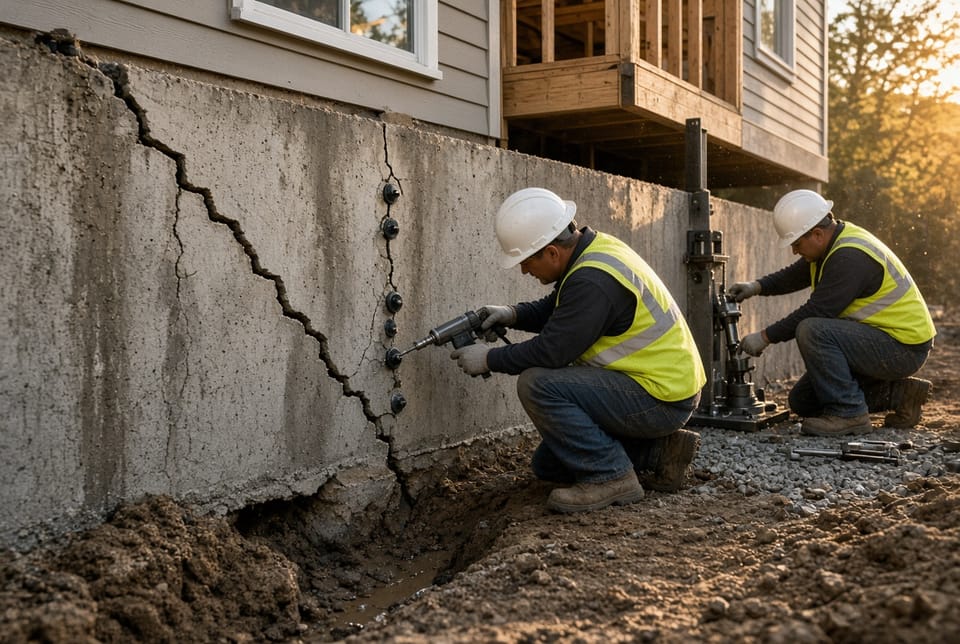
A home’s concrete foundation is the structural platform that carries every wall, floor, and roof load. When that platform cracks or settles, the entire building begins to move. The good news is that most foundation problems are repairable when they are identified early and treated with the correct structural method. This guide explains why foundations fail, how to recognize the warning signs, and which proven repair techniques restore stability.
Repair Cracked Foundation Walls – Call Now
Foundation settlement and cracked foundation walls are not cosmetic issues. They are structural conditions that worsen with every rain cycle, freeze-thaw period, and seasonal soil change. Addressing them promptly protects the value of the property and the safety of the people who live in it.
Why Concrete Foundations Crack and Settle
Concrete is strong in compression but relatively weak in tension. When the soil beneath or beside a foundation moves, the concrete is pulled, twisted, or unevenly loaded. That movement produces cracks and differential settlement.
Soil Movement
Expansive clay soils swell when they absorb water and shrink when they dry. That cycle can lift one section of a footing while another section drops. Sandy or poorly compacted fill can compress under the weight of the house, causing one corner to sink. Tree roots can also extract moisture unevenly, creating localized settlement.
Water and Hydrostatic Pressure
Water is the most common trigger. Poor grading, clogged gutters, or missing downspout extensions allow rainwater to pond against the foundation. The resulting hydrostatic pressure pushes against basement walls and saturates the bearing soil. Saturated soil loses strength, so the footing sinks. In cold climates, water that enters cracks freezes and expands, widening the opening with each cycle.
Poor Drainage and Construction Factors
A foundation that was poured on inadequately compacted soil, or one that lacks a functioning perimeter drain, is already at a disadvantage. Over time, even a well-built foundation can be undermined if surface water is not directed away from the structure. Plumbing leaks under a slab can produce the same hidden erosion.
These causes often work together. A single season of heavy rain on expansive clay, combined with clogged downspouts, is enough to start a crack that later becomes a settling problem.
Clear Signs That Structural Repair Is Needed
Homeowners frequently notice interior symptoms before they inspect the foundation itself. Treat the following indicators as a call for a professional evaluation rather than as isolated annoyances.
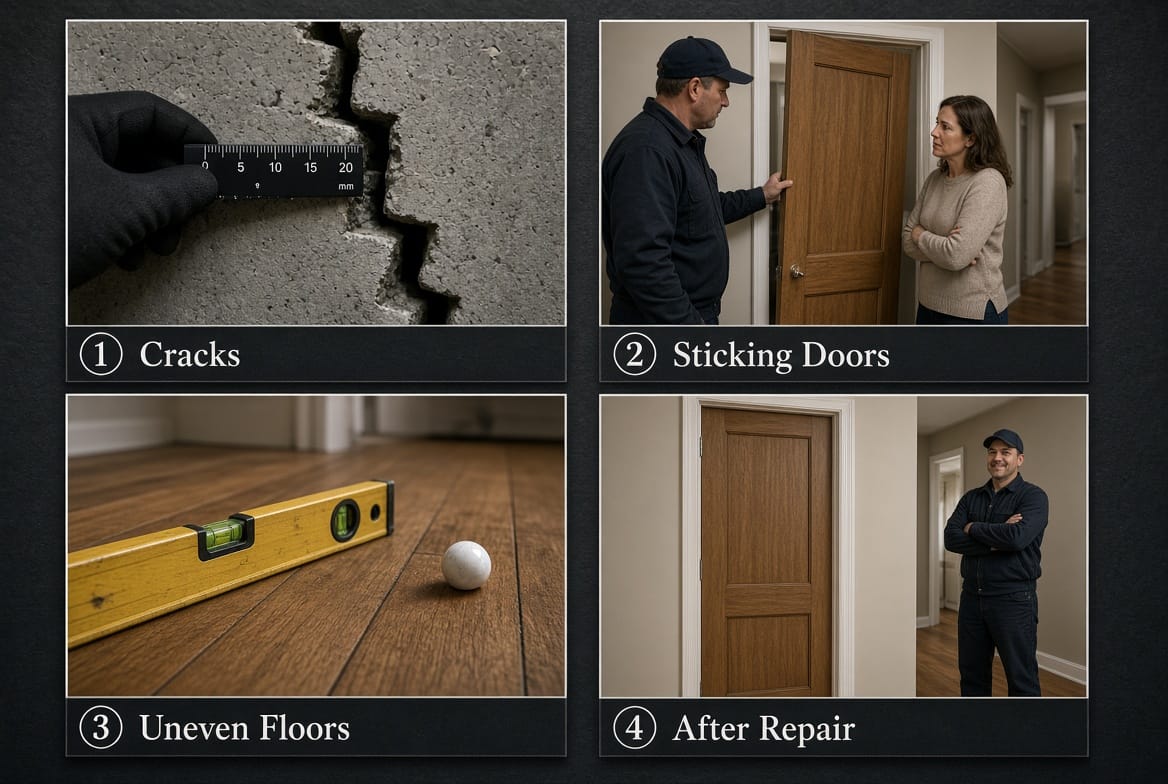
- Foundation cracks that are wider than a credit card, that run in a stair-step pattern through block or brick, or that continue to grow from season to season.
- Sticking doors and windows that suddenly bind, even after the hardware has been adjusted. The frame is no longer square because the wall has moved.
- Uneven or sloping floors that cause furniture to rock or a marble to roll toward one wall.
- Gaps appearing between walls and ceilings, or between baseboards and floors.
- Interior drywall cracks that radiate from door corners or that reappear after being patched.
- Exterior brick or siding that has separated from the foundation or that shows new step cracks.
A single hairline crack in a new pour may be normal shrinkage. A pattern of cracks plus movement of doors and floors is not. Document the width of cracks with a simple crack monitor or dated photographs so a contractor can see whether the problem is active.
Structural Repair Methods That Restore Capacity
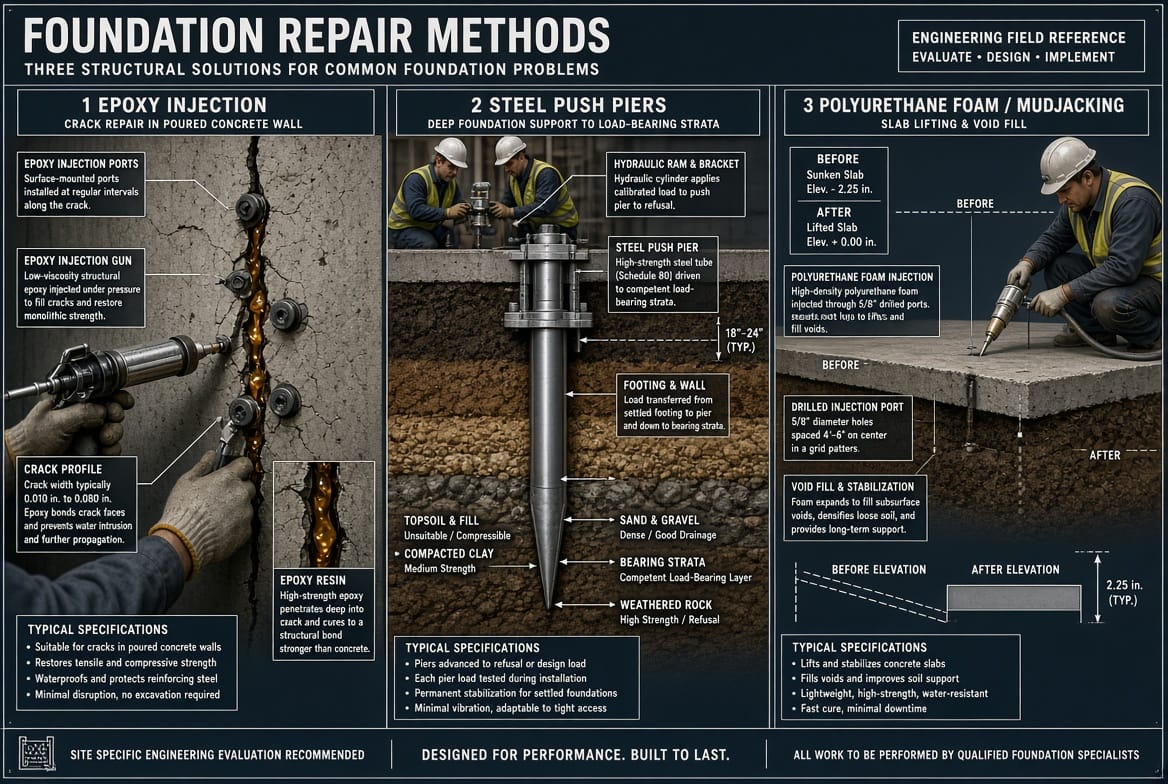
The correct method depends on the type of damage, the soil profile, and whether the problem is a cracked wall, a settled footing, or a sunken slab. A qualified contractor will combine visual inspection, elevation readings, and sometimes soil data before recommending a system.
Epoxy Injection for Cracked Walls
When a poured-concrete wall has cracked but has not displaced significantly, epoxy injection can restore monolithic strength. Low-viscosity structural epoxy is injected under pressure so it travels the full depth of the crack. Once cured, the epoxy is stronger than the surrounding concrete and seals the path against water.
The process typically includes:
- Cleaning and sealing the crack face.
- Installing injection ports at measured intervals.
- Injecting from the lowest port upward until the crack is filled.
- Removing ports and refinishing the surface if desired.
Epoxy is not a substitute for underpinning when the footing itself has settled. It is the method of choice for stable cracks that need to be structurally bonded and waterproofed.
Piers for Settled Foundations
When part of the foundation has dropped, the structure must be supported on deeper, stable soil or bedrock. Steel push piers or helical piers are driven or screwed beneath the footing until they reach competent material. Hydraulic jacks then lift the foundation back toward its original elevation, after which the piers are locked off to carry the load.
Push piers work well on heavier structures because the building’s own weight helps drive the pier. Helical piers can be installed with less vibration and are useful where access is limited or where soils are mixed. Both systems transfer the house load below the zone of seasonal moisture change.
Proper pier installation includes:
- Exposing the footing at calculated locations.
- Attaching a steel bracket to the concrete.
- Driving or turning the pier to a predetermined pressure or torque.
- Lifting in small, controlled increments while monitoring the structure.
- Permanently connecting the pier to the bracket.
This is the most direct way to stop ongoing foundation settlement.
Mudjacking and Polyurethane Foam Lifting
Sunken concrete slabs—garage floors, porch slabs, or interior slabs-on-grade—can often be raised with mudjacking (cementitious slurry) or modern polyurethane foam injection. Holes are drilled through the slab, material is pumped beneath it, and the slab is lifted back to level. Foam is lighter, cures faster, and is less likely to add significant weight to weak soils.
These methods correct the surface but do not replace deep underpinning when the perimeter foundation itself has dropped. They are excellent complementary repairs once the main structure is stabilized.
How a Professional Assessment Protects the Repair
A thorough evaluation prevents the wrong product from being applied to the wrong problem. Expect the contractor to:
- Measure floor elevations and wall plumbness.
- Map every crack and note whether it is active.
- Check grading, gutters, and downspouts.
- Look for plumbing leaks that could be saturating soil.
- Explain which combination of epoxy, piers, and slab lifting is required.
Written proposals should identify pier locations, expected lift, warranty terms, and any drainage corrections that must accompany the structural work. Drainage repairs—regrading, extensions, or a new French drain—are often essential so the same water problem does not return.
Preventing Further Movement After Repair
Once the foundation is stabilized, simple maintenance keeps soil moisture more consistent:
- Keep gutters clean and extend downspouts at least six feet from the wall.
- Maintain a positive slope away from the foundation on all sides.
- Avoid planting large water-hungry trees close to the footing.
- Repair plumbing leaks immediately.
- In expansive-clay regions, consider soaker hoses used carefully during drought only if recommended by the engineer.
These steps do not replace structural repair; they protect the investment after the repair is complete.
The Cost of Waiting
Small cracks become pathways for water. Water softens soil. Soft soil allows more settlement. More settlement twists the frame, opens larger cracks, and can eventually affect plumbing, electrical, and finish surfaces throughout the house. Insurance policies frequently exclude gradual settlement, so the financial exposure grows with time.
Early intervention is almost always less invasive and less expensive than waiting until walls bow or floors require full reconstruction. Most modern pier and injection systems can be installed with limited excavation and without moving the family out of the home.
Choosing a Structural Repair Partner
Look for a company that specializes in foundation work rather than general concrete pouring. Confirm that they carry appropriate insurance, provide transferable warranties on piers, and will explain the engineering logic behind their recommendation. Ask to see similar completed projects in the same soil conditions.
A clear, itemized scope—what will be repaired, how lift will be monitored, and what drainage work is included—protects both the homeowner and the long-term performance of the repair.
Conclusion: Stabilize the Foundation Before the Damage Spreads
Cracked walls and settling are structural problems with known causes and proven solutions. Soil movement, water, and poor drainage create the conditions; cracks, sticking doors, and uneven floors announce that those conditions are already affecting the house. Epoxy injection restores cracked concrete, piers transfer load to stable strata, and slab-lifting methods correct sunken interior or exterior concrete. Used together and supported by better drainage, these methods return a foundation to reliable service.
Do not postpone the inspection. Foundation movement rarely reverses on its own. A timely repair protects the structure, the finishes, and the equity in the property.
Fix foundation problems before they worsen.
Stabilize Your Concrete Foundation – Call Now