The Concrete Stamping Troubleshooting: Common Defects and Fixes
Stamped concrete offers elegant, cost-effective alternatives to natural stone or brick. However, even skilled installations can encounter issues that affect appearance and durability. Understanding concrete stamping troubleshooting helps homeowners and contractors maintain beautiful, long-lasting surfaces.
Fix Your Stamped Concrete Today – Call Now!
This comprehensive guide explores the most frequent stamped concrete defects, their causes, prevention strategies, and effective repair solutions. With proper knowledge, you can protect your investment and enjoy a flawless decorative concrete finish for decades.
Why Stamped Concrete Defects Occur
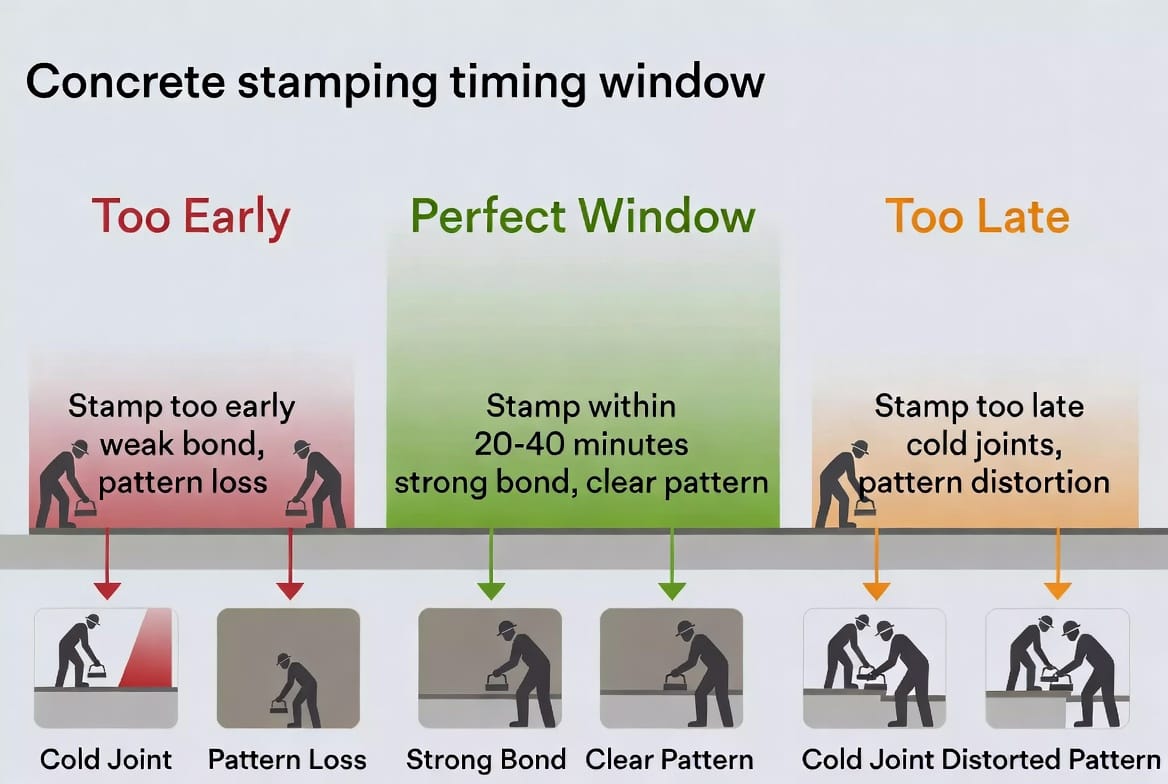
Concrete stamping requires precise timing, material quality, and technique. The window for successful stamping is narrow — typically between initial set and final set. Deviations in temperature, humidity, mix design, or application can lead to visible imperfections.
Cold joints, pattern loss, and release agent problems rank among the top concerns. These issues not only diminish aesthetic appeal but may also create maintenance headaches if left unaddressed.
Early intervention and professional expertise significantly improve outcomes. Let’s examine each common defect in detail.
Cold Joints in Stamped Concrete: Causes and Prevention
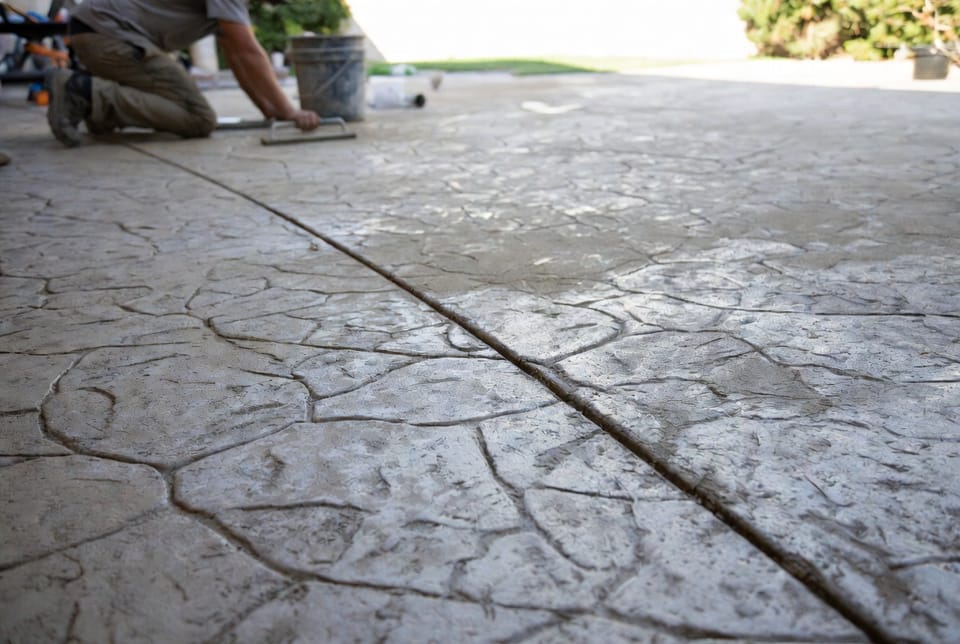
Cold joints appear as visible cracks or seams where fresh concrete meets partially set concrete. They form when one section begins hardening before the adjacent pour or stamping connects properly.
Common Causes:
- Delays between mixing and placement
- High temperatures accelerating set time
- Improper scheduling of large pours
- Inadequate planning for crew size
Bold warning: Cold joints create weak points vulnerable to water penetration and further cracking over time.
Prevention Strategies:
- Plan pours in manageable sections
- Use retarders when working in hot weather
- Maintain consistent mix temperature
- Coordinate team efficiently for seamless workflow
Pro Tip: Monitor slump and ambient conditions closely. Ideal stamping temperature ranges between 50°F and 70°F for best results.
Pattern Loss: When Timing Goes Wrong
Pattern loss occurs when concrete is stamped too late. The surface has stiffened excessively, preventing proper imprint depth and definition.
This defect results in shallow, blurred, or missing patterns that destroy the intended stone, brick, or slate appearance.
Signs of Pattern Loss:
- Shallow impressions (less than ¼ inch depth)
- Uneven pattern alignment
- Blurred texture details
- Inconsistent coloring
Late stamping remains one of the most frustrating stamped concrete problems because correction often requires significant effort.
Prevention Methods:
- Test concrete firmness regularly with finger pressure
- Train crews on optimal stamping window recognition
- Use accelerants cautiously in cooler conditions
- Prepare all tools and stamps in advance
Experienced crews develop an intuitive sense for the perfect moment when concrete holds its shape yet remains workable.
Release Agent Issues: The Hidden Culprit
Release agents prevent stamps from sticking to fresh concrete. Problems arise when release powder or liquid is applied incorrectly.
Typical Release Agent Defects:
- Insufficient coverage causing stamp sticking
- Excessive release agent leaving white residue
- Uneven application creating patchy coloring
- Poor quality agents failing under heat
These issues can ruin an otherwise perfect stamping job and require additional cleaning or touch-ups.
Best Practices for Release Agents:
- Apply uniformly using proper equipment
- Choose high-quality agents compatible with coloring systems
- Follow manufacturer dosage recommendations
- Remove excess material thoroughly after stamping
Proper release agent application ensures clean stamp separation and protects the integrity of integral colors and stains.
Comprehensive Repair Solutions for Stamped Concrete
Fortunately, most stamped concrete defects can be repaired effectively. The approach depends on defect severity and project scope.
Minor Defect Repairs:
- Staining techniques to camouflage cold joints
- Color hardeners for touch-up coloring
- Grinding to level minor surface issues
- Joint sealing to prevent water intrusion
Moderate Repairs:
- Partial re-stamping of affected sections
- Overlay systems for pattern restoration
- Surface grinding combined with new coloring
Major Defect Solutions:
- Complete removal and replacement (last resort)
- Full decorative overlay installation
- Professional resurfacing systems
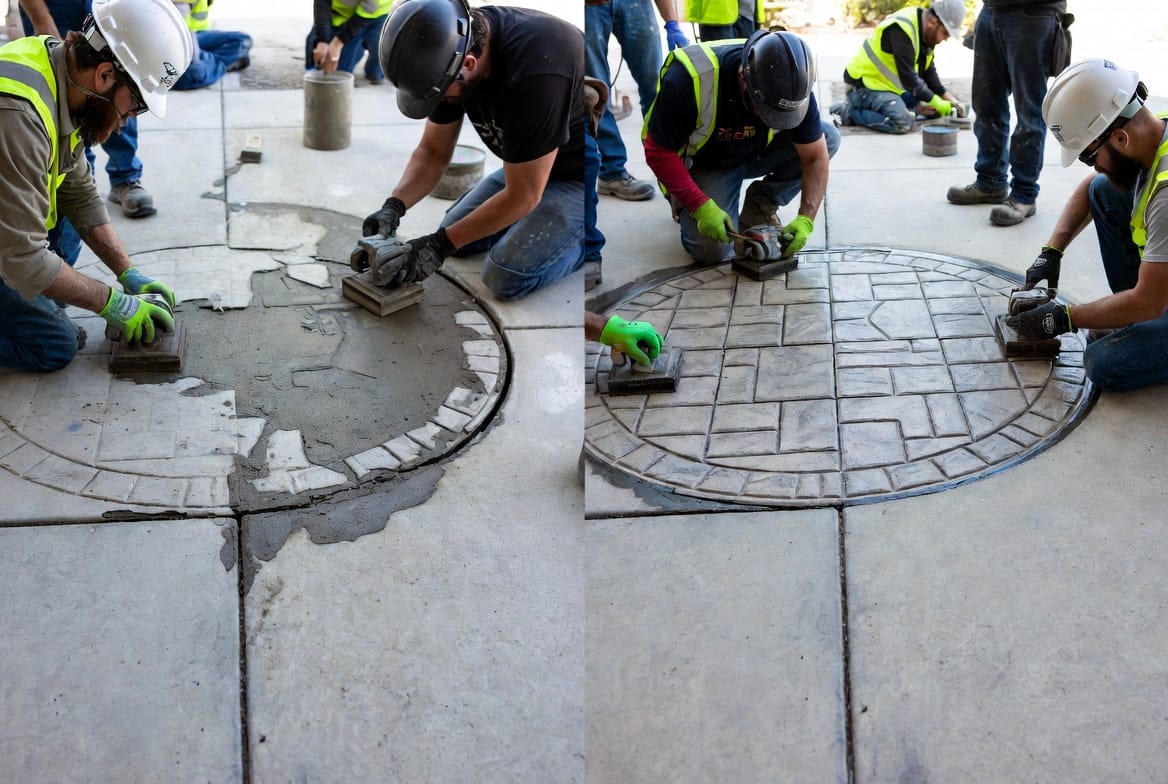
Step-by-Step Repair Process
Successful stamped concrete repair follows a systematic approach:
- Assessment – Identify all defects and underlying causes
- Surface Preparation – Clean and profile the concrete
- Repair Application – Apply appropriate fix (grind, stain, overlay)
- Texturing – Re-stamp or texture to match existing pattern
- Color Matching – Blend new materials with original coloring
- Sealing – Apply high-quality sealer for protection
Professional intervention ensures repairs blend seamlessly with existing work.
Advanced Troubleshooting Techniques
Modern concrete stamping troubleshooting incorporates several advanced methods:
- Ultrasonic testing for hidden voids
- Moisture mapping to detect problematic areas
- Color matching technology for precise repairs
- Polymer-modified overlays for durable fixes
These techniques allow contractors to deliver long-term solutions rather than temporary patches.
Environmental Factors Affecting Stamped Concrete
Weather plays a crucial role in stamping success. Extreme conditions require specific adjustments:
Hot Weather Challenges:
- Faster evaporation rates
- Reduced working time
- Increased risk of cold joints
Cold Weather Challenges:
- Slower setting times
- Risk of incomplete curing
- Pattern definition issues
Wind and humidity also significantly impact outcomes. Professional crews adjust mix designs, use evaporation retarders, and modify schedules accordingly.
Maintenance Practices to Prevent Future Issues
Prevention extends beyond installation day. Proper maintenance preserves stamped concrete beauty:
- Regular cleaning with pH-neutral products
- Periodic resealing every 2-3 years
- Prompt repair of small cracks
- Avoiding harsh chemicals and de-icers
Consistent maintenance dramatically extends the lifespan of decorative concrete surfaces.
Choosing Professional Stamped Concrete Services
DIY approaches often lead to costly mistakes. Experienced professionals understand:
- Optimal mix designs for local conditions
- Proper timing regardless of weather
- Advanced troubleshooting techniques
- Quality materials and tools
Their expertise minimizes defects and ensures stunning, durable results that enhance property value.
The Long-Term Benefits of Quality Installation
Well-executed stamped concrete delivers decades of performance with minimal maintenance. It combines the durability of concrete with the elegance of natural materials at a fraction of the cost.
Investing in professional concrete stamping from the beginning prevents most common defects and eliminates expensive future repairs.
Conclusion: Get It Right the First Time
Mastering concrete stamping troubleshooting empowers better decisions for both new installations and existing surfaces. By understanding cold joints, pattern loss, release agent issues, and their solutions, you protect your decorative concrete investment.
The key remains prevention through proper planning, skilled execution, and quality materials. When issues do arise, timely professional repairs can restore beauty and function effectively.
Ready to achieve flawless stamped concrete results? Get expert guidance and professional stamping services tailored to your needs.
Our experienced team delivers exceptional decorative concrete installations and reliable repair solutions that stand the test of time.
Professional Stamped Concrete Fixes – Call Today