The Concrete Sealant Types: Penetrating vs. Acrylic vs. Epoxy
Concrete surfaces face constant challenges from moisture, traffic, weather, and chemicals. Choosing the right concrete sealant protects your investment and extends the life of driveways, patios, garage floors, and walkways. Three primary options dominate the market: penetrating sealers, acrylic sealers, and epoxy sealers. Each delivers distinct performance based on chemistry, application method, and intended use. Understanding these differences allows homeowners and property managers to select the ideal solution with confidence.
Protect Your Concrete Today – Call Now!
This guide explains how each sealer works, outlines practical applications, highlights key benefits and limitations, and provides clear guidance for matching the product to your specific needs. With the correct choice, concrete remains strong, attractive, and low-maintenance for years.
Why Concrete Needs Protection
Unsealed concrete is porous. Water, de-icing salts, oil, and everyday wear penetrate the surface, leading to cracks, spalling, discoloration, and structural weakening over time. A quality sealant forms either an internal barrier or a protective surface layer that blocks these threats. The three main categories—penetrating, acrylic, and epoxy—address different levels of exposure and performance expectations.
Selecting the wrong type can result in premature failure, wasted effort, or unnecessary expense. The following sections detail each option so you can make an informed decision.
Penetrating Sealers: Deep, Invisible Water Protection
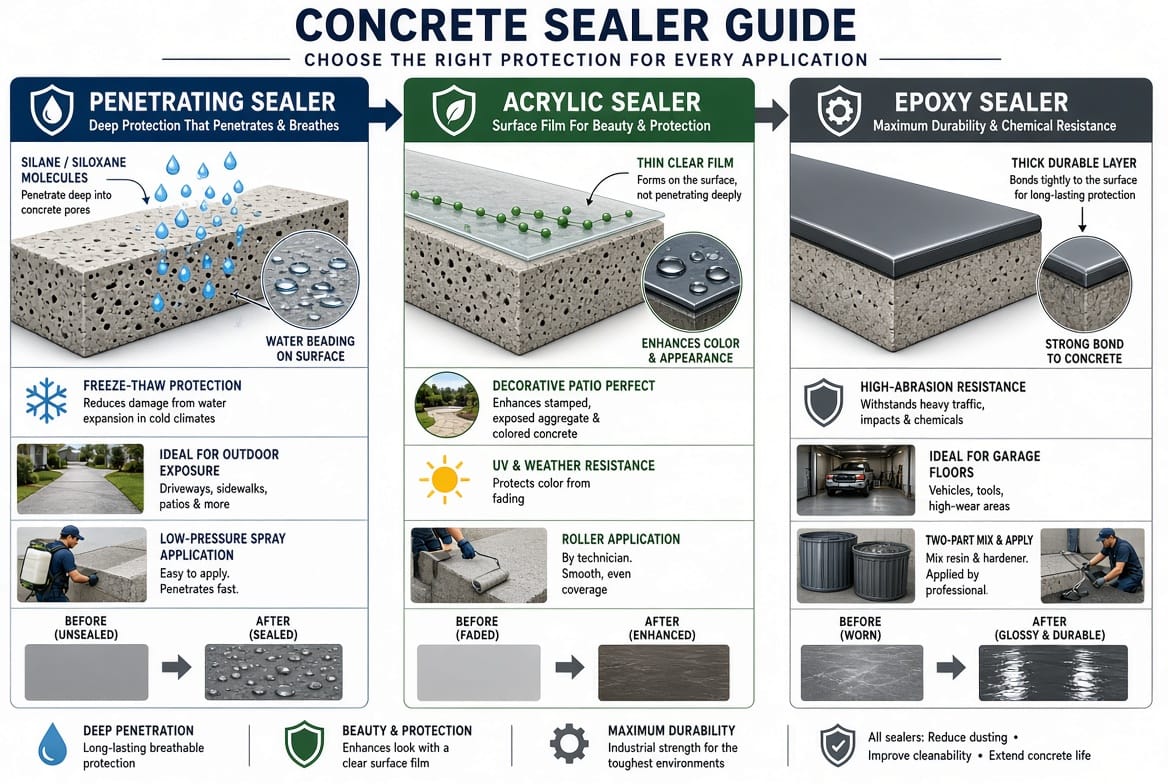
Penetrating sealers, most commonly formulated with silane or siloxane, soak into the concrete rather than sitting on top. Once absorbed, they react chemically with the substrate to create a hydrophobic (water-repelling) barrier deep within the pores. The surface appearance remains essentially unchanged—no gloss, no film, and no color alteration in most cases.
How Penetrating Sealers Work
Silane molecules are smaller and penetrate deeper, making them excellent for dense concrete. Siloxane molecules are slightly larger and provide strong water repellency with good breathability. Many modern products combine both for balanced performance. The treated concrete continues to allow vapor transmission, reducing the risk of trapped moisture that can cause blistering or freeze-thaw damage.
Key Benefits
- Excellent long-term water resistance without changing surface texture or appearance
- High breathability that prevents internal pressure buildup
- Strong resistance to freeze-thaw cycles and de-icing salts
- Minimal maintenance once applied correctly
- Suitable for both horizontal and vertical surfaces
Ideal Applications
Penetrating sealers perform best on exterior concrete exposed to weather and moisture:
- Driveways and parking areas
- Sidewalks and walkways
- Patios and pool decks
- Foundation walls and retaining walls
- Bridges and commercial plazas where natural appearance is preferred
They excel in climates with heavy rainfall or cold winters because they stop water from entering while allowing the concrete to dry out. For new concrete, wait until it has cured properly (typically 28 days) before application. Existing surfaces should be thoroughly cleaned of dirt, oil, and previous coatings for maximum absorption.
Limitations to Consider
Penetrating sealers offer limited protection against surface abrasion or staining from oils and chemicals. They do not add gloss or enhance color. Reapplication is usually needed every 5–10 years depending on exposure and product quality. Always test a small area first to confirm penetration and appearance.
When applied by experienced professionals, these sealers deliver reliable, low-visibility protection that keeps concrete looking natural while solving moisture-related problems effectively.
Acrylic Sealers: Affordable Surface Film Protection
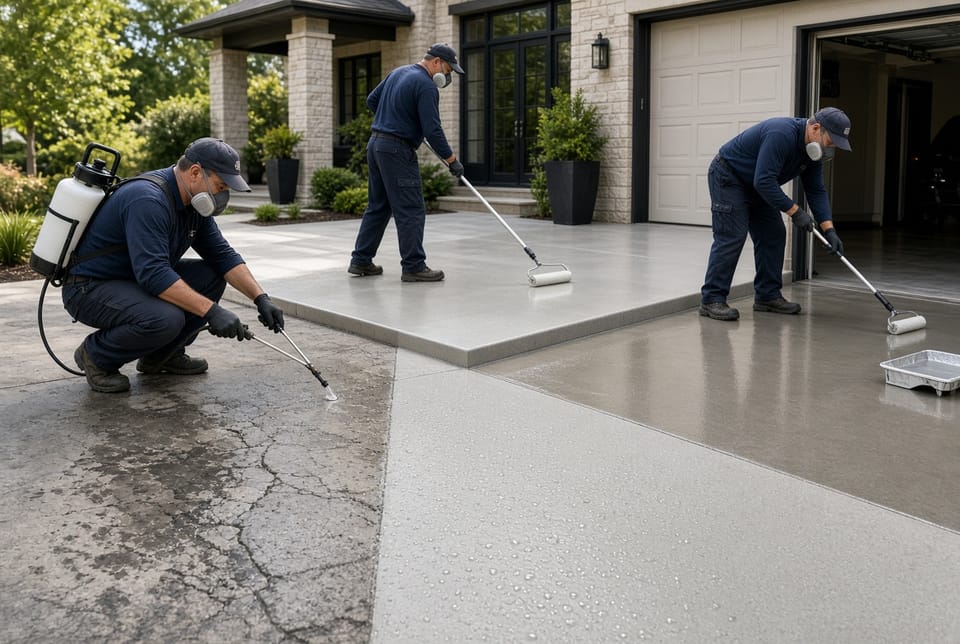
Acrylic sealers form a thin, clear or tinted film on the surface of the concrete. They are solvent- or water-based acrylic polymers that dry to create a protective layer. This category is popular because of its lower cost and relatively simple application.
How Acrylic Sealers Work
The liquid acrylic spreads across the surface and cures into a continuous film. This film blocks water, mild chemicals, and some staining agents while often adding a subtle sheen that enhances the concrete’s color. Water-based versions are easier to clean up and lower in odor; solvent-based versions typically produce a harder, more durable film.
Key Benefits
- Low cost compared with other high-performance options
- Easy application with rollers or sprayers
- Ability to enhance color and provide light-to-medium gloss
- Reasonable resistance to UV fading when quality formulations are used
- Suitable for both interior and exterior decorative concrete
Ideal Applications
Acrylic sealers work well where moderate protection and visual improvement matter most:
- Decorative stamped or colored concrete patios
- Interior floors with light foot traffic
- Exterior walkways and pool surrounds that benefit from a finished look
- Residential driveways in milder climates
- Vertical surfaces such as concrete walls or planters
They are frequently chosen for projects where budget is a primary concern and heavy industrial traffic is not expected. Many acrylic products can be reapplied over themselves, making maintenance straightforward.
Limitations to Consider
The surface film can wear under heavy vehicle traffic or aggressive cleaning. It may become slippery when wet unless anti-slip additives are included. Over time, the film can chalk, peel, or yellow if exposed to intense sunlight or if applied too thickly. Breathability is lower than penetrating sealers, so proper surface preparation is essential to avoid moisture-related failures. Typical service life ranges from 1–5 years before recoating is needed.
Despite these points, acrylic sealers remain a practical, cost-effective choice for many residential and light-commercial projects when applied correctly and maintained as recommended.
Epoxy Sealers: Highest Durability for Demanding Surfaces
Epoxy sealers (or more accurately epoxy coatings) deliver the strongest surface protection available among common concrete treatments. They consist of a resin and hardener that chemically react to form a rigid, highly durable plastic-like layer bonded tightly to the concrete.
How Epoxy Sealers Work
Once mixed and applied, the two-part epoxy cures into a thick, seamless film that is far more abrasion-resistant and chemical-resistant than acrylics. Many systems include aggregate for added texture or metallic pigments for decorative effects. The result is a hard, often high-gloss surface that withstands heavy use.
Key Benefits
- Highest durability and resistance to abrasion, impact, and heavy loads
- Superior protection against oils, chemicals, and staining
- Excellent for creating easy-to-clean, professional-looking floors
- Long service life when properly installed—often 5–10 years or more in residential settings
- Available in clear, colored, or decorative finishes
Ideal Applications
Epoxy shines in high-traffic and high-exposure environments:
- Garage floors where vehicles, tools, and chemicals are common
- Workshop and basement floors
- Commercial kitchens, warehouses, and light industrial spaces
- Showroom floors that need both protection and visual appeal
- Areas requiring chemical resistance such as around hot tubs or utility rooms
Because epoxy forms a continuous barrier, it also helps control dusting and makes cleaning simple. Proper surface preparation—including grinding or shot-blasting to create a profile—is critical for long-term adhesion.
Limitations to Consider
Epoxy is less breathable than penetrating sealers and can trap moisture if the concrete is not fully dry or if vapor barriers are inadequate. Installation requires careful mixing ratios, temperature control, and timing. UV exposure can cause ambering or chalking on exterior applications unless a UV-stable topcoat is added. The higher material and labor cost reflects the superior performance. Slip resistance must be addressed with additives for wet areas.
When installed by trained professionals, epoxy transforms ordinary concrete into a tough, attractive surface that solves the most demanding wear and staining problems.
Side-by-Side Performance Considerations
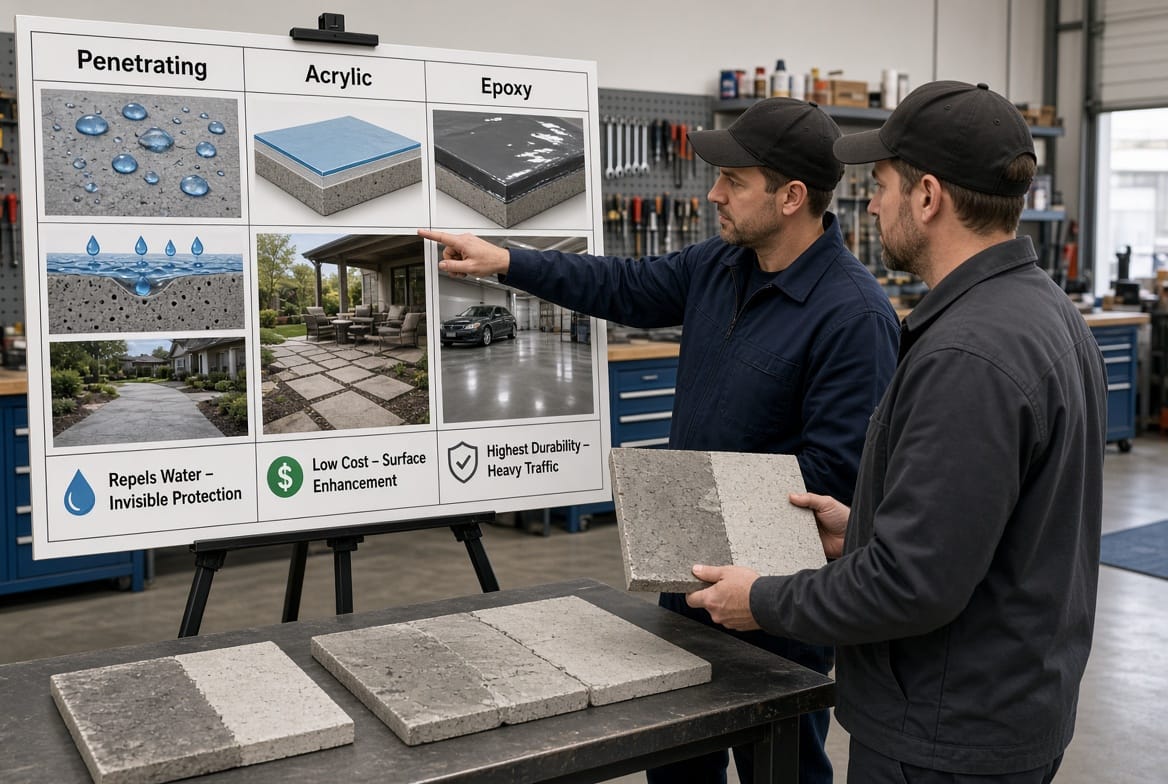
Each sealer type solves different challenges. Penetrating sealers prioritize invisible moisture control and freeze-thaw protection. Acrylic sealers focus on affordability and mild surface enhancement. Epoxy sealers emphasize maximum mechanical strength and chemical resistance.
Surface preparation remains essential for all three. Cleaning, repairing cracks, and ensuring the concrete is dry and sound prevent most failures. Climate, expected traffic, desired appearance, and maintenance willingness further guide the decision.
For exterior horizontal surfaces in cold or wet regions, penetrating sealers often provide the best long-term value. Decorative residential areas frequently benefit from acrylic. Garages and high-use interiors almost always perform better with epoxy.
Practical Tips for Successful Application and Longevity
Regardless of the type chosen, success depends on careful execution:
- Test moisture levels before sealing—excess water can compromise adhesion or penetration.
- Follow manufacturer guidelines for temperature, humidity, and recoat windows.
- Use appropriate personal protective equipment and ensure good ventilation.
- Address any existing damage, such as cracks or spalls, before sealing.
- Schedule reapplication based on wear rather than a fixed calendar.
Professional application reduces the risk of common issues such as uneven coverage, bubbling, or premature peeling. Experienced teams understand substrate conditions and select products matched to local climate and use patterns.
Making the Right Choice for Your Project
Begin by evaluating the concrete’s location, traffic level, exposure to moisture or chemicals, and desired finished look. Outdoor surfaces needing natural appearance and freeze-thaw resistance lean toward penetrating sealers. Budget-conscious decorative projects often suit acrylic sealers. High-wear areas such as garage floors benefit most from epoxy.
Combining knowledge of chemistry with realistic expectations about performance and maintenance leads to lasting results. Properly sealed concrete resists damage longer, requires less frequent repair, and maintains better appearance—protecting both function and property value.
Conclusion: Choose the Right Sealer for Your Concrete
Penetrating, acrylic, and epoxy sealers each offer proven solutions for different concrete challenges. Penetrating sealers deliver deep water repellency without altering appearance. Acrylic sealers provide economical surface protection and mild enhancement. Epoxy sealers supply the highest durability for demanding environments like garage floors. Matching the product to the specific conditions of your project ensures effective, long-lasting protection.
Seal Your Garage Floors with Durable Epoxy – Call Now!