The Concrete Retaining Wall Block: Dry-Stack vs. Mortared Options
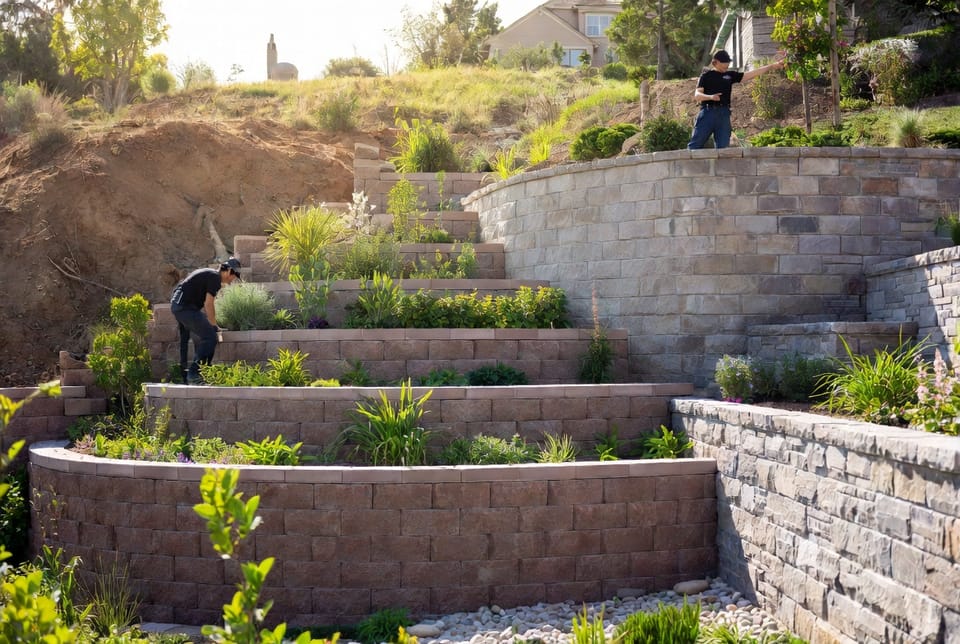
Retaining walls play a crucial role in transforming sloped yards into usable, beautiful outdoor spaces while preventing soil erosion and protecting your property. When it comes to concrete retaining wall blocks, homeowners and landscapers often face a key decision: dry-stack segmental retaining walls or mortared stone walls.
Choose the Right Retaining Wall – Call Now for Expert Advice
Both options offer strength and aesthetic appeal, but they differ significantly in design, installation, drainage, and maintenance. This comprehensive guide compares these two popular approaches, helping you choose the best solution for your landscape needs. Whether you're tackling a backyard slope or enhancing curb appeal, understanding the differences ensures a durable, cost-effective result.
What Are Dry-Stack Segmental Retaining Walls?
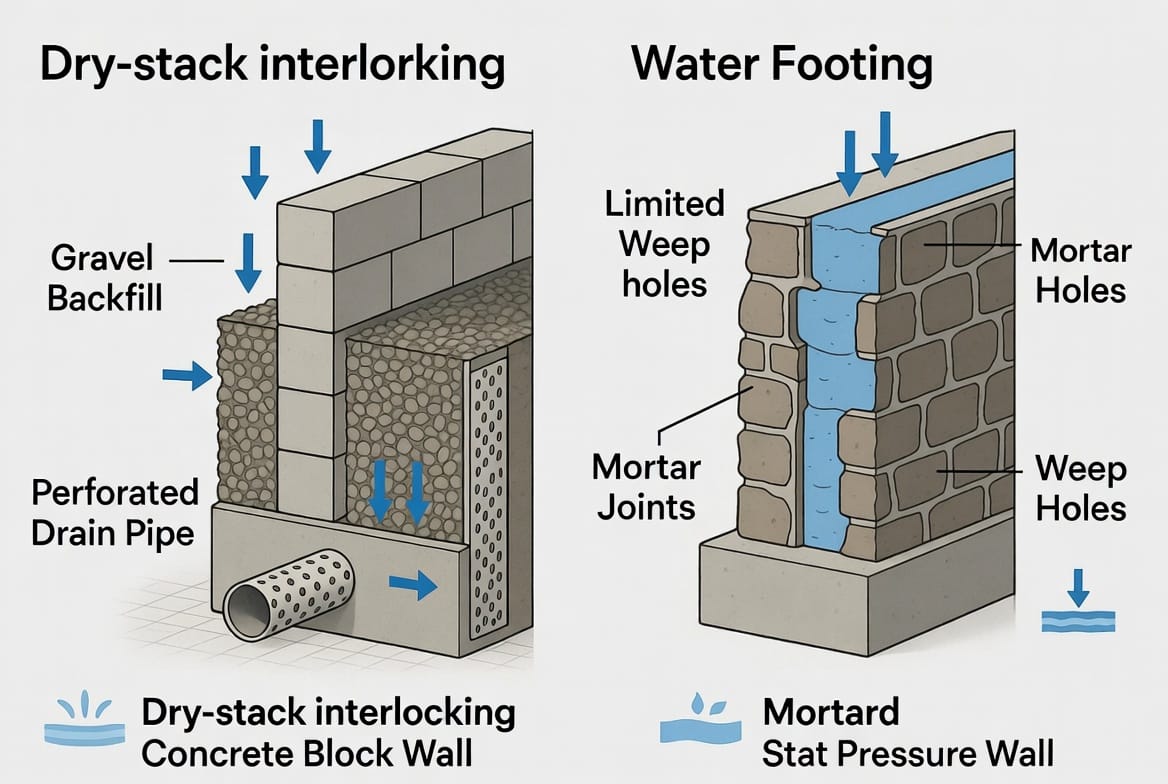
Dry-stack segmental retaining walls are engineered systems built using interlocking concrete blocks that require no mortar. These blocks fit together like puzzle pieces, relying on their weight, shape, and strategic backfill for stability.
Key features include:
- Interlocking design — Blocks have pins, lips, or grooves that secure each course.
- Built-in drainage — Gravel backfill behind the wall allows water to flow freely, reducing hydrostatic pressure.
- Flexible installation — Suitable for gravity walls or reinforced systems with geogrid for taller applications.
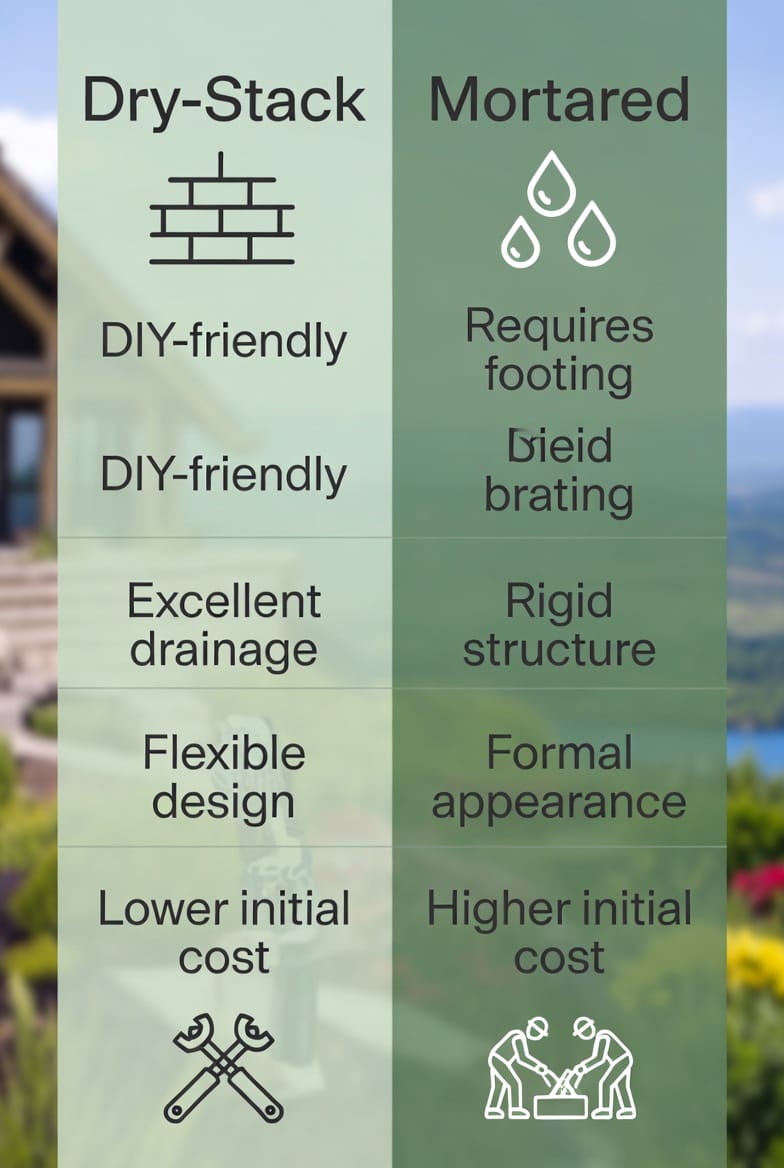
- DIY-friendly — Many homeowners successfully complete smaller projects themselves.
These walls are popular for their modern, clean look and excellent performance in areas with heavy rainfall or poor soil drainage. The absence of mortar joints creates a natural, textured appearance that blends beautifully with surrounding landscaping.
In practice, dry-stack walls excel at managing water flow. By incorporating a drainage layer of clean gravel and a perforated pipe at the base, they effectively direct water away from the wall, minimizing the risk of cracking or shifting over time.
Understanding Mortared Retaining Walls
Mortared stone or concrete block retaining walls use traditional masonry techniques. Blocks or stones are set with mortar joints and typically require a solid concrete footing for support.
Characteristics of mortared walls:
- Rigid structure — Mortar creates a permanent bond between units.
- Strong, monolithic feel — Ideal for formal or architectural landscapes.
- Requires professional installation — Footing excavation, formwork, and precise mortar work demand expertise.
- Limited natural drainage — Weep holes or additional drainage systems must be incorporated manually.
Mortared walls offer a timeless, elegant appearance with smooth or tooled joints. They are often chosen for high-end residential projects or commercial settings where a polished, permanent look is desired. However, the rigidity that provides strength can also make them more susceptible to cracking if the ground shifts or freezes.
Key Differences: Dry-Stack vs. Mortared Concrete Retaining Walls
Choosing between dry-stack and mortared options depends on your specific site conditions, budget, and design goals. Here's a detailed breakdown:
Stability and Construction
- Dry-stack: Relies on interlocking blocks, mass, and proper backfill. Can be engineered for taller walls using geogrid reinforcement.
- Mortared: Depends on a reinforced concrete footing and mortar bonds. Excellent for load-bearing applications but less forgiving of soil movement.
Drainage Performance
Proper drainage is critical for any retaining wall to avoid failure. Dry-stack systems naturally excel here due to open joints and recommended gravel backfill. Water passes through the wall face, relieving pressure quickly.
Mortared walls require deliberate installation of weep holes and drainage pipes. Without these, trapped water can exert tremendous force, leading to bulging or collapse.
Installation Process and Skill Level
Dry-stack walls are more accessible for experienced DIYers. Installation typically involves:
- Excavating a level trench
- Adding compacted base material
- Laying courses with interlocking blocks
- Backfilling with gravel and compacting
Mortared walls demand more steps:
- Digging and pouring a concrete footing
- Setting blocks in mortar
- Tooling joints
- Curing time before backfilling
Professional installation is strongly recommended for mortared walls and taller dry-stack projects to ensure long-term performance.
Aesthetic and Design Flexibility
Dry-stack concrete retaining wall blocks offer a contemporary, stacked-stone look with subtle color variations. They work well in casual or naturalistic gardens.
Mortared walls provide a more formal, crafted appearance. Joints can be raked, flush, or concave for different visual effects. Both can be finished with various textures and colors to match your home's exterior.
Cost Considerations
- Dry-stack: Generally lower material and labor costs, especially for shorter walls. DIY options can save significantly.
- Mortared: Higher upfront costs due to footing, mortar, and skilled labor. May offer better value for permanent, high-load applications.
Maintenance is another factor. Dry-stack walls are easier to repair — individual blocks can be replaced if needed. Mortared walls may require professional tuckpointing if cracks develop.
Best Applications for Each Type
Dry-stack segmental retaining walls shine in:
- Residential backyard slopes and garden terraces
- Erosion control on hillsides
- Raised planting beds and vegetable gardens
- Areas with high water tables or frequent rain
- Projects where homeowners want to participate in installation
Mortared retaining walls are ideal for:
- Formal entryways and high-visibility landscapes
- Supporting heavy loads or structures above the wall
- Commercial or upscale residential properties
- Situations requiring maximum rigidity and permanence
- Designs emphasizing precise architectural lines
In regions with freeze-thaw cycles, both types benefit from proper drainage and base preparation, but dry-stack systems often handle minor ground movement better due to their flexibility.
Design and Engineering Best Practices
Regardless of your choice, successful retaining walls follow these principles:
- Proper base preparation — Compact gravel or crushed stone for stability.
- Adequate drainage — Always include gravel backfill and drainage pipe.
- Geogrid reinforcement — For walls over 3-4 feet, depending on local codes.
- Professional engineering — Consult experts for walls taller than 4 feet or in challenging soil conditions.
Local building codes often require permits for taller walls. Working with experienced contractors ensures compliance and safety.
Long-Term Performance and Maintenance
Dry-stack walls typically require minimal maintenance. Occasional cleaning and checking for shifting blocks is usually sufficient. Their design accommodates natural settling without major issues.
Mortared walls may need periodic inspection for mortar deterioration, especially in harsh climates. Sealing can help protect against moisture penetration.
Both options, when properly installed, provide decades of reliable service. Modern concrete blocks are manufactured to high standards, offering excellent durability against weathering and UV exposure.
Choosing the Right Concrete Retaining Wall Block for Your Property
Selecting between dry-stack and mortared retaining walls comes down to balancing aesthetics, functionality, budget, and site-specific conditions. Dry-stack systems offer easier installation, superior drainage, and flexibility — making them a smart choice for most residential applications. Mortared walls deliver a classic, solid appearance and maximum strength where needed.
Consider factors like:
- Soil type and drainage characteristics
- Wall height and load requirements
- Desired aesthetic and maintenance level
- Budget and timeline
- Local climate and freeze-thaw potential
A professional assessment of your property can provide tailored recommendations and prevent costly mistakes down the road.
At our team, we specialize in helping homeowners create beautiful, functional landscapes with the right retaining wall solutions. Whether you prefer the modern versatility of dry-stack concrete retaining wall blocks or the traditional elegance of mortared construction, we deliver expert results that stand the test of time.
Ready to enhance your landscape with a reliable retaining wall? Contact our retaining wall specialists today to discuss your project and explore the best options for your property.
Get Your Dry-Stack or Mortared Wall Installed – Call Today