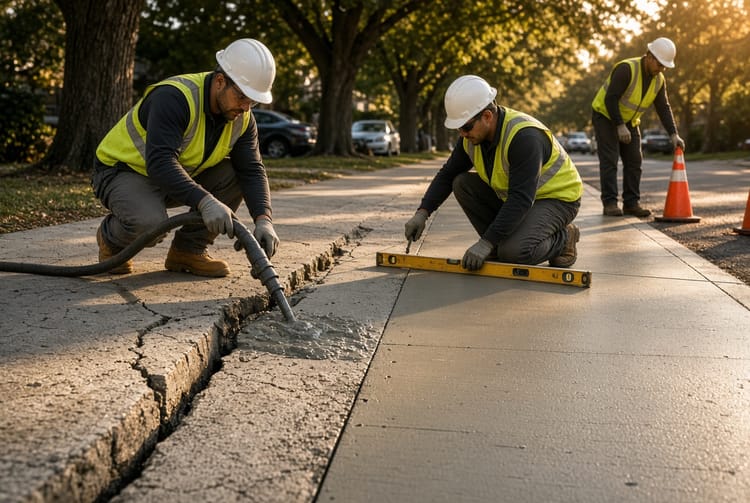
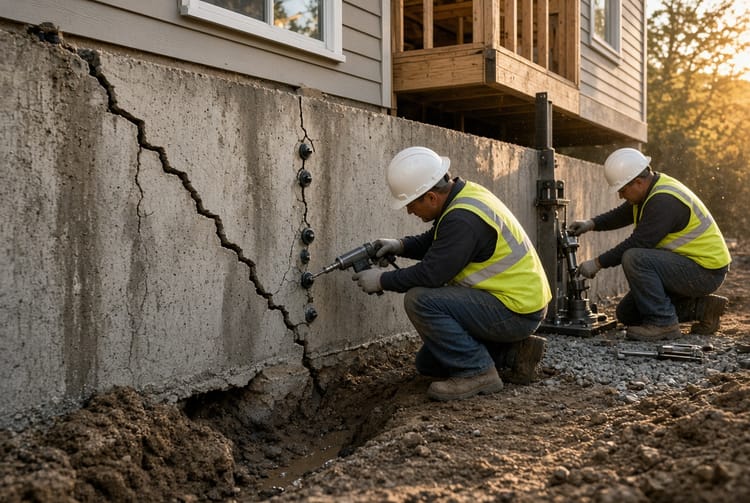
The Concrete Joint Sealing: Backer Rod and Sealant Installation
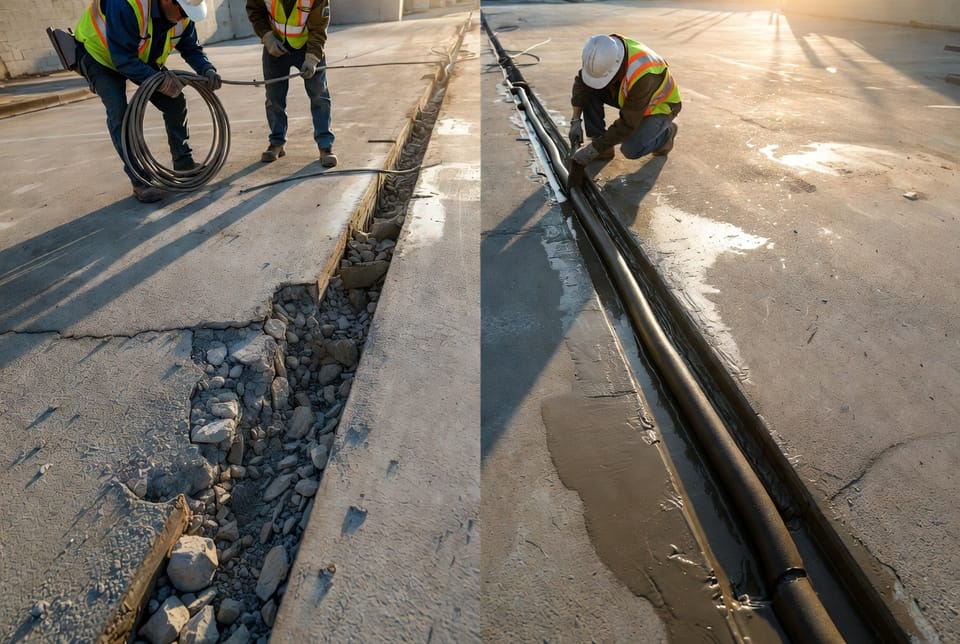
Concrete structures endure immense stress from temperature changes, heavy loads, and environmental factors. Proper joint sealing stands as one of the most critical maintenance practices for preserving concrete integrity. In this comprehensive guide, we explore the essential technique of backer rod and sealant installation, providing authoritative insights that help property owners and contractors achieve lasting results.
Protect Your Concrete from Cracks – Call Now!
Whether managing commercial parking lots, industrial floors, or residential driveways, understanding this process ensures your concrete investments remain protected for decades.
Why Concrete Joints Require Attention
Concrete naturally expands and contracts with temperature fluctuations. Without properly designed and maintained joints, this movement leads to uncontrolled cracking. Expansion joints and control joints create planned weak points where movement occurs safely.
However, open joints invite water infiltration, debris accumulation, and weed growth. These issues accelerate deterioration, leading to costly repairs. Professional joint sealing with backer rod and high-quality sealant forms a flexible barrier that accommodates movement while blocking harmful elements.
This method not only extends the lifespan of your concrete but also maintains its aesthetic appeal and structural safety.
Understanding the Critical Role of Backer Rod
Backer rod, also known as backer material or foam rod, serves as the foundation for effective joint sealing. This cylindrical foam material fills the bottom portion of the joint, creating the ideal environment for sealant performance.
What Backer Rod Does
- Fills the joint bottom: It occupies space at the base, preventing sealant from sinking too deep.
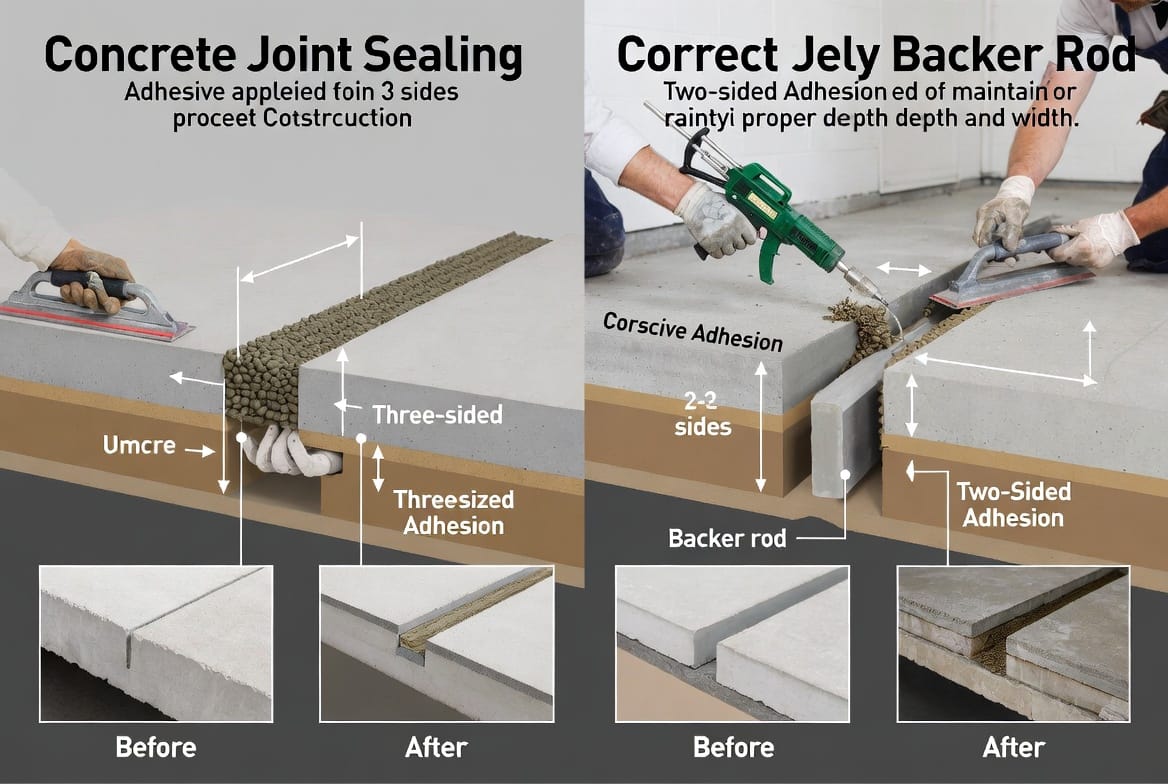
- Controls sealant depth: Ensures the sealant maintains the recommended depth-to-width ratio, typically 1:2 for optimal flexibility.
- Provides support: Acts as a firm backing during sealant application and tooling.
The primary purpose of backer rod centers on allowing the sealant to flex properly. Without it, sealant often bonds to three sides of the joint (bottom and both walls), restricting movement and causing premature failure through cracking or separation.
Proper backer rod installation creates two-sided adhesion only — the sealant bonds exclusively to the joint walls, permitting it to stretch and compress freely as the concrete moves. This technique significantly enhances durability and performance.
Selecting Quality Materials for Success
Choosing the right materials forms the cornerstone of successful concrete joint sealing.
- Closed-cell backer rod works best for most exterior applications due to its moisture resistance.
- Open-cell backer rod suits certain interior applications where breathability matters.
- Sealants should match project requirements — polyurethane, silicone, or polysulfide options each offer specific advantages in flexibility, adhesion, and weather resistance.
Always verify compatibility between backer rod and sealant. Professional-grade materials ensure reliable performance under demanding conditions.
Step-by-Step Backer Rod and Sealant Installation Process
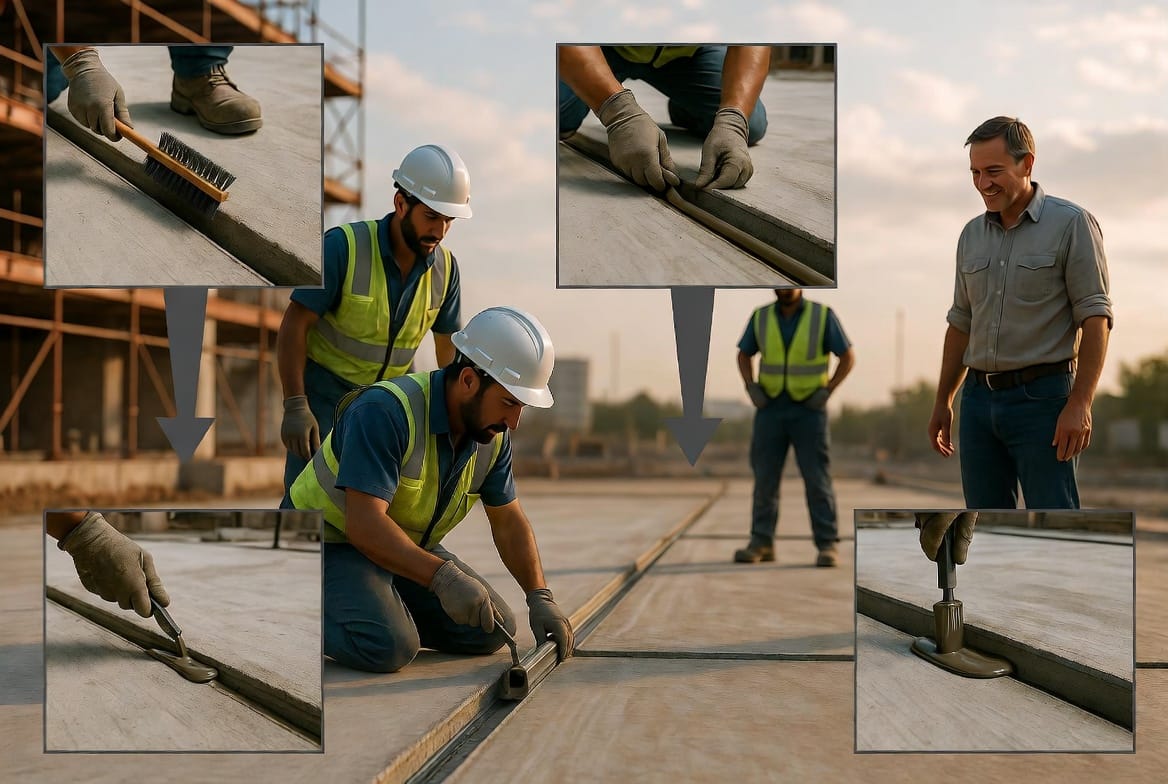
Professional installation follows precise steps to achieve superior results. Here’s the authoritative process:
- Joint Preparation
Thoroughly clean the joint using wire brushes, compressed air, or specialized vacuums. Remove all dirt, old sealant, debris, and loose concrete. A clean surface ensures maximum adhesion. - Depth Assessment
Measure joint depth and width. The backer rod should sit at approximately 1/2 to 2/3 of the joint depth, leaving proper space for sealant. - Backer Rod Installation
Select backer rod 25-50% wider than the joint width for a snug fit. Gently push it into place using a blunt tool, ensuring it remains at the correct depth without twisting or stretching excessively. - Sealant Application
Apply high-quality sealant using a professional caulking gun. Fill the joint from the bottom up, avoiding air pockets. - Tooling the Sealant
Tool the sealant to a concave shape using a specialized tool. This concave profile promotes water shedding and enhances flexibility.
Proper tooling prevents the sealant from forming a convex shape that traps water and leads to faster deterioration.
Common Challenges and Professional Solutions
Many DIY attempts fail due to improper depth control or inadequate cleaning. Three-sided adhesion represents the most frequent mistake, leading to sealant tear and joint failure within months rather than years.
Professional contractors avoid these pitfalls through experience and proper tools. They ensure:
- Correct backer rod compression without over-stuffing
- Appropriate sealant depth typically half the joint width
- Environmental conditions suitable for curing (temperature and moisture levels)
- High-quality tooling for smooth, concave finishes
These practices distinguish professional results from temporary fixes.
Benefits of Expert Concrete Joint Sealing
Investing in proper backer rod and sealant installation delivers multiple advantages:
- Waterproof protection against rain and groundwater
- Prevention of crack propagation throughout the slab
- Reduced maintenance costs over time
- Enhanced safety by eliminating trip hazards from debris-filled joints
- Improved appearance with clean, uniform joint lines
- Extended concrete lifespan protecting your valuable investment
Facilities with properly sealed joints demonstrate significantly lower repair frequency and better resistance to freeze-thaw cycles in colder climates.
Advanced Considerations for Different Applications
Various concrete projects require tailored approaches. Horizontal joints in driveways and parking lots face different stresses than vertical joints in walls or structural elements.
Heavy traffic areas benefit from more robust sealants with higher shore hardness. Decorative concrete installations may require color-matched sealants to maintain aesthetic consistency.
Industrial environments with chemical exposure demand specialized chemical-resistant formulations. Understanding these nuances ensures optimal performance across applications.
Maintenance and Long-Term Performance
Even the best installation requires periodic inspection. Look for signs of sealant failure such as:
- Cracking or splitting
- Loss of adhesion
- Discoloration or weathering
- Water ponding near joints
Address issues promptly to prevent broader concrete damage. Professional reapplication typically extends protection for 7-20 years depending on conditions and materials used.
The Science Behind Effective Sealing
Concrete movement occurs constantly. Sealants must accommodate this dynamic behavior through elasticity. The backer rod creates the hourglass shape that maximizes the sealant’s ability to handle extension and compression cycles.
This hourglass profile — wider at the top and bottom with a narrower middle — represents the gold standard in joint design. It distributes stress evenly and prevents the sealant from tearing at stress concentration points.
Choosing Professional Concrete Services
While basic joint sealing appears straightforward, achieving professional results consistently requires expertise, quality materials, and proper equipment. Experienced teams understand local climate considerations, substrate conditions, and industry best practices that ensure long-term success.
Property managers and homeowners benefit from partnering with specialists who stand behind their work with warranties and follow-up inspections.
Conclusion: Protect Your Concrete Investment
Proper sealing prevents concrete cracks and preserves structural integrity for years to come. By following the correct backer rod and sealant installation techniques — including precise depth control, two-sided adhesion, and concave tooling — you create durable, flexible joints that withstand the elements.
Don’t wait for visible damage to take action. Proactive joint maintenance saves significant costs and headaches down the road.
Ready to protect your concrete surfaces?
Our professionals deliver reliable, long-lasting results using proven techniques and premium materials tailored to your specific project requirements.
Professional Joint Sealing Services – Get a Free Quote Now