The Concrete Patio Resurfacing: Renewing Old Surfaces
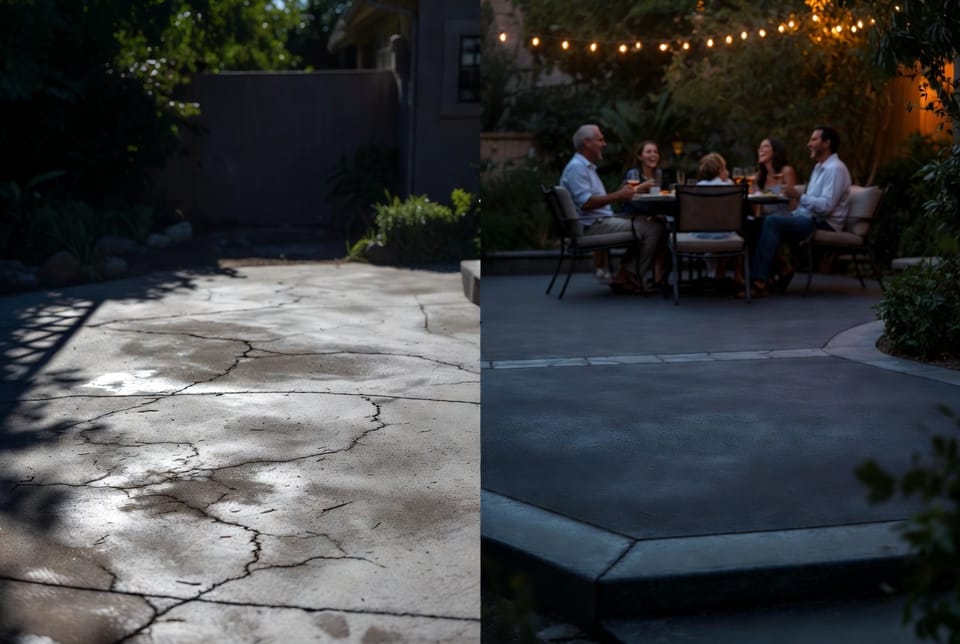
A concrete patio that once served as the heart of outdoor gatherings can slowly lose its appeal. Years of weather exposure, foot traffic, and everyday spills leave many surfaces looking tired, stained, and cracked. Full replacement is expensive, disruptive, and often unnecessary. Concrete patio resurfacing offers a smarter path: a cost-effective upgrade that restores strength, beauty, and function while keeping the original slab in place.
Get a Cost-Effective Patio Resurfacing Quote – Call Now
This process uses a polymer-modified cement overlay applied directly over existing concrete. When performed correctly, the result looks and performs like a brand-new surface at a fraction of the cost and time of tearing out and pouring a fresh slab. Homeowners across the country are discovering that resurfacing is not a temporary patch—it is a lasting renewal.
What Exactly Is Concrete Patio Resurfacing?
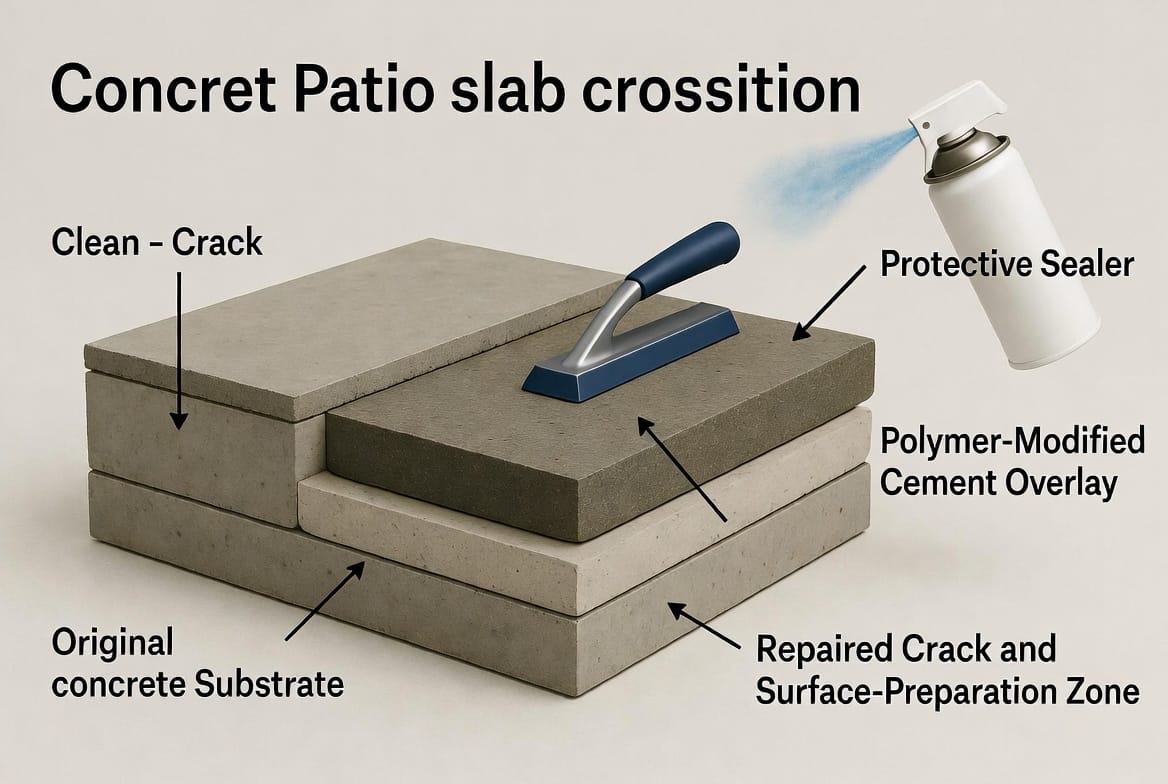
Resurfacing is the controlled application of a thin, high-performance cementitious layer over a sound existing concrete base. The key material is a polymer-modified cement overlay. Polymers are added to traditional cement, sand, and aggregates to create a mixture that bonds tightly, flexes slightly with temperature changes, and resists cracking far better than ordinary concrete.
The overlay is typically applied at a thickness of ⅛ inch to ½ inch, depending on the condition of the substrate and the desired finish. Because it is bonded to the original slab, the finished surface gains the structural support of the existing concrete while presenting a fresh, uniform face.
Unlike simple sealers or paint, a true polymer-modified overlay becomes an integral part of the patio. It can be colored, stamped, textured, or left smooth according to design preference. The result is a surface that looks intentional and modern rather than patched.
When Resurfacing Becomes the Right Choice
Not every damaged patio needs resurfacing, but many do. The decision usually rests on three common conditions:
- Surface wear — Years of abrasion from furniture, foot traffic, and weather gradually erode the top layer, leaving the concrete dusty, rough, and uneven.
- Stains — Oil drips from grills, rust from metal furniture, leaf tannins, and fertilizer residue penetrate the porous surface and create permanent-looking discoloration.
- Cracking — Hairline cracks and shallow surface cracks caused by freeze-thaw cycles or minor settlement are common. As long as the cracks are not structural (moving or wide enough to indicate foundation movement), they can be repaired and covered by the overlay.
Resurfacing is appropriate when the original slab remains structurally sound—meaning it is still level, free of major heaving, and without deep spalling that exposes aggregate throughout large areas. If the concrete is crumbling extensively or has settled unevenly by more than an inch, full replacement may be required. For the majority of residential patios that simply look worn, stained, or lightly cracked, resurfacing delivers excellent results.
The Clear Benefits of Choosing Resurfacing Over Replacement
The most compelling advantage is economic. Removing an old patio, hauling away debris, preparing a new base, and pouring fresh concrete can cost two to three times more than a professional overlay. Resurfacing eliminates demolition labor, disposal fees, and the need for extensive formwork.
Time is another major benefit. A typical residential patio can be prepared, overlaid, and sealed in a few days rather than the week or more required for complete replacement. Homeowners regain use of their outdoor space quickly.
Aesthetic flexibility is equally important. The new surface can be finished in virtually any color, texture, or pattern. Smooth modern finishes, broom textures for slip resistance, or decorative stamped designs that mimic stone or wood are all achievable. The patio can be matched to existing architecture or updated to a completely new look.
Durability improves as well. Polymer-modified overlays are denser and less permeable than standard concrete. When properly sealed, they resist staining, moisture intrusion, and freeze-thaw damage more effectively than the original surface. The finished patio often outperforms the slab it covers.
Finally, resurfacing is environmentally responsible. Keeping the existing concrete in place reduces landfill waste and the carbon footprint associated with producing and transporting new concrete.
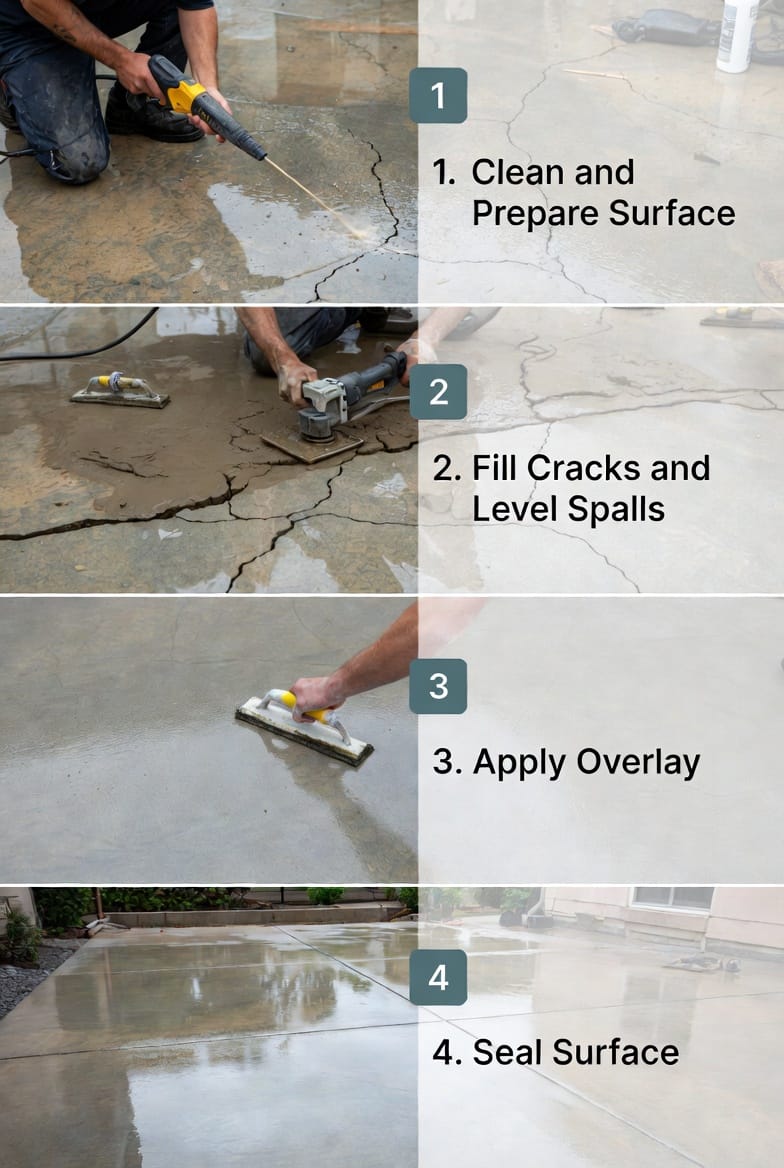
The Professional Resurfacing Process: Four Essential Steps
A successful resurfacing project follows a disciplined sequence. Skipping or rushing any stage compromises long-term performance. Here is how experienced contractors approach the work.
1. Thorough Cleaning and Surface Preparation
Every successful overlay begins with a clean, profiled substrate. The existing patio is pressure-washed at high pressure to remove dirt, algae, loose particles, and surface contaminants. Chemical cleaners or degreasers may be applied to lift oil and organic stains. After cleaning, the surface is allowed to dry completely.
Next comes mechanical profiling. Light grinding or shot-blasting creates a slightly rough texture that gives the overlay material something to grip. This step is critical. A smooth, sealed, or painted surface will not bond properly. Contractors test the profile to ensure it meets the manufacturer’s requirements for the chosen overlay system.
Any previous coatings or sealers that remain after cleaning are removed. The goal is a uniformly porous, dust-free concrete surface ready to accept the new layer.
2. Crack and Defect Repair
Once the surface is clean, all cracks, spalls, and low spots are addressed. Hairline cracks are typically filled with a flexible polymer repair material that moves with the concrete. Wider cracks may be routed and filled with a more rigid patching compound. Spalled or pitted areas are built up with a polymer-modified repair mortar so the surface is level before the overlay is applied.
Control joints that still function properly are usually left open or re-cut after the overlay cures. This prevents random cracking in the new surface. The repair stage transforms a damaged patio into a stable base capable of supporting a thin, high-performance layer.
3. Application of the Polymer-Modified Overlay
With preparation complete, the overlay mixture is mixed according to precise ratios of polymer, cement, sand, and water. The material is applied by hand with trowels, squeegees, or specialized sprayers depending on the desired thickness and texture.
For most residential patios a single coat of ⅛ to ¼ inch is sufficient. Thicker applications or multiple coats may be used when greater leveling is required. While the material is still plastic, contractors can introduce color, create texture, or stamp decorative patterns. Timing is critical—the overlay must be finished before it sets too firmly.
The polymer component is what gives the overlay its superior bond strength and flexibility. It reduces the risk of delamination and helps the surface accommodate minor movement in the underlying slab without cracking.
4. Curing and Protective Sealing
After the overlay has been finished and has begun to set, it is protected during the initial curing period. Temperature and humidity are monitored so the material gains strength properly. Once cured, a high-quality penetrating or film-forming sealer is applied.
The sealer serves two purposes: it enhances color depth and provides a barrier against moisture, stains, and UV degradation. Many modern sealers are breathable, allowing vapor to escape while still repelling liquids. Reapplication every few years keeps the surface looking new and performing at its best.
Practical Considerations for Homeowners
Choosing the right contractor is essential. Look for companies that specialize in decorative concrete and polymer overlays rather than general concrete pouring. Ask for recent project photos, references, and details about the specific overlay system they use. A reputable contractor will inspect the existing slab thoroughly and explain whether resurfacing is suitable or if replacement is the better long-term choice.
Climate plays a role in scheduling. Most polymer overlays perform best when applied in moderate temperatures with low risk of rain during the first 24–48 hours. Experienced crews monitor weather closely and protect the fresh surface when necessary.
Maintenance after resurfacing is straightforward. Sweep or rinse regularly, clean spills promptly, and reapply sealer according to the manufacturer’s recommendations—typically every two to four years depending on traffic and exposure. Avoid harsh chemical de-icers in winter; sand or approved ice-melt products are safer.
Cost varies with patio size, condition, and finish complexity, yet resurfacing consistently remains the more economical route compared with full replacement. Homeowners gain a renewed surface that can last 10–15 years or longer with proper care—often matching or exceeding the service life of a new pour when maintenance is maintained.
Addressing Common Concerns
Some homeowners worry that a thin overlay will not hold up. When the substrate is properly prepared and a quality polymer-modified system is used, bond strength is excellent. Delamination is rare and almost always traces back to inadequate cleaning or profiling rather than the material itself.
Others fear that existing cracks will telegraph through the new surface. Flexible repair materials and the inherent elasticity of polymer overlays minimize this risk. In cases of active structural movement, the contractor will recommend addressing the underlying cause before proceeding.
Color fading is another frequent question. Modern integral color systems and UV-stable sealers keep the finish looking vibrant for years. Choosing a slightly darker or more neutral tone often provides the most forgiving long-term appearance.
Why Resurfacing Aligns with Smart Home Ownership
Outdoor living spaces continue to grow in importance. A patio that is cracked, stained, or simply outdated limits how families use their property. Resurfacing restores both function and pride of ownership without the upheaval of demolition. It is a practical investment that enhances daily enjoyment and supports property value.
The process is mature, well-tested, and supported by advanced materials science. Polymer technology has evolved significantly, giving today’s overlays performance characteristics that earlier cement toppings lacked. When combined with skilled application, the result is a surface that feels substantial, looks intentional, and stands up to real-world use.
Renew Your Patio, Don’t Replace It
A worn concrete patio does not have to mean a costly and disruptive replacement. Concrete patio resurfacing with a polymer-modified cement overlay delivers a cost-effective, durable, and attractive solution that renews the surface while preserving the original slab. By addressing wear, stains, and cracking through careful cleaning, precise repairs, expert overlay application, and protective sealing, homeowners gain a patio that looks and performs like new.
The process is proven, the materials are advanced, and the results speak for themselves. Whether the goal is simple restoration or a complete aesthetic update, resurfacing offers a practical path forward.
If your patio has begun to show its age, the next step is a professional evaluation. Contact a specialist to determine whether resurfacing is the right solution for your space.
Transform Your Old Concrete Patio – Call for Free Consultation