The Concrete Resurfacing Process: Restoring Worn Driveways Without Replacement
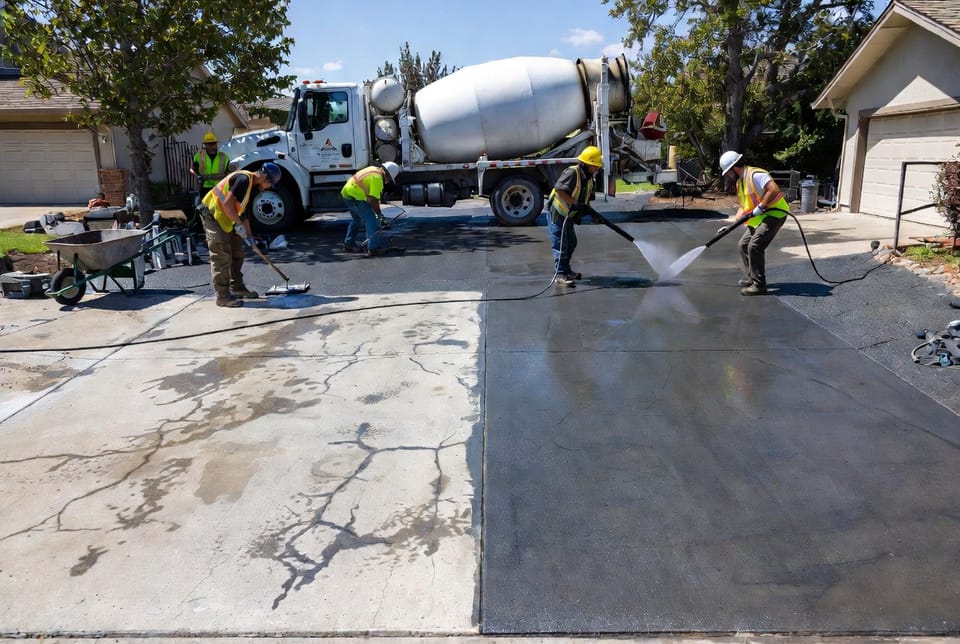
Concrete resurfacing stands as a smart, cost-effective alternative to full driveway replacement. When your once-smooth concrete surface begins showing signs of wear—pitting, cracking, or staining—you do not need to tear everything out and start over. Instead, expert resurfacing restores strength, beauty, and function while saving you thousands of dollars and weeks of disruption.
Affordable Driveway Resurfacing – Call Today!
Homeowners across the country choose driveway resurfacing because it delivers professional-grade results that last. The process revitalizes existing concrete without the heavy machinery, long downtime, or high expense of demolition and new pours. In this comprehensive guide, you will discover exactly how the concrete resurfacing process works, why it succeeds where other methods fall short, and how it can transform your property today.
Concrete resurfacing is more than a cosmetic fix. It creates a durable new wearing surface bonded directly to your original slab. Modern materials and proven techniques ensure the restored driveway withstands weather, traffic, and time far better than aging concrete ever could. Whether you face minor surface deterioration or moderate cracking, this method offers a reliable path forward.
Why Choose Concrete Resurfacing Over Full Replacement?
Replacing an entire driveway often costs between $8 and $15 per square foot, depending on your region and site conditions. That price tag adds up quickly for a standard two-car driveway. Concrete resurfacing, by contrast, typically runs 40 to 60 percent less while delivering comparable or superior surface performance.
The savings extend beyond dollars. Resurfacing completes in days rather than weeks. Your home stays accessible, your landscaping stays intact, and your daily routine experiences minimal interruption. Environmentally, you avoid hauling away tons of old concrete and mixing fresh material from scratch—reducing waste and your carbon footprint.
Polymer-modified overlays and high-strength concrete toppings add flexibility and adhesion that plain concrete lacks. These advanced formulas resist cracking, repel water, and stand up to freeze-thaw cycles that commonly damage older slabs. Homeowners report renewed driveways that look fresh for 10 to 15 years or more with proper care.
Bold key risk many overlook: ignoring surface wear leads to deeper structural problems. Water seeps into cracks, expands when it freezes, and accelerates damage. Concrete resurfacing seals those entry points early, protecting your investment and preventing costlier repairs later.
Is Your Driveway a Candidate for Resurfacing?
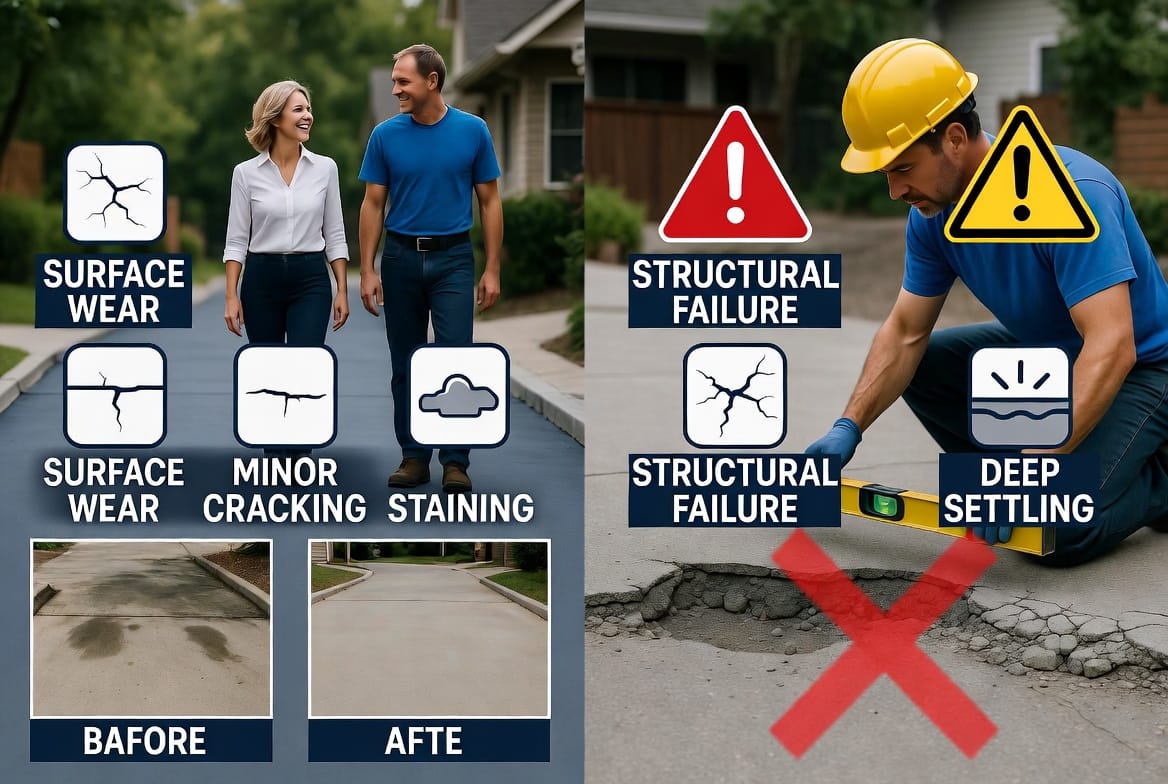
Not every driveway qualifies, but most with surface-level issues do. Surface wear, minor cracking, and staining respond beautifully to resurfacing. These conditions affect only the top layer, leaving the base slab sound and level.
When resurfacing works best:
- Shallow pitting or spalling no deeper than ½ inch
- Hairline or narrow cracks under ¼ inch wide
- Discoloration from oil, tire marks, or weathering
- Minor settling that has not compromised the foundation
When replacement becomes necessary:
- Structural failure with wide, deep cracks running through the slab
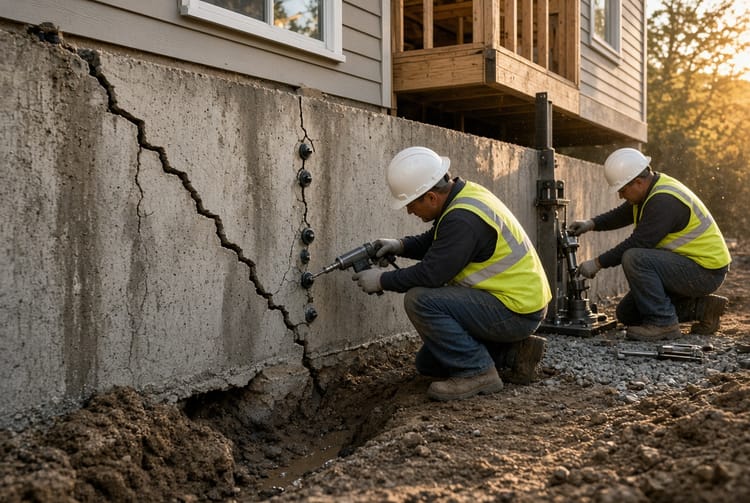
- Significant settling or heaving that affects drainage and stability
- Extensive tree-root damage or underground utility shifts
A quick on-site evaluation by a trained professional confirms suitability in minutes. They check slope, drainage, and load-bearing capacity to ensure long-term success. When conditions align, driveway resurfacing delivers outstanding value.
The Concrete Resurfacing Process: Step-by-Step
The concrete resurfacing process follows four precise stages that transform tired concrete into a like-new surface. Each step builds on the last, creating unbreakable adhesion and lasting durability. Professional crews execute these stages with care, ensuring every detail contributes to a flawless result.
Step 1: Thorough Cleaning and Surface Preparation
Cleaning sets the foundation for success. Workers begin by removing dirt, oil, grease, and loose debris using high-pressure washing and specialized cleaners. For stubborn stains, they apply eco-friendly degreasers that lift contaminants without harming the concrete.
Next comes etching. A light acid solution or mechanical grinding opens the pores of the existing slab, creating a textured profile that promotes superior bonding. This critical preparation prevents delamination—the key risk of poor adhesion that causes premature failure in DIY attempts.
During cleaning, technicians also inspect for hidden issues such as efflorescence or moisture intrusion. Addressing these early guarantees the overlay performs as designed. The entire surface emerges clean, dry, and ready—typically within a single workday.
Step 2: Repairing Cracks and Damaged Areas
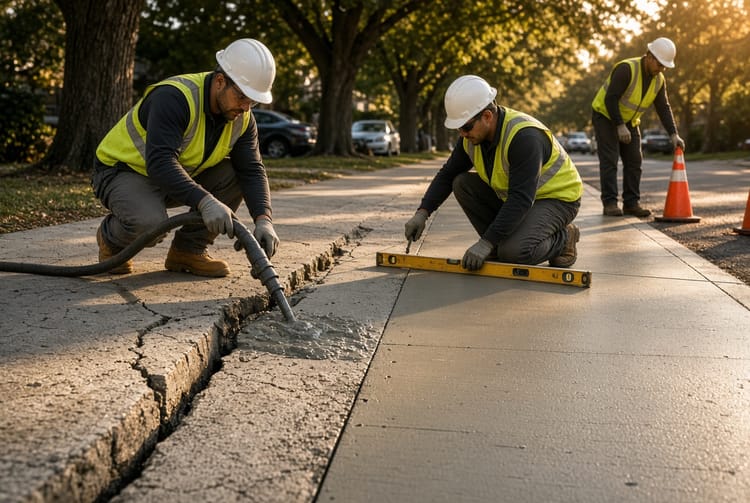
No concrete resurfacing skips this vital repair phase. Technicians route out and fill every crack with flexible, high-bond repair mortar. They use color-matched compounds so repairs blend seamlessly beneath the final overlay.
For wider cracks, they install control joints or backer rod to allow natural movement without telegraphing through the new surface. This attention to detail eliminates future cracking and maintains structural integrity.
Homeowners often worry about existing damage spreading. Professional repair halts progression, reinforcing weak spots and creating a uniform base. The result? A stable platform ready for the next layer.
Step 3: Applying the Bonding Agent
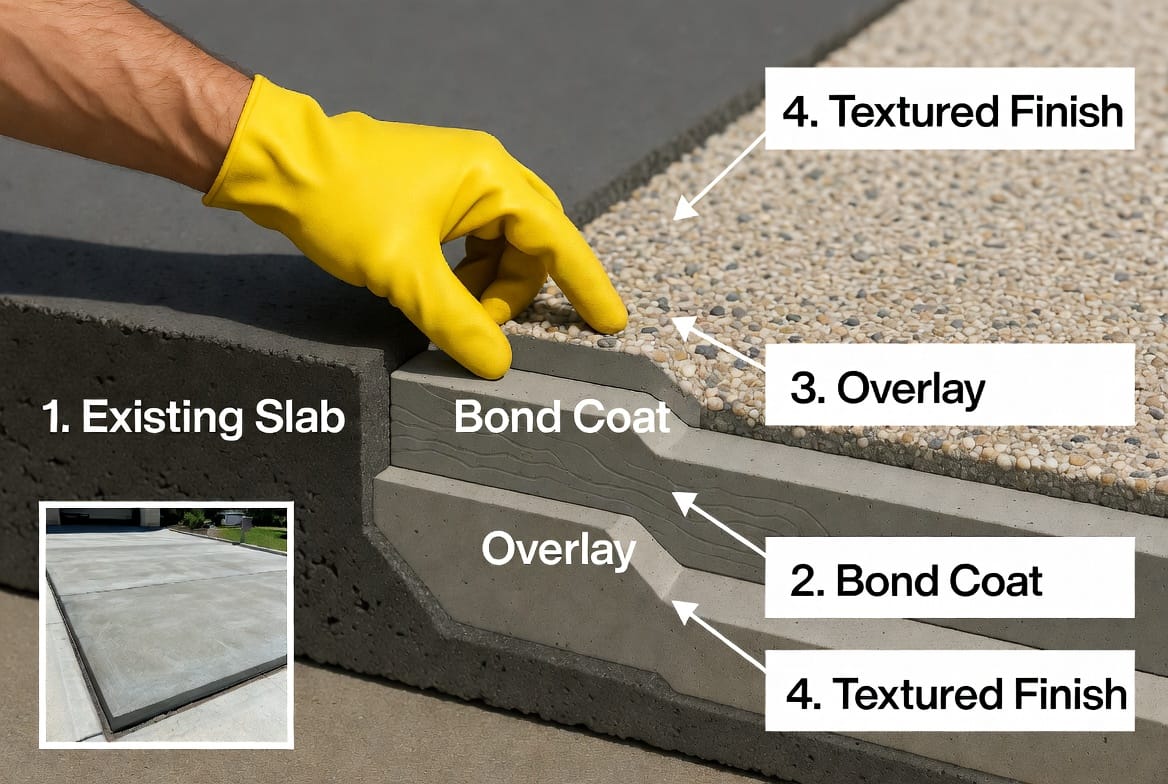
The bonding agent forms the invisible hero of the entire process. This specialized liquid or polymer emulsion chemically links the old concrete to the new overlay. Applied evenly with rollers or sprayers, it penetrates the prepared surface and creates a molecular bond stronger than the concrete itself.
Polymer-modified bonding agents add extra flexibility and water resistance—ideal for driveways exposed to rain, snow, and temperature swings. Crews allow proper curing time, usually 30 to 60 minutes, before proceeding. Skipping or rushing this step ranks among the most common causes of overlay failure, which is why certified professionals never cut corners.
Step 4: Overlaying with New Concrete or Polymer-Modified Material
Now the transformation accelerates. Crews pour or trowel the chosen overlay—either traditional concrete mix or advanced polymer-modified overlay—to a thickness of ¼ to 2 inches, depending on needs. Polymer options offer lighter weight, faster curing, and superior stain resistance, making them popular for residential driveways.
Workers spread the material evenly, using screeds and floats to achieve perfect level and slope for drainage. Decorative options include stamped patterns, colored pigments, or exposed aggregate finishes that match your home’s style.
The overlay cures rapidly thanks to modern accelerators. Within hours, the surface gains enough strength for light foot traffic; full vehicle use returns in 24 to 48 hours. This speed minimizes inconvenience compared to traditional replacement timelines.
Step 5: Finishing Touches and Proper Curing
Final texturing ensures safety and aesthetics. Broom finishes provide excellent traction, while smooth or decorative surfaces add curb appeal. Sealing follows once the overlay reaches full strength, locking out moisture and UV damage.
Proper curing—maintaining moisture and temperature—prevents shrinkage cracks and maximizes hardness. Professionals apply curing compounds or cover the surface as needed, then provide detailed aftercare instructions to protect your new driveway.
Materials That Make Modern Resurfacing Superior
Today’s concrete resurfacing relies on engineered materials unavailable decades ago. Polymer-modified overlays blend Portland cement with acrylic or latex polymers, delivering tensile strength up to three times higher than standard concrete. These mixes flex with the slab instead of fighting it, reducing stress fractures.
Color additives and microfibers further enhance performance. The result is a surface that resists chipping, fading, and chemical attack from de-icers or automotive fluids. When paired with the proper bonding agent, these overlays create a monolithic system that acts as one durable unit.
Real-World Benefits and Long-Term Value
Beyond cost savings, driveway resurfacing boosts property value and homeowner satisfaction. A fresh, uniform surface improves first impressions and complements landscaping beautifully. Many clients notice better traction in wet weather and easier snow removal—practical perks that enhance daily living.
Maintenance stays simple. Annual cleaning and occasional resealing keep the surface looking pristine for years. Unlike replacement, resurfacing allows future decorative updates without starting over.
Key phrase to remember: durability meets affordability. You regain a safe, attractive driveway without the hassle or expense of full demolition.
Common Questions About the Resurfacing Process
Homeowners frequently ask how long the process takes and whether their specific damage qualifies. Most jobs finish in two to four days. Durability questions receive reassuring answers—properly installed overlays routinely outlast original concrete in challenging climates.
Another frequent concern involves color matching. Professionals offer custom tinting so the new surface blends or stands out exactly as desired. Eco-conscious clients appreciate low-VOC materials and reduced waste.
Conclusion: Renew Your Concrete for a Fraction of Replacement Cost
Your driveway deserves better than constant repairs or costly replacement. The concrete resurfacing process delivers a strong, beautiful surface that protects your home and enhances its value—all at a fraction of the price.
Ready to restore your worn driveway without the disruption of full replacement? Our expert team specializes in concrete resurfacing that lasts. Contact us today to schedule a free assessment and discover how simple and affordable renewal can be.
Transform Your Worn Driveway Without Replacement – Call Now