The Concrete Ramp Installation: Access for Mobility and Equipment

Concrete ramp installation delivers reliable, long-lasting solutions for homes, businesses, and public spaces. When properly designed and built, these ramps transform accessibility barriers into smooth pathways for wheelchairs, walkers, scooters, and heavy equipment. At the heart of every successful project lies expert planning that prioritizes safety, durability, and compliance with accessibility standards.
Get Your ADA-Compliant Ramp Built Today – Call Now!
Accessible concrete ramps do more than meet requirements—they enhance quality of life and property value while demonstrating thoughtful care for users of all abilities. This comprehensive guide explores everything you need to know about professional concrete ramp construction.
Why Concrete Ramps Excel for Accessibility
Concrete stands unmatched for ramp construction due to its exceptional strength, versatility, and low maintenance. Unlike wood or metal alternatives that degrade over time, well-installed concrete ramps withstand heavy use, weather exposure, and daily traffic for decades.
Key advantages include:
- Superior load-bearing capacity for mobility devices and equipment
- Customizable surface textures for optimal traction
- Thermal stability that resists cracking in temperature fluctuations
- Seamless integration with existing structures
- Cost-effectiveness over the long term
Professional installation ensures these benefits while avoiding common pitfalls that lead to structural failure or safety issues.
Critical Design Requirements for Safe Concrete Ramps
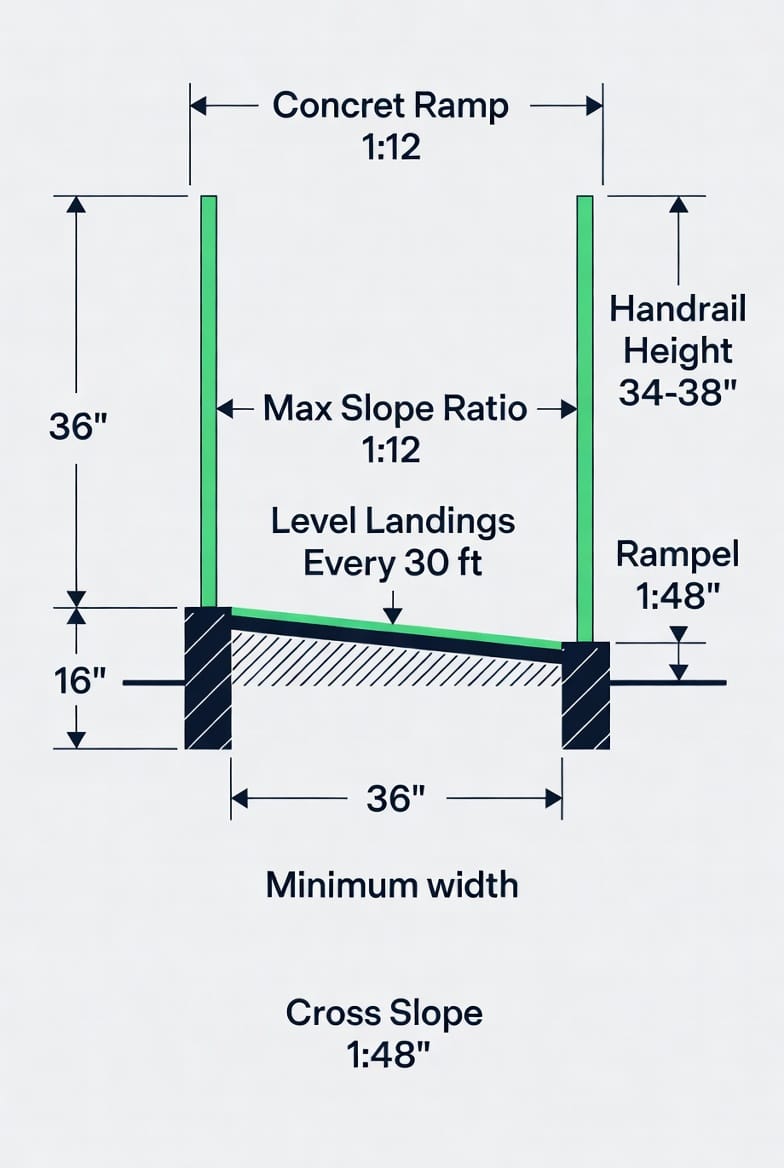
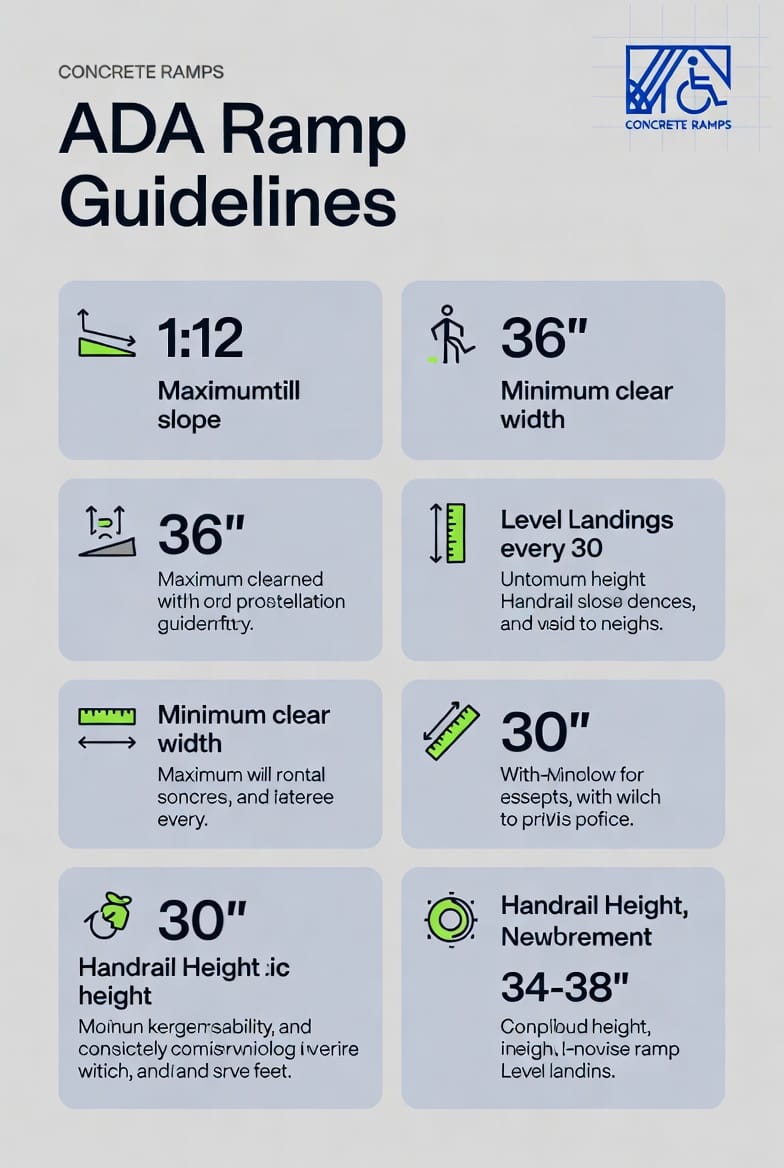
Slope ratio represents the most vital specification in ramp design. The maximum allowable slope is 1:12—meaning one inch of rise for every 12 inches of horizontal run. Steeper slopes create dangerous conditions and violate accessibility standards.
Landings provide essential rest and turning points. Level landings must be installed:
- At the top and bottom of each ramp run
- Every 30 feet of continuous ramp length
- Where ramps change direction
Handrails offer crucial support and must be installed on both sides for any ramp with a rise greater than 6 inches. Proper handrail specifications include:
- Height between 34 and 38 inches measured from the ramp surface
- Continuous gripping surface along the entire length
- Extension 12 inches beyond the top and bottom of ramp runs
- Clearance of 1.5 inches from walls or surfaces
Minimum clear width of 36 inches ensures comfortable passage for wheelchair users and equipment movers. Cross slopes must not exceed 1:48 to prevent sideways drifting.
Concrete Mix Considerations for Durable Ramps
High-quality concrete mix determines long-term performance. Professional installers select mixes with:
- Minimum 4,000 PSI compressive strength for heavy-duty applications
- Air-entrainment additives for freeze-thaw resistance in colder climates
- Fiber reinforcement to reduce surface cracking
- Proper water-cement ratio for optimal workability and strength
Surface finishing techniques create safe, non-slip textures without compromising aesthetics. Broom finishes or specialized stamping patterns provide excellent traction while maintaining a clean appearance.
Reinforcement using rebar or wire mesh adds tensile strength, particularly important for ramps subject to soil movement or heavy loads.
Applications of Concrete Ramps Across Different Settings
Residential Home Access
Home accessibility ramps enable aging family members and individuals with mobility challenges to maintain independence. These installations often feature:
- Gentle curves that blend with landscape design
- Matching color and texture with existing driveways or patios
- Integrated lighting for nighttime safety
- Decorative elements that enhance curb appeal
Garage Threshold Solutions
Garage entry ramps address significant height differences between driveways and garage floors. Professional installations create smooth transitions that protect vehicle undercarriages while providing reliable access for mobility equipment.
Commercial and Public Spaces
Commercial concrete ramps must meet strict ADA compliance standards for businesses, hospitals, schools, and government buildings. These projects often require:
- Wider dimensions for high traffic volumes
- Heavy-duty reinforcement for frequent equipment movement
- Integration with existing architectural features
- Professional documentation and permitting support
The Professional Installation Process
Successful concrete ramp installation follows a systematic approach:
- Site Evaluation – Assessment of existing conditions, soil stability, drainage patterns, and space constraints
- Design Development – Creation of detailed plans meeting all accessibility requirements
- Permitting – Navigation of local building codes and accessibility regulations
- Foundation Preparation – Proper excavation and base compaction
- Formwork Construction – Precise setup ensuring correct slopes and dimensions
- Concrete Placement – Expert pouring with attention to consolidation and finishing
- Curing and Protection – Controlled curing process for maximum strength development
- Final Inspection – Verification of compliance and functionality
Quality control at every stage prevents costly future repairs and ensures user safety.
Common Challenges and Professional Solutions
Soil movement can cause cracking or settling over time. Experienced contractors implement proper drainage systems and reinforced foundations to mitigate these risks.
Water management prevents pooling that creates slippery conditions. Strategic grading and drainage solutions direct water away from ramp surfaces.
Aesthetic integration ensures the ramp complements rather than detracts from property appearance. Custom coloring, stamping, and finishing options create beautiful, functional results.
Maintenance for Long-Term Performance
Routine maintenance extends ramp lifespan significantly:
- Regular cleaning to remove debris and prevent staining
- Inspection of handrails and expansion joints
- Prompt repair of any surface damage
- Sealing as recommended by installation professionals
Proper care protects your investment while maintaining safety and accessibility standards.
Benefits Beyond Accessibility
Well-designed concrete ramps deliver multiple advantages:
- Increased property value through enhanced accessibility
- Insurance and liability protection through code compliance
- Future-proofing for changing family or business needs
- Universal design that benefits all users, including delivery personnel and parents with strollers
Accessible environments foster inclusion and independence for everyone.
Choosing the Right Concrete Ramp Contractor
Expertise matters when selecting a contractor for your project. Look for companies with:
- Proven experience in accessibility ramp construction
- Strong understanding of current building codes
- Portfolio of completed similar projects
- Comprehensive warranty offerings
- Professional project management and communication
Quality craftsmanship ensures your ramp performs reliably for years while meeting all safety requirements.
Conclusion: Accessible Concrete Improves Lives
Concrete ramp installation represents one of the most impactful home and business improvements available today. These carefully engineered structures remove barriers, enhance safety, and demonstrate commitment to accessibility for all.
Whether you need a simple residential ramp or a complex commercial solution, professional concrete ramp installation delivers results that matter. The combination of proper design, quality materials, and expert construction creates safe, durable access that serves users reliably for decades.
Ready to improve accessibility at your property? Contact our experienced team today to discuss your concrete ramp project.
Investing in accessible concrete means investing in independence, safety, and a more inclusive future. Let us help you create the perfect ramp solution for your specific requirements.
Safe, Durable Ramp Installation – Speak to Experts Today