The Concrete Ramp for Wheelchairs: ADA Slope and Landing Requirements
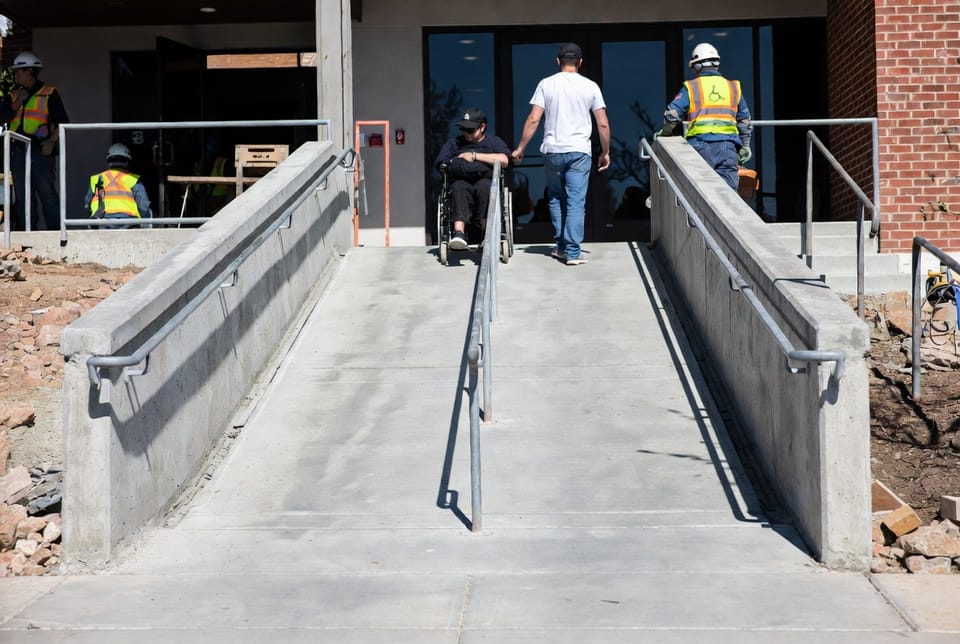
Creating safe, accessible pathways is both a legal responsibility and a powerful statement of inclusion. For property owners, business leaders, and facility managers, a properly designed concrete wheelchair ramp that meets every ADA requirement delivers lasting value—welcoming all visitors, protecting against liability, and enhancing the overall usability of any building.
Build ADA-Compliant Concrete Ramps Today – Call Now
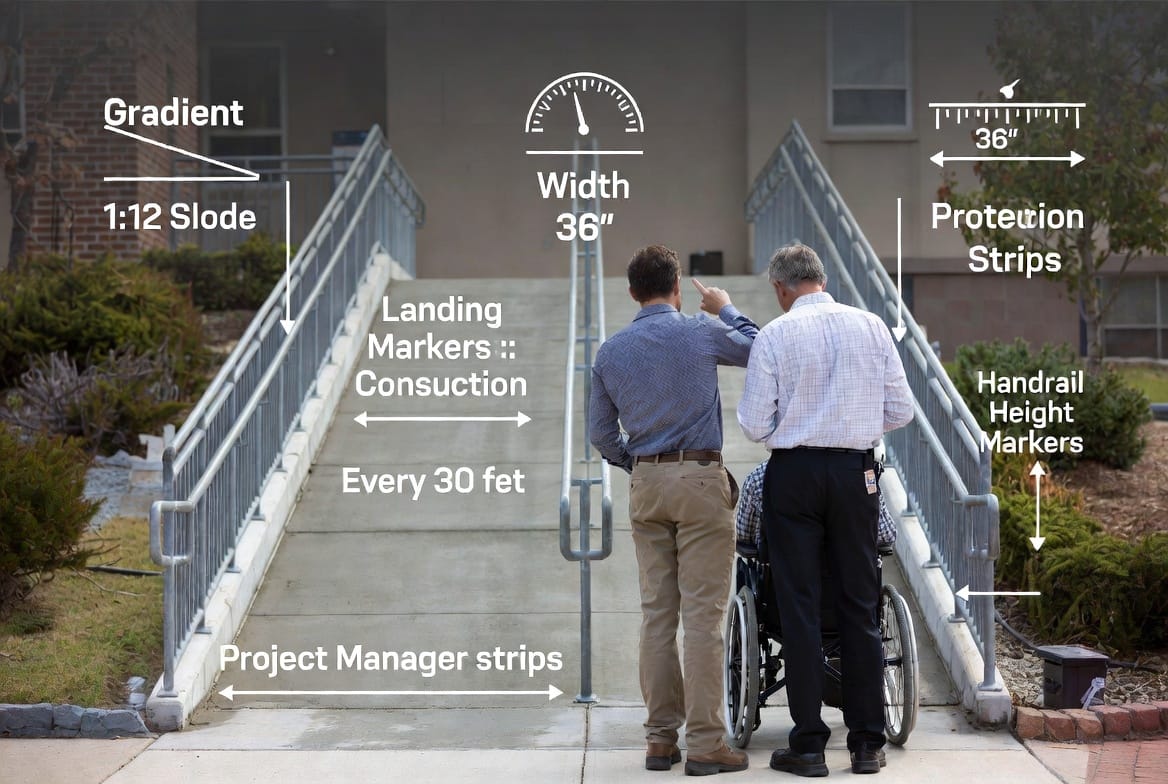
The Americans with Disabilities Act sets clear, science-based standards that ensure ramps are usable by the widest range of people. At the center of these standards are four non-negotiable elements: the 1:12 slope ratio, landings every 30 feet of run, a minimum 36-inch clear width, and handrails on rises greater than 6 inches. When these are executed in durable, precisely formed concrete, the result is a ramp that performs reliably for decades.
This in-depth guide explains each requirement in practical terms, shows why concrete is the superior material for permanent installations, highlights common mistakes to avoid, and reassures you that full compliance is achievable with the right planning and professional execution. Whether you are planning a new commercial entrance, upgrading a public facility, or creating accessible access for a private residence, understanding these rules empowers you to make confident decisions that serve your community for years to come.
Why ADA-Compliant Concrete Ramps Matter More Than Ever
Accessibility is no longer optional. Millions of Americans rely on wheelchairs or other mobility devices, and that number continues to grow with an aging population. A non-compliant ramp does more than create inconvenience—it can exclude customers, employees, students, or family members and expose property owners to serious legal and financial risks, including federal fines, lawsuits, and remediation orders.
Concrete offers unmatched advantages for wheelchair ramps. It can be formed to exact angles, finished with consistent slip-resistant texture, and reinforced to resist cracking, settling, or erosion. Unlike temporary wooden or metal structures, a well-built concrete ramp maintains its precise slope and structural integrity through seasons of heavy use, freeze-thaw cycles, and daily traffic.
Professional installation also protects your investment. When concrete specialists who understand ADA standards handle the project, you receive documentation of compliance, proper permitting support, and a finished product that passes inspection the first time. The peace of mind is immediate, and the long-term benefits—lower maintenance, higher property appeal, and genuine inclusivity—are immeasurable.
Decoding the 1:12 Slope Requirement
The single most important measurement in any wheelchair ramp is its slope. ADA standards establish a maximum slope of 1:12—meaning one inch of vertical rise requires a minimum of twelve inches of horizontal run. This creates a gentle incline of roughly 8.33 percent, allowing most wheelchair users to travel independently without excessive physical strain or risk of tipping.
Steeper slopes may seem like a space-saving solution, but they dramatically increase the effort required, raise safety concerns, and almost always fail inspection. The 1:12 ratio represents the consensus of accessibility experts on the steepest incline that remains practical and safe for the majority of users.
Practical Slope Calculations You Can Use Today
Consider a typical commercial entrance with an 18-inch rise from sidewalk to threshold. Applying the 1:12 rule:
- Required horizontal run = 18 inches × 12 = 216 inches
- Convert to feet: 216 ÷ 12 = 18 feet of sloped ramp
For a 24-inch rise the calculation yields 24 feet of run. A 36-inch rise demands 36 feet. These numbers illustrate why early planning is essential—longer runs often require creative site solutions such as switchback designs or extended landings, all while preserving the maximum 1:12 slope.
Concrete construction makes achieving these precise measurements straightforward. Custom formwork, laser levels, and experienced crews ensure the finished surface matches the engineered drawings exactly. Small errors during forming or pouring can compound over distance, turning a compliant design into a non-compliant reality. That is why working with specialists who routinely build ADA-compliant concrete ramps eliminates guesswork and costly rework.
Key risk reminder: Deviating from the 1:12 maximum slope creates safety hazards, invites failed inspections, and can lead to expensive retrofits. Always design to the standard or gentler when space allows.
The Critical Importance of Minimum Ramp Width
Clear width is just as vital as slope. ADA standards require a minimum clear width of 36 inches between handrails or edge protection. This dimension gives wheelchair users adequate room to maneuver, pass others comfortably, and position themselves correctly at landings or doorways.
Anything narrower creates pinch points, increases collision risk, and can make navigation impossible for larger wheelchairs or users who need extra arm clearance. When forming a concrete ramp, achieving the required width is simple during the layout stage. Professionals also calculate space for handrail posts and edge curbs so the finished clear width never falls below 36 inches.
In high-traffic locations—hospitals, schools, retail centers—many owners choose 48-inch or wider ramps for smoother traffic flow. The modest additional concrete and forming cost delivers outsized usability benefits and future-proofs the installation.
Landings: Essential Rest Points and Transition Zones
Landings are the level platforms that make long or complex ramps usable. They provide places to rest, open doors without rolling backward, and change direction safely. ADA standards require landings at the top and bottom of every ramp segment and every 30 feet of horizontal run on longer installations. This spacing prevents fatigue and keeps the entire journey manageable.
Proper Landing Dimensions and Placement
Minimum landing length is 60 inches (5 feet), matching the full width of the ramp. Where a ramp changes direction, a 60-inch by 60-inch (or larger) landing is typically required to allow full wheelchair turning radius. Proper landings also support drainage, preventing water from pooling on the ramp surface—a critical factor for maintaining slip resistance on concrete finishes.
During construction, skilled concrete teams use precise leveling, control joints, and careful finishing to create perfectly flat landings that blend seamlessly with sloped sections. The result is a continuous, code-compliant path that feels natural to users.
When space is tight, experienced designers can often combine landings with existing walkways or create extended top landings that double as maneuvering clearance for doors. Early professional involvement prevents the frustration of discovering space conflicts after concrete has already been poured.
Handrails: Safety and Confidence on Every Rise
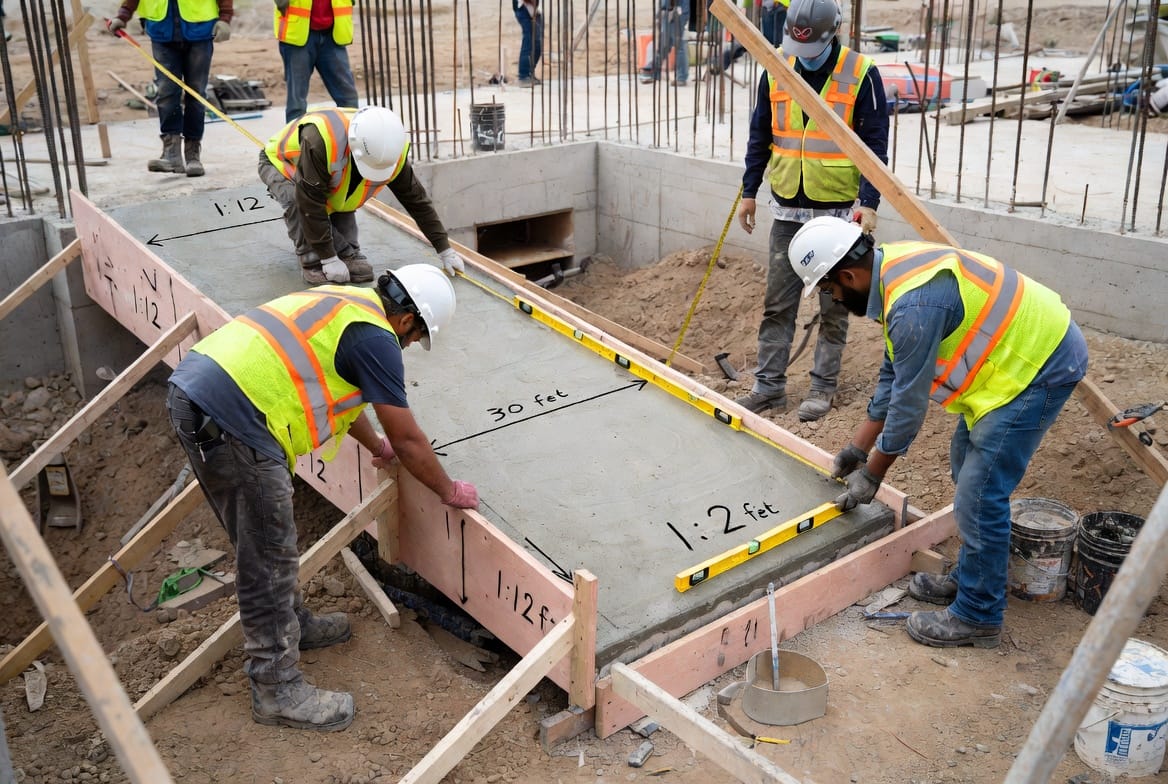
Handrails are required whenever any ramp segment rises more than 6 inches. They provide critical support for users who need assistance with balance or propulsion and serve as a safety barrier against slips or tip-overs.
Handrail Specifications That Pass Inspection
- Height must measure 34 to 38 inches from the ramp surface to the top of the gripping surface.
- Handrails are required on both sides of the ramp.
- Extensions of at least 12 inches are needed beyond the top and bottom of each ramp segment, with ends rounded or returned safely to the ground or wall.
- Gripping surface diameter or shape must allow secure grasp (typically 1¼ to 2 inches).
- Minimum 1½-inch clearance from adjacent walls or surfaces is mandatory.
For concrete ramps, handrails are usually mounted to posts anchored directly into the concrete or attached to adjacent structures. Choosing corrosion-resistant materials ensures the handrails last as long as the concrete itself. Correct installation from day one eliminates one of the most frequent causes of failed inspections and gives every user confidence that the ramp was built with their safety in mind.
Edge Protection, Surface Texture, and Supporting Safety Features
Beyond the four core requirements, several additional elements complete a fully compliant and user-friendly ramp:
- Edge protection — A minimum 4-inch curb or barrier prevents wheelchair wheels from accidentally leaving the ramp surface where a drop-off exists.
- Slip-resistant finish — Concrete can be finished with a consistent light broom texture that provides reliable traction in wet or dry conditions without being abrasive to wheels.
- Cross slope — Maximum 1:48 (about 2%) allows drainage while keeping the surface stable.
- Smooth transitions — Level, even connections at top and bottom prevent jarring bumps.
- Drainage planning — Proper grading around the ramp prevents water accumulation that could create hazards or damage the concrete over time.
All of these features integrate naturally during quality concrete construction, resulting in a cohesive, low-maintenance structure.
Common Pitfalls That Undermine Compliance and Safety
Many ramp projects encounter problems that could have been avoided with proper knowledge and execution. The most frequent issues include:
- Building a slope steeper than the 1:12 maximum due to space constraints or measurement errors.
- Failing to maintain 36-inch clear width after accounting for handrails and edge features.
- Omitting required intermediate landings or making them too small.
- Installing handrails at incorrect heights or without proper extensions.
- Using concrete mixes or finishing techniques that lead to cracking, spalling, or slippery surfaces over time.
- Ignoring site drainage, resulting in standing water and accelerated deterioration.
Each of these mistakes creates safety hazards, triggers failed inspections, and often requires expensive demolition and reconstruction. The reassuring truth is that every one of them is preventable when experienced ADA-compliant concrete professionals manage the project from design through final inspection.
Why Professional Concrete Expertise Delivers Superior Results
Choosing specialists in accessible concrete construction brings advantages that go far beyond basic code compliance. These teams understand how mix design, reinforcement, forming precision, and curing practices directly affect long-term performance. They select air-entrained, fiber-reinforced concrete formulated for exterior durability and finish surfaces with the exact texture needed for safe wheelchair travel.
The outcome is a ramp that not only passes inspection immediately but continues to meet every ADA requirement for decades with minimal maintenance. Professional crews can also incorporate aesthetic enhancements—colored concrete, subtle patterns, or integrated lighting—that turn a functional necessity into an attractive architectural feature.
For property owners managing multiple locations or tight timelines, working with experienced partners simplifies permitting, inspection coordination, and documentation, providing complete peace of mind from start to finish.
Moving Forward with Confidence: Your Next Steps
If you are ready to build or upgrade a concrete wheelchair ramp, begin with a thorough site assessment by professionals who specialize in ADA requirements. They will evaluate existing conditions, discuss your specific rise and space limitations, and develop a design that satisfies every specification while optimizing cost and appearance.
During construction you can expect meticulous formwork, accurate reinforcement placement, precise concrete placement and finishing, secure handrail installation, and final grading that ensures proper drainage. Clear communication throughout the process keeps you informed and confident that the finished ramp will exceed expectations.
Conclusion: Build Ramps That Meet Code and Welcome Everyone
A properly designed and constructed concrete wheelchair ramp that fulfills all ADA slope and landing requirements is one of the most meaningful improvements you can make to any property. By respecting the 1:12 slope, providing landings every 30 feet, maintaining 36-inch minimum width, and installing correct handrails, you create safe, dignified access that serves users today and for generations to come.
With expert concrete craftsmanship, these standards become opportunities to deliver something exceptional—durable, attractive, and genuinely inclusive.
Ensure Full ADA Compliance with Professional Concrete Ramps