The Concrete Floating Slab: Foundation for Sheds and Garages

When planning a new shed, garage, or small outbuilding, choosing the right foundation is one of the most critical decisions homeowners face. A concrete floating slab offers a practical, cost-effective solution that delivers reliable performance without the complexity of traditional deep foundations. This guide explores everything you need to know about floating slabs, from their design and construction to their many practical applications. Whether you're a DIY enthusiast or working with professionals, understanding this foundation type helps ensure your project stands strong for decades.
Ready for a Durable Shed or Garage Foundation? Call Now!
What Exactly Is a Concrete Floating Slab?
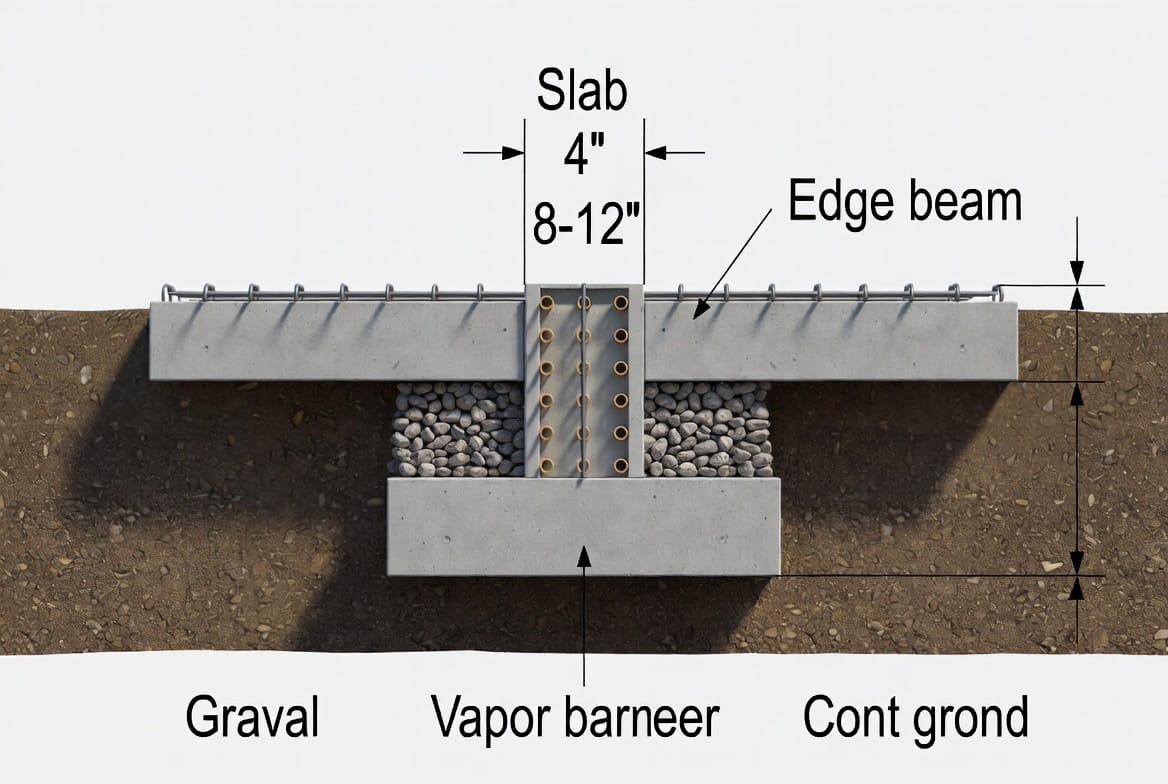
A floating slab, also known as a monolithic slab, is a single-pour concrete foundation that integrates the slab and footings into one continuous structure. Unlike conventional foundations that require separate footings dug below the frost line, a floating slab "floats" on the prepared soil surface with thickened perimeter edges that act as an integrated beam for added strength.
Key characteristics include:
- Monolithic pour: The entire foundation is poured at once.
- Thickened edges: The perimeter is typically 8 to 12 inches thick while the main slab area remains around 4 inches.
- No separate footings: The thickened edges provide the necessary bearing capacity directly on compacted soil or a gravel base.
- Reinforcement: Usually includes rebar or wire mesh concentrated in the edge beams for tensile strength.
This design makes floating slabs particularly suitable for lighter structures where soil conditions are stable and frost heave risks are managed through proper site preparation.
Why Choose a Floating Slab Foundation?
Homeowners and builders increasingly turn to floating slabs for good reason. They balance affordability, speed, and durability in ways that more elaborate foundations often cannot match.
Major benefits include:
- Lower construction costs: Fewer excavation requirements and less concrete and labor compared to full basements or stem-wall foundations.
- Faster installation: A properly prepared site can have a floating slab ready in days rather than weeks.
- Reduced material needs: Optimized concrete usage with material concentrated where structural demands are highest.
- Versatility: Ideal for a wide range of outbuildings in many climates when engineered correctly.
- Simpler maintenance: Easy access for utilities and straightforward repairs if needed.
Of course, floating slabs aren't perfect for every situation. They work best on stable, well-drained soils and for structures that don't require a basement or significant below-grade space. Professional site evaluation ensures the foundation matches your specific property conditions.
How a Floating Slab Is Constructed
Building a successful floating slab requires careful planning and execution. Here's the typical step-by-step process professionals follow:
- Site Preparation: Clear vegetation, level the area, and excavate to create a stable base. This often includes adding and compacting a gravel subbase for drainage.
- Formwork: Install wooden or metal forms that define the slab perimeter and create the thickened edge profile.
- Reinforcement Placement: Position rebar or wire mesh, with extra reinforcement in the edge beams where bending stresses are highest.
- Utility Rough-Ins: Install plumbing, electrical conduits, or anchor bolts before the pour.
- Concrete Pour: Deliver and finish the concrete in one monolithic pour, ensuring proper consolidation around reinforcement.
- Curing and Finishing: Protect the slab during the critical curing period and apply desired surface treatments.
Proper soil compaction and moisture control during preparation are essential for long-term performance. Experienced crews know how to achieve the right consistency and finishing techniques that prevent cracking and ensure a smooth, level surface.
Reinforcement Strategies for Strength and Durability
The strength of a floating slab comes largely from strategic reinforcement. The edge beam acts like a structural ring beam that resists soil movement and distributes loads effectively.
Common reinforcement approaches include:
- Rebar grids: #4 or #5 rebar placed in a grid pattern within the thickened edges.
- Wire mesh: 6x6 W1.4/W1.4 or heavier fabric across the slab area.
- Fiber additives: Synthetic or steel fibers mixed into the concrete for additional crack control.
- Post-tensioning: In some larger applications, cables are used for extra tension resistance.
These elements work together to create a foundation capable of supporting sheds, garages, and workshops while accommodating minor soil shifts without significant damage.
Ideal Applications for Floating Slab Foundations
Floating slabs shine in numerous residential and light commercial scenarios. They provide an excellent base for structures that need a solid, level floor without excessive cost.
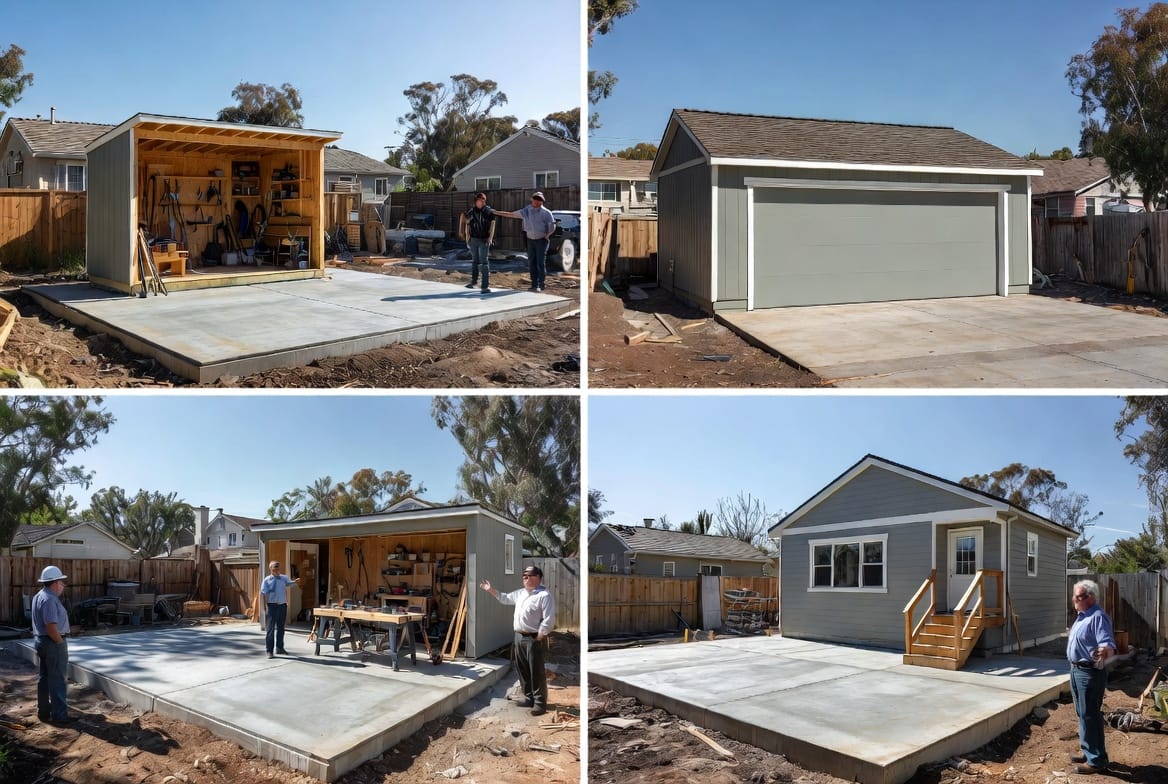
Common uses include:
- Garden sheds and storage buildings: A level, durable floor protects tools and supplies from moisture.
- Detached garages: Provides a strong platform for vehicle storage and workspace.
- Workshops and hobby buildings: Ideal for creating a dedicated space for woodworking, crafting, or small business activities.
- Small additions and expansions: Perfect for sunrooms, home offices, or pool houses.
- Covered patios and pavilions: When properly engineered, floating slabs support light roof structures.
In each case, the floating slab delivers reliable performance while keeping project budgets manageable.
Design Considerations and Engineering Best Practices
Successful floating slab projects begin with thorough planning. Factors such as soil type, expected loads, local building codes, and climate conditions all influence the final design.
Professional engineers typically specify:
- Appropriate slab and edge beam dimensions based on structure size and use.
- Proper reinforcement schedules tailored to local conditions.
- Drainage solutions to direct water away from the foundation.
- Vapor barriers and insulation where needed for comfort and energy efficiency.
Working with licensed contractors who understand local requirements helps ensure your floating slab meets all safety standards and performs reliably for years.
Potential Challenges and How to Address Them
Like any foundation type, floating slabs have considerations to keep in mind. Frost heave in colder climates can be managed with adequate gravel base depth and perimeter insulation. Soil expansion in clay-heavy areas requires proper site preparation and sometimes additional reinforcement.
Regular inspections and prompt attention to any settling or cracking help maintain the foundation's integrity. Most issues are minor and easily addressed when caught early.
Long-Term Maintenance for Your Floating Slab
Maintaining a concrete floating slab is straightforward. Key practices include:
- Keeping gutters and downspouts directing water away from the foundation edges.
- Sealing the concrete surface periodically to resist stains and moisture.
- Monitoring for any signs of movement or cracking.
- Addressing vegetation growth near the slab promptly.
With basic care, a well-built floating slab can provide decades of trouble-free service.
Cost-Effectiveness and Project Planning
One of the strongest advantages of a floating slab remains its cost-effectiveness. Compared to alternatives, you often save significantly on excavation, materials, and labor while still getting a professional-grade foundation.
When budgeting your project, consider:
- Site preparation requirements.
- Concrete volume and reinforcement needs.
- Local permit and inspection fees.
- Professional installation versus DIY approaches.
Investing in quality workmanship from the start prevents expensive repairs later. Many homeowners find that a properly installed floating slab offers excellent return on investment through durability and low maintenance.
Why Professional Installation Matters
While some experienced DIYers tackle smaller slabs, most floating slab projects benefit from professional expertise. Licensed crews bring specialized equipment, knowledge of local codes, and the ability to handle unexpected site conditions safely and efficiently.
They ensure proper:
- Compaction testing.
- Formwork alignment.
- Concrete placement and finishing.
- Quality control throughout the process.
This expertise gives you confidence that your new shed, garage, or workshop rests on a solid, code-compliant foundation.
Real-World Success Stories
Across many communities, homeowners have transformed their properties using floating slab foundations. From compact backyard sheds that organize seasonal items to spacious garages that protect vehicles and provide workspace, these foundations deliver consistent results. The combination of practical design and reliable performance makes floating slabs a popular choice for practical property improvements.
Final Thoughts: A Smart Foundation Choice
A concrete floating slab stands out as a cost-effective, efficient foundation option for sheds, garages, workshops, and small buildings. Its monolithic design with reinforced thickened edges provides the stability these structures need while minimizing complexity and expense.
If you're considering a new outbuilding or addition, a floating slab may be the ideal solution for your needs. Professional assessment of your site ensures the best possible outcome tailored to your property.
Ready to build on a strong foundation? Contact our experienced team today to discuss your project and explore how a floating slab can support your vision.
Cost-Effective Concrete Foundation Solutions – Call Today