The Concrete Pumper vs. Wheelbarrow: When to Use Professional Pumping
Choosing the right concrete delivery method can determine the success of your entire project. Whether you are building a new driveway, pouring a patio foundation, or completing a major renovation, concrete pumping and the traditional wheelbarrow approach each serve distinct purposes. Understanding when professional concrete pumping services become the smarter, more efficient choice helps you avoid unnecessary delays, labor strain, and unexpected costs.
Need Professional Concrete Pumping? Call Us Today!
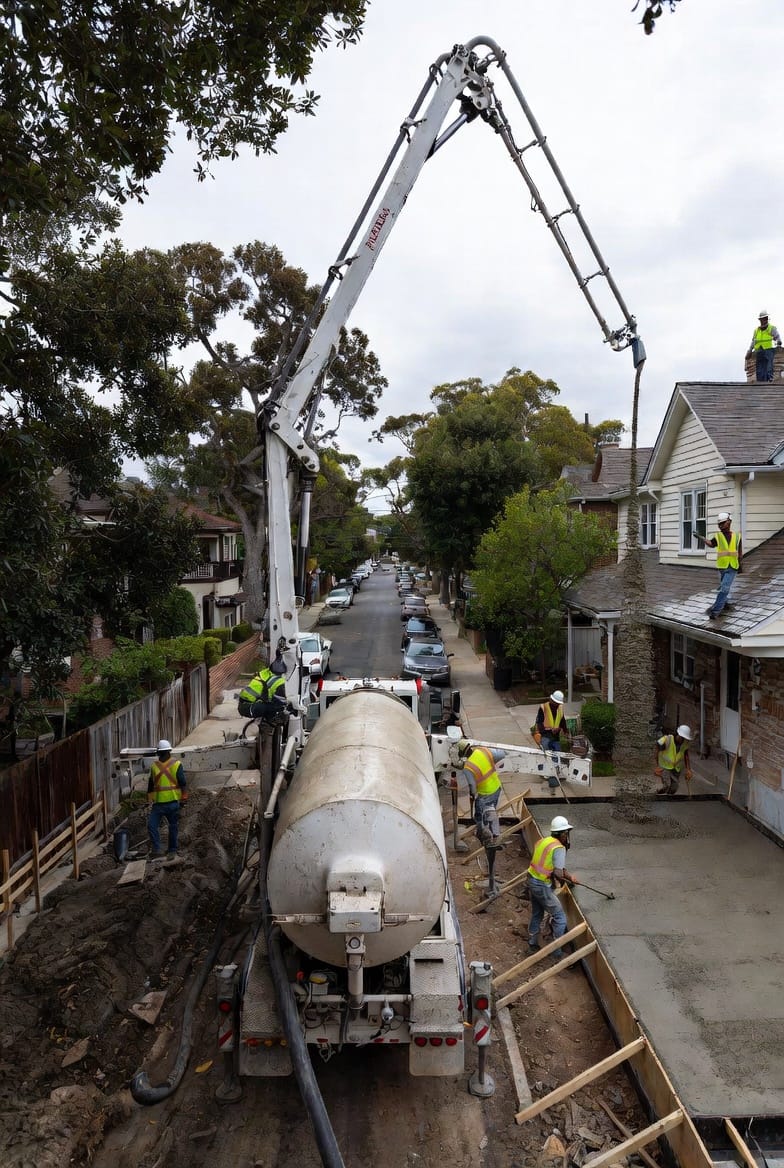
Ready-mix concrete arrives at your site in a standard truck, but getting it from the truck to the exact pour location is where the real decisions begin. Direct pouring works only when the truck can back right up to the forms. For everything else, you must choose between manual transport or advanced concrete pumper technology. Professional pumping uses high-pressure hoses and extendable booms to move concrete precisely, quickly, and with minimal physical effort.
This comprehensive guide explains the key differences, highlights the situations where concrete pumping proves essential, and delivers a clear cost-benefit analysis. By the end, you will feel confident selecting the method that best protects your timeline, budget, and final results.
Understanding Your Concrete Delivery Options
Concrete delivery methods fall into three main categories. The first is direct chute pouring from the ready-mix truck itself. This option is fast and economical when the truck can reach the pour site directly.
The second is the classic wheelbarrow approach. Workers load concrete into wheelbarrows and manually transport it across the site. This method remains popular for very small jobs or perfectly flat, short-distance pours because it requires no extra equipment.
The third—and often most powerful—option is professional concrete pumping. Specialized pump trucks use powerful hydraulic systems to push concrete through hoses or booms that can extend dozens of feet in any direction. Concrete pumping services deliver the mix exactly where it is needed, even when terrain, elevation, or obstacles make other methods impractical.
Each method has strengths, yet knowing their limitations helps you choose wisely and complete your project with confidence.
Limitations of the Traditional Wheelbarrow Method
The wheelbarrow method feels familiar and budget-friendly at first glance. It requires only basic tools and a willing crew. For small residential slabs or flat driveways, it can work well.
However, several practical limitations quickly appear on real job sites. Manual transport demands significant physical labor, which increases fatigue and the risk of injury over time. Each wheelbarrow holds only a limited volume, so large pours stretch into hours or even days of repetitive trips.
Terrain challenges compound the issue. Sloped lots, soft ground, narrow pathways, or landscaping obstacles make pushing a heavy, loaded wheelbarrow unstable and inefficient. Concrete begins to set during transport, which can lead to inconsistent quality and cold joints in the finished product.
In short, while the wheelbarrow offers low upfront cost, it often results in higher labor expenses, longer project timelines, and greater physical strain on your team.
The Advantages of Professional Concrete Pumping
Concrete pumping transforms challenging pours into smooth, controlled operations. The technology allows a single operator to direct concrete exactly where it is needed, reducing the number of workers required on site.
Pumps maintain consistent flow and pressure, preserving the concrete mix integrity from truck to forms. This leads to stronger, more uniform results with fewer air pockets or segregation issues.
Speed is another major benefit. Professional concrete pumper equipment can place dozens of cubic yards per hour—far faster than manual methods. Crews finish sooner, which means less exposure to weather variables and quicker project completion.
Safety improves dramatically as well. Workers spend less time carrying heavy loads across uneven ground, lowering the chance of back injuries or slips. The reassuring reliability of concrete pumping services lets you focus on quality finishing rather than constant material movement.
When Concrete Pumping Becomes Necessary
Certain project conditions make concrete pumping not just preferable, but essential. Recognizing these scenarios early prevents costly mistakes and keeps your schedule on track.
Hard-to-Access Areas Require Professional Solutions
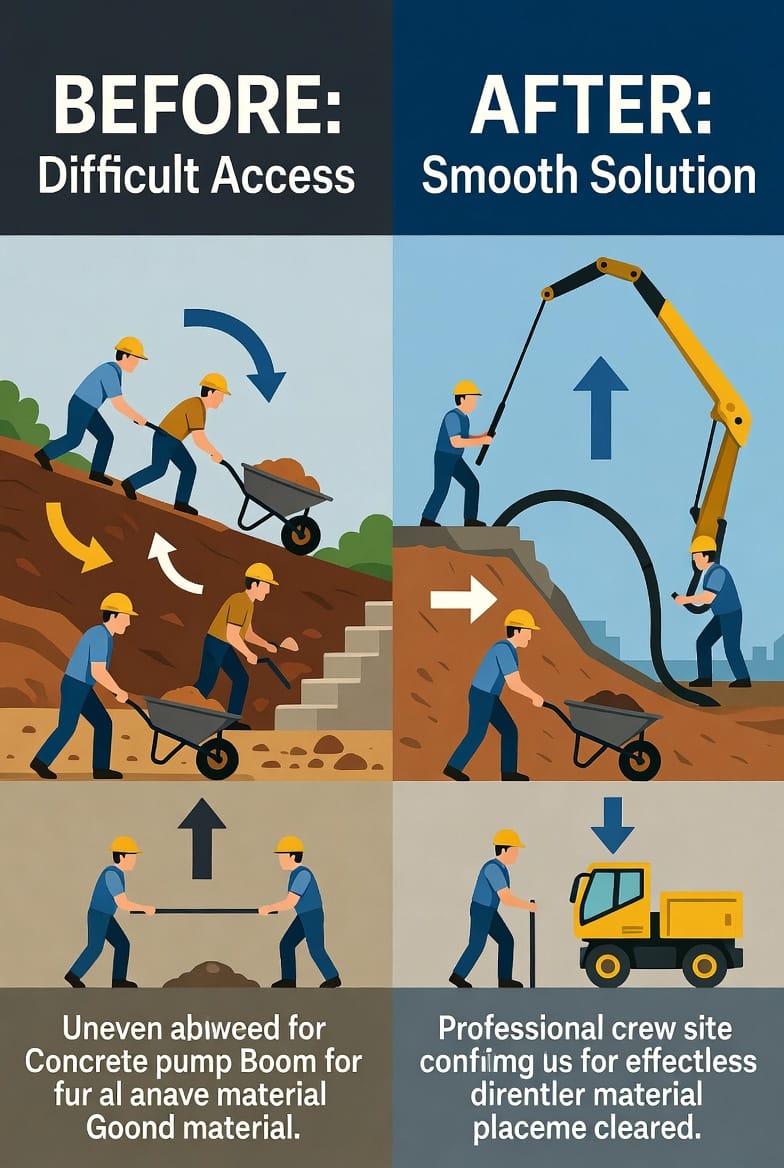
Many residential and commercial sites present physical barriers. Fenced yards, mature landscaping, steep slopes, or tight urban lots prevent the ready-mix truck from getting close. In these situations, the wheelbarrow method quickly becomes exhausting and inefficient.
A concrete pumper boom can reach over obstacles, across fences, or around corners with ease. Your crew stays safe on stable ground while concrete flows precisely into the forms. This access advantage eliminates the need to tear down temporary paths or risk damaging existing features.
Long Distances from the Truck Demand Efficient Delivery
When the pour site sits hundreds of feet from the street, manual transport turns into a marathon. Each wheelbarrow trip consumes time and energy, and the concrete may begin setting before it reaches the forms.
Professional concrete pumping bridges long distances effortlessly. Hoses or booms extend the reach without compromising quality or speed. You maintain schedule momentum even on expansive properties or commercial developments.
Second-Story Pours and Elevated Work
Elevated concrete work—such as second-story decks, elevated slabs, or stair landings—creates unique challenges. Carrying concrete up stairs or using ramps with wheelbarrows is slow, dangerous, and labor-intensive.
Concrete pumping services solve this cleanly. The boom reaches upper levels directly, delivering fresh mix right into the forms. Workers stay focused on proper placement and finishing rather than hazardous hauling.
Large Projects Benefit from Scale and Speed
Volume-heavy pours, such as warehouse floors, parking lots, or multi-unit foundations, overwhelm manual methods. The sheer quantity of concrete required makes repeated wheelbarrow trips impractical and costly.
Professional concrete pumper equipment handles large volumes continuously. Projects finish in a fraction of the time, reducing labor costs and allowing faster progression to the next construction phase. The efficiency gain often offsets the equipment fee while delivering superior results.
Cost-Benefit Analysis of Concrete Pumping vs Wheelbarrow
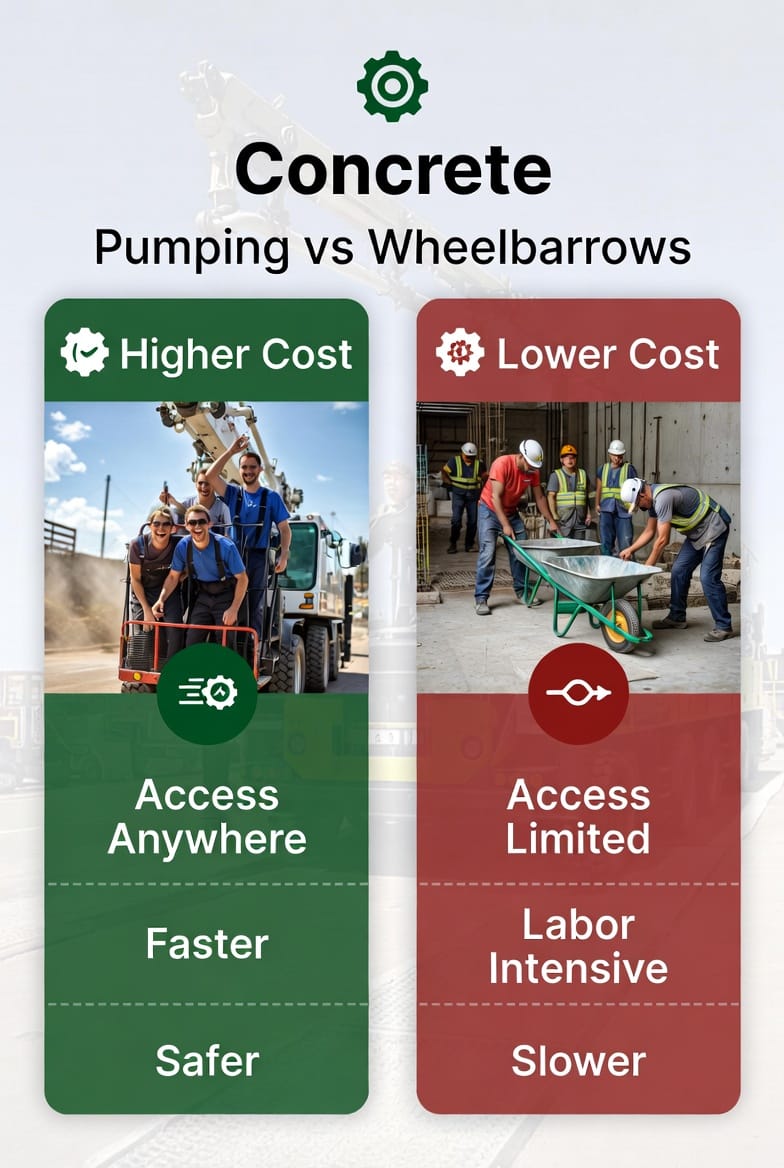
Evaluating costs requires looking beyond the initial invoice. Concrete pumping carries a higher upfront fee because of specialized equipment and trained operators. However, the long-term savings frequently make it the more economical choice.
Consider labor. A wheelbarrow crew may need six or more workers for an entire day, while a pump crew often completes the same job with two or three people in just a few hours. Reduced man-hours translate directly into lower payroll expenses.
Time savings also matter. Faster placement means the entire project moves forward sooner, potentially avoiding weather delays or rental equipment extensions.
Quality and risk factors add further value. Professional pumping minimizes concrete waste, segregation, and rework. It also lowers injury risk, which can reduce insurance claims and downtime.
For smaller, simple jobs the wheelbarrow may still win on pure cost. Yet for most mid-size and larger projects, the speed, safety, and access benefits of concrete pumping deliver a clear positive return on investment.
Safety, Quality, and Long-Term Reliability
Beyond cost and speed, concrete pumping enhances overall project safety and durability. Reduced manual handling means fewer opportunities for accidents. Consistent delivery preserves the designed mix proportions, resulting in stronger finished concrete.
Your team works more efficiently and with greater confidence, knowing the material arrives fresh and ready. This peace of mind is invaluable when deadlines and quality standards matter most.
How to Decide Which Method Fits Your Project
Assess your site conditions first. Measure distance from the truck to the pour, evaluate terrain and elevation, and calculate total volume required.
If any of the following apply—difficult access, long distances, elevated work, or large volume—professional concrete pumping services will likely save you time and money.
Consult with experienced providers early. They can visit the site, review plans, and recommend the most appropriate solution tailored to your specific needs.
Planning Tips for a Successful Concrete Pour
Prepare forms and reinforcement in advance. Schedule the pump or ready-mix delivery during optimal weather windows. Have your crew ready with finishing tools so placement flows seamlessly into completion.
Communicate clearly with your concrete pumping provider about exact pour locations and any site-specific obstacles. Proper planning ensures everything runs smoothly from start to finish.
Conclusion: Get Concrete Where You Need It Efficiently
The choice between a concrete pumper and a wheelbarrow ultimately comes down to your project’s unique demands. For simple, small-scale, easily accessible pours, the traditional method may suffice. Yet when hard-to-access areas, long distances, second-story work, or large volumes enter the picture, professional concrete pumping delivers unmatched efficiency, safety, and quality.
You deserve a solution that works with your site rather than against it. Professional pumping services make complex pours straightforward, protect your investment, and help your project succeed on time and on budget.
Ready to experience the difference? Contact our team today to discuss concrete pumping services for your next project.
Save Time & Labor with Concrete Pumping – Call Now