The Concrete Pressure Washing: Cleaning Oil and Stains
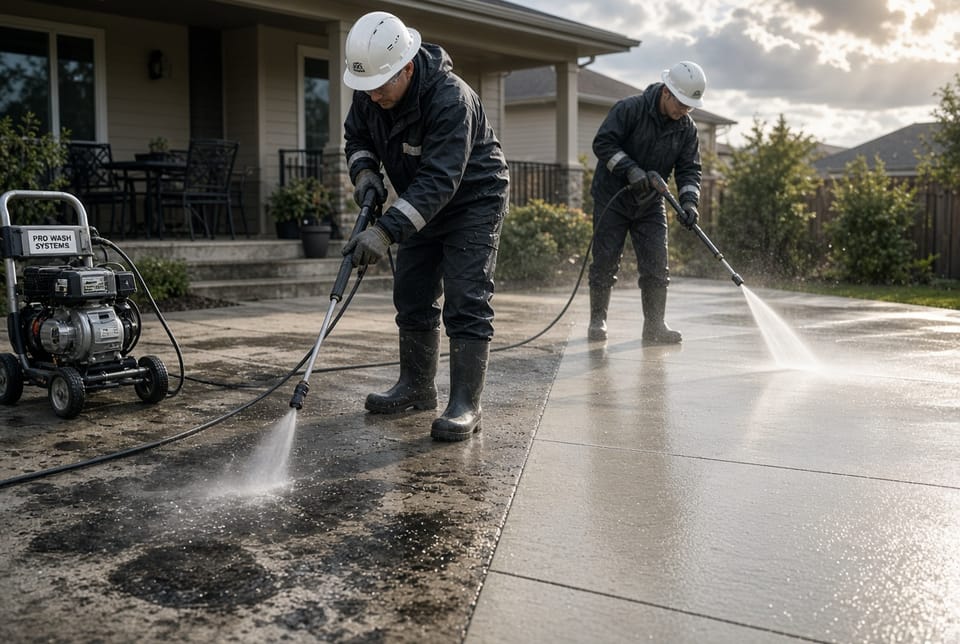
Maintaining concrete driveways and patios is essential for preserving both appearance and structural integrity. Over time, these surfaces collect oil stains, grease, tire marks, dirt, and environmental debris that not only look unsightly but can also lead to long-term deterioration if left untreated. Concrete pressure washing stands out as one of the most effective maintenance methods for removing these stubborn contaminants. When performed correctly, it restores the original texture and color of the concrete while extending its lifespan.
Get Your Concrete Clean & Stain-Free Today – Call Now!
This comprehensive guide focuses exclusively on maintenance practices for concrete driveways and patios. You will learn the proper techniques for using pressure washing combined with degreasers, the maximum safe pressure settings, essential safety precautions, and proven strategies to keep surfaces looking their best year after year. Whether you handle the work yourself or hire professionals, understanding these principles ensures lasting results without risking damage to the concrete or surrounding areas.
Understanding Why Concrete Needs Regular Maintenance
Concrete is a porous material. Oil stains and other petroleum-based residues penetrate the surface rather than sitting on top. Once absorbed, they create dark spots that worsen with sunlight and traffic. Rainwater can carry additional contaminants deeper into the pores, accelerating wear. Regular concrete pressure washing interrupts this cycle by lifting embedded dirt and oils before they cause permanent discoloration or surface breakdown.
Driveways endure constant vehicle traffic, while patios face foot traffic, outdoor cooking spills, and seasonal debris. Both benefit from scheduled cleaning. Neglecting maintenance often leads to costly repairs later, such as sealing or resurfacing. By incorporating pressure washing into a routine maintenance plan, homeowners protect their investment and maintain a clean, inviting outdoor environment.
Preparing the Surface Before Pressure Washing
Proper preparation is the foundation of successful concrete pressure washing. Begin by clearing the area completely. Remove vehicles, outdoor furniture, plants, and any loose items. Sweep away leaves, twigs, and loose dirt so the pressure washer can focus on deeper stains.
Inspect the concrete for cracks or damaged sections. Address minor repairs first, as high-pressure water can worsen existing issues. Cover nearby plants, electrical outlets, and delicate surfaces with plastic sheeting or tarps. Wet surrounding vegetation thoroughly beforehand so residual cleaning solutions dilute safely.
Identify the types of stains present. Oil stains require specialized treatment, while general dirt responds well to water alone. Mark heavily soiled zones for targeted attention. This preparatory phase reduces overall cleaning time and improves results dramatically.
Selecting the Right Equipment and Pressure Settings
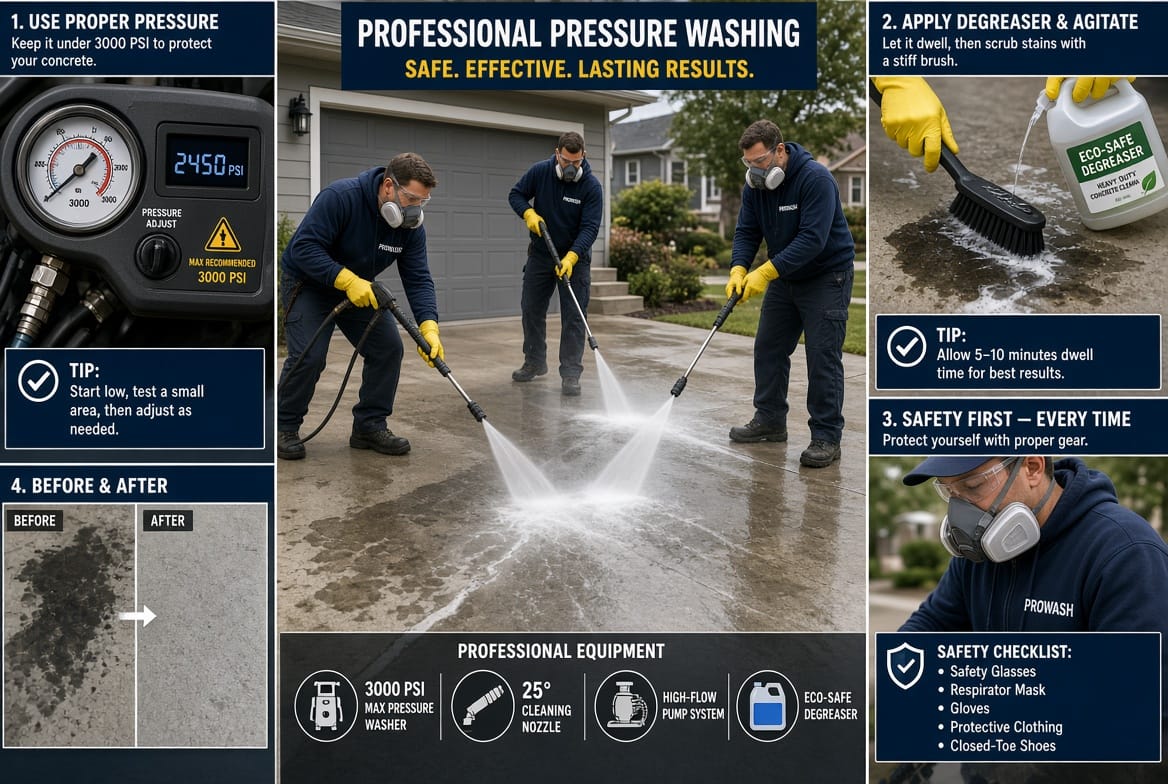
Choosing appropriate equipment prevents damage while maximizing cleaning power. For residential concrete driveways and patios, a gas-powered or electric pressure washer rated between 2000 and 3000 PSI max is ideal. Never exceed 3000 PSI, as higher pressures can etch the surface, create pitting, or strip away protective sealants.
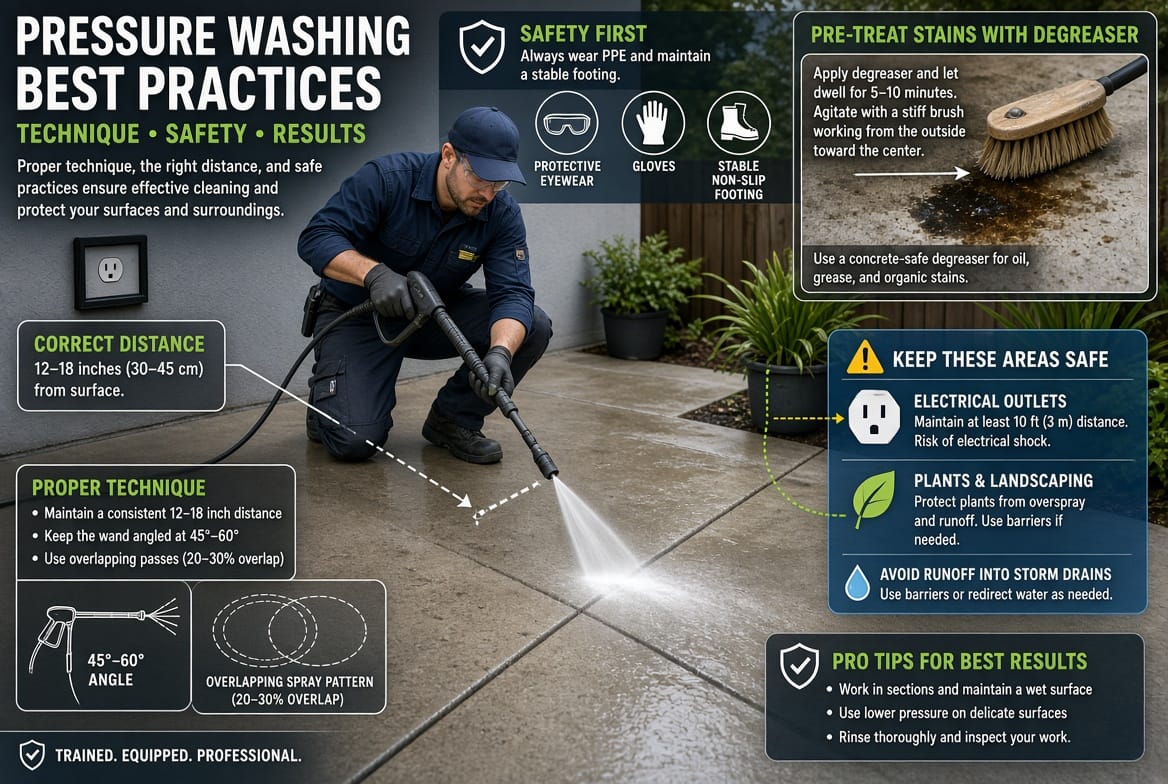
Use a 25-degree or 40-degree nozzle for general cleaning. A narrower 15-degree tip may be reserved for the toughest oil stains, but apply it cautiously and keep the wand moving constantly. Maintain a consistent distance of 8 to 12 inches from the surface. Starting farther away and gradually moving closer allows better control.
Hot water pressure washers offer superior performance on greasy residues because heat softens oils. Cold water units still work effectively when paired with quality degreasers. Always check the manufacturer’s guidelines for your specific machine and never operate equipment beyond its recommended limits.
The Critical Role of Degreasers in Removing Oil Stains
Pressure washing alone often fails to eliminate deeply absorbed oil stains. Degreasers break down petroleum molecules so water can lift them away. Select a concrete-safe, biodegradable degreaser formulated for outdoor use. Avoid acidic or overly aggressive formulas that can discolor or weaken the surface.
Apply the degreaser generously to stained areas using a pump sprayer or brush. Allow it to dwell for 10 to 15 minutes, but do not let it dry completely. For older or heavier stains, agitate the area gently with a stiff-bristle brush. This mechanical action helps the chemical penetrate further.
After the dwell time, rinse thoroughly with the pressure washer, working from the highest point downward so dirty water flows away cleanly. Multiple applications may be necessary for severe contamination. Always follow product instructions regarding dilution ratios and safety handling.
Step-by-Step Process for Cleaning Driveways and Patios
Follow this systematic approach for consistent, professional-quality results:
- Clear and prepare the entire work area as described earlier.
- Pre-treat all visible oil stains and grease spots with degreaser.
- Set the pressure washer to no more than 3000 PSI and select an appropriate nozzle.
- Begin at one end of the driveway or patio and work in overlapping strokes, moving the wand in a steady side-to-side motion.
- Keep the spray at a consistent angle of approximately 45 degrees to avoid forcing water into expansion joints.
- Rinse each section completely before moving to the next to prevent streaking.
- Pay special attention to high-traffic zones and edges where dirt accumulates.
- After the full surface is cleaned, perform a final rinse with clean water to remove any remaining residue.
- Allow the concrete to dry fully before resealing if desired.
Working methodically ensures even cleaning and reduces the risk of missing spots. For large driveways, divide the area into manageable sections and complete one before starting another.
Essential Safety Precautions During Pressure Washing
Safety must remain the top priority throughout any concrete pressure washing project. High-pressure water can cause serious injury if mishandled. Always wear protective eyewear, closed-toe shoes with non-slip soles, long pants, and chemical-resistant gloves. Hearing protection is advisable when using gas-powered units for extended periods.
Never point the wand at people, animals, or windows. The force can cause lacerations or break glass. Maintain firm control of the trigger and wand at all times; sudden pressure surges can knock users off balance. Keep children and pets away from the work zone until the surface has dried and equipment is stored.
Be mindful of electrical hazards. Avoid spraying near outlets, light fixtures, or power cords. If using an electric pressure washer, ensure the cord is rated for outdoor use and protected by a ground-fault circuit interrupter. When working on slopes or wet surfaces, move carefully to prevent slips.
Chemical safety is equally important. Read all degreaser labels thoroughly. Provide adequate ventilation if working in enclosed patio areas, and wash hands thoroughly after handling products. Dispose of rinse water according to local regulations, especially if it contains oil residues.
Avoiding Common Mistakes That Damage Concrete
Even experienced users sometimes make errors that compromise results. One frequent mistake is using excessive pressure. Exceeding 3000 PSI can scar the surface permanently. Another error is holding the wand too close or remaining stationary over one spot, which creates etched lines or uneven cleaning.
Skipping the degreaser step on oil stains leads to incomplete removal and rapid reappearance of marks. Applying chemicals on hot surfaces in direct sunlight can cause them to dry too quickly and leave residue. Failing to rinse thoroughly allows cleaning agents to remain and potentially attract new dirt.
Overlooking surrounding landscaping often results in chemical burn on plants. Always protect greenery and rinse foliage after the job if accidental overspray occurs. Finally, neglecting regular maintenance between major cleanings allows stains to set deeper, making future efforts more difficult.
Long-Term Maintenance Strategies for Clean Concrete
After a thorough concrete pressure washing, establish a simple ongoing routine. Sweep driveways and patios weekly to remove loose debris. Address fresh spills immediately with absorbent materials and a mild cleaner to prevent penetration.
Schedule a full pressure-washing session at least once or twice per year, depending on traffic and climate. In regions with heavy rainfall or frequent vehicle use, more frequent cleaning may be beneficial. Consider applying a quality concrete sealer after the surface has dried completely. Sealants reduce porosity and make future stain removal easier.
Monitor expansion joints and edges for weed growth or debris buildup. Keep these areas clear so water drains properly and cleaning remains efficient. Document cleaning dates and note any recurring problem spots to refine your maintenance plan over time.
Environmental Considerations and Responsible Practices
Modern concrete pressure washing emphasizes eco-friendly methods. Choose biodegradable degreasers that break down safely. Direct rinse water away from storm drains whenever possible, especially if oil residues are present. Some municipalities require containment of contaminated runoff; check local guidelines before beginning.
Using the lowest effective pressure and the correct nozzle conserves water while still achieving excellent results. Hot-water units, when available, reduce the need for harsh chemicals. These responsible practices protect both the environment and the longevity of the concrete itself.
When Professional Assistance Becomes the Best Choice
While many homeowners successfully manage routine concrete pressure washing, certain situations call for experienced technicians. Extremely large surfaces, multi-level patios, or severe contamination may exceed the capacity of consumer-grade equipment. Professionals bring commercial machines, specialized detergents, and advanced techniques that deliver superior outcomes in less time.
They also carry proper insurance and understand local disposal requirements. If physical limitations, time constraints, or uncertainty about equipment settings exist, contacting trained specialists provides peace of mind and guarantees consistent quality.
Final Thoughts on Preserving Your Concrete Surfaces
Consistent maintenance through concrete pressure washing keeps driveways and patios free of oil stains and other contaminants. By respecting the 3000 PSI max limit, pairing water power with effective degreasers, and following strict safety precautions, you protect both the surface and everyone involved in the process. Regular attention prevents minor issues from becoming major repairs and maintains the clean, polished appearance that enhances curb appeal.
Keep concrete clean with pressure washing. For professional assistance or questions about the best approach for your property, call (855) 321-3655 today..
Call Today for Expert Driveway & Patio Pressure Washing