The Concrete Pier and Footing: Proper Foundations for Decks and Additions
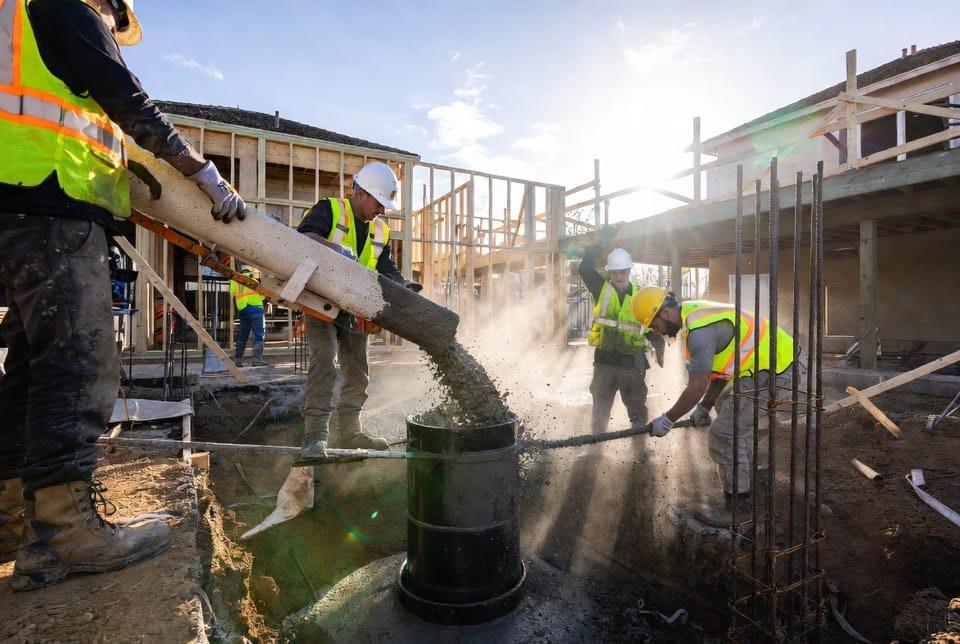
When building a deck or home addition, the most critical element is often the one you never see once the project is complete: the concrete pier and footing. These structural concrete elements form the unseen backbone that supports everything above ground. Without them, even the most beautifully designed structure can shift, crack, or fail over time. At the heart of every safe, long-lasting outdoor living space or extension lies a properly engineered foundation.
Build on Rock-Solid Foundations – Call Now!
Concrete piers and footings are engineered to transfer the weight of your deck or addition deep into stable soil while resisting the forces of nature. Whether you live in a region with freezing winters or expansive clay soils, investing in the right foundation design ensures decades of worry-free performance. This comprehensive guide walks you through every essential detail – from footing depth requirements to reinforcement techniques and mandatory inspections – so you can move forward with confidence.
Understanding these fundamentals not only protects your investment but also delivers peace of mind. Strong foundations mean stronger structures, and proper planning today prevents costly repairs tomorrow. Let’s explore exactly what makes a concrete pier and footing system the gold standard for decks and additions.
Understanding Concrete Piers and Footings
Concrete piers are vertical columns of structural concrete that rise from a wider base called a footing. Together, they create a stable platform that elevates your structure above ground level, improving drainage and reducing moisture-related issues. Unlike shallow slabs, pier-and-footing systems excel in areas with frost heave, poor surface soil, or uneven terrain.
The footing spreads the load over a larger area of soil, while the pier provides vertical support and elevation. This design is particularly ideal for decks, screened porches, room additions, and even small outbuildings. When installed correctly, these elements work in harmony to create a foundation that can handle everything from seasonal soil movement to heavy snow loads or wind forces.
Homeowners often underestimate the importance of this phase, yet engineers and building professionals know it accounts for the majority of long-term structural success. A well-designed concrete pier and footing system is reassuringly permanent – once cured, it becomes an unyielding anchor that protects your project for generations.
Footing Depth Requirements: Going Below the Frost Line
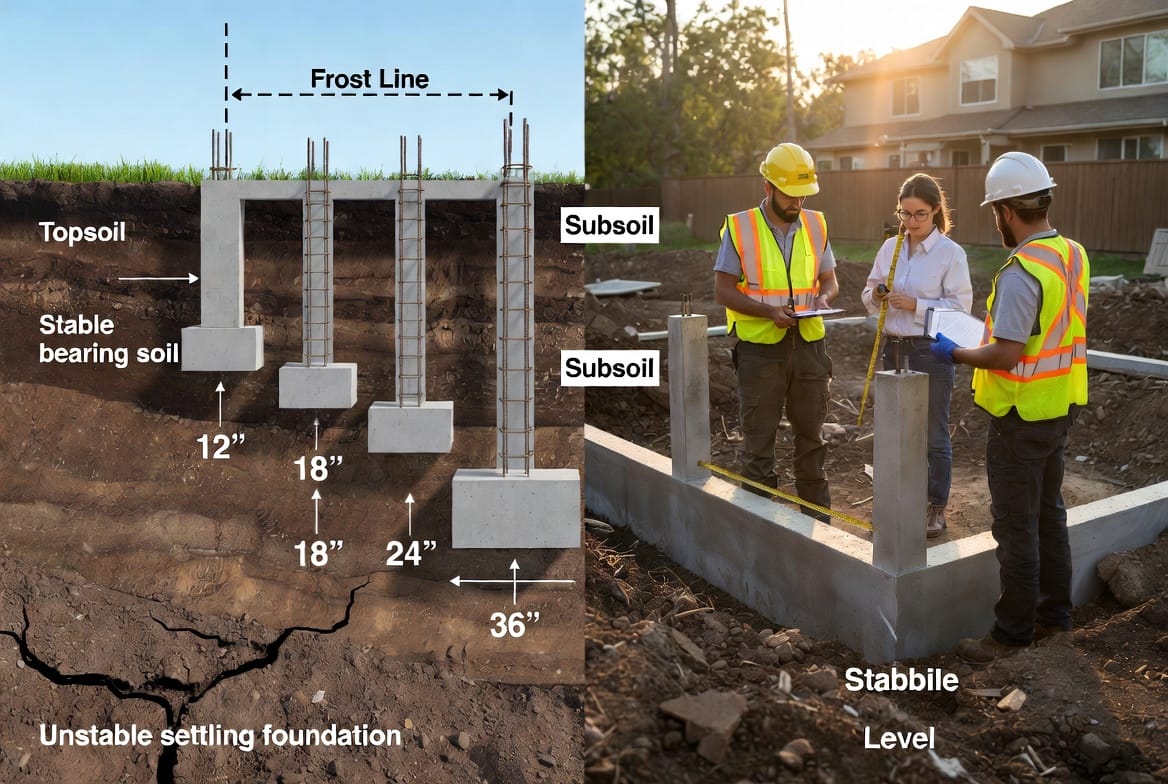
One of the most vital footing requirements is depth. Every concrete footing must extend below the local frost line – the deepest point at which soil freezes in winter. Frost heave occurs when moisture in the soil freezes and expands, exerting tremendous upward pressure that can lift and crack improperly placed foundations.
Local building codes specify exact frost line depths based on regional climate data. In northern states, this may mean digging 48 inches or more; in milder southern climates, 12 to 24 inches may suffice. Always verify your area’s requirements through your local building department, as soil composition also plays a critical role.
Key footing depth considerations include:
- Frost line compliance to eliminate seasonal shifting
- Soil bearing capacity testing to confirm stable load support
- Protection against expansive soils that swell and shrink with moisture changes
- Future-proofing for potential climate variations
Failing to reach the proper depth is one of the most common – and expensive – mistakes. A concrete footing placed too shallow can lead to uneven settling, cracked beams, and structural failure. Professionals measure twice and dig once, ensuring every pier and footing sits securely below the frost line where temperatures remain constant year-round.
This depth requirement is non-negotiable for code compliance and long-term durability. When executed correctly, your foundation remains stable through freeze-thaw cycles, heavy rains, and drought conditions alike.
Sizing Footings: Diameter Based on Load
Footing diameter is determined by two critical factors: the total load of the structure above and the soil’s load-bearing capacity. A larger concrete footing spreads weight over more soil area, reducing pressure per square inch and preventing settlement.
Engineers calculate required diameter using precise formulas that factor in dead loads (structure weight), live loads (people, furniture, snow), and soil test results. Typical residential deck footings range from 12 to 24 inches in diameter, while larger additions may require 36 inches or more.
Load-based sizing principles:
- Light decks on stable soil: 12–16 inch diameter
- Heavier structures or poor soil: 18–24+ inch diameter
- Multiple piers working together to distribute weight evenly
- Professional soil analysis to avoid guesswork
Choosing the correct size isn’t just about meeting minimum code – it’s about building in a safety margin that reassures you for decades. Oversized footings provide extra peace of mind without significantly increasing cost, while undersized ones invite trouble.
Reinforcement: Essential for Strength and Longevity
Plain concrete is exceptionally strong in compression but vulnerable to tension forces caused by soil movement or settling. That’s why every quality concrete pier and footing incorporates rebar reinforcement.
Steel rebar creates a composite system where concrete handles compression and rebar resists tension. Vertical rebar runs the full height of the pier and ties securely into the footing’s horizontal grid. This reinforcement prevents cracking and maintains structural integrity even under extreme conditions.
Best reinforcement practices include:
- Rebar placement according to engineer specifications
- Proper concrete cover to protect steel from corrosion
- Wire mesh in footings for added tensile strength
- High-strength concrete mix designed for structural applications
The result is a reinforced concrete foundation that stands strong against the elements. Homeowners who choose professional reinforcement enjoy structures that remain level and crack-free for 50 years or more.
Code Compliance and Professional Inspection
No concrete pier and footing project is complete without passing local building department inspection. Inspectors verify depth, reinforcement, formwork, and concrete quality before the pour and again after curing.
Inspection checklist highlights:
- Depth below frost line confirmed by measurement
- Rebar reinforcement properly installed and tied
- Footing diameter matching approved plans
- Clean, stable soil at the base
- Concrete strength and placement meeting specifications
These inspections are your safeguard. They ensure every footing requirement is met and provide official documentation that protects your property value and insurance coverage. Working with experienced concrete professionals means inspections go smoothly because the work is done right the first time.
The Complete Installation Process
From initial site evaluation to final cure, professional installation follows a proven sequence that guarantees success:
- Soil testing and engineering review
- Precise layout and excavation
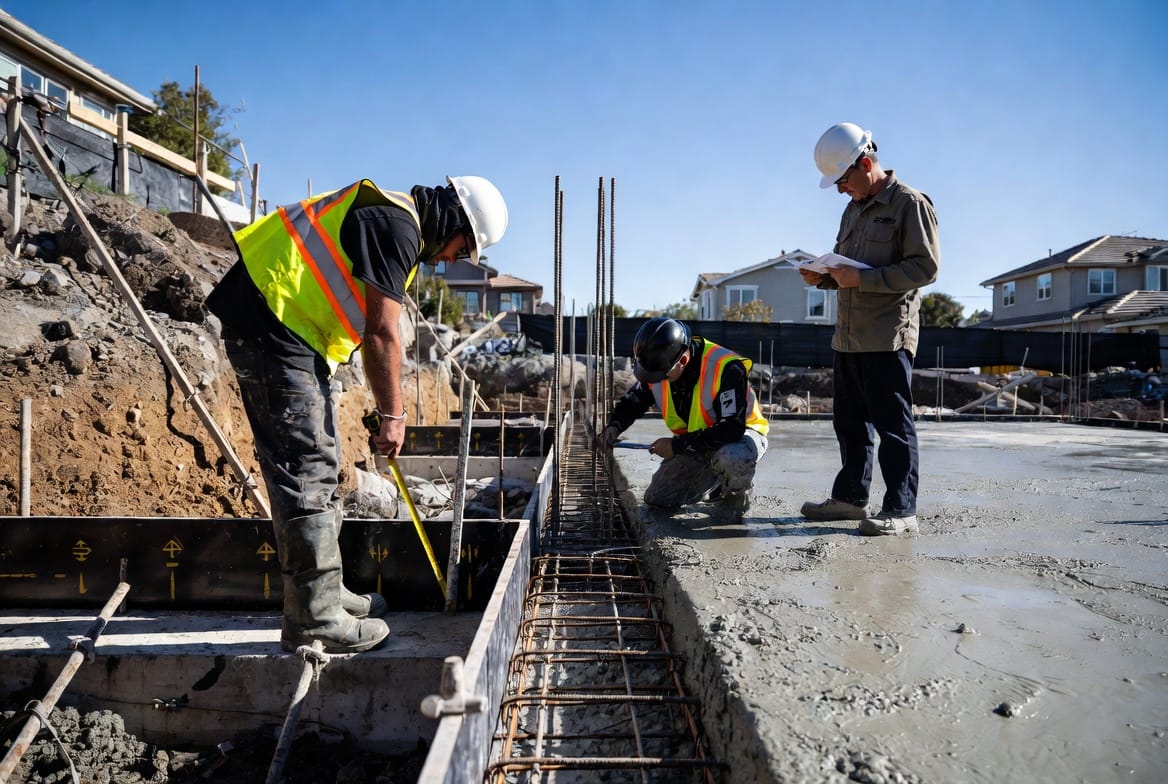
- Formwork and rebar installation
- Pre-pour inspection
- High-quality structural concrete placement
- Proper vibration to eliminate voids
- Controlled curing for maximum strength
Each step is performed with care by trained crews who understand that quality foundations equal satisfied customers.
Why Proper Foundations Matter for Your Project
Investing in correctly engineered concrete piers and footings delivers multiple long-term benefits. You gain structural stability that prevents costly future repairs. Your deck or addition maintains its beautiful appearance without sagging or shifting. Most importantly, you create a safe environment for family and friends to enjoy for years to come.
Risks of skipping these critical steps – such as uneven settling, premature cracking, or complete structural failure – are simply not worth taking. Professional concrete service teams eliminate these risks through expertise, proper planning, and attention to every detail.
Strong Structures Start with Strong Footings
The foundation you choose today determines the strength and longevity of your deck or addition tomorrow. By prioritizing proper footing depth below the frost line, correct diameter based on load, full rebar reinforcement, and thorough inspection for code compliance, you build something truly lasting.
Strong structures start with strong footings. If you’re planning a deck, porch, or home addition and want expert guidance on your concrete foundation needs, reach out today. Our team is ready to help you create the solid base your project deserves.
Get Expert Concrete Piers & Footings Today