The Concrete Color Hardener: Integral vs. Broadcast for Decorative Finishes
When it comes to decorative concrete finishes, choosing the right coloring method can make all the difference between a surface that looks good for years and one that truly stands the test of time. Whether you’re planning a stunning patio, a custom driveway, or an elegant pool deck, concrete color hardener options give homeowners and contractors powerful tools to achieve vibrant, professional results.
Call Now to Choose the Best Concrete Color Hardener for Your Project
At Concrete Service, we’ve perfected both integral color and broadcast hardener techniques through thousands of projects. This guide breaks down exactly how each method works, their key differences in durability and appearance, and how to select the best one for your next decorative concrete project.
What Is a Concrete Color Hardener?
Concrete color hardener is a specialized powder or liquid additive designed to color, strengthen, and densify concrete surfaces. Unlike basic pigments that simply tint the mix, hardeners combine color with chemical agents that react with the concrete to create a tougher, more wear-resistant finish.
These products serve two main purposes:
- Delivering rich, consistent color
- Increasing surface hardness and abrasion resistance
The two primary application methods — integral color and broadcast hardener — achieve these goals in very different ways. Understanding the distinction helps you make an informed decision that aligns with your project’s demands for beauty and longevity.
Integral Color: Consistent Color Mixed Throughout the Slab
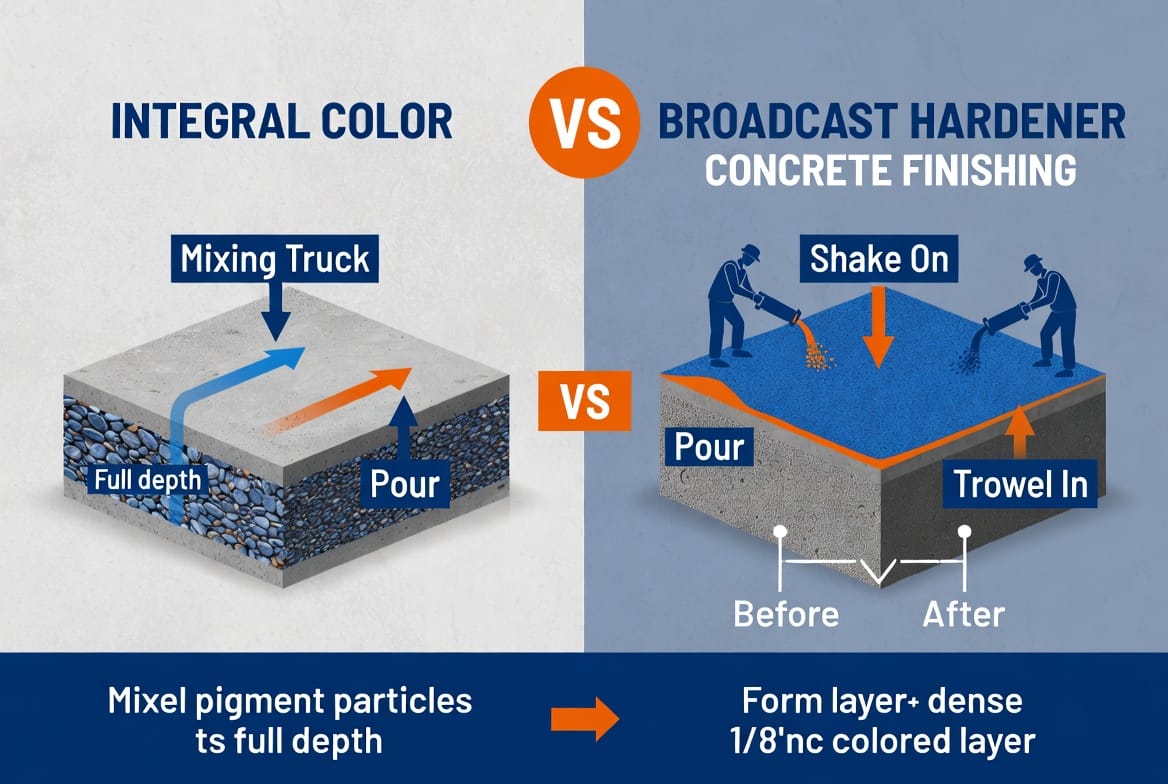
Integral color involves adding pigment directly to the concrete mix before it is poured. The color becomes part of the entire concrete matrix, penetrating every inch of the slab from top to bottom.
This method ensures the color remains uniform even if the surface experiences minor wear or chipping. Because the pigment is distributed evenly throughout the mix, there is no risk of the color fading or wearing away over time.
Key benefits of integral color include:
- Uniform appearance from edge to edge and top to bottom
- No surface wear concerns — color stays true even with light surface abrasion
- Lower maintenance requirements in high-traffic areas
- Excellent for projects where the concrete may be cut or tooled after pouring
However, integral color typically produces slightly softer, more matte tones compared to surface-applied methods. The color intensity depends on the amount of pigment used in the entire batch, which can make achieving ultra-vibrant shades more expensive.
Broadcast Color Hardener: Surface-Applied Vibrancy and Strength
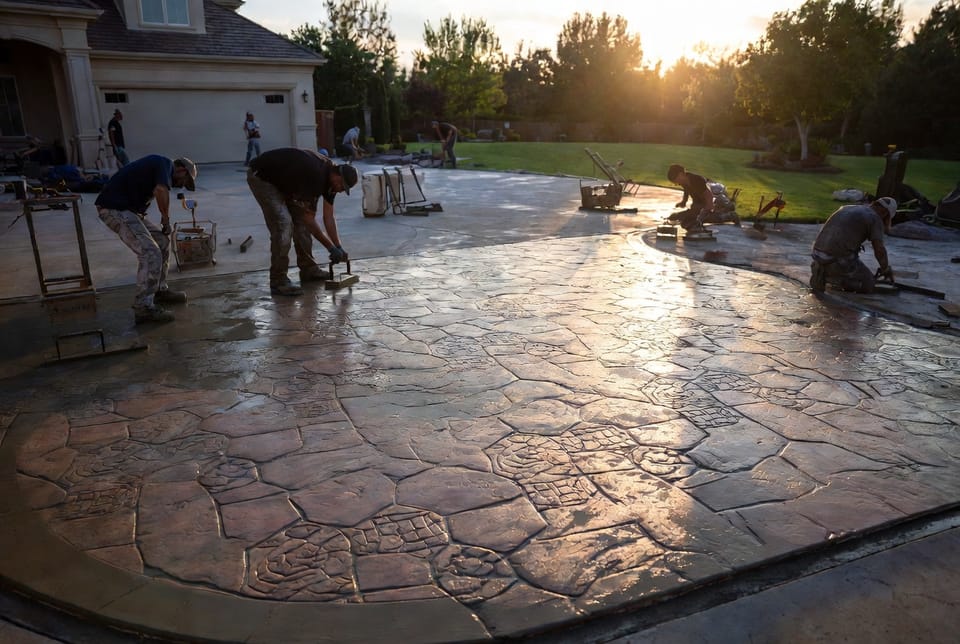
Broadcast hardener (also called dry-shake color hardener) is applied directly to the surface of freshly poured concrete while it is still in its plastic state. Contractors shake or broadcast the colored powder evenly across the wet slab, then work it in with floats and trowels.
This technique creates a dense, colored “skin” approximately 1/8-inch thick on the surface while leaving the underlying concrete in its natural state. The result is a harder, more abrasion-resistant top layer with exceptionally rich and vibrant color.
Advantages of broadcast hardener:
- Richer, more intense color that pops visually
- Enhanced surface hardness for superior wear resistance
- Ideal for stamped concrete and textured decorative finishes
- Allows for multiple colors and intricate patterns during the same pour
Because the color sits primarily on the surface, proper application technique and subsequent sealing are essential to long-term performance.
Durability Comparison: How Each Method Holds Up Over Time
Durability is often the deciding factor for homeowners investing in decorative concrete. Here’s how the two methods compare:
- Integral color delivers consistent color performance because the pigment is locked throughout the entire slab. Minor surface scratches or chips reveal the same color underneath, making it exceptionally forgiving in areas with moderate foot traffic or occasional impact.
- Broadcast hardener creates a significantly denser and harder surface layer that resists abrasion better than standard concrete or integral mixes. However, because the color is concentrated on the surface, aggressive wear (such as heavy vehicle traffic without proper sealing) could eventually expose the uncolored base.
Both methods outperform untreated concrete, but broadcast hardener typically provides superior surface hardness when applied correctly. With regular sealing, it maintains its appearance for decades in even the harshest climates.
Appearance and Aesthetic Appeal
When it comes to visual impact, broadcast hardener often wins for decorative projects. The concentrated pigments on the surface produce deeper, more saturated colors that highlight stamped patterns, textures, and joint lines beautifully.
Integral color offers a more subtle, natural look that many homeowners prefer for modern minimalist designs. Its matte finish can be enhanced with sealers, but it rarely matches the vivid intensity of a properly applied broadcast hardener.
For projects featuring intricate stamping or multiple color blends, broadcast hardener gives artisans more creative control during the finishing process.
Pros and Cons at a Glance
Integral Color
- Pros: Full-depth color consistency, no wear-off risk, lower long-term maintenance, cost-effective for large plain slabs
- Cons: Slightly less vibrant tones, higher pigment cost per cubic yard
Broadcast Hardener
- Pros: Richer color depth, harder surface, perfect for stamped and textured finishes, allows on-site color adjustments
- Cons: Surface-only color layer, requires expert application and periodic sealing
Application Processes Explained
Proper installation is critical for both methods. With integral color, the pigment is added at the batch plant or on-site and mixed thoroughly before placement. Finishers then focus on standard troweling and texturing.
Broadcast hardener demands precise timing. The powder must be applied when the concrete has reached the ideal plastic state — firm enough to support the weight of the applicator but wet enough for the hardener to integrate. Multiple passes and careful troweling ensure even color distribution and maximum density.
Our crews at Concrete Service follow strict quality-control protocols for both techniques to guarantee flawless results every time.
Choosing the Right Coloring Method for Your Project
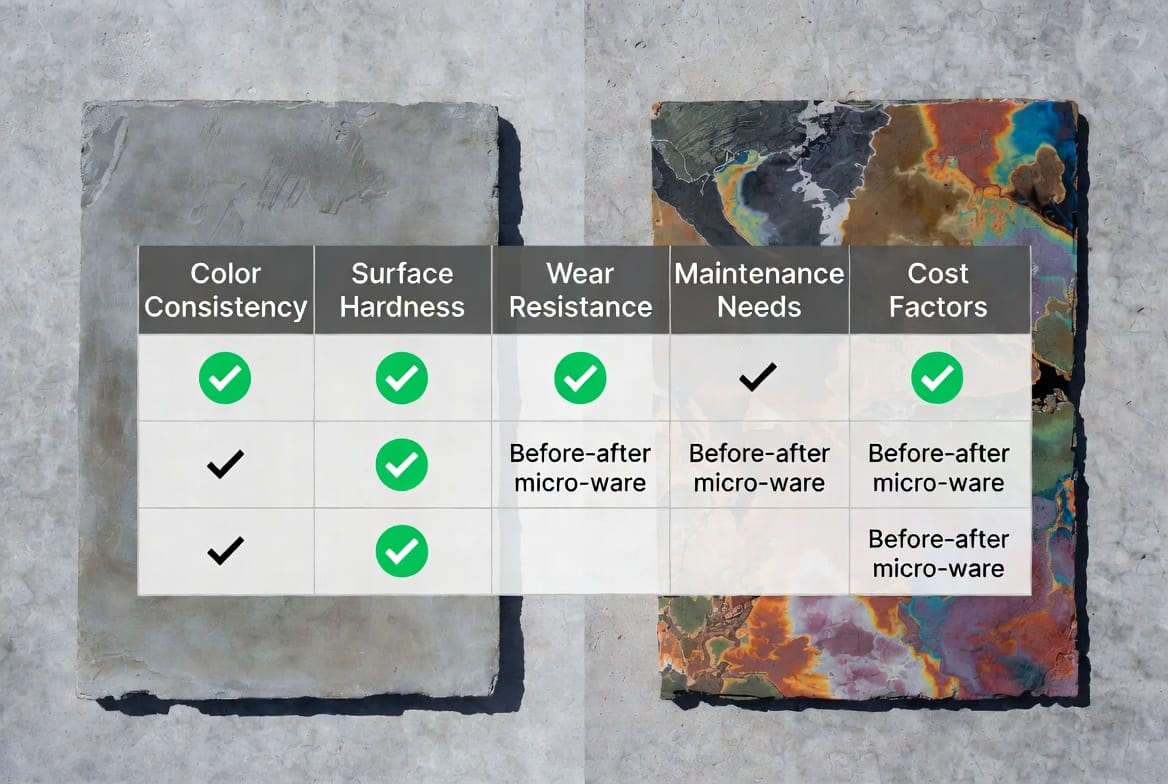
Selecting between integral color and broadcast hardener depends on your priorities:
- Choose integral color for driveways, walkways, or any area where long-term color consistency without frequent maintenance is essential.
- Choose broadcast hardener for patios, pool decks, or commercial entrances where maximum color vibrancy and a hard, polished surface matter most.
Many projects benefit from combining both methods — using integral color for the base and broadcast hardener for the decorative surface layer. This hybrid approach delivers the best of both worlds.
Maintenance Tips for Long-Lasting Beauty
Regardless of your chosen method, proper care extends the life of your decorative concrete:
- Apply a high-quality penetrating sealer every 2–3 years
- Avoid harsh chemicals or de-icing salts
- Clean regularly with mild soap and water
- Address spills promptly to prevent staining
With routine maintenance, both integral and broadcast finishes will continue to enhance your property for 20 years or more.
Real-World Benefits of Professional Concrete Color Hardener
Homeowners who invest in professional concrete color hardener applications report higher property values, greater curb appeal, and years of enjoyment from their decorative surfaces. The right choice eliminates common regrets such as fading colors or premature wear.
Our team has helped countless clients achieve exactly the look they envisioned while ensuring structural integrity and low-maintenance performance.
Conclusion: Choose the Right Coloring Method for Your Project
The decision between integral color and broadcast hardener ultimately comes down to your specific needs for appearance, durability, and maintenance. Both methods deliver outstanding decorative concrete finishes when installed by experienced professionals.
At Concrete Service, we guide every client through the selection process with clear recommendations based on their site conditions, design goals, and budget. Our expertise ensures you get a beautiful, long-lasting result that exceeds expectations.
Ready to explore your options? Our team is standing by to help you choose the perfect concrete color hardener solution for your next project.
Get Expert Advice on Integral vs Broadcast Color Hardener – Call Today