The Concrete Control Joint Filler: Sealing Joints Against Water and Debris
Concrete control joints are essential features in every properly installed slab, yet they often become the weakest points if left untreated. Proper joint maintenance through high-quality control joint filler is one of the smartest investments you can make to extend the life of your concrete surfaces.
Protect Your Concrete Slab – Get Professional Joint Sealing Today!
Whether you manage a commercial parking lot, industrial floor, or residential driveway, sealing those joints protects your entire investment from costly damage.
In this comprehensive guide, we explore why sealing control joints matters, the different types of joint fillers available, and the professional application process that delivers lasting results.
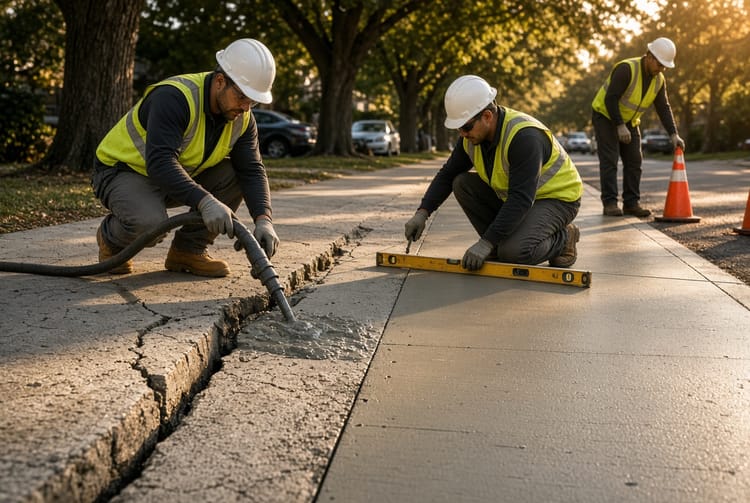
Main opening image - Expert technicians sealing concrete control joints with premium self-leveling filler to protect against water damage and debris.
Why Control Joints Need Sealing: Understanding the Risks
Control joints are intentional cuts made in concrete to control where cracking occurs as the slab cures and expands or contracts with temperature changes. While they serve a critical structural purpose, unsealed joints create vulnerabilities that can compromise the entire slab over time.
Without proper joint sealing, several serious issues can develop:
- Water infiltration – Rain, snowmelt, and irrigation water easily enter open joints, weakening the base and causing erosion beneath the slab.
- Debris accumulation – Dirt, sand, leaves, and small stones collect inside joints, creating pressure points during freeze-thaw cycles.
- Weed growth – Organic material trapped in joints provides ideal conditions for weeds to take root, leading to further cracking and unsightly appearance.
- Spalling and edge damage – Repeated expansion and contraction of debris and ice inside joints causes the concrete edges to chip and break away, a condition known as spalling.
Preventing these problems through timely sealing is far more cost-effective than repairing damaged concrete later. A well-maintained joint system can add years of service life to your slab while maintaining its structural integrity and appearance.
Professional concrete joint maintenance not only stops water and debris but also preserves the aesthetic value of your property. Clean, sealed joints give a finished, professional look that reflects quality workmanship.
The Hidden Damage Caused by Unsealed Joints
Left unprotected, control joints act like open wounds in your concrete. Water seeps deep into the subbase, softening soil and creating voids that lead to settlement and uneven surfaces. During winter months, trapped water freezes and expands with tremendous force, pushing against the joint edges and causing progressive deterioration.
Debris acts as an abrasive, grinding against the concrete with every movement or temperature shift. Over time, this leads to joint widening, edge crumbling, and eventually costly slab repairs or replacement.
Early intervention with the right control joint filler breaks this cycle. By creating a flexible, watertight barrier, quality sealants keep harmful elements out while allowing the concrete to move naturally as designed.
Choosing the Right Concrete Control Joint Filler
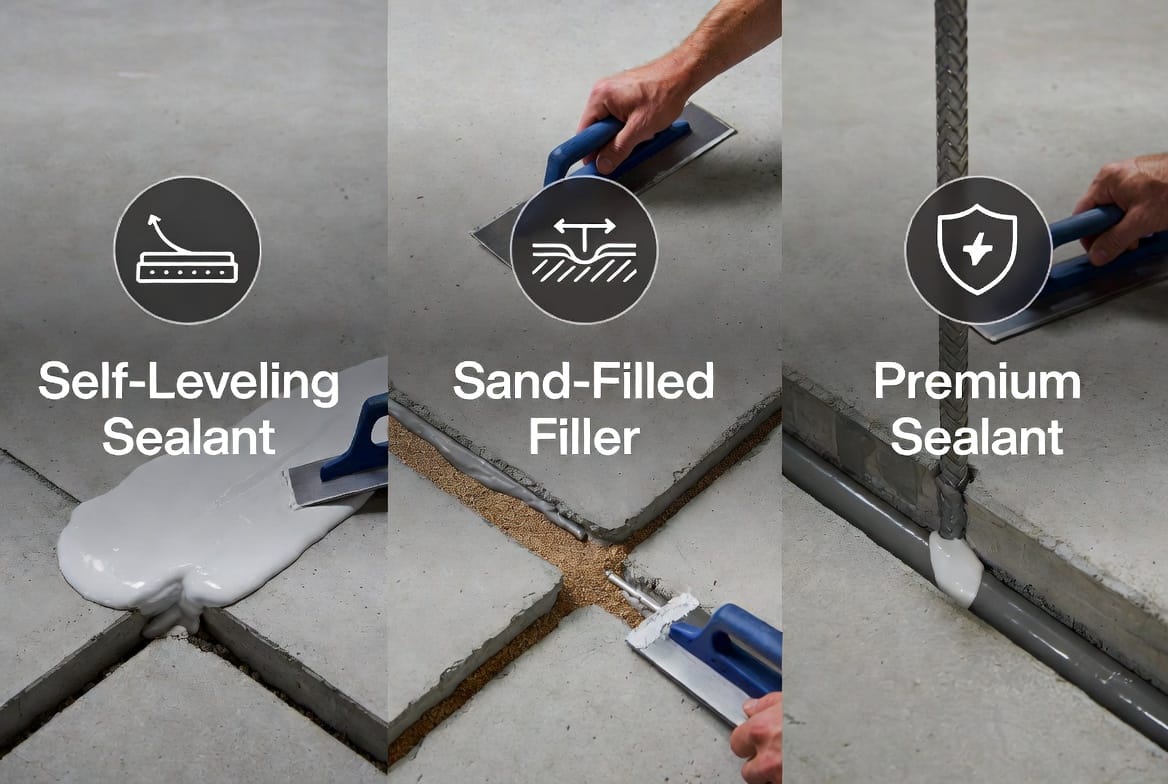
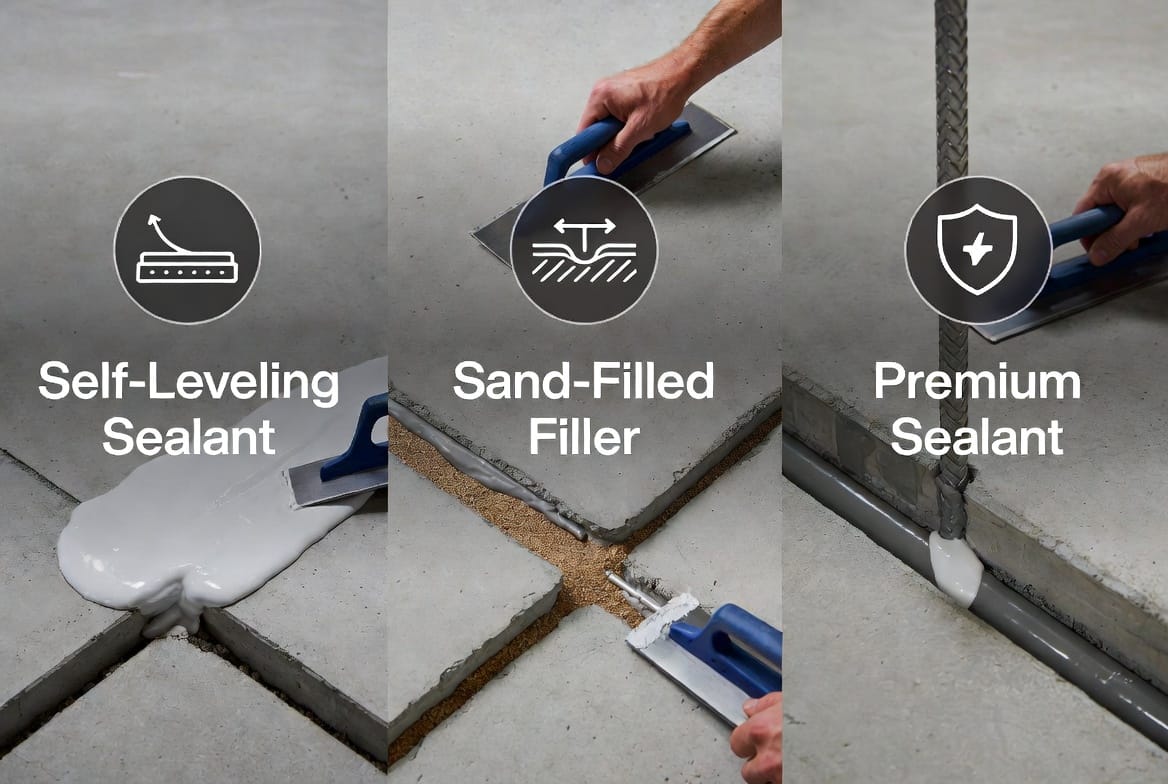
Not all joint fillers are created equal. The best choice depends on your specific application, traffic load, climate, and desired longevity. Here are the three most effective types used in professional concrete joint sealing projects:
- Self-leveling sealants – These pourable, smooth compounds flow easily into joints and create a clean, level surface. Ideal for areas with pedestrian or light vehicle traffic where appearance matters.
- Sand-filled joint fillers – A blend of flexible polymer and sand that offers excellent durability and flexibility. These perform well in high-traffic areas and provide superior resistance to indentation.
- Backer rod with premium sealant – The gold standard for demanding applications. A foam backer rod is inserted to control depth, followed by high-performance sealant. This system delivers maximum flexibility and long-term waterproofing.
Each type has its strengths, and an experienced contractor will recommend the optimal solution based on a thorough assessment of your concrete conditions.
Professional Application Process for Long-Lasting Results
Effective joint sealing requires more than simply pouring material into cracks. Professional contractors follow a meticulous multi-step process to ensure optimal performance:
- Joint Preparation – Existing joints are cleaned thoroughly using specialized tools to remove all old sealant, dirt, debris, and loose concrete particles.
- Depth Control – Proper backer rod or bond breaker is installed to ensure the sealant achieves the correct shape and depth ratio for maximum flexibility.
- Surface Priming (when required) – High-quality primers are applied to promote strong adhesion between the sealant and concrete.
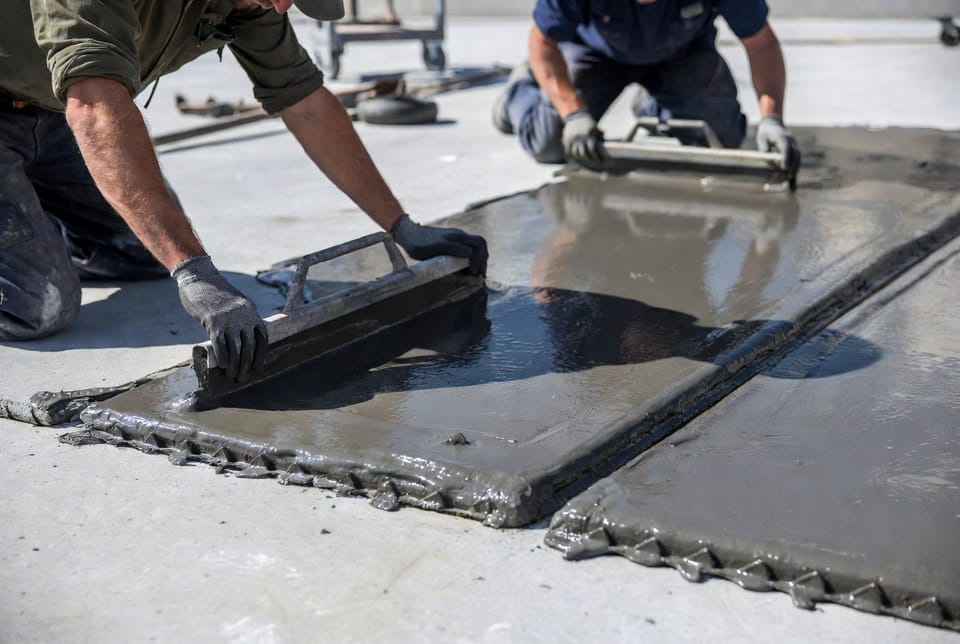
- Filler Application – The chosen control joint filler is applied using precision equipment that ensures even distribution and proper fill level.
- Finishing and Curing – The surface is tooled for a smooth finish, and adequate curing time is allowed before reopening the area to traffic.
This methodical approach guarantees that the sealant bonds correctly and performs as intended for many years.
Proper preparation is the foundation of any successful sealing project. Cutting corners during cleaning or depth control often leads to premature failure, which is why working with experienced professionals delivers superior value.
Benefits of Timely Joint Maintenance
Investing in concrete control joint filler provides multiple advantages that go beyond basic protection:
- Extended slab lifespan – Protected joints reduce stress on the entire concrete structure.
- Reduced repair costs – Preventing spalling and cracking eliminates expensive future fixes.
- Improved safety – Smooth, sealed joints minimize trip hazards and surface irregularities.
- Enhanced appearance – Clean joints maintain a neat, professional look for your property.
- Better resistance to environmental factors – Quality sealants withstand UV exposure, chemicals, and temperature extremes.
Regular joint maintenance schedules help catch issues early and keep your concrete performing at its best throughout its service life.
Common Questions About Control Joint Sealing
How often should control joints be sealed?
In most climates, professional inspection every 2-3 years is recommended, with resealing as needed based on wear and environmental exposure.
Can I seal joints myself?
While DIY kits exist, professional application ensures proper preparation, material selection, and installation depth that delivers reliable, long-term performance.
What if my joints are already damaged?
Experienced teams can often repair minor spalling and then apply high-performance fillers to stabilize the area and prevent further deterioration.
Will sealing stop all cracking?
Sealing control joints manages the designed movement joints effectively, but it works best as part of an overall concrete maintenance strategy.
Protecting Your Investment Starts with Expert Care
Your concrete slab represents a significant investment in your property. Control joint maintenance is one of the most effective ways to safeguard that investment against the damaging effects of water, debris, and time.
By choosing the right concrete control joint filler and ensuring professional application, you create a durable barrier that keeps your slab strong, stable, and attractive for years to come.
Protect your joints to protect your slab.
Don’t wait until small issues become major repairs. Contact our concrete specialists today to schedule a professional joint evaluation and sealing service.
Our experienced team is ready to help you select the best solution for your specific needs and deliver results you can trust.
Stop Water Damage Before It Starts – Call for Joint Filler Service