The Concrete Patio Sealing: Protecting Your Outdoor Investment
Your concrete patio serves as the heart of outdoor living. It hosts family gatherings, quiet morning coffee, and evening relaxation. Yet without proper care, this valuable surface faces constant threats from weather, foot traffic, and everyday use. Concrete patio sealing stands as the single most effective maintenance step to safeguard that investment for years to come.
Protect Your Outdoor Investment – Call Experts
This comprehensive guide focuses exclusively on maintenance through sealing. You will discover why sealing matters, the primary types of sealers available, recommended application frequency, and practical steps that keep your patio looking new while preventing costly repairs. The advice remains straightforward, authoritative, and designed to give homeowners confidence in protecting their outdoor space.
Why Concrete Patio Sealing Matters for Long-Term Maintenance
Concrete is strong, yet it remains porous. Moisture, oils, dirt, and temperature swings penetrate the surface daily. Over time these elements create visible and structural problems that diminish both appearance and value.
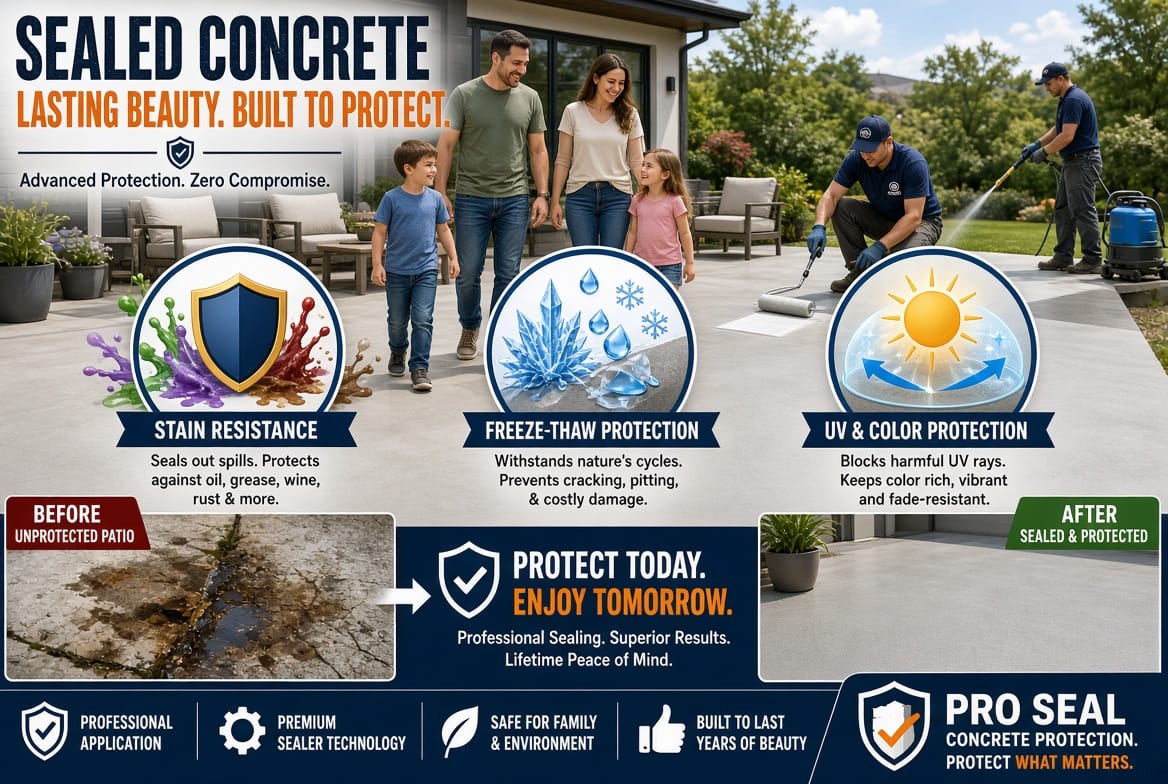
Sealing prevents stains. Spilled drinks, grease from the grill, leaf tannins, and pet accidents absorb quickly into untreated concrete. Once embedded, these marks become permanent eyesores. A quality sealer forms a barrier that keeps liquids on the surface where they can be wiped away easily.
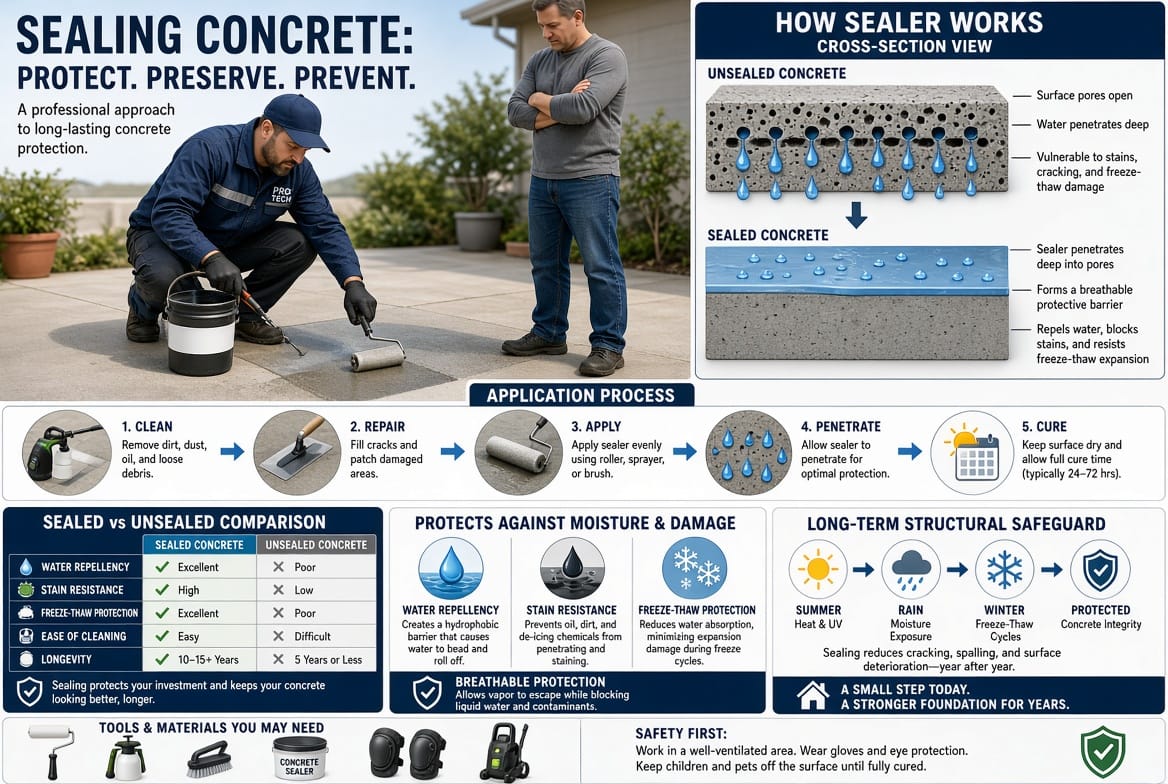
Sealing stops cracking. Water that enters the pores expands when temperatures drop. This internal pressure forces the concrete apart, producing hairline cracks that widen with each season. By blocking moisture entry, sealing dramatically reduces the risk of structural cracks.
Sealing guards against freeze-thaw damage. In climates that experience repeated freezing and thawing, water trapped inside the concrete expands up to nine percent. The resulting stress causes surface scaling, spalling, and deeper fractures. A properly applied sealer keeps water out and preserves the integrity of the slab through harsh winters.
Beyond these core protections, sealing also resists UV fading, reduces surface dusting, and makes routine cleaning far simpler. The result is a patio that retains its original color and smoothness while requiring less intensive upkeep. Homeowners who invest in regular sealing consistently report fewer repairs and higher satisfaction with their outdoor living areas.
Understanding the Two Main Types of Concrete Sealers
Selecting the right sealer begins with understanding the two primary categories used for patios: penetrating sealers and film-forming sealers. Each offers distinct performance characteristics suited to different needs and climates.
Penetrating Sealers
These products soak into the concrete pores and chemically react to form a water-repellent barrier beneath the surface. They leave little to no visible film, preserving the natural look and texture of the concrete.
Key advantages include excellent breathability, which allows any trapped moisture vapor to escape, and superior resistance to abrasion from foot traffic. Penetrating sealers excel at blocking water and chloride intrusion, making them ideal for freeze-thaw regions. They typically last longer between applications and do not peel or yellow over time.
Homeowners appreciate that the surface remains slip-resistant even when wet, an important safety consideration for outdoor entertaining spaces.
Film-Forming Sealers
These create a protective coating on top of the concrete. Acrylic, polyurethane, and epoxy formulations fall into this group. They deliver a noticeable sheen ranging from matte to high-gloss and can enhance color intensity.
Film-forming sealers provide strong resistance against stains and chemical spills. They also offer additional UV protection that helps maintain color vibrancy. However, they require careful surface preparation because any trapped moisture can cause blistering. Reapplication becomes necessary more frequently in high-traffic or extreme-weather locations, and the coating can become slippery if not formulated with slip-resistant additives.
Many professionals recommend film-forming sealers for decorative stamped or colored concrete where appearance enhancement is a priority, while penetrating options suit natural-gray or broom-finished patios focused purely on protection.
Choosing between the two depends on climate, desired aesthetics, and maintenance preferences. In mixed climates, some property owners alternate types over successive cycles to balance protection and appearance.
Recommended Application Frequency for Optimal Protection
Consistent timing keeps the protective barrier intact. Most manufacturers and experienced contractors advise resealing every two to three years for standard residential patios. Several factors influence the exact interval:
- Climate severity: Areas with heavy rainfall, snow, or intense sun may require sealing every 18 to 24 months.
- Traffic volume: Patios used daily for entertaining or children’s play wear faster and benefit from more frequent attention.
- Sealer type: Penetrating products often extend to three or even four years, while film-forming coatings may need renewal closer to the two-year mark.
- Surface exposure: Fully open patios face greater weathering than those partially covered by pergolas or awnings.
A simple water-bead test helps determine readiness. Sprinkle water on the surface. If it soaks in within a few minutes rather than beading, the previous sealer has worn and reapplication is due. Performing this check each spring ensures timely maintenance before the busy outdoor season begins.
Preparing the Patio Surface Before Sealing
Proper preparation determines the success and longevity of any sealing project. Skip this phase and even the best product underperforms.
Begin by clearing all furniture, planters, and décor. Sweep thoroughly to remove loose dirt and debris. Next, apply a concrete cleaner or degreaser formulated for outdoor use. Scrub stubborn stains with a stiff brush, then rinse completely with a pressure washer set to a moderate setting that will not damage the surface.
Allow the patio to dry fully—typically 24 to 48 hours depending on humidity and temperature. Any residual moisture trapped beneath the sealer can cause cloudiness or adhesion failure. Inspect for existing cracks or spalls. Fill larger voids with a concrete patching compound and let it cure according to product instructions.
Finally, mask adjacent surfaces such as house walls, landscaping borders, and expansion joints to prevent overspray or drips. These preparatory steps create a clean, dry, and sound substrate ready to accept the sealer evenly.
Step-by-Step Application Process for Professional Results
Once the surface is prepared, application proceeds methodically.
- Choose a mild, dry day with temperatures between 50 °F and 90 °F and no rain forecast for at least 24 hours.
- Stir the sealer thoroughly without introducing excessive air bubbles.
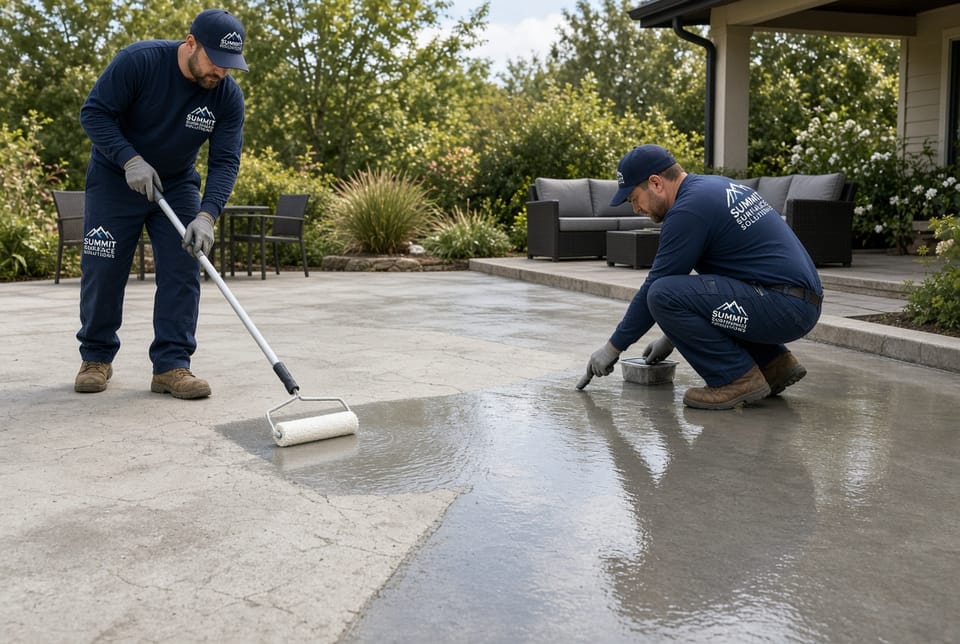
- Apply the first coat using a high-quality roller with a ⅜-inch to ½-inch nap for penetrating products or a finer nap for film-forming options. Work in manageable sections, maintaining a wet edge to avoid lap marks.
- Allow the recommended drying time—usually two to four hours—before applying a second coat if the product requires it.
- Apply the second coat perpendicular to the first for complete coverage.
- Keep the area free of foot traffic for the full curing period, often 24 to 72 hours depending on the formulation.
Professional applicators frequently use airless sprayers for large surfaces followed by back-rolling to ensure even penetration or film thickness. Homeowners tackling smaller patios achieve excellent results with careful roller technique and patience.
Seasonal Maintenance Tips to Extend Sealer Life
Sealing forms the foundation, yet ongoing care multiplies its benefits.
In spring, inspect for winter damage and clean thoroughly before the outdoor season. Summer demands prompt cleanup of spills and avoidance of harsh chemicals that can degrade the sealer. Autumn leaf removal prevents tannin stains, while a final rinse before winter removes salts and debris.
During freeze-thaw months, keep the surface clear of ice melt products containing ammonium nitrates or aggressive chlorides when possible; milder alternatives reduce chemical stress on both the concrete and the sealer.
Periodic gentle washing with a mild detergent and soft brush maintains the surface without stripping the protective layer. Avoid high-pressure washing at close range or abrasive scrubbing that can wear the sealer prematurely.
Common Mistakes to Avoid During Patio Sealing
Even well-intentioned efforts can fall short if common pitfalls occur.
Applying sealer to a damp surface ranks as the most frequent error and leads to a cloudy or whitish appearance. Over-application creates a thick film prone to peeling. Using the wrong product for the climate—such as a non-breathable sealer in freeze-thaw zones—traps moisture and accelerates damage.
Neglecting surface preparation leaves contaminants that prevent proper bonding. Sealing in direct hot sunlight causes rapid drying and uneven coverage. Finally, walking on the surface too soon leaves permanent footprints and weakens the cure.
Awareness of these issues allows homeowners and professionals alike to achieve consistent, high-quality results every time.
Long-Term Benefits That Protect Your Outdoor Investment
Regular sealing delivers measurable returns. Stain resistance keeps the patio looking inviting for guests. Crack prevention eliminates the need for expensive patching or full replacement. Freeze-thaw protection preserves structural soundness through decades of seasonal cycles.
Additional advantages include easier cleaning, reduced dust generation, and maintained resale appeal. Real-estate professionals often note that well-maintained outdoor hardscapes contribute positively to overall property value. The modest cost and time invested in sealing every few years pale in comparison to the expense of major concrete repairs or replacement.
Choosing Professional Sealing Services Versus DIY
While motivated homeowners can successfully seal smaller patios, many prefer professional service for larger or complex surfaces. Experienced technicians bring commercial-grade equipment, precise product knowledge, and efficient application that minimizes downtime. They also handle proper disposal of materials and guarantee even coverage across expansion joints and edges.
Professional service often includes a surface evaluation, customized product recommendation, and warranty on workmanship. For busy households or those seeking absolute confidence, this route provides peace of mind and superior longevity.
Final Thoughts on Maintaining Your Concrete Patio
Consistent sealing transforms a vulnerable concrete surface into a resilient outdoor investment. By blocking stains, minimizing cracks, and resisting freeze-thaw damage, the simple act of applying the right sealer at the right intervals preserves both beauty and function for many seasons. Understanding penetrating versus film-forming options, adhering to recommended frequency, and following careful preparation and application steps ensures reliable protection.
Protect your patio with sealing.
Secure Your Concrete Patio – Call Experts