The Concrete Floor Drying: Why Concrete Takes Weeks to Dry Naturally
When dealing with water damage, one of the most critical yet misunderstood aspects is concrete floor drying. Many homeowners and even some contractors assume that once the surface looks dry, the floor is ready for new flooring installation. This misconception can lead to costly failures down the road.
Get Your Concrete Slab Professionally Dried Today – Call Now!
Concrete floor drying is a science-driven process that requires patience and expertise. In this comprehensive guide, we explain why concrete can take weeks to dry naturally, the porous nature of the material, and how professional intervention with advanced equipment can safely accelerate the timeline while protecting your investment.
The Science of Concrete: A Porous Material
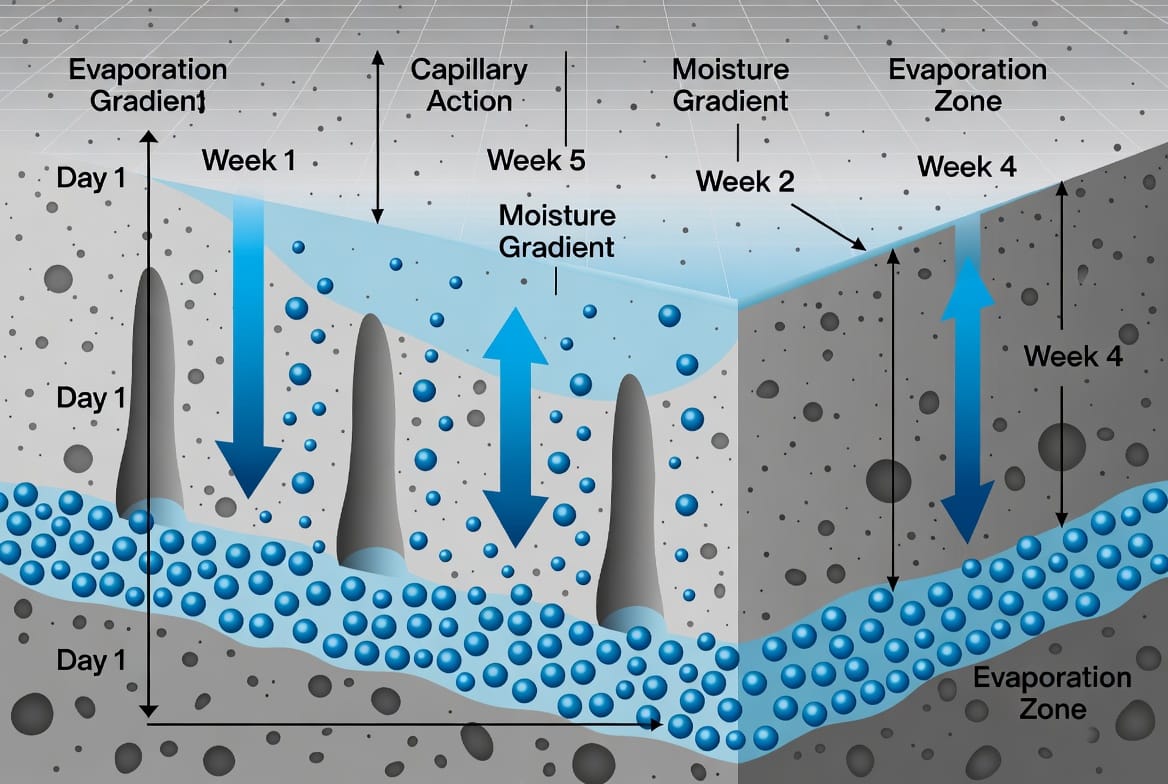
Concrete is far from solid and impermeable. At a microscopic level, it forms a highly porous matrix during the curing process. As cement hydrates, it creates an intricate network of capillaries and voids that trap water.
These pores allow concrete to hold significant amounts of moisture deep within its structure — often several inches below the surface. During a water damage event, whether from flooding, pipe bursts, or leaks, water penetrates these pores rapidly.
Even after visible water is removed, moisture remains trapped. Natural evaporation occurs slowly from the surface, but extracting moisture from deeper layers takes considerable time due to the material's density and low permeability.
Key Fact: Freshly poured concrete typically contains 10-15% water by weight. Even mature slabs can reabsorb massive amounts during flooding, requiring professional attention for proper concrete floor drying.
Why Concrete Takes Weeks to Dry Naturally
Natural drying depends on several environmental factors:
- Ambient temperature
- Relative humidity (RH) levels
- Airflow
- Slab thickness and density
In typical indoor conditions, a concrete slab may take 21 to 60 days or longer to reach acceptable moisture levels for flooring installation. This extended timeline occurs because moisture must migrate upward through the capillary network to reach the surface and evaporate — a process called moisture migration.
Without intervention, this slow movement creates a prolonged risk window for secondary damage.
Bold Warning: Attempting to install flooring too early traps moisture beneath the surface, leading to adhesive breakdown, mold growth, and material failure.
The Critical Importance of Accurate Moisture Measurement
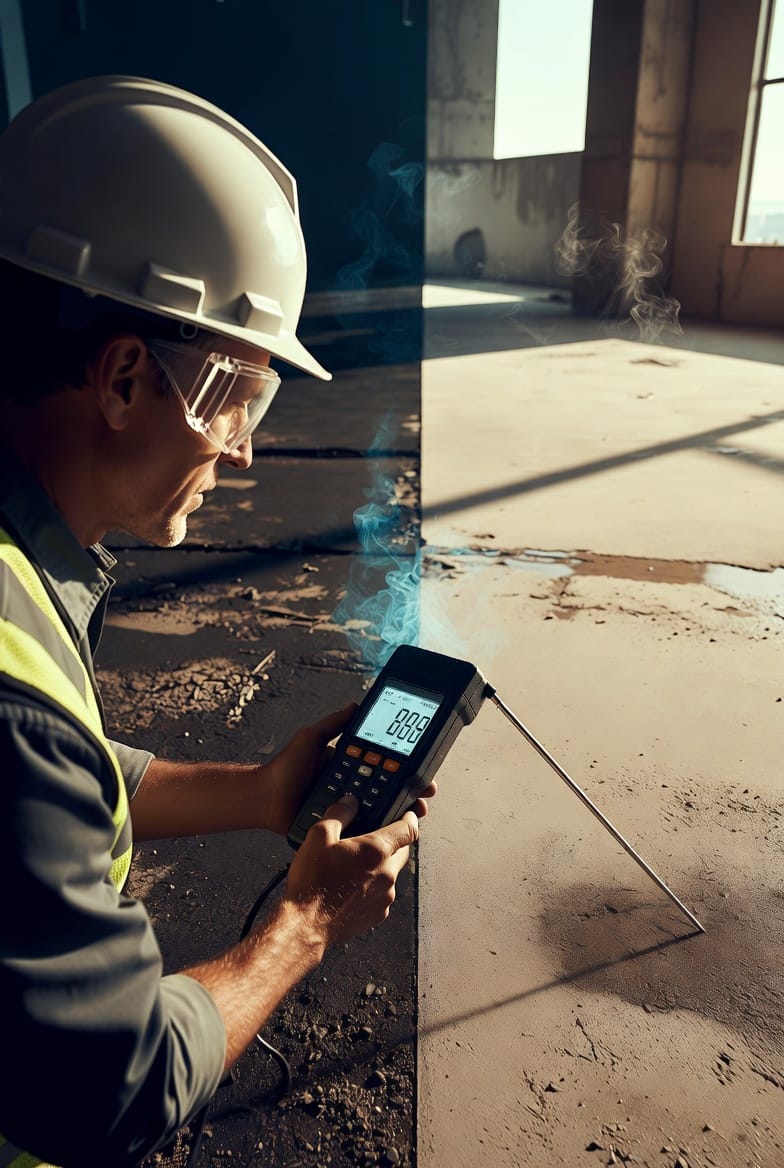
Visual inspection or surface touch tests are unreliable indicators of dryness. This is why professional restorers use specialized moisture meters for accurate readings.
Why surface dry isn't enough:
- Surface layers dry first while deeper sections remain saturated
- Trapped moisture continues migrating upward after installation
- High internal moisture vapor emission rates (MVER) can damage new floors
Professionals take multiple readings at various depths and locations to create a comprehensive moisture profile of the slab.
Pro Tip: Reliable meters measure both surface and internal relative humidity, ensuring the entire slab meets industry standards (typically below 75-85% RH depending on flooring type).
Risks of Installing Flooring on Insufficiently Dried Concrete
Rushing the concrete floor drying process creates several serious issues:
- Adhesive Failure: Moisture interferes with bonding agents, causing tiles or hardwood to detach
- Flooring Bubbles and Buckling: Trapped vapor creates pressure that lifts new materials
- Musty Odors and Mold Growth: Persistent dampness promotes microbial activity
- Warranty Voidance: Most manufacturers require verified dry slabs before installation
- Structural Concerns: Long-term moisture can contribute to rebar corrosion in reinforced concrete
These problems often appear weeks or months after installation, resulting in expensive repairs and business disruptions.
How Professional Drying Accelerates the Process Safely
Professional restoration teams use advanced technology to speed up concrete floor drying without compromising the slab's integrity.
Desiccant Dehumidifiers stand out as the gold standard for effective moisture removal. Unlike refrigerant units, desiccant systems excel in lower temperature environments and deliver extremely dry air — often below 30 grains per pound.
Benefits of Professional Concrete Drying:
- Targeted Moisture Extraction: Equipment creates pressure differentials that pull moisture from deep within the slab
- Controlled Environment: Precise management of temperature, humidity, and airflow
- Faster Timeline: Reduces drying time from weeks to days in many cases
- Verified Results: Continuous monitoring ensures the slab meets proper dryness criteria
- Prevention of Secondary Damage: Minimizes mold risk and protects surrounding materials
These systems work by circulating ultra-dry air across the concrete surface while strategically placed equipment draws out deep moisture through enhanced evaporation and vapor pressure management.
Understanding Signs of Un-Dried Concrete
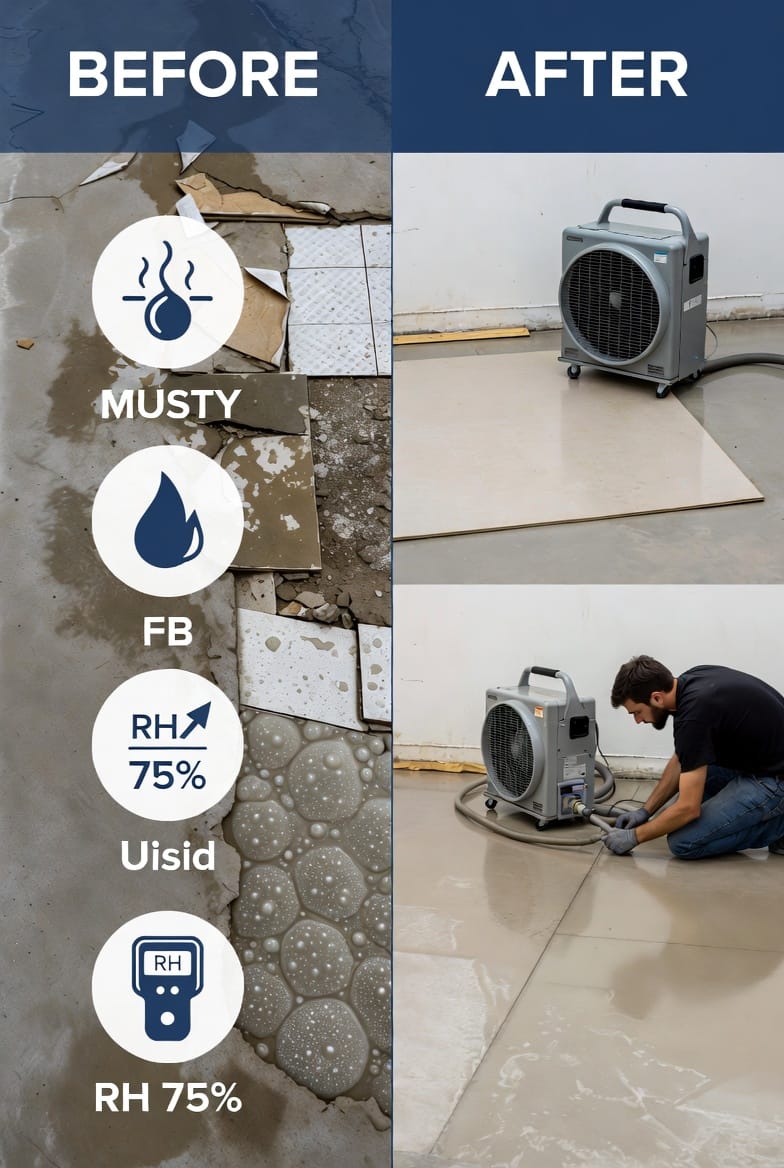
Recognizing these indicators helps property owners understand when professional help is essential:
- Persistent musty odors even after surface cleaning
- High RH readings (above 75%) on moisture meters
- Adhesive failure during test installations
- Bubbling or cupping in test sections of new flooring
- Damp feel or cool spots on the slab surface
Best Practices for Successful Concrete Floor Drying
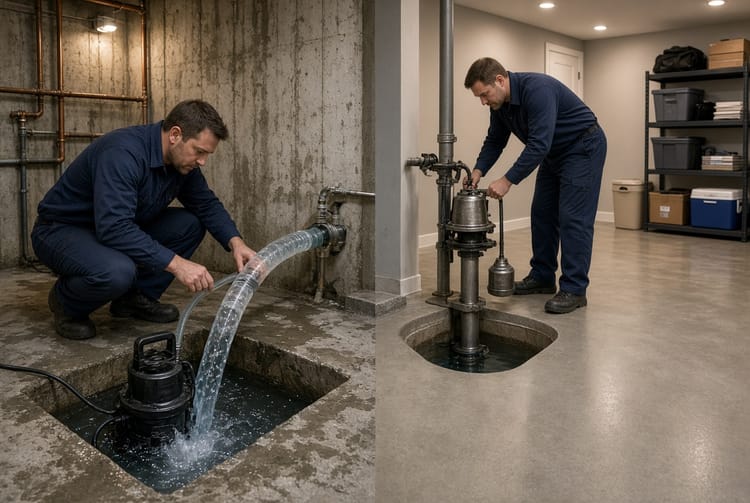
- Immediate Water Extraction — Remove standing water quickly
- Professional Assessment — Get comprehensive moisture mapping
- Strategic Equipment Placement — Use desiccant dehumidifiers and air movers effectively
- Continuous Monitoring — Track progress with regular meter readings
- Proper Ventilation — Maintain optimal temperature and humidity balance
- Patience with Verification — Wait for confirmed dryness before proceeding
Protecting Your Property Investment
Understanding the science behind concrete floor drying empowers you to make informed decisions during water damage restoration. While natural drying is possible, it carries significant risks and extended timelines that most property owners cannot afford.
Professional restoration using desiccant dehumidifiers and scientific monitoring provides the fastest, safest path to a truly dry slab ready for long-term flooring success.
Surface dry isn't slab dry. Don't risk costly callbacks or material failures. When facing water damage to concrete floors, trust the experts who understand both the science and the urgency of proper drying.
Our certified technicians provide rapid response, advanced desiccant drying technology, and verified results you can trust.
Protect Your Floors from Hidden Moisture – Call Today!