The Concrete Driveway Replacement: When to Replace vs. Repair
A well-functioning concrete driveway protects your home’s curb appeal, supports daily vehicle traffic, and contributes to overall property value. Yet even the most durable concrete eventually shows wear. Homeowners frequently face a critical choice: invest in targeted repairs or commit to a full concrete driveway replacement. Making the wrong decision can waste money, leave safety issues unresolved, or force another major project sooner than expected.
Call Today for a Professional Driveway Assessment
This guide delivers a clear, professional decision-making framework. You will learn exactly when minor issues respond well to repair and when conditions such as major settling, extensive cracking, and a failing subbase make replacement the more reliable and cost-effective path. With accurate evaluation and expert execution, you can restore both function and appearance for decades.
Understanding Driveway Deterioration
Concrete driveways typically last 25 to 40 years when installed over a properly compacted subbase and maintained against freeze-thaw cycles, heavy loads, and water intrusion. Damage rarely appears overnight. Small surface imperfections gradually worsen as water seeps into cracks, freezes, and expands. Soil movement beneath the slab compounds the problem.
Recognizing the difference between cosmetic wear and structural failure is the first step. Superficial marks do not automatically require replacement, yet ignoring progressive damage invites larger expenses and safety hazards such as trip risks or pooling water that can undermine the foundation of your home.
A systematic inspection covers three core areas: visible surface condition, slab movement or elevation changes, and the hidden support system underneath. Professional contractors use levels, moisture meters, and core sampling when necessary to reveal what the eye cannot see.
When Repair Works: Minor Cracks and Surface Wear
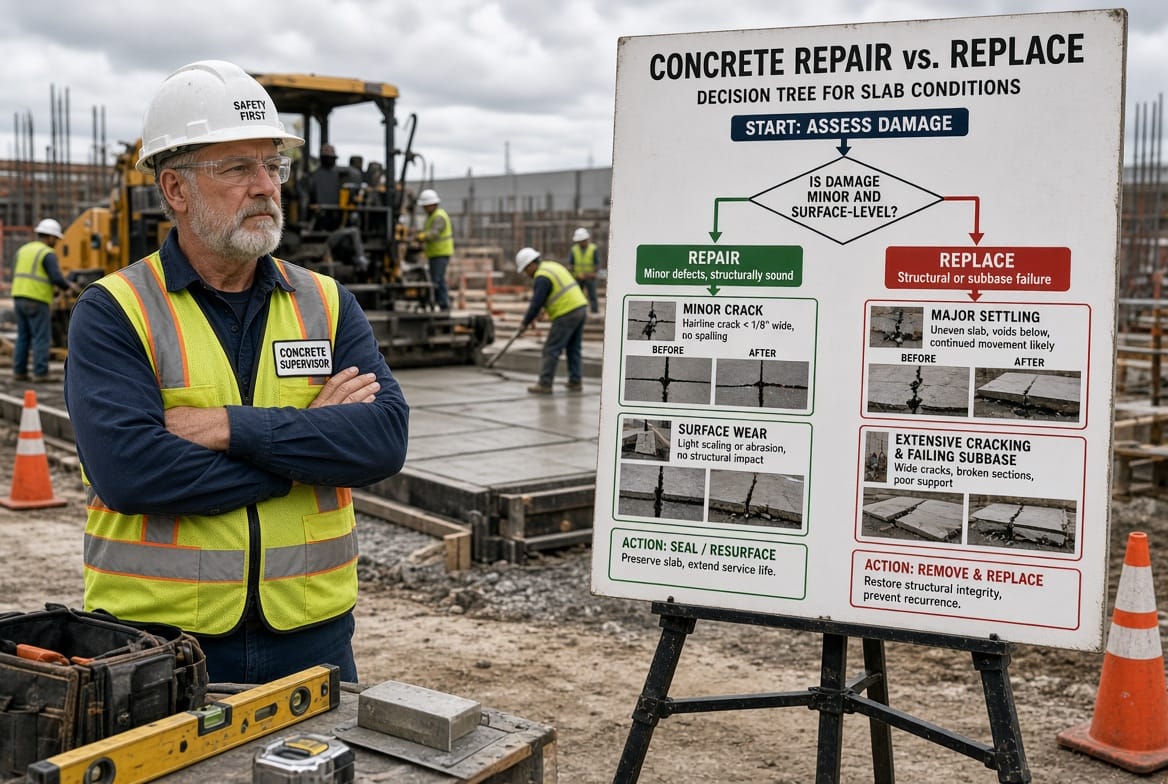
Repair remains the practical choice for isolated, non-structural problems. These issues affect appearance and light functionality but have not compromised the slab’s integrity or the supporting soil.
Minor cracks measuring less than one-quarter inch wide and showing no vertical displacement often respond well to professional filling and sealing. Hairline shrinkage cracks that appear shortly after installation or isolated stress cracks from normal thermal expansion fall into this category. High-quality polyurethane or epoxy fillers restore a smooth surface and prevent water entry when applied correctly.
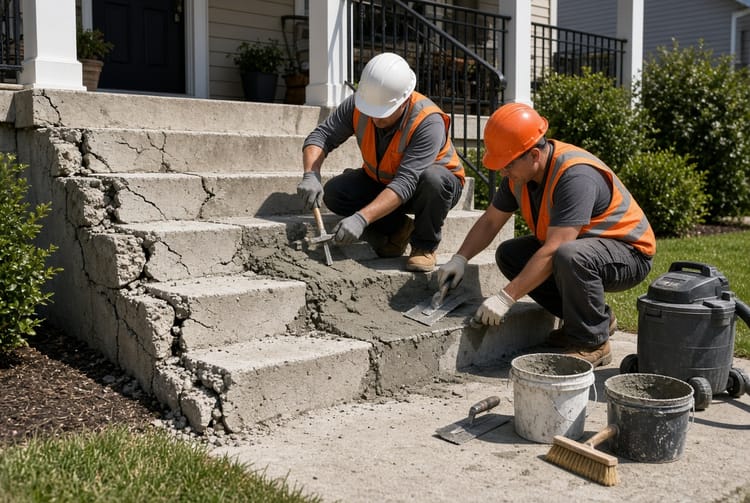
Surface wear includes scaling, light spalling, or faded color caused by de-icing salts, abrasion from snowplows, or UV exposure. In these cases the concrete remains structurally sound. Techniques such as diamond grinding, overlay systems, or specialized resurfacing compounds can renew the top layer without removing the entire slab. These methods cost significantly less than replacement and can extend service life by 8 to 15 years when the underlying concrete is stable.
Additional situations suited to repair include:
- Isolated pop-outs or small chips that do not connect into a network of cracks
- Minor staining or discoloration that cleaning and sealing can address
- Slight surface roughness that grinding or a thin overlay can correct
- Localized settling of less than half an inch that can be leveled with mudjacking or polyurethane foam injection
Successful repair depends on two conditions. First, the damage must remain limited in scope. Second, the subbase must still provide uniform support. When both criteria are met, repair delivers an economical, low-disruption solution that preserves the original investment.
Delaying even modest repairs allows water to penetrate and accelerate deterioration. Prompt professional attention keeps small problems from becoming extensive cracking that later forces replacement.
When Replacement Becomes Necessary
Replacement is the appropriate course when damage has progressed beyond the point where patches or overlays can restore long-term performance. Three primary conditions signal that the existing slab has reached the end of its useful life.
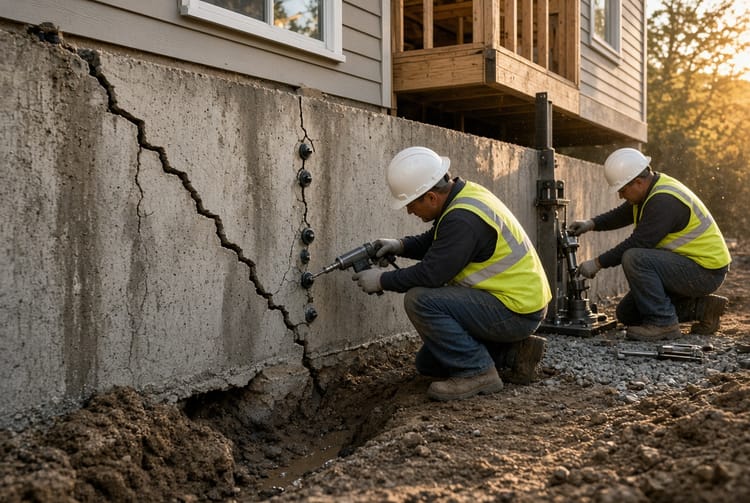
Major settling occurs when sections of the driveway drop unevenly, creating height differences of one inch or more. This movement typically results from poorly compacted fill, soil erosion, or expansive clay that shrinks and swells with moisture changes. Once the slab tilts or sinks, vehicles scrape, water pools, and trip hazards appear. Temporary leveling compounds cannot permanently correct ongoing soil instability.
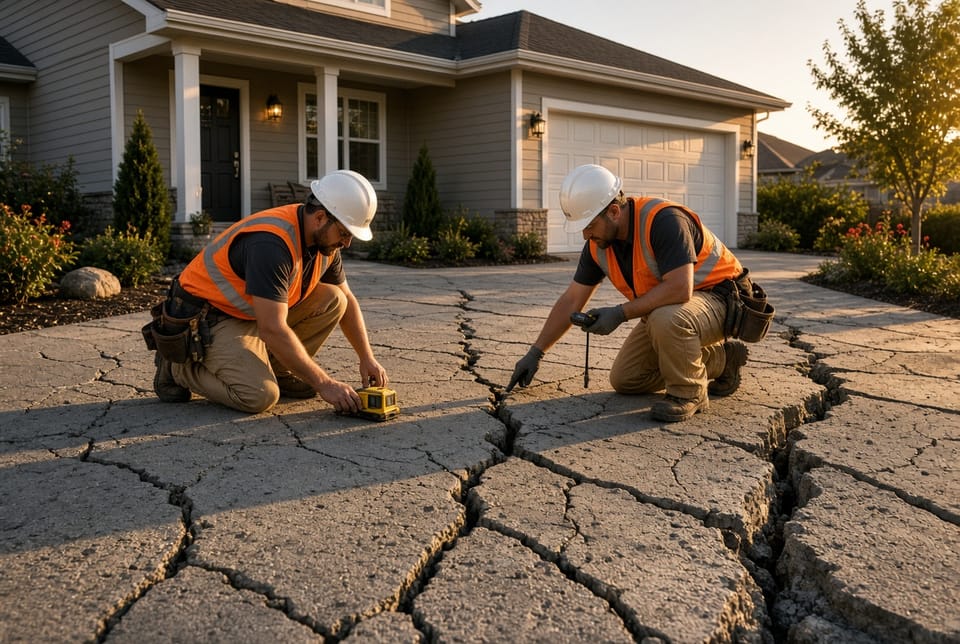
Extensive cracking appears as a network of interconnected fissures, often forming map-like patterns or running the full width of the driveway. These cracks frequently exceed one-half inch in width and show vertical displacement. They allow continuous water infiltration that saturates the subbase and invites further movement. Surface treatments merely hide the problem while the underlying structure continues to fail.
A failing subbase is the most serious and least visible issue. If the original installation lacked adequate compaction, proper drainage, or suitable aggregate, the soil beneath the concrete gradually loses strength. Signs include widespread heaving, rocking slabs, or persistent wet spots even after rain has stopped. Repairing only the concrete surface leaves the weak foundation intact, guaranteeing rapid recurrence of problems.
Other indicators that favor replacement include:
- Driveway age exceeding 30 years combined with multiple defect types
- Poor original installation revealed by inconsistent thickness or missing reinforcement
- Repeated repair attempts that have already failed
- Drainage deficiencies that channel water toward the house foundation
- Desire for updated width, slope, or decorative finishes that the existing slab cannot accommodate
Replacement allows complete correction of these root causes. Crews remove the old concrete, regrade and compact a new subbase, install proper drainage, and pour a correctly specified slab with control joints and reinforcement. The result is a driveway engineered for current loads and local climate conditions.
Key Factors in the Repair-versus-Replace Decision
A structured evaluation prevents both over-repairing a doomed slab and unnecessarily replacing a still-viable one. Consider these decisive elements in order.
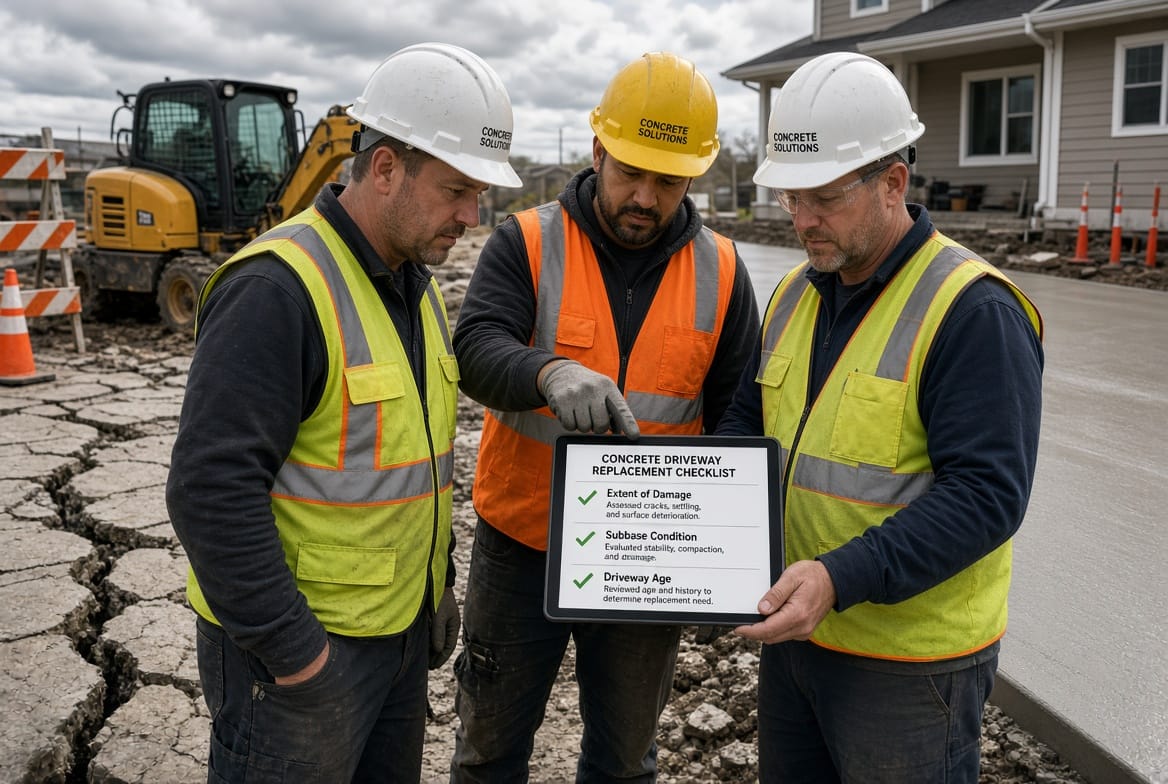
Extent of damage is the most immediate factor. Isolated defects covering less than 20–25 percent of the surface generally favor repair. When cracks, settlement, or spalling affect a majority of the driveway, replacement usually proves more economical over a 10-year horizon.
Subbase condition often determines the final outcome. A stable, well-drained base can support repairs. An eroded, saturated, or poorly compacted base requires excavation and reconstruction—work that is only practical during full replacement.
Age of the driveway provides context. A 10-year-old slab with limited cracking may be worth repairing. A 35-year-old driveway showing the same symptoms has already delivered most of its expected service life; replacement resets the clock.
Additional practical considerations include:
- Local climate and freeze-thaw frequency
- Vehicle weight and traffic volume
- Budget versus long-term cost of ownership
- Impact on property value and curb appeal
- Timeline and disruption tolerance
Homeowners who attempt to weigh these factors alone frequently underestimate hidden subbase problems. A qualified concrete contractor performs a thorough on-site inspection, measures elevations, checks moisture levels, and, when warranted, conducts limited excavation to inspect the base. This professional assessment removes guesswork and documents the recommended path.
A Practical Decision-Making Process
Follow these steps to reach a confident conclusion:
- Conduct a visual walk-through after a rain to observe pooling and after a freeze-thaw cycle to note new cracks.
- Measure crack widths and elevation changes with a straightedge and tape.
- Note the driveway’s age and any previous repair history.
- Schedule a professional inspection that includes subbase evaluation.
- Review the contractor’s written findings and cost comparison of repair versus replacement.
- Consider future needs such as additional parking or improved drainage.
- Select the option that balances immediate cost with expected remaining service life.
Most reputable contractors provide this analysis at little or no charge because an accurate diagnosis benefits both parties. Transparent communication about findings and options builds trust and ensures the chosen solution matches your priorities.
Benefits of Choosing the Correct Approach
Selecting repair when conditions allow preserves budget and minimizes disruption. The existing concrete remains in place, curing time is short, and the driveway returns to service quickly. Properly executed repairs also prevent small defects from spreading.
Choosing replacement when structural issues exist delivers peace of mind. A new slab with a rebuilt subbase resists the same forces that destroyed the original driveway. Modern mix designs, proper joint placement, and improved drainage techniques produce a surface that performs better than many older installations. Property value rises, safety improves, and maintenance demands drop for years.
Either path succeeds only when performed by experienced crews using appropriate materials. Amateur patches or incomplete base work frequently fail within a few seasons, turning a modest project into a larger expense.
Protecting Your Investment Going Forward
After repair or replacement, simple maintenance extends results. Seal the surface every two to three years, promptly fill any new hairline cracks, keep edges free of vegetation, and avoid harsh de-icers. Direct downspouts and landscape grading away from the driveway so water does not saturate the subbase.
Periodic professional inspections every five years catch emerging issues while they remain inexpensive to address. These habits transform a one-time project into a long-term asset.
The decision between concrete driveway repair and replacement does not need to feel overwhelming. By focusing on the actual extent of damage, the condition of the supporting soil, and the age of the existing slab, you can select the solution that restores safety, appearance, and durability.
Choose the right solution for your driveway.
Get Expert Advice on Settling & Cracking – Call Today