The Concrete Drainage Swale: Shaping Concrete to Direct Water
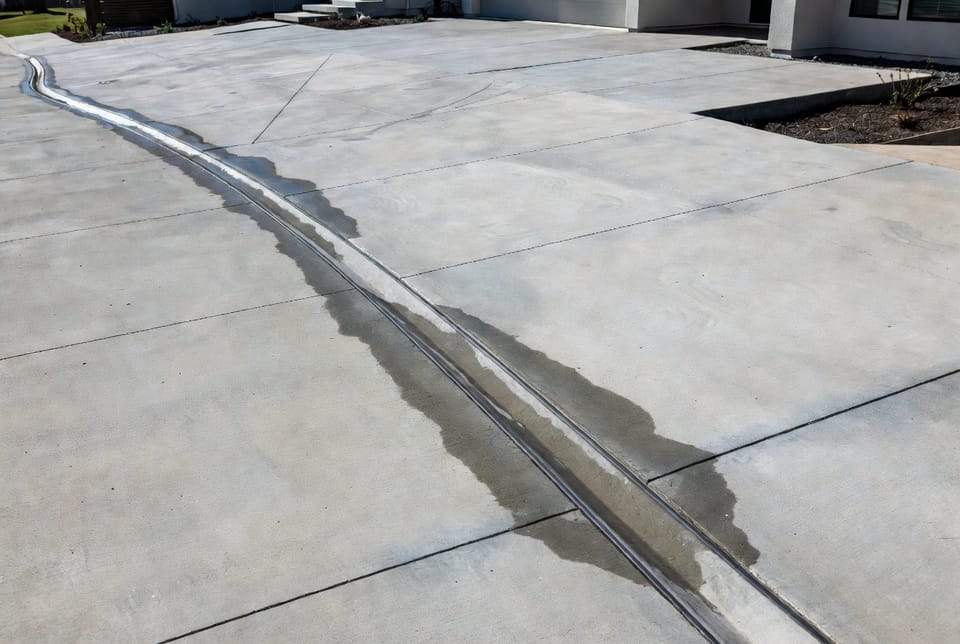
Concrete drainage swales represent one of the most effective yet often overlooked solutions in water management for residential and commercial properties. These carefully engineered shallow channels in concrete surfaces play a crucial role in directing water away from buildings, preventing costly damage from ponding and erosion.
Get Expert Concrete Drainage Solutions – Call Now!
In this comprehensive guide, we explore how proper concrete swale design transforms functional surfaces like driveways, walkways, and patios into reliable water management systems while maintaining aesthetic appeal.
Understanding Concrete Drainage Swales
A concrete drainage swale is a shallow, elongated depression or channel formed directly into concrete surfaces. Unlike traditional French drains or underground systems, swales utilize the surface itself to guide water naturally toward designated drainage points.
Key benefits include:
- Effective surface water redirection away from building foundations
- Prevention of ponding water that can damage concrete over time
- Reduced risk of soil erosion around paved areas
- Enhanced longevity of your concrete installations
- Compliance with local building codes for proper drainage
When expertly designed, these swales become nearly invisible while performing essential protective functions.
The Science Behind Proper Swale Design
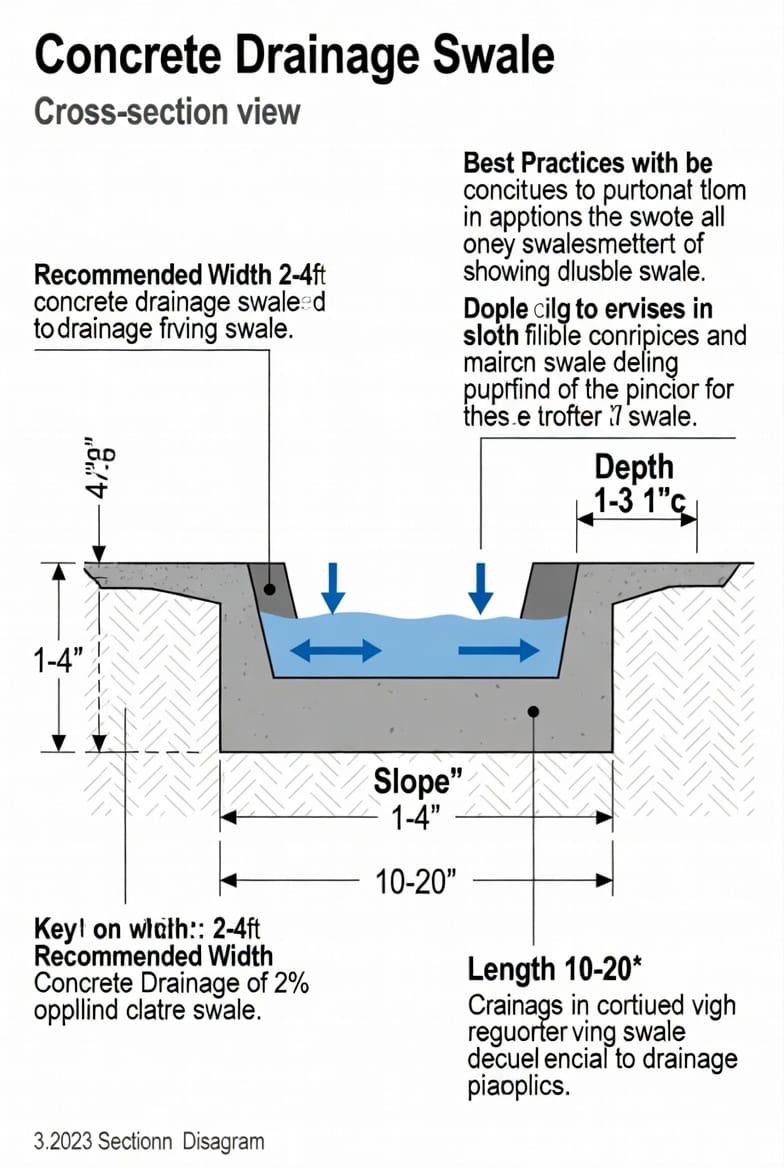
The effectiveness of any concrete drainage swale depends primarily on precise slope calculations. Industry standards recommend a minimum 2% slope (approximately 1/4 inch drop per foot) to ensure efficient water movement without creating tripping hazards or uncomfortable walking surfaces.
Critical design considerations include:
- Channel depth: Typically 1 to 3 inches at the deepest point, maintaining a smooth transition
- Width: Varies based on expected water volume, usually 12 to 36 inches
- Flow direction: Always directed away from structures toward storm drains or permeable areas
- Surface texture: Broom finish or light stippling for traction while allowing smooth water flow
Proper concrete mix design is equally important. Using high-strength concrete with appropriate additives ensures the swale withstands both water exposure and regular traffic.
Designing Swales for Different Concrete Applications
Driveway Drainage Solutions
Driveways often collect significant rainwater runoff. A concrete driveway swale typically runs along the center or edges, creating a gentle valley that channels water toward the street or side yards.
Best practices for driveway swales:
- Position swales to intercept water before it reaches garage doors
- Integrate with existing grading for seamless appearance
- Ensure adequate width to handle heavy rainfall events
- Maintain vehicle comfort with gradual transitions
Walkway and Pathway Considerations
For concrete walkways, swales must balance drainage with pedestrian safety. Narrower channels with smoother transitions work best in high-traffic areas.
Key elements include strategic placement near building entrances and integration with landscape features for natural water dispersion.
Patio and Outdoor Living Space Management
Patios present unique challenges due to their proximity to homes. Patio drainage swales often combine with slight overall grading to direct water away from seating areas and house foundations.
Effective patio solutions often feature:
- Multiple subtle swales directing water to perimeter drains
- Integration with decorative elements like stamped patterns
- Consideration of furniture placement and traffic patterns
Signs You Need Concrete Drainage Swales
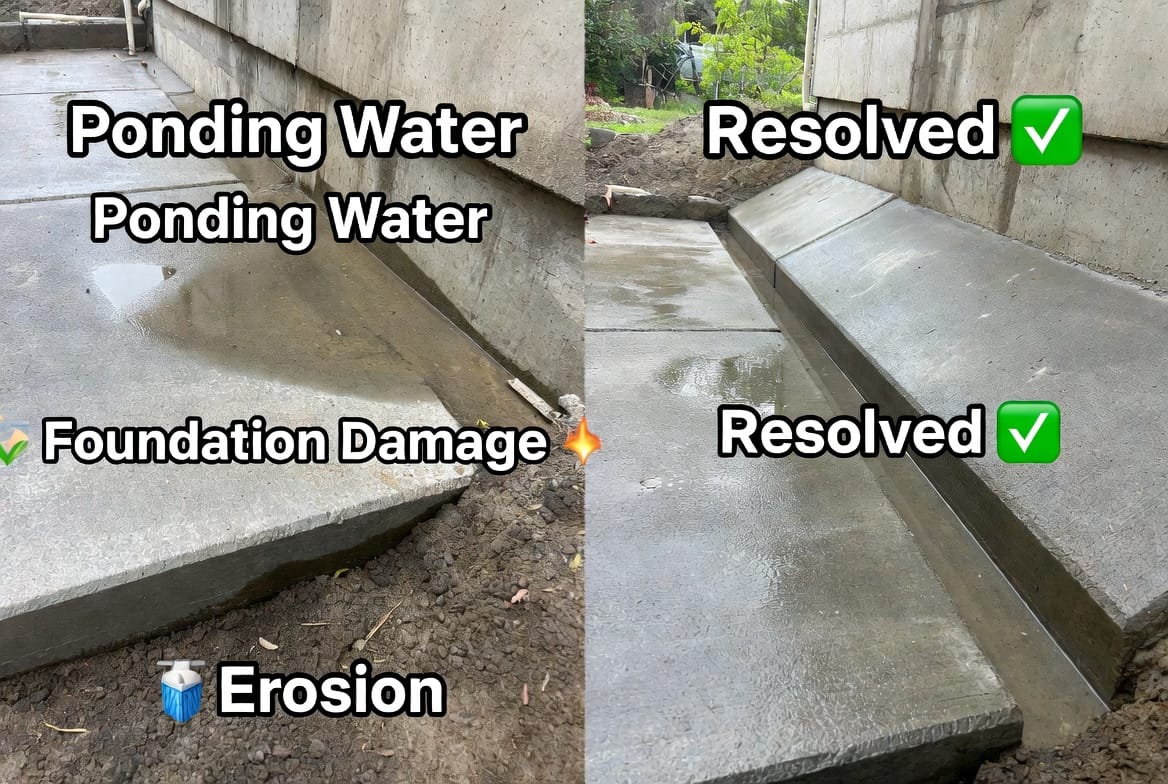
Recognizing problems early can prevent expensive repairs. Watch for these warning signs:
- Persistent ponding water after rainfall
- Water staining or damage along foundation walls
- Soil erosion at concrete edges
- Cracking or heaving in flatwork surfaces
- Moss or algae growth in low spots
- Water entering basements or crawl spaces
Installation Best Practices
Successful concrete swale installation requires experienced professionals who understand both concrete finishing and hydraulic principles. The process involves:
- Site evaluation and water flow analysis
- Precise formwork setup for desired channel shapes
- Quality concrete placement with proper reinforcement
- Expert finishing techniques to create functional yet attractive surfaces
- Thorough curing to ensure long-term durability
Quality control throughout installation ensures the swale performs as designed for decades.
Long-Term Maintenance and Performance
Well-constructed concrete drainage swales require minimal maintenance. Regular cleaning to remove debris and occasional inspection of slope integrity maintain optimal performance.
Proactive maintenance tips:
- Remove leaves and sediment seasonally
- Inspect for settling or cracking annually
- Address any changes in surrounding landscaping promptly
- Consider protective sealers for enhanced water resistance
Common Design Mistakes to Avoid
Even experienced contractors sometimes overlook critical details. Avoid these pitfalls:
- Insufficient slope leading to ineffective drainage
- Abrupt transitions creating tripping hazards
- Inadequate channel capacity for local rainfall patterns
- Poor integration with overall site grading
- Using incorrect concrete mixtures for water exposure
The Aesthetic and Functional Balance
Modern concrete techniques allow drainage swales to enhance rather than detract from property appearance. Through creative formwork, stamping, and coloring, these functional elements can become design features.
Homeowners increasingly appreciate solutions that solve water management challenges while maintaining beautiful outdoor spaces.
Environmental Benefits of Proper Drainage
Effective concrete swale systems contribute to responsible water management by:
- Reducing runoff into storm sewers
- Minimizing soil erosion and pollutant transport
- Protecting local waterways from excessive sediment
- Supporting sustainable landscape practices
Making Informed Decisions for Your Property
Every property presents unique challenges based on soil type, rainfall patterns, and existing structures. Professional assessment ensures your concrete drainage solutions address specific needs effectively.
Expert guidance helps balance immediate requirements with long-term performance goals.
Conclusion
Grading concrete to effectively manage water is just as important as creating beautiful, durable surfaces. A well-designed concrete drainage swale provides reliable protection against water damage while maintaining the aesthetic appeal of your outdoor spaces.
Don't let poor drainage compromise your investment. Proper planning and professional installation of concrete swales ensure your driveways, walkways, and patios perform beautifully for years to come.
Ready to improve your property's drainage system?
Professional Concrete Swale Design – Call for a Free Quote