The Concrete Crack Chasing: Routing Cracks Before Sealing
Concrete crack chasing is a critical step in professional concrete crack repair that ensures long-lasting, effective results. When hairline or wider cracks appear in concrete surfaces—whether on driveways, patios, garage floors, or industrial slabs—simply applying sealant over the top often leads to premature failure.
Expert Crack Chasing & Sealing – Call Today!
Crack chasing, also known as routing, involves carefully cutting a clean, uniform groove along the existing crack. This creates a wider, deeper, and contaminant-free surface that allows high-performance sealants to bond properly and flex with the concrete’s natural movement.
At our concrete repair services, we emphasize proper preparation because it makes all the difference between a temporary patch and a permanent solution. In this comprehensive guide, we’ll walk you through everything you need to know about this essential technique.
Understanding Concrete Cracks and Why They Need Proper Treatment
Concrete is incredibly strong, yet it inevitably develops cracks due to settling, temperature fluctuations, moisture changes, heavy loads, or shrinkage during curing. Left unaddressed, these cracks allow water infiltration, which can lead to reinforcing steel corrosion, further deterioration, and costly structural issues.
Key risks of ignoring proper crack preparation:
- Poor sealant adhesion
- Water penetration and freeze-thaw damage
- Continued crack widening over time
- Unsightly appearance that reduces property value
Crack chasing addresses these concerns by transforming irregular fractures into engineered repair channels. This method is widely recommended by concrete restoration professionals for both residential and commercial applications.
What Exactly Is Concrete Crack Chasing?
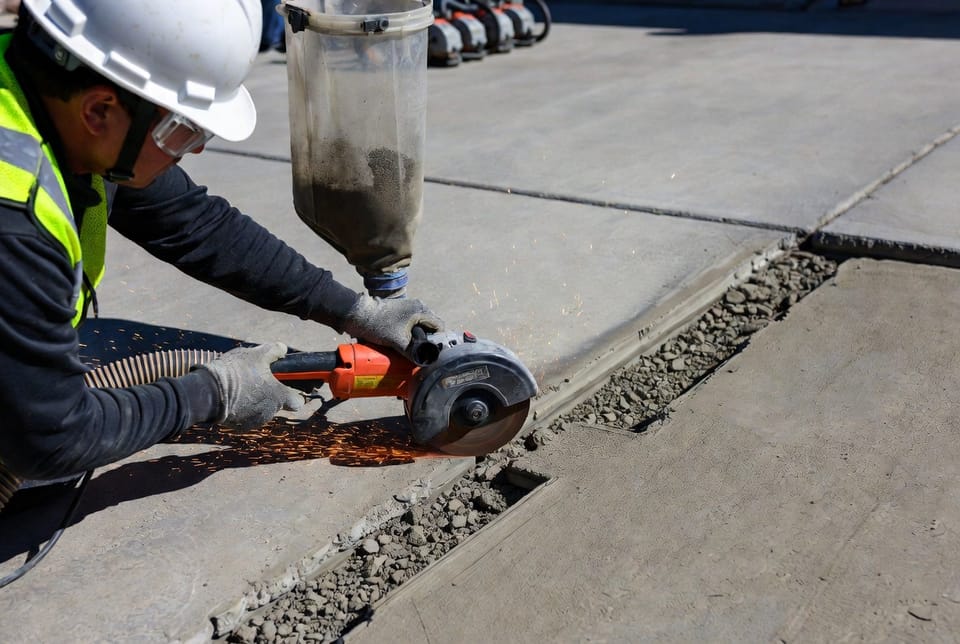
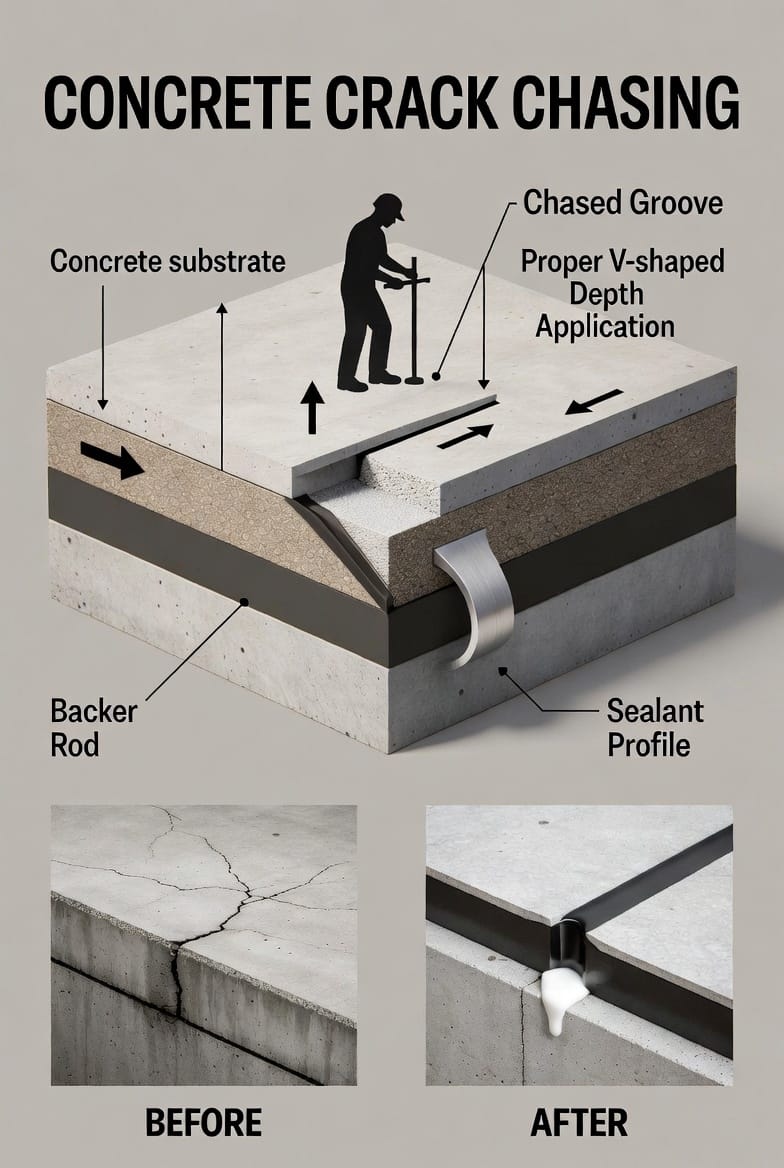
Crack chasing is the process of using a specialized tool—typically a grinder or concrete saw—to cut a precise groove directly along the path of the crack. The goal is to create a clean, V-shaped or rectangular channel that removes loose debris, widens the crack to an optimal width (usually ¼ to ½ inch), and provides sufficient depth for the sealant to perform effectively.
Unlike simple cleaning or filling, chasing ensures the sealant has a solid bonding surface free from dust, old material, or weak concrete edges. This step significantly enhances the flexibility and durability of the repair.
Why chasing is necessary:
- Creates a uniform reservoir for sealant
- Removes contaminated or spalled concrete
- Improves mechanical interlocking between sealant and substrate
- Allows for proper backer rod installation when needed
- Prevents sealant from bridging over the crack ineffectively
Tools and Equipment Used in Professional Crack Chasing
Professional crews rely on high-quality tools designed specifically for this task:
- Angle grinders with diamond blades (most common for precision work)
- Walk-behind concrete saws for longer, straight cracks
- Crack chasers (specialized blades that follow crack contours)
- HEPA dust extraction systems for safety and cleanliness
- Safety gear including respirators, eye protection, and hearing protection
The choice of tool depends on crack size, location, and project scale. For most residential repairs, a handheld grinder with a diamond crack-chasing blade offers excellent control and efficiency.
Step-by-Step Guide to Effective Crack Chasing and Sealing
Proper execution follows a disciplined sequence that ensures optimal results.
1. Initial Assessment and Cleaning
Begin by thoroughly inspecting the crack and surrounding area. Remove all loose debris, dirt, and vegetation using a wire brush, shop vacuum, or pressure washer. Identifying the crack’s cause helps determine the best repair strategy.
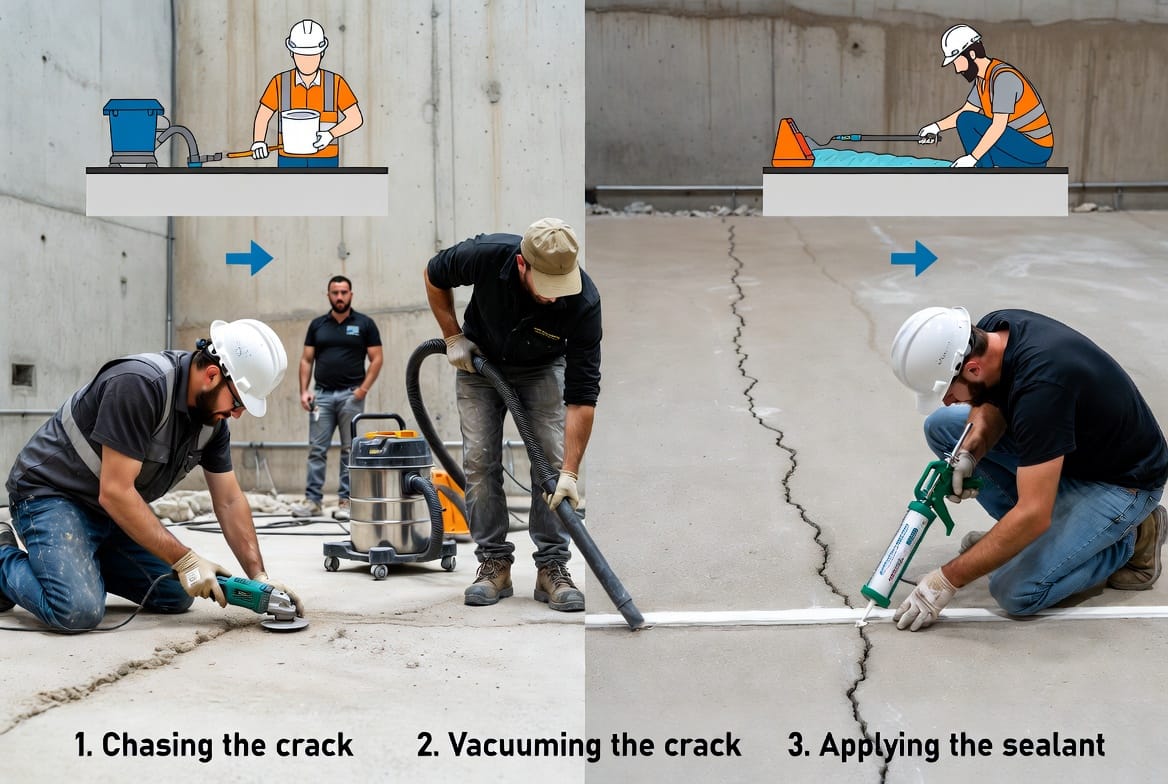
2. Routing the Crack (Chasing)
Using your chosen tool, carefully follow the crack’s path, cutting a consistent groove. Maintain steady pressure and depth—typically ½ to ¾ inch deep depending on crack width.
Pro tip: Slightly widen the groove at the surface to create a reservoir shape that accommodates sealant movement.
3. Vacuuming and Final Cleaning
After chasing, thoroughly vacuum the groove and surrounding area to remove all dust and debris. Any remaining particles can compromise the sealant bond. For best results, use compressed air followed by a vacuum with a HEPA filter.
4. Installing Backer Rod (When Applicable)
For deeper cracks, insert a closed-cell backer rod to control sealant depth. This ensures the sealant maintains an optimal width-to-depth ratio (usually 2:1), allowing it to expand and contract without tearing.
5. Applying High-Quality Sealant
Select a premium polyurethane or silicone sealant designed for concrete. Apply using a professional caulking gun, tooling the surface for a smooth, slightly concave finish. This shape helps shed water effectively.
6. Curing and Protection
Allow the sealant to cure fully according to manufacturer specifications before exposing the area to traffic or moisture.
Benefits of Professional Crack Chasing
Investing in proper concrete crack chasing delivers numerous advantages:
- Extended repair lifespan — often 10+ years with quality materials
- Enhanced waterproofing protecting against costly water damage
- Improved aesthetics with clean, uniform repairs
- Prevention of further cracking and structural issues
- Increased property value through professional maintenance
Homeowners and facility managers alike report greater peace of mind knowing their concrete surfaces are properly protected.
Common Mistakes to Avoid
Even experienced DIYers can undermine their efforts. Avoid these pitfalls:
- Skipping the chasing step and applying sealant directly
- Using insufficient depth or inconsistent width
- Failing to remove all dust and debris
- Choosing low-quality sealants not rated for exterior use
- Neglecting proper safety equipment during grinding
When in doubt, trust experienced professionals who understand the nuances of concrete restoration techniques.
When to Call the Experts
While small cracks might seem manageable, larger or structural cracks often require professional evaluation. Factors like crack width exceeding ¼ inch, active movement, or signs of underlying foundation issues warrant expert intervention.
Our team specializes in comprehensive concrete crack repair solutions, including advanced crack chasing methods tailored to your specific situation.
Maintaining Your Repaired Concrete Surfaces
After successful repair, regular maintenance helps preserve results:
- Inspect sealed areas annually
- Keep surfaces clean and free of standing water
- Address new cracks promptly
- Consider protective sealers for high-traffic areas
With proper care, your concrete investments will continue serving reliably for decades.
Conclusion: Proper Crack Prep Ensures Lasting Repairs
Concrete crack chasing represents the gold standard in professional repair preparation. By routing cracks to create ideal bonding surfaces, you set the foundation for sealant performance that truly stands the test of time.
Don’t settle for short-term fixes that fail when it matters most. Invest in quality preparation and materials for repairs you can trust.
If you’re dealing with concrete cracks on your property, we’re here to help. Contact us today to discuss your crack sealing needs and discover how professional crack chasing can restore strength and beauty to your concrete surfaces.
Durable Crack Sealing Starts Here – Call Now!