The Concrete Acid Etching: Preparing Surfaces for Coating
Surface preparation stands as the single most critical foundation for any successful concrete coating project. Without it, even the highest-quality epoxy, polyurethane, or polyaspartic systems risk peeling, blistering, or premature failure. Among the proven mechanical and chemical methods available, concrete acid etching remains a reliable, cost-effective technique that opens the concrete’s pores and creates the microscopic roughness essential for superior coating adhesion. This comprehensive guide explores every aspect of the process—what acid etching accomplishes, when it becomes necessary, the precise sequence of steps, and the non-negotiable safety protocols—so property owners, facility managers, and contractors can achieve durable, professional-grade results.
Ensure Long-Lasting Coating Bond – Call Now!
Understanding the Fundamentals of Surface Preparation
Concrete, by nature, is a porous material. Over time, however, its surface can become densified through finishing techniques, contamination, or previous sealers, leaving a smooth, non-absorbent layer that coatings cannot properly grip. Proper surface preparation removes these barriers and generates a profile that allows the coating to mechanically interlock with the substrate. Industry standards frequently reference a Concrete Surface Profile (CSP) ranging from CSP 1 to CSP 3 for most thin-film coatings; acid etching is particularly effective at producing this light-to-moderate texture.
The goal is never merely to clean the floor. It is to create a receptive, consistent canvas. When the concrete’s capillary structure is opened and a uniform roughness is established, the coating penetrates deeper, forming a tenacious bond that withstands heavy traffic, chemical exposure, and thermal cycling for years.
What Acid Etching Actually Does to Concrete
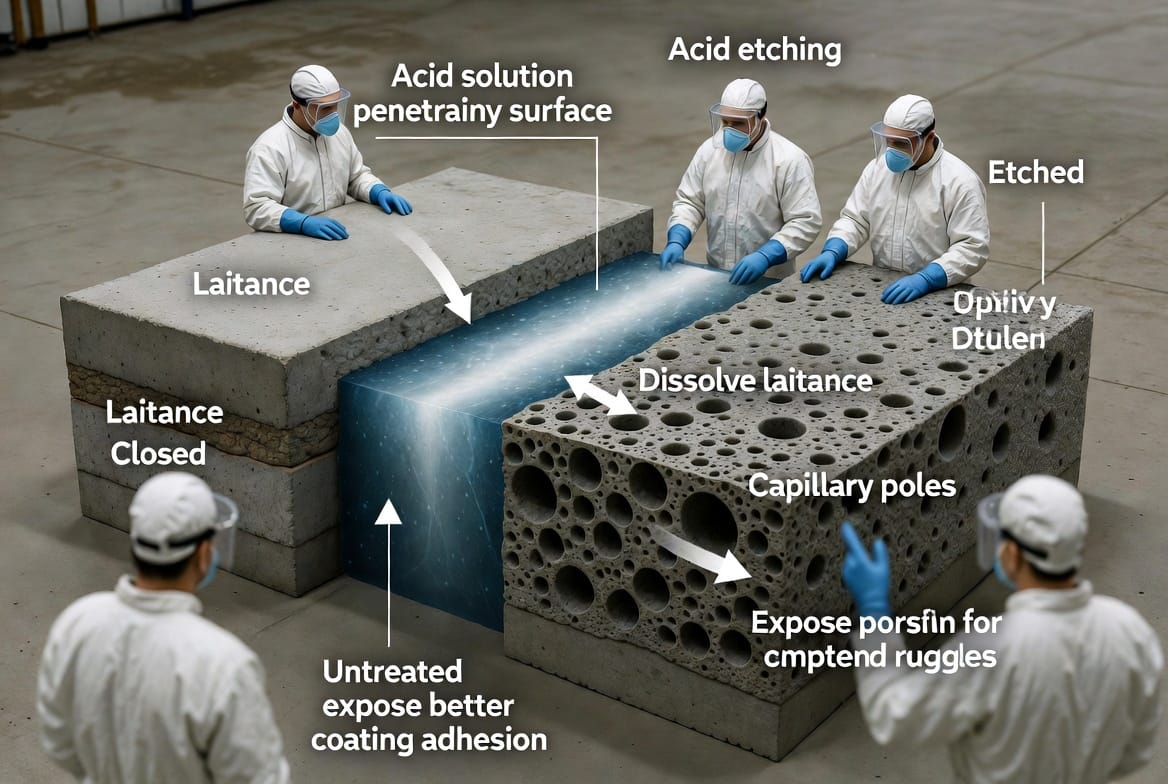
Acid etching employs a diluted solution of hydrochloric (muriatic) acid or a proprietary phosphoric-based etchant that reacts with the free lime (calcium hydroxide) present in the concrete matrix. This controlled chemical reaction produces two essential outcomes:
- Opens the pores: The acid dissolves the smooth laitance and densified surface paste, exposing the underlying porous structure so that coating resins can penetrate several millimeters into the slab.
- Creates microscopic roughness: The etching action leaves a finely textured “tooth” or profile across the entire surface. This roughness dramatically increases the surface area available for mechanical adhesion, preventing the coating from simply sitting on top like a film that can later delaminate.
The reaction is self-limiting to a degree; once the free lime is consumed, the etching slows. Nevertheless, skilled application ensures uniformity. The result is a concrete surface that feels like fine sandpaper—ready to accept primers and topcoats with maximum tenacity. Without this dual action of pore opening and roughness creation, coatings applied to smooth or sealed concrete almost invariably fail within months under real-world stresses.
When Acid Etching Becomes Necessary
Not every concrete floor requires acid etching. Power-troweled warehouse slabs, polished surfaces, previously sealed garage floors, or any concrete that exhibits a glassy sheen typically demand the process. Visual and tactile clues include:
- Water beading on the surface rather than being absorbed within 60–90 seconds (the classic “water drop test”).
- A smooth, almost polished appearance left by steel trowels.
- Residual curing compounds, form-release agents, or old sealers that create a hydrophobic barrier.
- Light contamination that mechanical grinding alone cannot fully address in tight timelines or budget constraints.
In residential garages, commercial kitchens, manufacturing facilities, and retail spaces where coatings must endure vehicle traffic, forklift movement, or frequent cleaning, acid etching provides a practical middle ground between aggressive diamond grinding and simple detergent washing. It is especially valuable on existing slabs where dust generation from mechanical methods must be minimized or where access for large grinding equipment is limited.
The Complete Step-by-Step Acid Etching Process
Achieving consistent results demands disciplined execution. The following sequence has proven reliable across thousands of projects:
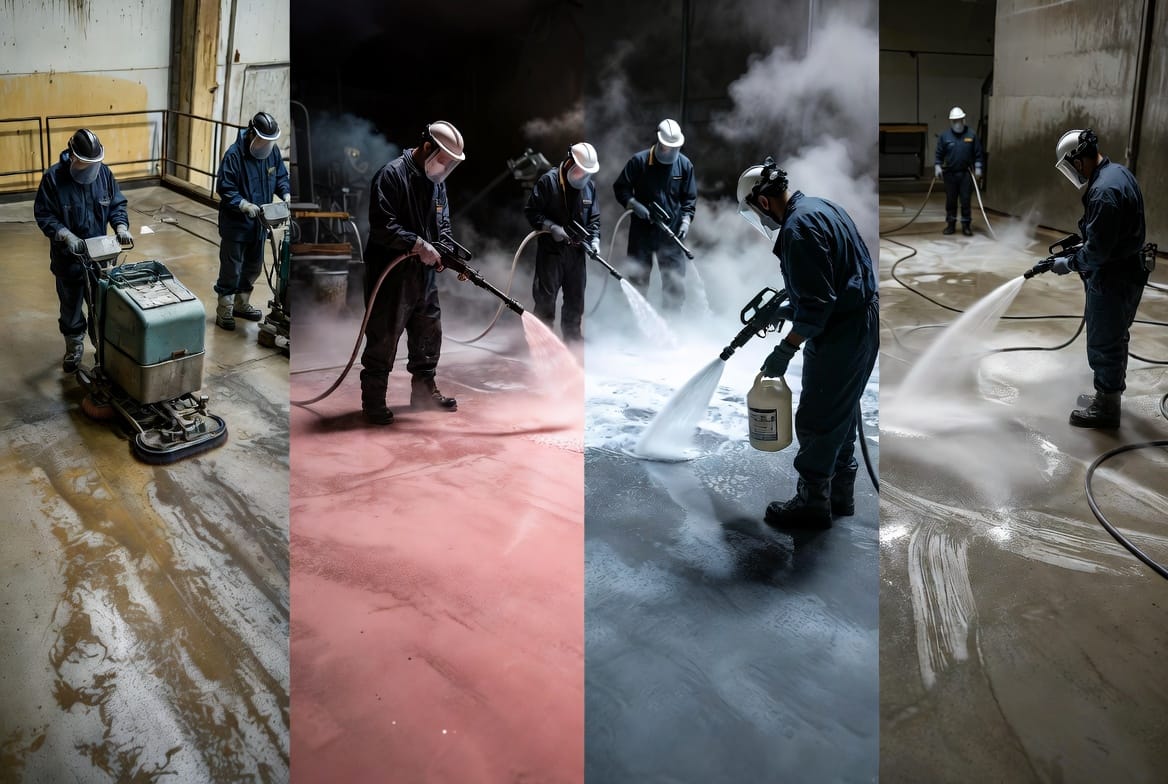
- Thorough cleaning: Remove all dirt, oil, grease, and loose debris using a heavy-duty degreaser and scrubbing machines. Rinse completely and allow the surface to dry. Any residual contaminants will neutralize the acid prematurely and create weak spots.
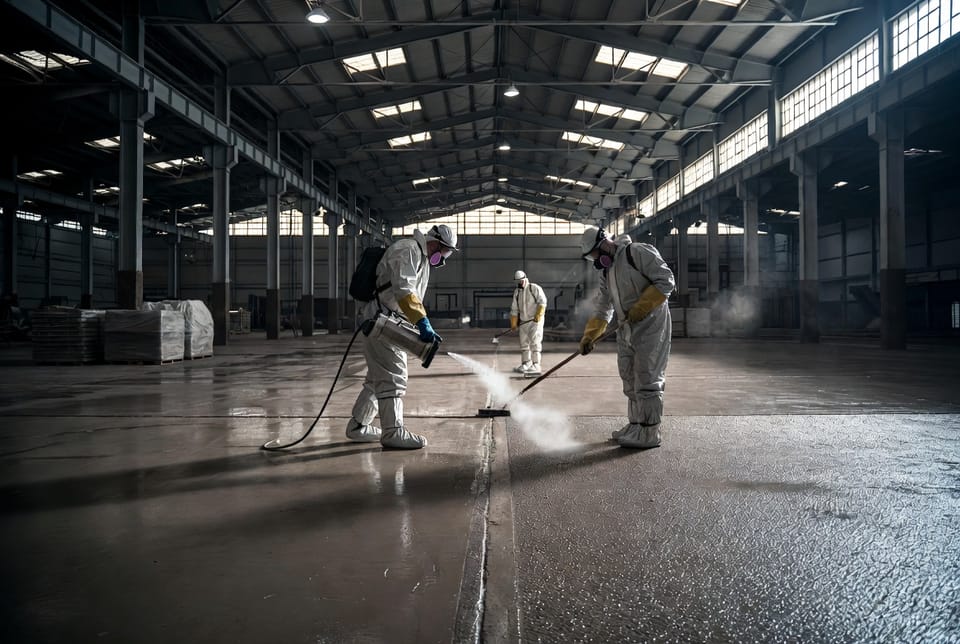
- Acid application and etching: Dilute the acid according to manufacturer guidelines (commonly 1:1 to 1:4 with water). Apply evenly with a plastic watering can or low-pressure sprayer, working in manageable sections. Agitate with a stiff-bristle broom or mechanical scrubber for 5–15 minutes until the surface stops fizzing vigorously and develops a uniform matte appearance.
- Neutralization: Immediately after etching, flood the floor with a neutralizing solution—typically baking soda mixed with water or a commercial ammonia-based neutralizer. This step halts the chemical reaction and raises the pH back toward neutral (7–8). Failure to neutralize leaves residual acid that can continue attacking the concrete or later compromise the coating.
- Rinsing: Perform multiple thorough rinses with clean water, preferably using a wet vacuum or squeegee system to extract all residual salts and neutralizing agents. Test the rinse water with pH paper until readings stabilize near neutral.
- Drying: Allow the floor to dry completely—usually 24–48 hours depending on humidity and temperature. Moisture meters should confirm readings below 4–5 percent before any coating is applied. Residual moisture is a leading cause of coating blistering.
Throughout the process, maintain continuous ventilation and monitor ambient conditions. Temperature should ideally remain between 50 °F and 85 °F for optimal reaction rates.
Critical Safety Considerations
Acid etching involves corrosive chemicals and demands uncompromising respect for safety. Protective gear is non-negotiable: chemical-resistant suits, butyl or neoprene gloves, full-face respirators with acid-gas cartridges, and chemical splash goggles. Never work alone. Ensure continuous fresh-air ventilation or forced-air systems to disperse fumes that can irritate respiratory passages and eyes.
Neutralizing residual acid is equally vital. Unneutralized surfaces can remain acidic for days, corroding metal fixtures, damaging nearby vegetation if runoff occurs, and creating hazardous conditions for subsequent workers. Always contain and properly dispose of rinse water in accordance with local environmental regulations—never allow it to enter storm drains untreated.
Additional precautions include:
- Pre-wetting surrounding areas and protecting adjacent finishes.
- Having neutralizing agents and emergency eyewash stations immediately available.
- Training every team member on spill response and first-aid procedures.
- Avoiding acid etching on extremely hot days when rapid evaporation can create uneven results and concentrated fumes.
When these protocols are followed rigorously, acid etching becomes a controlled, predictable operation rather than a hazardous gamble.
Advantages That Justify the Effort
Properly etched concrete delivers measurable long-term value. Coatings achieve full design thickness and bond strength, resisting delamination even under thermal shock or heavy point loads. Maintenance costs drop because the finished system lasts longer and cleans more easily. Facility downtime is minimized compared with more aggressive mechanical profiling methods that generate significant dust and require extensive containment.
Moreover, acid etching levels minor surface variations and removes weak surface layers that would otherwise become failure points. The resulting profile accepts a wide range of coating chemistries—from thin acrylic sealers to thick industrial epoxy systems—expanding design flexibility.
Avoiding Common Pitfalls
Even experienced teams can encounter setbacks. Over-etching produces a powdery surface that must be removed before coating. Under-etching leaves shiny islands that reject adhesion. Inadequate rinsing traps soluble salts that later cause osmotic blistering. Skipping the water-drop test or moisture measurement invites moisture-related failures. Each of these risks is eliminated by disciplined adherence to the process outlined above and by treating every floor as a unique substrate requiring verification rather than assumption.
Professional Execution Versus DIY Approaches
While the chemistry appears straightforward, consistent results across large or complex floors demand experience. Professionals calibrate dilution ratios to the specific concrete mix design, adjust dwell times for ambient conditions, and possess the equipment to extract rinse water efficiently. They also carry liability coverage and environmental compliance knowledge that protect property owners. For mission-critical floors—food-processing plants, aircraft hangars, or high-traffic retail—the investment in expert preparation pays dividends in performance and peace of mind.
Final Thoughts on Long-Term Performance
The difference between a coating that lasts two years and one that endures fifteen often traces directly back to the quality of surface preparation. Acid etching, when executed with precision, opens pores and creates the roughness that transforms ordinary concrete into an ideal substrate. Every subsequent layer—from primer to topcoat—builds upon that foundation.
Proper prep ensures coating adhesion. Whether you manage a single residential garage or an entire industrial campus, investing the necessary time and expertise at the preparation stage safeguards the entire system. For personalized guidance on assessing your concrete surfaces, determining whether acid etching is the optimal method, or scheduling professional evaluation. Their team stands ready to help you achieve surfaces that perform as intended for decades.
Call Now for Safe, Professional Concrete Etching