The Compressor Short Cycling: Causes, Consequences, and Solutions for Frequent On-Off Operation
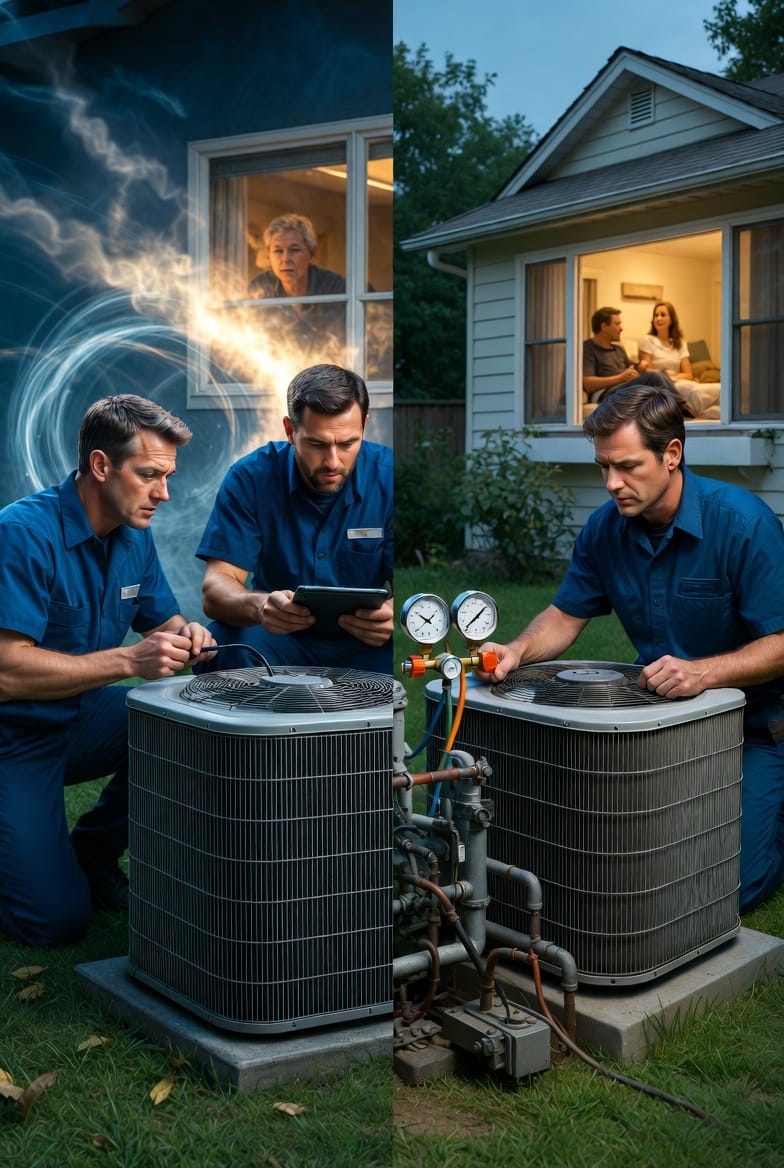
Compressor short cycling is one of the most frustrating yet common performance issues homeowners encounter with their central air conditioning or heat pump systems. Instead of running in steady, efficient cycles that maintain consistent indoor comfort, the compressor turns on and off rapidly – sometimes every few minutes. This frequent on-off operation places unnecessary stress on the entire HVAC system and drives up energy costs while reducing reliability.
Stop Compressor Short Cycling – Call Now for Expert Diagnosis!
If your system seems to be constantly clicking on and off without ever reaching a full cooling cycle, you are likely experiencing compressor short cycling. The good news is that this issue is highly diagnosable and, in most cases, fully correctable by a qualified HVAC professional. In this comprehensive guide, we explain exactly what short cycling is, the leading causes behind it, the serious consequences of ignoring it, and the proven solutions that restore long-term performance and peace of mind.
What Is Compressor Short Cycling?
In a healthy HVAC system, the compressor operates in balanced cycles – typically running for 10 to 20 minutes or longer before shutting off, allowing the home to reach and maintain the thermostat setting efficiently. Short cycling occurs when these cycles shrink dramatically to under 5–10 minutes of run time followed by an equally brief off period.
This rapid on-off pattern prevents the system from removing humidity effectively and never allows the refrigerant to reach optimal operating pressures. As a result, your home feels less comfortable, your energy bills climb, and the compressor – the heart of your HVAC system – works harder than it was designed to.
Recognizing the signs early is key: unusual clicking sounds from the outdoor unit, uneven temperatures room to room, higher-than-normal utility bills, and frequent thermostat adjustments are all classic indicators of frequent on-off operation.
Why Your Compressor Keeps Short Cycling: Key Causes
Several factors can trigger compressor short cycling. Identifying the root cause is essential because simply resetting the system or adjusting the thermostat rarely provides a lasting fix.
Oversized HVAC System
An HVAC unit that is too large for your home’s square footage cools the space too quickly. Once the thermostat is satisfied, the compressor shuts down almost immediately. A short time later, the temperature rises slightly and the cycle restarts. This pattern repeats constantly, never allowing the system to dehumidify properly or run at peak efficiency.
Refrigerant Issues
Low refrigerant levels caused by leaks are a leading culprit. When refrigerant charge drops, system pressures become unstable. Safety switches detect the imbalance and shut the compressor down to prevent damage. The result is short, erratic cycles. Over time, repeated low-pressure events can lead to compressor failure.
Thermostat Placement and Malfunction
A thermostat located near windows, heat sources, air vents, or in direct sunlight will register false temperature readings. It signals the system to cycle on and off prematurely. Similarly, an aging or poorly calibrated thermostat may send erratic signals that confuse the control board.
Restricted Airflow from Dirty Filters or Blocked Coils
Clogged air filters, dirty evaporator coils, or blocked supply and return vents drastically reduce airflow. The system cannot absorb heat fast enough, causing the compressor to reach its internal safety limits and shut down quickly. Each short cycle compounds the problem, further stressing components.
Additional Contributing Factors
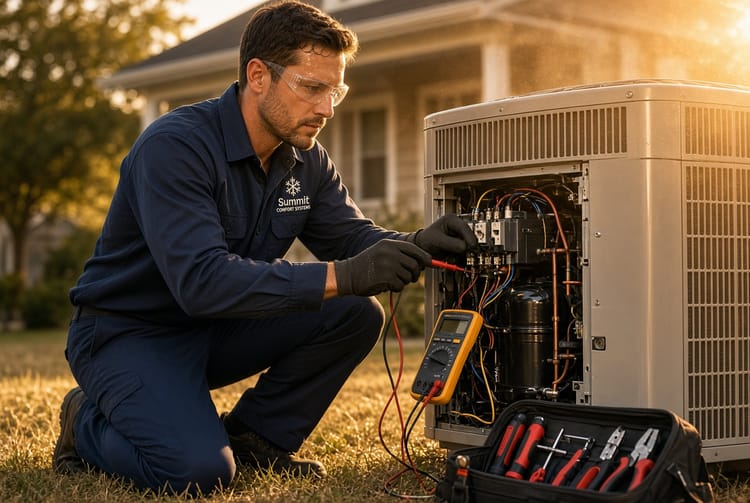
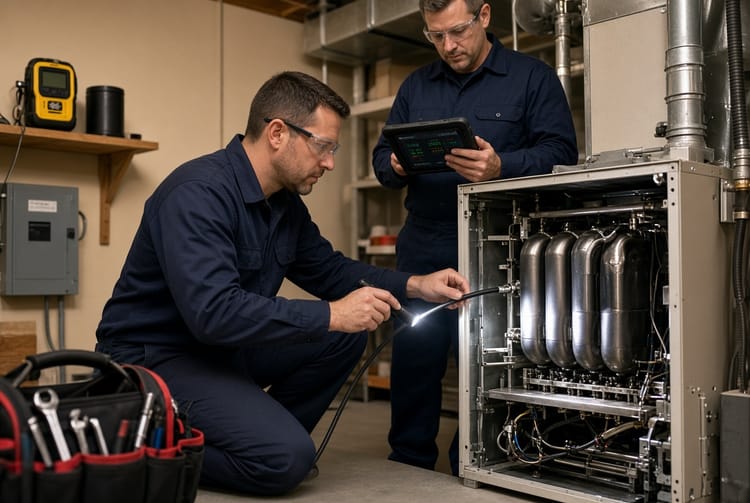
Electrical issues, faulty capacitors, low or high pressure switch malfunctions, and even poor ductwork design can contribute. A professional diagnostic inspection is the only reliable way to isolate the exact cause in your specific installation.
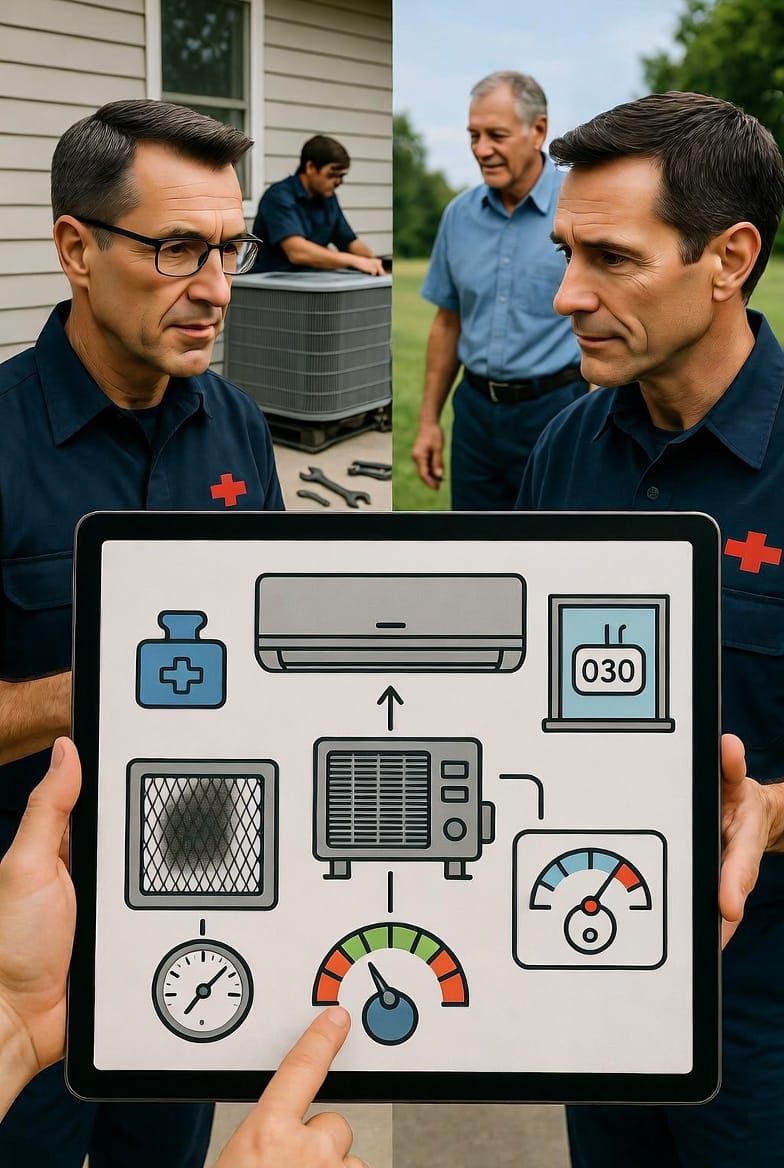
The Costly Consequences of Ignoring Short Cycling
Frequent on-off operation is far more than a minor annoyance. Left unaddressed, compressor short cycling accelerates wear and drives up operating costs dramatically.
- Premature Compressor Failure – The compressor is the most expensive component in your HVAC system. Each rapid start-stop cycle creates electrical and mechanical stress that can halve its expected lifespan.
- Skyrocketing Energy Bills – Short cycling prevents efficient heat exchange, forcing the system to work harder while delivering less cooling. Homeowners often see 20–40 % increases in monthly cooling costs.
- Reduced Indoor Comfort – Rapid cycling fails to remove humidity, leaving the air feeling clammy even when the temperature is technically “satisfied.”
- Higher Repair Frequency – The strain leads to cascading failures in capacitors, contactors, and control boards, resulting in repeated service calls.
- Environmental Impact – Wasted energy means a larger carbon footprint and unnecessary strain on the power grid.
The reassuring news is that these consequences are completely preventable once the underlying cause is professionally diagnosed and corrected.
Proven Solutions to Stop Compressor Short Cycling
The path to reliable, efficient operation begins with an expert assessment. Here are the most effective, long-term solutions HVAC professionals use to eliminate frequent on-off operation:
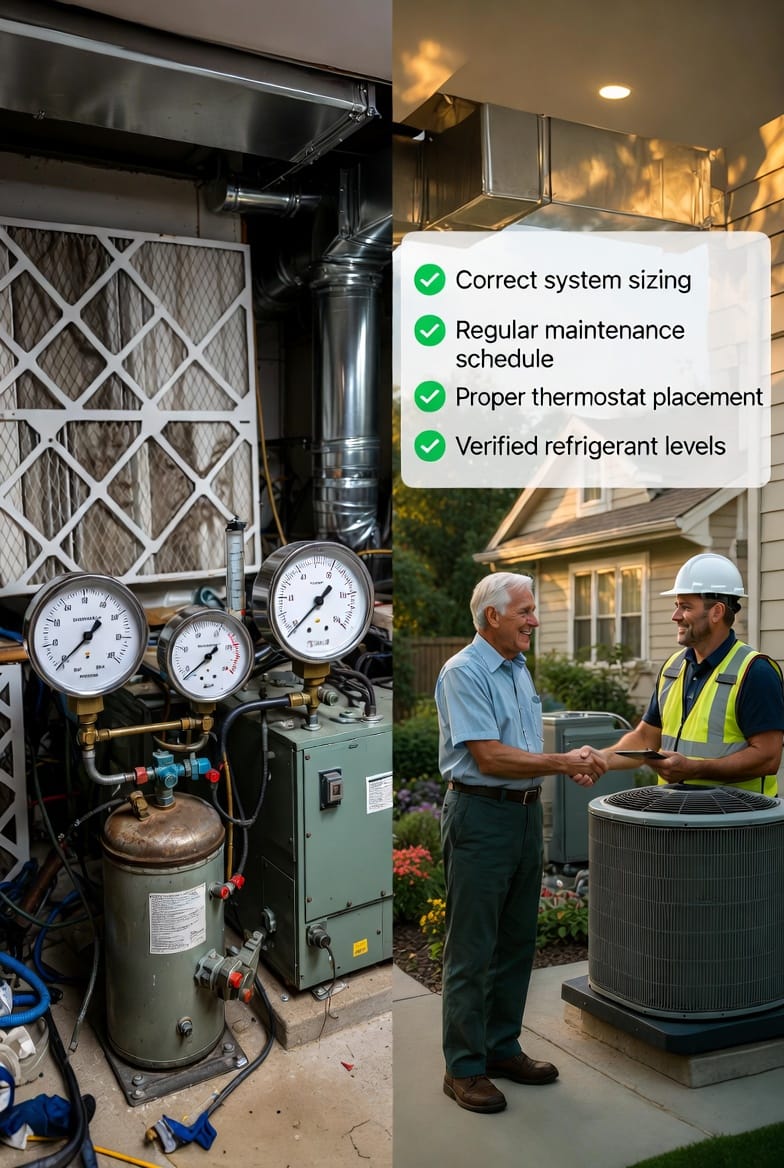
- Correct System Sizing Verification – For new installations or major replacements, ensure the unit matches your home’s load calculation. Existing oversized systems may require zoning or supplemental dehumidification strategies.
- Professional Refrigerant Leak Repair and Recharge – Technicians locate and seal leaks using advanced detection tools, then restore the precise refrigerant charge specified by the manufacturer.
- Thermostat Relocation or Upgrade – Moving the thermostat to a central, shaded interior wall or installing a smart thermostat with adaptive algorithms prevents false cycling signals.
- Routine Maintenance and Airflow Restoration – Regular filter changes, coil cleaning, and duct inspections restore proper airflow and allow the compressor to run longer, healthier cycles.
- Electrical and Control System Checks – Testing capacitors, contactors, and pressure switches ensures all safety and control components are functioning correctly.
- Ductwork Evaluation – Sealing leaks and balancing airflow eliminates restrictions that contribute to short cycling.
Implementing these solutions not only stops the damaging cycle but also extends equipment life, lowers energy consumption, and restores consistent comfort throughout your home.
Take Control of Your HVAC Performance Today
Compressor short cycling is a clear signal that your system needs attention, but it is also an opportunity to restore peak efficiency and comfort. By addressing the root cause rather than treating symptoms, you protect your investment, reduce energy waste, and enjoy reliable cooling or heating for years to come.
Professional diagnosis is the smartest first step. A certified technician can pinpoint the exact issue in your system and recommend the most cost-effective, lasting solution tailored to your home.
Restore Your HVAC Efficiency – Schedule Diagnostics Now