The Commercial Auto vs. Personal Auto: When to Switch
Choosing the correct vehicle insurance is one of the most important decisions a business owner or self-employed professional can make. Many people start with a standard personal auto policy because it feels familiar and affordable. Yet as soon as a vehicle begins supporting income-generating activities, that same policy can leave serious gaps. Understanding the clear differences between commercial auto and personal auto coverage protects both your assets and your peace of mind.
Switch to Commercial Auto Coverage Today – Call Now!
This guide explains exactly when a switch becomes necessary, what commercial auto insurance actually covers, and the real risks of continuing to rely on a personal policy for business use. The information is practical, straightforward, and designed to help you make an informed decision without unnecessary complexity.
Understanding the Core Difference
A personal auto policy is designed for vehicles used primarily for private, non-business purposes—commuting to a regular job, running household errands, or leisure travel. Liability limits, medical payments, and physical damage coverage are calibrated for individual drivers and typical passenger vehicles.
A commercial auto policy, by contrast, is built for vehicles that serve a business function. It accounts for higher exposure, more frequent use, specialized equipment, and the greater liability that comes with generating revenue. Whether you operate a single work truck or manage a small fleet, commercial coverage is structured to match the realities of business driving.
The distinction is not merely technical. Insurance carriers evaluate risk differently once a vehicle crosses into business territory. Using the wrong type of policy can result in claim denials, personal financial exposure, and unexpected out-of-pocket costs.
When You Need Commercial Auto Coverage
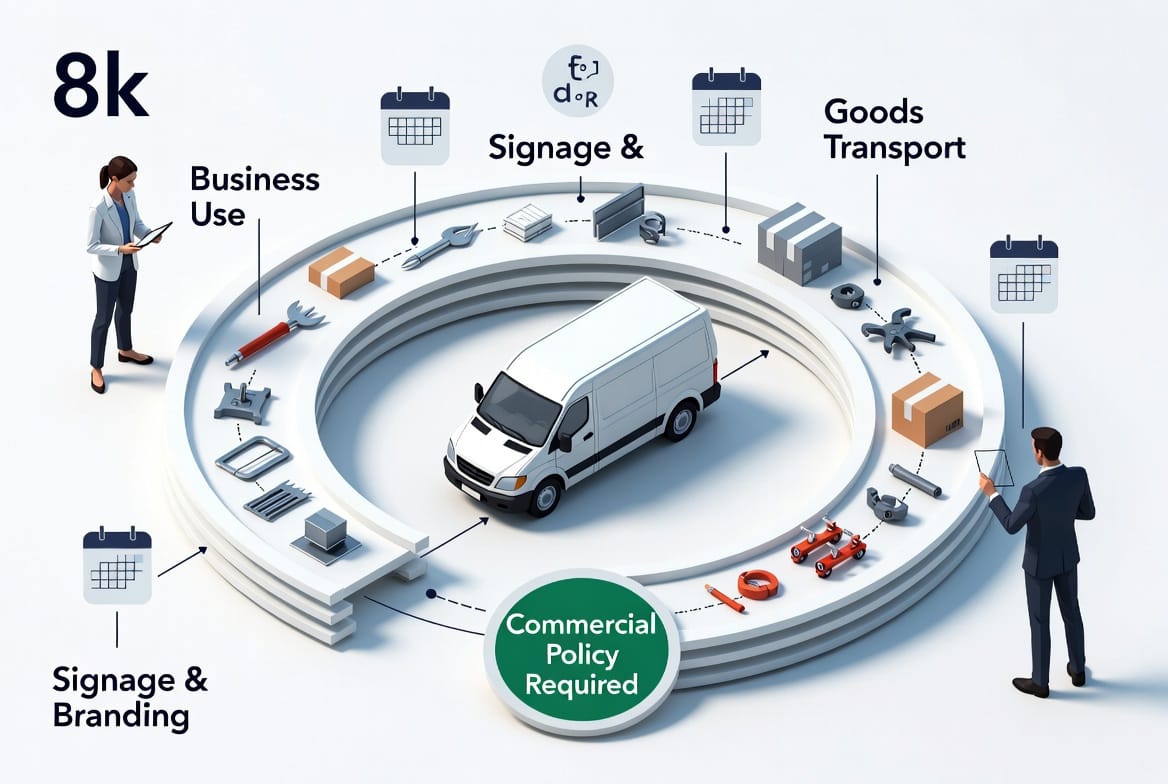
Several clear situations signal that it is time to move from personal to commercial auto insurance. These triggers are widely recognized across the industry and provide reliable guidance.
- Business use of the vehicle. If the vehicle is used regularly to perform job-related tasks—visiting clients, making deliveries, transporting tools, or traveling between job sites—commercial coverage is appropriate. Occasional trips may still fall under personal policies, but consistent or frequent business driving does not.
- Vehicles displaying business logos or signage. Any vehicle that carries your company name, logo, phone number, or advertising materials is almost always classified as a commercial vehicle. Visible branding increases public perception of business activity and raises liability exposure.
- Transporting goods or materials. Hauling inventory, supplies, equipment, or customer products—whether in a van, truck, or even a passenger vehicle with a trailer—requires commercial auto protection. Cargo and the potential for damage to others’ property create risks that personal policies typically exclude.
- More than occasional business driving. Many personal policies allow limited business use, often defined as less than a certain percentage of total miles or a set number of days per week. Once usage exceeds those thresholds, the personal policy may no longer apply.
- Vehicles owned by a business entity. If the vehicle is titled in the name of an LLC, corporation, or partnership, commercial auto insurance is generally required. Personal policies are written for individual owners, not business entities.
- Employees or multiple drivers. When more than one person operates the vehicle for work purposes, commercial policies offer broader driver coverage and higher liability limits that better protect the business.
Recognizing these situations early prevents costly surprises. The moment any of these factors appear, reviewing your coverage with a knowledgeable advisor becomes essential.
What Commercial Auto Insurance Covers
Commercial auto policies provide a broader and more robust set of protections tailored to business realities. Key components typically include:
- Higher liability limits. Business activities often involve greater potential for property damage or bodily injury claims. Commercial policies offer higher minimum and available limits, protecting the company’s assets more effectively than standard personal coverage.
- Cargo coverage. When you transport goods belonging to clients or your own inventory, specialized cargo protection can reimburse losses from theft, damage, or accidents. Personal policies almost never include meaningful cargo protection.
- Equipment and tools. Many commercial policies can be endorsed to cover tools, machinery, or specialized equipment stored or transported in the vehicle. This is particularly valuable for contractors, service technicians, and tradespeople.
- Hired and non-owned auto coverage. This extension protects the business when employees use their own vehicles for company errands or when the business rents or borrows vehicles. It is a critical safeguard that personal policies cannot provide.
- Physical damage coverage. Comprehensive and collision protection for the business vehicle itself is available, often with options that reflect the higher value or specialized nature of commercial vehicles.
- Medical payments and uninsured/underinsured motorist protection. These benefits apply to drivers and passengers while the vehicle is used for business purposes, offering additional security.
Because every business has unique needs, commercial auto policies are highly customizable. Endorsements can address specific risks such as towing, rental reimbursement, or coverage for attached equipment.
The Real Risks of Using a Personal Policy for Business
Continuing to rely on a personal auto policy once business use begins creates several serious exposures:
- Claim denial. If an insurer determines that the vehicle was being used for business at the time of an accident, the claim may be denied entirely. This leaves the driver and the business responsible for all damages, medical costs, and legal expenses.
- Insufficient liability limits. Personal policies often carry lower liability ceilings. A single serious accident involving a commercial vehicle can easily exceed those limits, placing personal assets and business assets at risk.
- Exclusion of business-related losses. Cargo, tools, and equipment are rarely covered under personal policies. Damage or theft of these items becomes an uncovered out-of-pocket expense.
- Policy cancellation. Discovery of regular business use can lead the personal insurer to non-renew or cancel the policy, creating a sudden coverage gap.
- Legal and contractual complications. Many clients, landlords, or contracts require proof of commercial auto insurance. Operating without it can jeopardize business relationships and opportunities.
- Personal financial exposure. In the event of a denied claim, the business owner may face lawsuits that reach into personal bank accounts, homes, or other assets—especially if the business is structured as a sole proprietorship.
These risks are not theoretical. They materialize regularly when accidents occur during business operations. The financial and operational consequences can be severe enough to threaten the survival of a small business.

Making the Switch Smoothly
Transitioning to commercial auto insurance does not have to be complicated. Begin by gathering details about how the vehicle is used: average weekly business miles, types of cargo or equipment carried, number of drivers, and whether the vehicle displays any business identification. Provide this information to an experienced insurance professional who can compare options and recommend appropriate limits and endorsements.
Many carriers offer flexible commercial policies that can start with a single vehicle and expand as the business grows. Premiums reflect the actual risk profile, so accurate information helps keep costs reasonable while ensuring solid protection.
It is also wise to review related coverages at the same time. General liability, workers’ compensation, and commercial property policies often interact with commercial auto, creating a more complete risk-management picture.
Final Advice: Protect What You Have Built
The decision between commercial auto and personal auto is not about choosing the cheapest option—it is about choosing the correct one. Continuing to operate under a personal policy once business use is established creates unnecessary vulnerability. A single claim denial can erase years of hard work.
Do not risk a claim denial. Speak with a knowledgeable advisor who understands the nuances of commercial vehicle coverage and can tailor a policy to your specific operations.
Proper commercial auto insurance provides more than financial protection. It delivers confidence that every business mile is backed by coverage designed for the realities of work. That confidence allows you to focus on serving customers, growing the business, and moving forward without the constant concern of an uncovered loss.
Making the switch at the right time is one of the smartest risk-management steps a business can take. The difference between personal and commercial coverage is clear, the triggers are identifiable, and the benefits of proper protection are substantial. Take action now so that the next time the vehicle is used for business, it is fully and correctly insured.
Secure Your Work Vehicles – Call for Expert Guidance