The Codependency Recovery: Healing the Caretaker Role in Addiction

In the journey of addiction recovery, families often face their own silent struggles. Codependency emerges as a profound challenge that can keep entire family systems trapped in unhealthy patterns. This article explores how to break free from the caretaker role, heal emotional wounds, and rebuild healthier relationships while supporting a loved one’s recovery.
Start Healing from Codependency Today – Call Now!
At our core, we believe true healing happens when families address both the addiction and the codependent dynamics that often sustain it. Recovery is not just for the individual struggling with substance use—it extends to every family member ready to reclaim their own life.
Understanding Codependency in Family Systems
Codependency is characterized by excessive emotional or psychological reliance on another person, particularly someone battling addiction. It involves enabling behaviors where family members unintentionally support the continuation of addictive patterns through over-responsibility and self-sacrifice.
This dynamic frequently develops within families where addiction has become central. One or more members unconsciously adopt the caretaker role, prioritizing the needs of the addicted loved one above their own emotional wellbeing. Over time, this creates an imbalanced family structure where love becomes entangled with control, rescue, and resentment.
Codependency is not a formal clinical diagnosis but a recognized pattern of behavior that affects millions of families worldwide. It often stems from learned family patterns passed across generations, where emotional needs were neglected in favor of maintaining peace or appearances.
Key characteristics of codependency include:
- Difficulty identifying and expressing personal needs
- Strong urge to control or "fix" others’ problems
- Low self-esteem tied to external validation
- Fear of abandonment or conflict
These patterns rarely appear overnight. They evolve gradually as family members adapt to the chaos and unpredictability that addiction introduces into daily life.
How Codependency Develops Around Addiction
When addiction enters a family, roles shift dramatically. The caretaker role often falls to a spouse, parent, or adult child who becomes hyper-focused on managing the crisis. This person may cover up consequences, provide financial support, or make excuses to protect the loved one from facing reality.
Such behaviors, while rooted in love and concern, create a feedback loop. The addicted individual faces fewer natural consequences, which can delay their motivation for genuine change. Meanwhile, the caretaker experiences emotional exhaustion, anxiety, and a loss of personal identity.
Family patterns play a crucial role here. In many households, children learn early that their worth comes from being helpful or keeping the peace. These childhood experiences prime individuals to step into codependent roles during adulthood when addiction surfaces.
Common family patterns that fuel codependency:
- High levels of emotional suppression
- Avoidance of direct communication about problems
- Generational history of substance use or mental health challenges
- Rigid expectations around family loyalty
Recognizing these patterns is the first step toward breaking them. Healing requires shifting focus from managing the addiction to nurturing personal growth and healthy boundaries.
Recognizing the Signs of Codependency
Awareness is essential for recovery. Many caretakers don’t realize they’re caught in codependent patterns until significant emotional damage has occurred.
Common signs of codependency include:
- Over-responsibility for others’ emotions and actions
- Difficulty saying no even when it harms personal wellbeing
- Poor boundaries that lead to resentment and burnout
- Constant worry about the loved one’s behavior
- Feeling guilty when prioritizing self-care
- Deriving self-worth primarily from helping others
These signs often intensify during active addiction but can persist even after the loved one enters recovery. The caretaker role becomes so ingrained that letting go feels threatening.
It’s important to remember: recognizing these patterns is not about blame. It’s about gaining clarity and compassion for yourself. Every family member has been doing their best with the tools they had available.
The Emotional Toll on Caretakers
Living in the caretaker role takes a significant toll. Chronic stress can manifest physically through fatigue, sleep disturbances, and weakened immune response. Emotionally, it often leads to anxiety, depression, and a deep sense of emptiness.
Many caretakers report feeling invisible. Their own needs become secondary to keeping the family functioning. This self-neglect creates a painful paradox: the more they give, the less fulfilled they feel.
Healing begins when you acknowledge that your wellbeing matters equally. Your emotional health is not selfish—it’s necessary for sustainable family recovery.
Therapeutic Approaches to Codependency Recovery
Effective recovery from codependency involves several evidence-based strategies focused on personal empowerment rather than controlling others’ behavior.
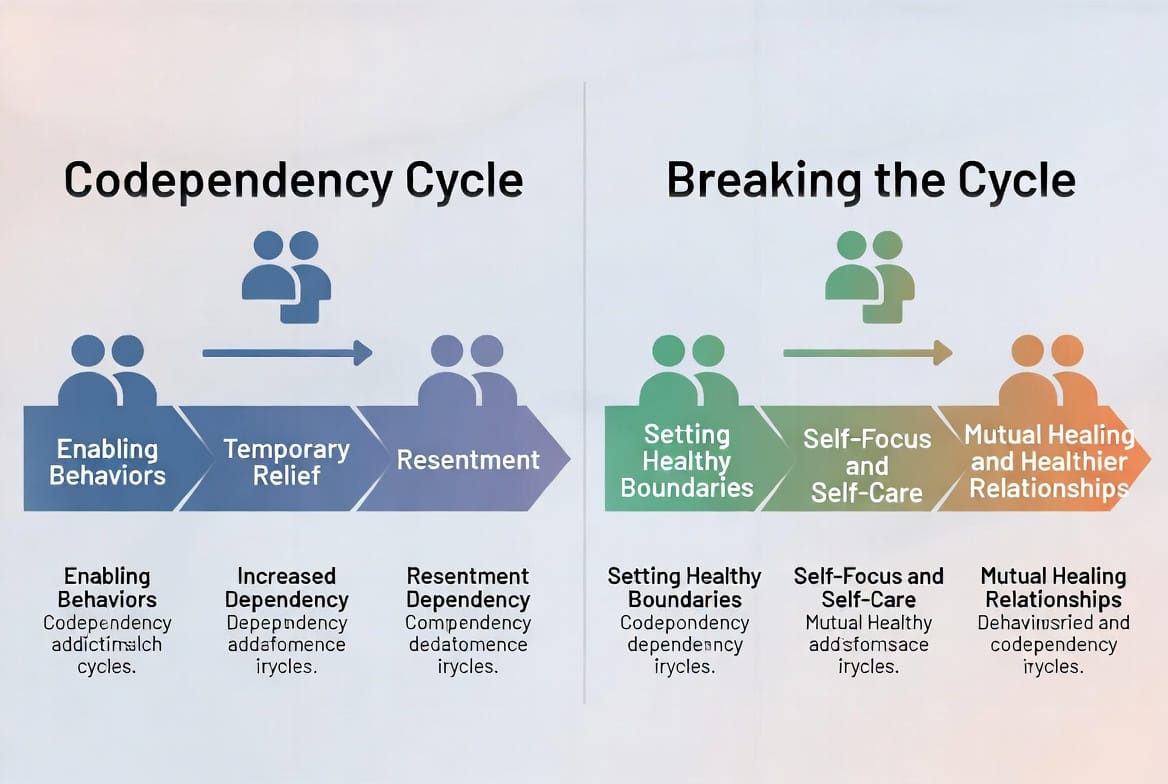
Setting Healthy Boundaries
Boundary setting is perhaps the most transformative skill in codependency recovery. Boundaries define what behaviors you will and will not accept while maintaining compassion.
Start small. Practice saying “no” to requests that drain your energy. Communicate clearly about your limits without apology or extensive justification. Remember, healthy boundaries protect relationships rather than damage them.
Shifting to Self-Focus
Recovery requires redirecting energy inward. Self-focus means developing interests, goals, and emotional regulation skills independent of your loved one’s journey.
This shift doesn’t mean abandoning support—it means supporting from a place of strength rather than desperation. Engage in activities that bring joy and fulfillment. Reconnect with hobbies, friendships, and personal aspirations that were set aside.
The Power of Support Groups
CoDA (Codependents Anonymous) offers a powerful community for those healing from codependent patterns. These peer-led groups provide a safe space to share experiences, learn from others, and practice new ways of relating.
Participants often report tremendous relief upon discovering they’re not alone. The 12-step framework adapted for codependency helps members develop spiritual and emotional tools for lasting change.
Other therapeutic approaches include:
- Individual counseling with specialists in family systems
- Cognitive-behavioral techniques to reframe negative thought patterns
- Mindfulness practices for emotional regulation
- Family therapy sessions when appropriate
Breaking the Codependency-Addiction Cycle
The cycle between codependency and addiction thrives on mutual dependency. Breaking it requires simultaneous but separate healing paths.
Your loved one works on their sobriety while you focus on reclaiming your identity and emotional independence. This parallel process creates healthier dynamics where support flows from choice rather than compulsion.
Steps to break the cycle:
- Educate yourself about both addiction and codependency
- Develop a personal recovery plan
- Practice consistent boundary setting
- Build a support network
- Celebrate small victories in your own growth
Progress may feel slow at times, but each healthy choice weakens the old patterns and strengthens new ones.
Family Patterns: Healing Across Generations
Many families discover that codependency extends beyond the current situation. By addressing these patterns, you create positive change that can benefit future generations.
Healing family patterns involves honest reflection, forgiveness, and intentional new behaviors. It’s never too late to model healthier relating for children or younger family members.
Remember that progress isn’t linear. There will be setbacks, but each attempt builds resilience and wisdom.
Reclaiming Your Life Through Recovery
Codependency recovery offers profound freedom. As you heal the caretaker role, you rediscover your own needs, desires, and capabilities. Relationships become more balanced and authentic.
Many individuals report feeling lighter, more energized, and genuinely hopeful after committing to their own recovery work. They learn to love without losing themselves.
Your healing journey benefits your loved one too. When you stop enabling, you create space for them to experience natural consequences and develop internal motivation for change.
Taking the First Step Today
Healing yourself while your loved one heals creates the strongest foundation for lasting family recovery. You deserve support, understanding, and tools for your own transformation.
Our specialized family program is designed to help caretakers navigate codependency recovery with compassion and expertise. We provide practical guidance for boundary setting, emotional healing, and rebuilding healthy family dynamics.
Take that important step toward healing the caretaker role and creating healthier patterns for yourself and your loved ones.
Recovery is possible. Healing is available. You are not alone on this journey.
Heal Yourself While Supporting Your Loved One – Call Now