The Classic Car Insurance: Agreed Value vs. Stated Value
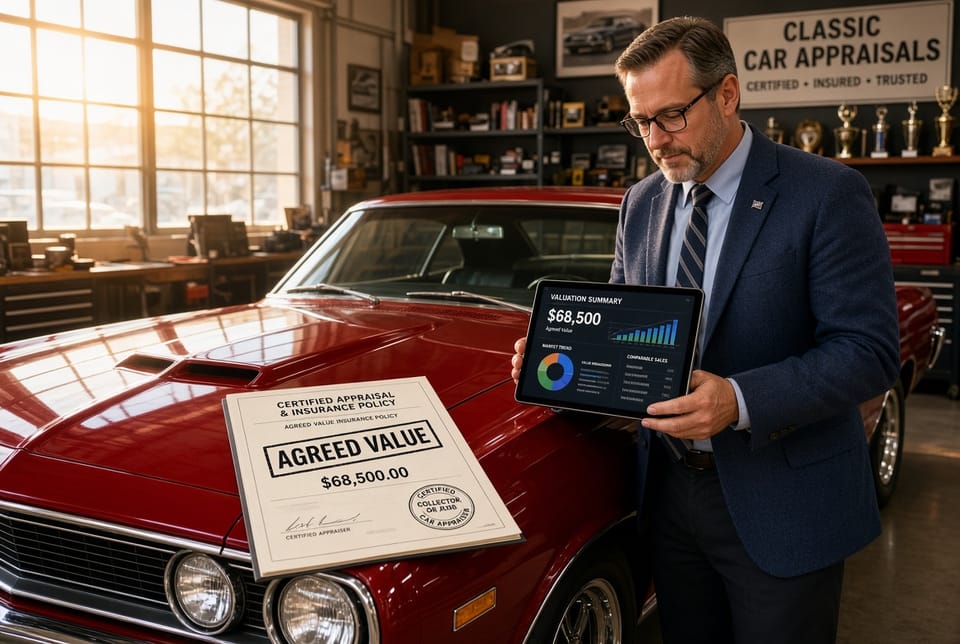
Owning a classic car is more than a hobby. It is a passionate commitment to history, craftsmanship, and personal pride. These vehicles represent decades of engineering excellence and emotional investment. Yet when it comes to protecting them, standard auto insurance often falls short. The critical distinction lies in how the insurer determines the payout after a loss. Understanding agreed value versus stated value coverage can mean the difference between full financial recovery and a disappointing settlement that leaves you short.
Protect Your Classic with Agreed Value – Call Now!
This guide explains the key coverage distinction clearly and thoroughly. It compares agreed value (where the insured and insurer agree on the vehicle’s value before any loss and provide a full payout) against stated value (which may pay less if the car has depreciated or if market conditions change). You will see why agreed value is the superior choice for collector cars and how to secure the right protection for your prized automobile.
Why Standard Insurance Falls Short for Classic Cars
Everyday auto policies are designed for modern vehicles that lose value steadily over time. They rely on actual cash value calculations that factor in depreciation, mileage, and comparable sales of ordinary cars. Classic cars do not follow that pattern. Many appreciate in value as they become rarer, better restored, or more desirable among collectors.
Applying a standard depreciation formula to a meticulously restored 1957 Chevrolet Bel Air or a pristine 1970 Porsche 911 can produce an unrealistically low figure. In the event of a total loss, theft, or severe damage, the owner may receive far less than the true market or replacement cost. That gap creates real financial risk and emotional frustration.
Specialized classic car insurance addresses this gap by offering two primary valuation methods: agreed value and stated value. The difference between them is fundamental to proper protection.
What Is Agreed Value Coverage?
Agreed value coverage is a contractual promise. Before the policy begins, you and the insurance company jointly determine the vehicle’s worth. This figure is usually supported by a professional appraisal, recent comparable sales, restoration records, and documentation of unique features or modifications. Once both parties accept that amount, it becomes the fixed sum that will be paid in the event of a covered total loss.
Key advantages of agreed value include:
- Full payout of the pre-agreed amount with no deduction for depreciation
- Certainty and peace of mind because the settlement figure is locked in advance
- Recognition of appreciation potential and the true collector market
- Streamlined claims process that avoids prolonged disputes over value
Because the value is established up front, there is no surprise at claim time. The insurer cannot later argue that the car was worth less due to age, market fluctuations, or perceived wear. This structure treats the classic car as the unique asset it truly is.
What Is Stated Value Coverage?
Stated value coverage appears similar at first glance. The owner declares a value for the vehicle, and that number is listed on the policy. However, the critical difference is that the stated figure is treated as a maximum limit rather than a guaranteed payment.
In a claim, the insurer typically pays the lesser of:
- The stated value, or
- The actual cash value at the time of loss (often calculated with depreciation)
If the market softens or the adjuster determines the car has lost value since the policy was written, the payout can fall well below the stated amount. Owners who believed they had secured full protection may discover a significant shortfall when they need it most.
This uncertainty makes stated value less reliable for collector vehicles whose values can rise or remain stable rather than decline.
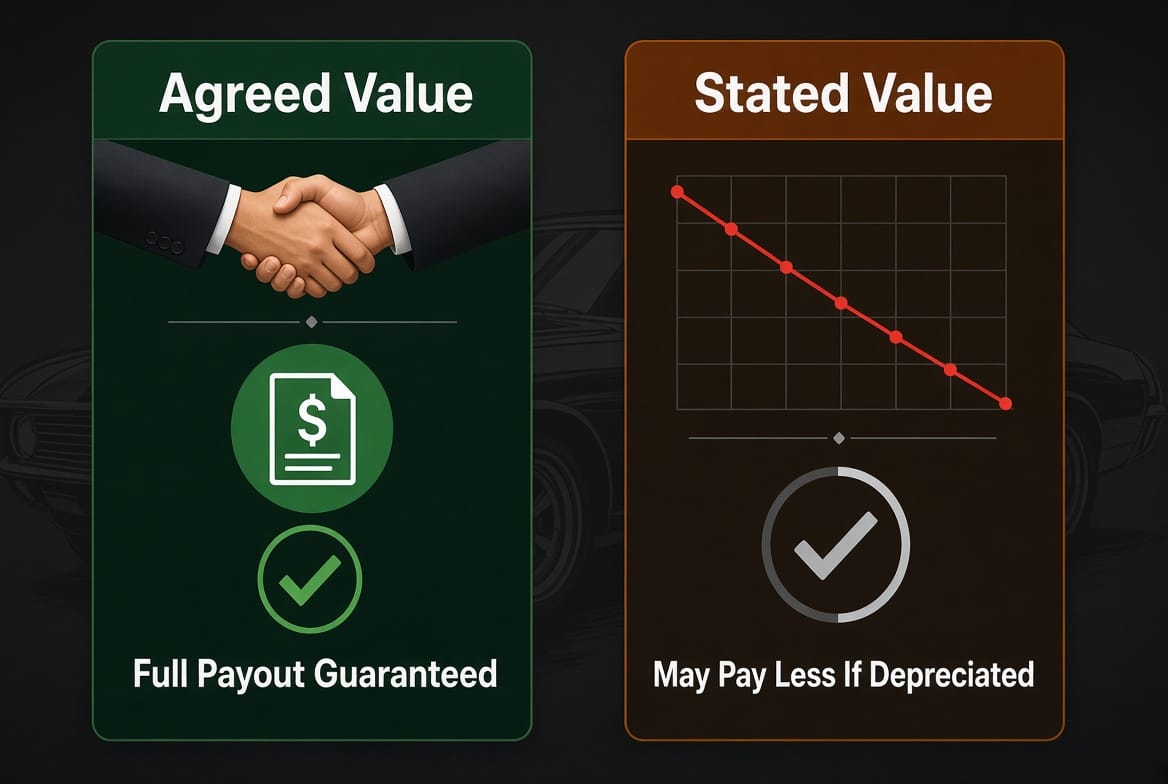
Side-by-Side Comparison: Agreed Value vs. Stated Value
To make the distinction crystal clear, consider these core differences:
- Valuation Timing
Agreed value sets the amount before any loss occurs.
Stated value allows the insurer to reassess at the time of claim. - Payout Certainty
Agreed value delivers the full agreed sum.
Stated value may deliver less if the car is deemed depreciated. - Depreciation Treatment
Agreed value ignores post-policy depreciation.
Stated value frequently applies it. - Documentation Requirements
Agreed value typically requires a current appraisal or detailed valuation.
Stated value often accepts an owner’s estimate with fewer formalities. - Suitability for Collectors
Agreed value aligns with the reality of appreciating or stable classic car markets.
Stated value mirrors standard auto policies that assume decline. - Claims Experience
Agreed value tends to produce faster, less contentious settlements.
Stated value can involve extended negotiations and potential disappointment.
These contrasts reveal why knowledgeable collectors consistently choose agreed value. The extra step of obtaining an appraisal is a small investment that purchases long-term security.
Why Agreed Value Is Better for Collector Cars
Collector cars are not everyday transportation. They are investments, heirlooms, and sources of joy. Their values are driven by rarity, condition, provenance, originality, and current market demand rather than simple age-related depreciation.
Consider a fully restored 1965 Ford Mustang Shelby GT350. Its market value may have climbed steadily over the past decade. Under a stated value policy written years earlier, an insurer could still apply a depreciation schedule and offer a reduced settlement. Under an agreed value policy, the owner receives the full amount previously negotiated, reflecting the car’s true standing in the collector community.
Agreed value also supports better risk management. Because the payout is fixed, owners can make informed decisions about storage, usage, and additional safeguards. They know exactly what financial recovery looks like, which reduces anxiety and encourages proper care of the vehicle.
Furthermore, specialized classic car insurers who offer agreed value often provide complementary benefits such as:
- Agreed mileage limits that match limited-use patterns
- Coverage for spare parts and memorabilia
- Flexible usage allowances for shows, tours, and club events
- Expertise in handling unique claims involving rare parts or custom restorations
These features work together with the valuation method to create comprehensive protection tailored to the collector lifestyle.
Common Misconceptions About Classic Car Valuation
Several myths persist and can lead owners toward inadequate coverage.
One frequent misconception is that any policy listing a high dollar amount automatically guarantees that sum. In reality, only true agreed value language locks the figure. Another myth is that appraisals are unnecessarily expensive or time-consuming. Professional appraisals for insurance purposes are often reasonably priced and can be updated periodically to keep pace with market changes.
Some owners believe their classic car is “too valuable” for standard specialty coverage. Reputable classic car insurers regularly handle six- and seven-figure vehicles with agreed value policies. The key is working with a provider experienced in the collector market.
Finally, a few assume that stated value is “good enough” because premiums appear lower. The potential savings disappear the moment a claim pays less than expected. The true cost of under-insurance far exceeds any modest premium difference.
How to Obtain Proper Agreed Value Coverage
Securing the right policy begins with accurate documentation. Gather restoration receipts, photographs, ownership history, and any previous appraisals. Schedule a current professional appraisal from a recognized classic car specialist. Present this information to an insurer that specializes in collector vehicles rather than a standard auto carrier.
During the underwriting process, discuss the proposed agreed value openly. A reputable company will review the supporting evidence and either accept the figure or suggest a mutually acceptable adjustment. Once both sides agree, the amount is written into the policy declarations.
Review the policy language carefully. Confirm that the wording explicitly states the vehicle is insured for the agreed value and that no depreciation will be applied in a total loss situation. Ask about claim handling procedures and the insurer’s track record with classic cars.
Periodic reviews are wise. Markets evolve, and a car that was valued at a certain level three years ago may command more today. Updating the agreed value keeps coverage aligned with reality.
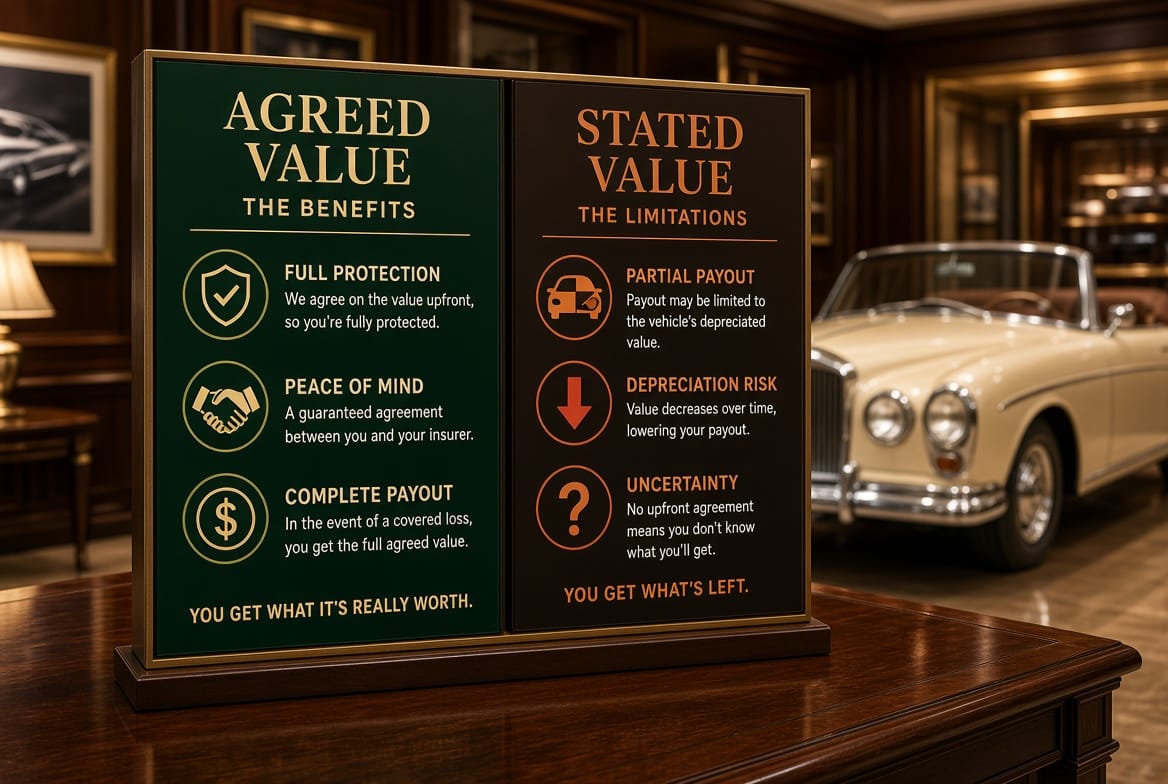
Real-World Impact of Choosing the Right Coverage
Imagine two identical classic cars involved in similar total-loss scenarios. The first is insured under agreed value at $85,000 based on a recent appraisal. The owner receives the full $85,000 promptly and can pursue a replacement or restoration without financial strain. The second car carries a stated value of $85,000. After the insurer applies an actual-cash-value calculation that factors in perceived market softening, the settlement arrives at $62,000. The owner must cover the remaining gap out of pocket or settle for a lesser vehicle.
These outcomes are not theoretical. Collectors who have experienced both types of claims consistently report greater satisfaction and financial security with agreed value. The peace of mind that comes from knowing the exact recovery amount allows owners to enjoy their cars rather than worry about worst-case scenarios.
Additional Considerations for Comprehensive Protection
While valuation method is the cornerstone, other policy features matter. Look for coverage that includes:
- Agreed value for the primary vehicle and any trailers or specialized equipment
- Protection against diminished value after repairs
- Options for original parts sourcing
- Liability limits appropriate for the collector community
- Roadside assistance tailored to older vehicles
Usage guidelines should match your actual driving patterns. Many classic car policies offer low annual mileage limits that keep premiums reasonable while still allowing participation in events and leisure drives.
Storage conditions also influence both risk and premium. Climate-controlled facilities and security measures are viewed favorably by specialty insurers and help preserve the vehicle’s condition—and therefore its agreed value.
Final Advice: Protect Your Classic with Agreed Value
Your classic car deserves insurance that respects its unique character and true worth. Agreed value coverage provides the certainty, full payout, and collector-focused approach that stated value simply cannot match. By establishing the value in advance and locking it into the policy, you eliminate the risk of a reduced settlement and gain the confidence to enjoy your vehicle fully.
Do not leave this important protection to chance or to a generic auto policy. Take the time to secure specialized classic car insurance built around agreed value. Speak with knowledgeable professionals who understand the collector market and can guide you through appraisal, documentation, and policy selection.
When you choose the right coverage, you safeguard not only a financial asset but also a piece of automotive history and personal passion. The road ahead remains open for many more miles of enjoyment, knowing that your investment is properly protected.
Secure Your Collector Car with Agreed Value