The Classic Car Appraisal: Documenting Value for Agreed Value Policies
Owning a classic car is more than a hobby—it’s a passion that connects you to automotive history and engineering excellence. Whether you cruise a restored Mustang through Texas backroads or showcase a vintage Corvette at local meets, protecting your investment with the right insurance is essential.
Get Your Classic Car Appraised – Call Now!
Agreed value policies stand out as the premier choice for classic car enthusiasts because they guarantee a predetermined payout in the event of a total loss, bypassing the uncertainties of standard market value calculations. However, securing this superior coverage requires one critical step: a professional classic car appraisal.
This comprehensive guide explores everything you need to know about the appraisal process, why it matters for your policy, and how regular updates keep your protection strong. By the end, you’ll feel confident taking the next step to safeguard your prized vehicle.
Understanding Agreed Value Coverage for Classic Cars
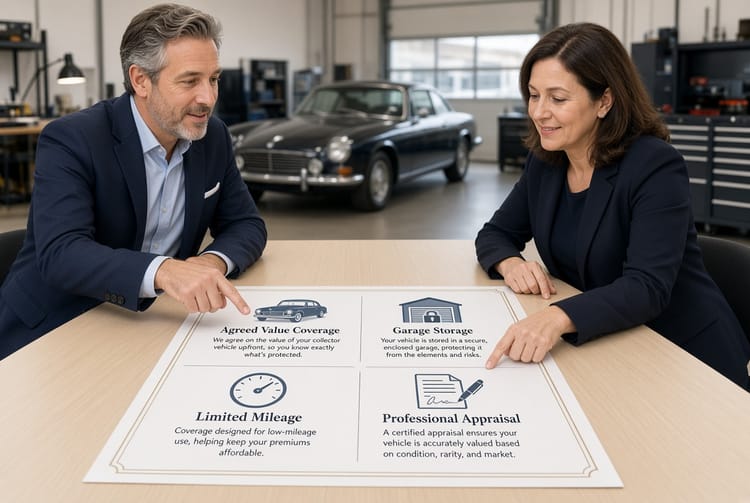
Agreed value coverage represents a significant upgrade from traditional auto insurance. Instead of the insurer determining your car’s worth after a claim—often resulting in lower payouts based on depreciated market estimates—you and the insurance provider agree on a specific value upfront.
This approach delivers peace of mind, especially for vehicles whose worth may not align with standard valuation tools. Classic cars often appreciate over time due to rarity, condition, and collector demand, making accurate documentation vital.
Without a proper appraisal, insurers may hesitate to offer agreed value terms or set a conservative figure that fails to reflect your vehicle’s true worth. A detailed appraisal bridges this gap, providing objective evidence that supports your requested coverage amount.
Key benefits include:
- Guaranteed payout matching the agreed amount in case of total loss
- Protection against market fluctuations and inflation
- Enhanced claim experience with reduced disputes
- Better alignment with restoration investments
For Dallas-area collectors and enthusiasts across Texas, where classic car culture thrives, this coverage type ensures your passion remains financially secure.
Why a Professional Appraisal Is Essential
Many owners underestimate the importance of documentation until they face a claim. An appraisal serves as the foundation for agreed value policies, transforming subjective enthusiasm into verifiable data.
Insurers rely on appraisals to assess risk accurately. A thorough report demonstrates that your vehicle’s stated value is realistic and supported by evidence. This process protects both parties: you receive adequate coverage, while the provider avoids overexposure.
Common scenarios where appraisals prove invaluable:
- Recently restored vehicles with significant upgrades
- Rare or low-production models with limited market data
- Cars modified while maintaining originality
- Vehicles in regions with unique collector markets, like Texas
Skipping this step could leave you underinsured. Imagine losing a meticulously restored classic only to receive a fraction of its replacement cost. A professional appraisal helps prevent such disappointing outcomes.
The Classic Car Appraisal Process: Step by Step
The appraisal process is methodical, transparent, and designed to capture every aspect of your vehicle’s value. Professional appraisers follow industry standards to deliver credible, detailed reports.
1. Initial Consultation and History Review
Your appraiser begins by gathering comprehensive background information. This includes ownership history, maintenance records, restoration documentation, and any modifications.
Authentic paperwork strengthens your case significantly. Receipts for parts, photos from the restoration process, and previous valuation records all contribute to a robust profile.
2. Thorough Physical Inspection
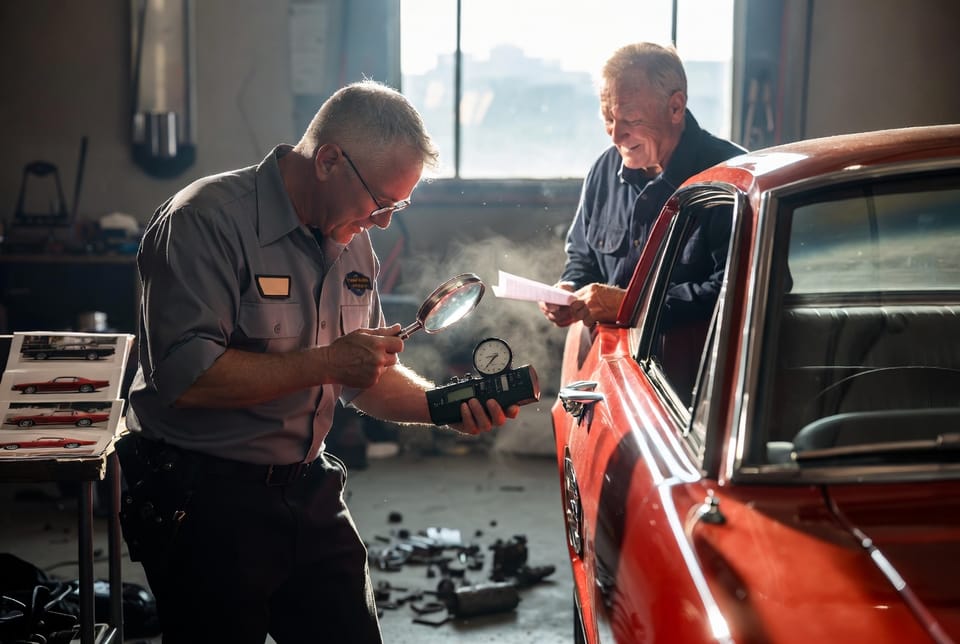
Next comes the hands-on evaluation. The appraiser examines the vehicle inside and out under optimal lighting conditions. They assess:
- Exterior condition — Paint quality, panel alignment, chrome trim, and bodywork
- Interior details — Upholstery, dashboard, instrumentation, and carpets
- Mechanical systems — Engine, transmission, suspension, and brakes
- Undercarriage and frame — Rust, structural integrity, and modifications
This inspection often takes several hours for a complete classic car, ensuring no detail is overlooked.
Pro tip: Prepare your vehicle by cleaning it thoroughly and organizing all supporting documents beforehand. This demonstrates care and professionalism.
3. Condition Assessment and Rating
Appraisers use standardized scales, such as the 1-6 condition rating system, where 1 represents a perfect, concours-quality vehicle and 6 indicates a project car needing major work.
Your car’s rating directly impacts its valuation. Even minor issues like faded trim or non-original components can influence the final figure, making accurate assessment crucial.
4. Market Comparison and Research
No appraisal is complete without analyzing comparable sales (comps). The appraiser reviews recent auction results, private sales, and market trends for similar models.
Factors such as geographic location matter— a classic car in Texas may command different values than one in California due to climate, usage patterns, and local demand.
5. Documentation and Report Compilation
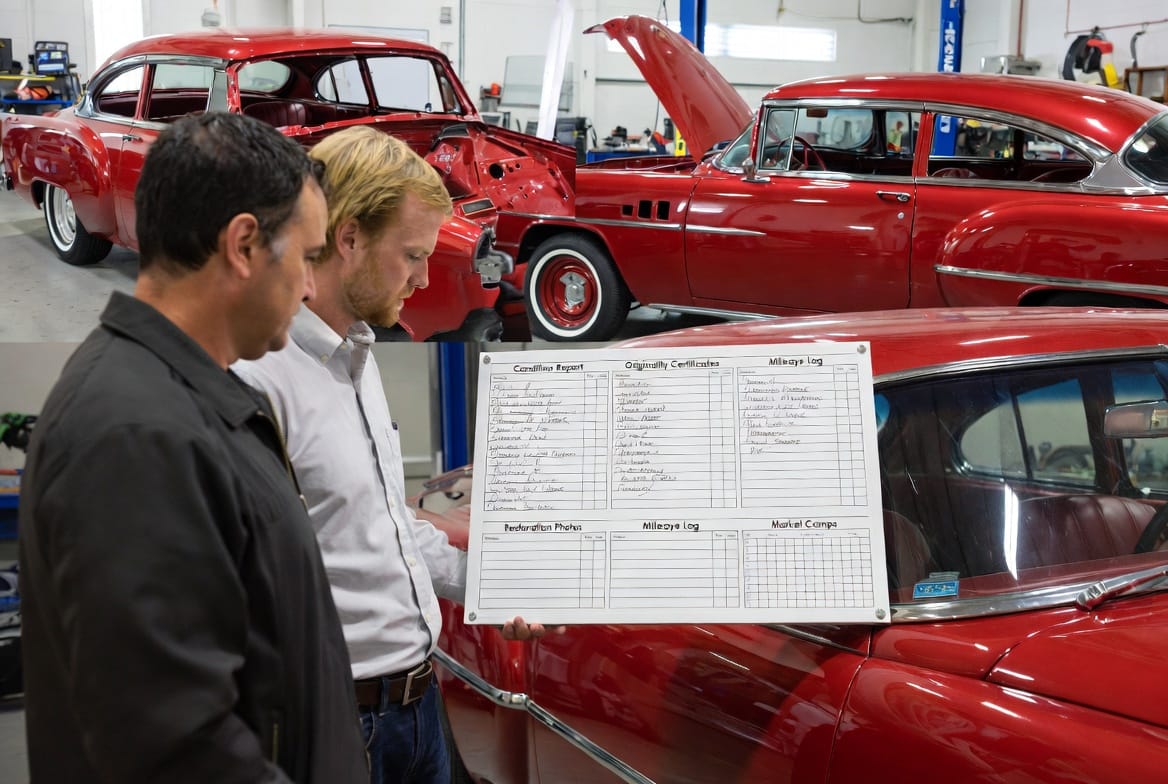
The final report includes high-resolution photographs, detailed descriptions, valuation rationale, and supporting evidence. This professional document becomes a key part of your insurance application or renewal.
Critical Factors That Influence Classic Car Valuation
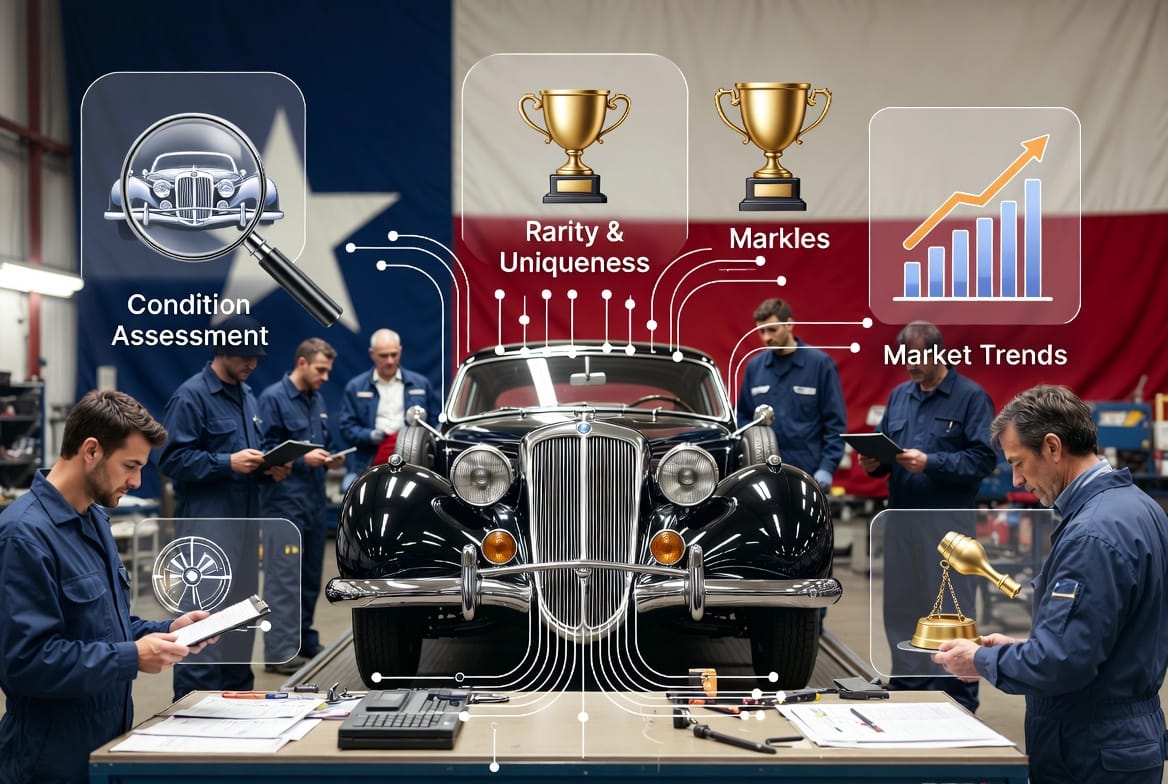
Several interconnected elements determine your vehicle’s appraised value. Understanding these helps you prepare effectively and maintain your car’s worth.
- Condition: The most significant factor. Flawless paint, mechanical reliability, and pristine interiors boost value dramatically.
- Originality: Matching-numbers engines, factory options, and unmolested components appeal strongly to purists.
- Mileage: Lower original miles generally command premiums, though well-documented maintenance can offset higher readings.
- Restoration Quality: Professional, documented restorations using period-correct parts add substantial value.
- Rarity and Desirability: Limited production models, special editions, or culturally significant vehicles often exceed average values.
- Market Comparables: Recent sales data provides the real-world benchmark for valuation.
- Provenance: Celebrity ownership, racing history, or documented timelines can significantly enhance worth.
How Often Should You Reappraise Your Classic Car?
Values change over time. Market trends, restoration progress, and economic factors influence what collectors will pay.
Industry experts recommend reappraising every 2-3 years, or more frequently if:
- You complete major restorations or upgrades
- Significant market shifts occur (e.g., surging interest in a particular model)
- Your policy renewal approaches and values have increased substantially
- You plan to sell or transfer the vehicle
Regular appraisals ensure your agreed value remains current, preventing underinsurance. They also provide an opportunity to document improvements that enhance your car’s worth.
For Texas owners, factors like climate control in storage and annual mileage patterns play important roles in long-term valuation.
The Benefits of Proper Appraisal Documentation
Investing in a professional appraisal delivers multiple advantages beyond insurance:
- Stronger negotiating position when buying or selling
- Detailed maintenance roadmap highlighting areas needing attention
- Historical record that increases the vehicle’s provenance over time
- Tax and estate planning support through documented fair market value
- Peace of mind knowing your passion is properly protected
Many owners discover hidden value or early issues during the process, turning the appraisal into both a protective and educational experience.
Preparing for Your Classic Car Appraisal
Maximize the accuracy and value of your appraisal with these practical steps:
- Gather all service records, titles, and restoration documentation
- Clean and detail the vehicle thoroughly
- Test all mechanical systems and note any issues
- Research recent comparable sales independently
- Choose a certified appraiser experienced with your specific make and model
- Schedule during daylight hours for optimal inspection conditions
Building a relationship with a reputable appraiser ensures consistency across future evaluations.
Common Myths About Classic Car Insurance Appraisals
Myth: Any online valuation tool suffices for agreed value policies.
Reality: Professional, in-person appraisals provide the depth and documentation insurers require.
Myth: Appraisals are only necessary for extremely rare cars.
Reality: Even popular classics benefit from proper valuation to reflect individual condition and modifications.
Myth: Once agreed, the value never needs updating.
Reality: Regular reappraisals keep coverage aligned with current realities.
Understanding these truths empowers you to make informed decisions.
Choosing the Right Appraiser for Your Classic Car
Look for professionals with credentials from recognized organizations, extensive experience with your vehicle type, and strong references from other collectors.
In the Dallas-Fort Worth area and across Texas, several qualified experts understand regional market nuances. Always verify their methodology includes detailed reporting suitable for insurance purposes.
Final Thoughts: Secure Your Classic Investment Today
A classic car appraisal is more than paperwork—it’s the key to unlocking true agreed value protection. By documenting your vehicle’s condition, history, and market position, you ensure your cherished automobile receives the coverage it deserves.
Don’t leave your investment vulnerable to outdated valuations or claim disputes. Take the proactive step of scheduling a professional appraisal and discussing tailored classic car insurance options.
Call our specialists today to learn more about agreed value policies and how a proper appraisal can safeguard your passion. Our team stands ready to help you protect what matters most—your classic car and the memories it represents.
Whether you own one standout vehicle or an impressive collection, proper documentation delivers confidence on every drive. Protect your classic today for worry-free enjoyment tomorrow.
Protect Your Investment with Expert Appraisal – Call Now!