The Church Cleanup Dumpster: Community Service Projects
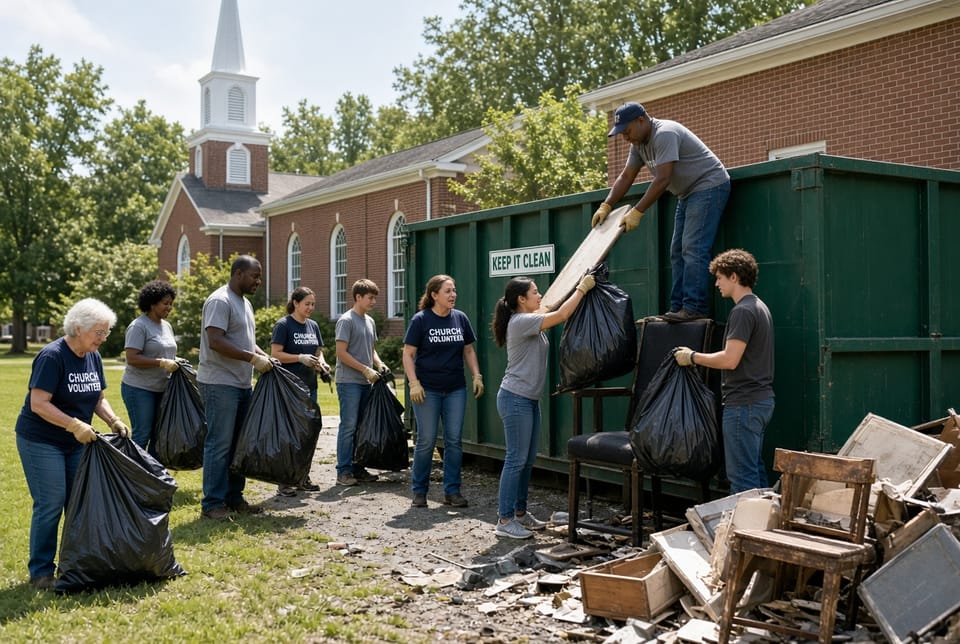
Churches stand as anchors of hope and practical support in countless communities. Beyond weekly worship, many congregations organize hands-on service days that restore grounds, maintain buildings, and assist neighbors. A central tool that makes these efforts efficient and manageable is the church cleanup dumpster. Renting a properly sized dumpster transforms scattered volunteer energy into organized progress, keeping projects safe, focused, and impactful.
Get Your Church Cleanup Dumpster Today – Call Now!
Nonprofit churches and faith-based groups often face limited budgets and busy volunteer schedules. Yard overgrowth, aging building materials, and accumulated donation overflow can quickly overwhelm small teams. A dedicated dumpster provides a single, contained collection point that simplifies logistics and protects the property from scattered debris. This approach supports the church’s mission of stewardship—caring for facilities while extending service outward.
Why Dumpsters Matter for Church Community Service Days
Community service projects frequently include yard cleanup, building maintenance, and donation sorting. Each activity generates substantial waste that regular trash service cannot handle. Leaves, branches, old fencing, worn furniture, carpet scraps, and broken fixtures accumulate rapidly. Without a dumpster, volunteers spend valuable time hauling materials in personal vehicles or stacking piles that create hazards and slow progress.
A temporary dumpster allows teams to work continuously. Volunteers focus on the actual service rather than logistics of disposal. This efficiency respects everyone’s time and maximizes the number of tasks completed in a single day. Churches also demonstrate environmental responsibility by containing waste properly and arranging for responsible hauling and recycling where possible.
Key benefits include:
- Reduced physical strain on volunteers
- Clearer organization of work zones
- Lower risk of property damage from loose debris
- Professional appearance that reflects well on the congregation
- Ability to handle mixed waste streams in one location
These advantages turn ambitious service goals into realistic, successful outcomes.
Planning Yard Cleanup Projects with Dumpster Support
Yard cleanup ranks among the most common church service activities. Overgrown shrubs, fallen limbs after storms, invasive plants, and seasonal leaf piles can make grounds look neglected and create safety issues for visitors. A community service day focused on the exterior invites members of all ages to participate in outdoor work.
Begin planning several weeks ahead. Assess the property to estimate volume. Measure approximate cubic yards of expected waste—branches, brush, grass clippings, and soil. Most churches find a 20- or 30-yard dumpster sufficient for a typical one-day yard project, though larger properties may need more capacity or a second container.
Coordinate placement carefully. The dumpster should sit on a firm, level surface accessible to the delivery truck yet out of primary walkways and parking areas. Avoid soft lawns that could be damaged by heavy equipment. Mark underground utilities if needed and confirm driveway or parking lot strength.
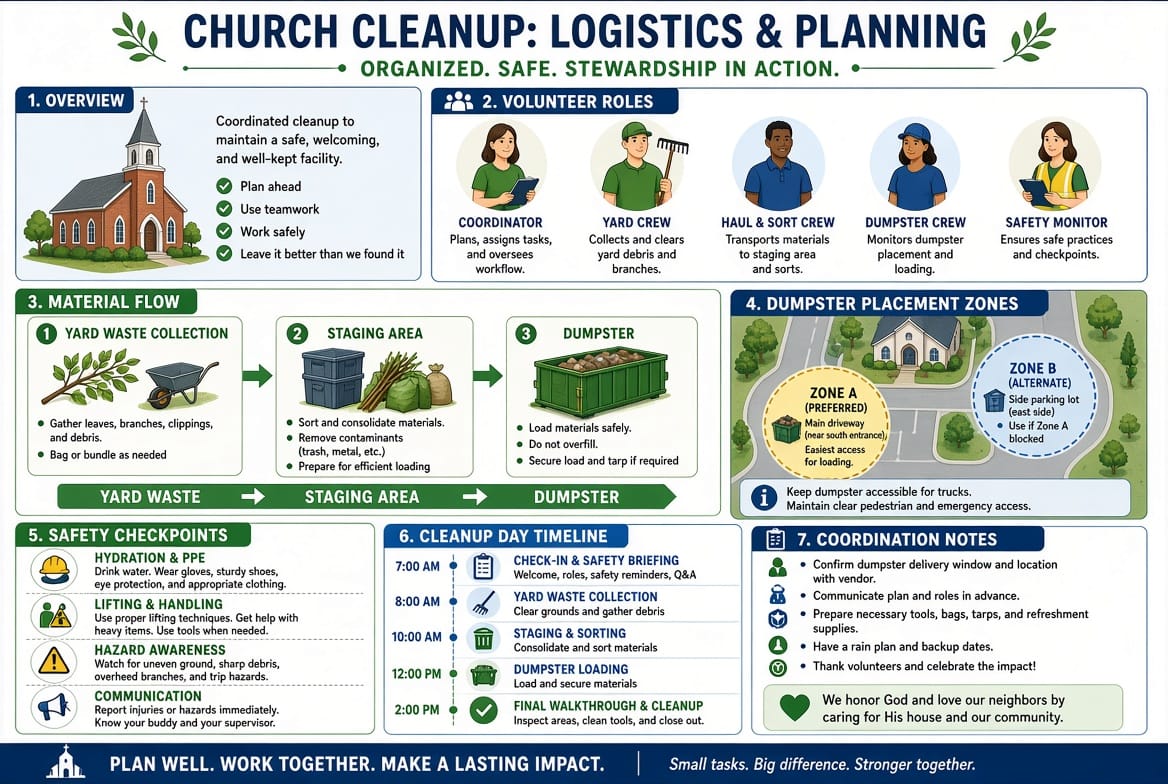
On the day of the event, assign teams: one group cuts and gathers, another loads the dumpster, and a third manages traffic flow around the container. Provide gloves, rakes, pruning tools, and water stations. Clear communication about what belongs in the dumpster—no hazardous materials, liquids, or prohibited items—keeps the process smooth and compliant.
After the cleanup, the restored grounds welcome the congregation and neighbors with renewed beauty. The dumpster’s removal leaves the property free of clutter, allowing the church to focus on its spiritual mission rather than residual mess.
Building Maintenance Days and the Role of Dumpsters
Many churches occupy older structures that require ongoing upkeep. Roof repairs, interior renovations, flooring replacement, or fixture updates generate construction debris. Organizing a building maintenance service day concentrates volunteer skill and effort while a dumpster manages the resulting waste.
Typical materials include drywall scraps, old lumber, carpet, tiles, fixtures, and packaging. Separating recyclable metals or clean wood when possible reduces disposal volume and cost. Still, a single dumpster simplifies the process for mixed construction waste.
Safety remains paramount. Designate a debris staging area near the dumpster so materials move efficiently without cluttering work spaces. Provide dust masks, eye protection, and proper lifting instruction. For larger projects, schedule the dumpster for multiple days if continuous work is planned.
Churches often combine maintenance with community outreach. Neighbors may help, turning the day into a shared experience that builds relationships. The visible presence of organized volunteers and a professional dumpster signals that the congregation takes its facilities—and its community role—seriously.
Coordination tips for building projects:
- Inventory expected waste types in advance
- Confirm dumpster weight limits and prohibited items
- Schedule delivery the evening before or early morning
- Assign a volunteer liaison to communicate with the rental company
- Plan for weather contingencies that could affect outdoor loading
These steps minimize surprises and keep the project on track.
Donation Sorting and Overflow Management
Many churches operate food pantries, clothing ministries, or thrift-style donation programs. Generosity sometimes outpaces storage capacity. Periodic donation sorting days allow volunteers to organize usable items, discard damaged goods, and prepare excess for redistribution or disposal.
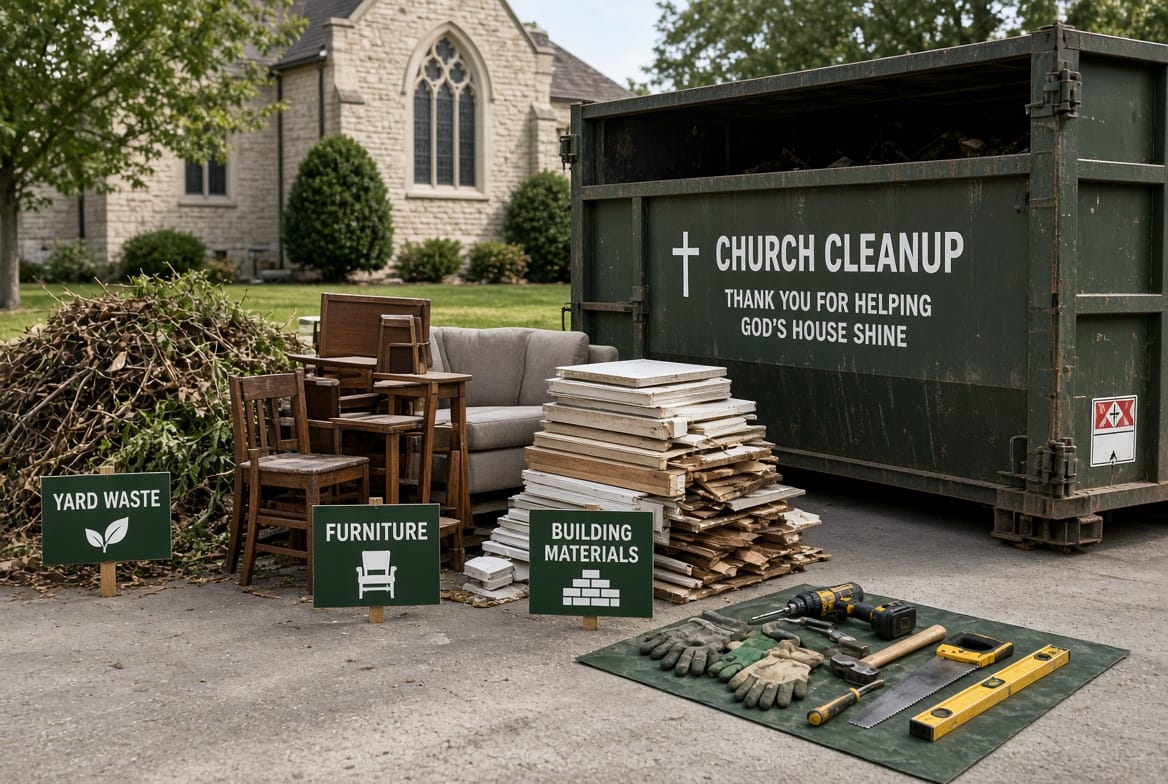
A dumpster becomes essential when sorting reveals unusable furniture, broken appliances, soiled textiles, or packaging waste. Placing the container near the sorting area lets teams work continuously without repeated trips. Usable donations move to shelves or partner organizations; waste moves directly into the dumpster.
This process honors both donors and recipients. Clean, well-organized storage improves ministry effectiveness. Responsible disposal of unusable items prevents clutter from undermining the church’s outreach goals. Volunteers experience the tangible impact of their service as spaces become functional again.
Coordination Tips for Volunteers and Church Leaders
Successful service days depend on clear leadership and thoughtful logistics. Church staff or project coordinators should begin with a written plan that includes goals, timeline, volunteer roles, and dumpster details.
Recruit volunteers through announcements, email, and social channels several weeks ahead. Offer a range of tasks so people of different abilities can contribute. Provide a simple sign-up form that notes physical limitations or preferred roles.
On the day itself, hold a brief orientation. Review safety rules, dumpster guidelines, and the overall schedule. Identify team leaders who can answer questions and keep groups focused. Supply water, light snacks, and rest areas. Encourage breaks to maintain energy and prevent fatigue.
Communication with the dumpster provider is equally important. Share the project date, estimated volume, and site access details early. Confirm delivery and pickup times. Ask about any restrictions on materials common to church cleanups—yard waste, furniture, or building scraps. Understanding these limits prevents last-minute complications.
After the event, gather brief feedback. Note what worked well and what could improve. Thank volunteers publicly. Document the results with photos (respecting privacy) and share outcomes with the congregation. Visible success encourages future participation.
Risk awareness deserves attention. Improper lifting can cause injury. Overloaded dumpsters may incur extra fees. Prohibited items can delay pickup. Addressing these points upfront protects both people and budget.
Practical Logistics for Church Dumpster Rental
Choosing the right size and service level starts with realistic volume estimates. A small yard project may need a 15-yard container. Larger grounds or combined building and yard work often require 20- or 30-yard units. Some providers offer temporary placement with flexible rental periods that align with multi-day service efforts.
Access remains critical. Ensure the delivery truck can reach the chosen location without damaging landscaping or structures. Provide clear instructions and, if helpful, a contact person on site for placement.
Cost considerations matter for nonprofit budgets. Request transparent pricing that includes delivery, rental period, and disposal. Some companies offer community or faith-based rates—inquire politely. Factor in potential overage fees and plan waste volume carefully to stay within limits.
Environmental stewardship aligns with many church values. Ask whether the hauler separates recyclables. Directing clean wood, metal, or cardboard away from landfill when feasible reduces impact and sometimes lowers cost.
Building Community Through Shared Effort
Beyond the practical results, dumpster-supported cleanup days strengthen relationships. Working side by side creates conversations and friendships that Sunday services alone may not foster. Newcomers feel welcomed when invited into meaningful activity. Long-time members rediscover purpose through tangible service.
Neighbors notice the activity. A clean, well-maintained church property improves the visual character of the surrounding area. Some congregations invite the wider community to join, turning an internal project into broader outreach. The dumpster becomes a quiet symbol of organized care—evidence that the church invests in both its facilities and its neighborhood.
These projects also teach stewardship. Volunteers see firsthand the volume of materials generated by maintenance and the importance of responsible disposal. Younger participants learn practical skills and the value of collective effort.
Overcoming Common Challenges
Weather can disrupt outdoor plans. Have indoor sorting or light maintenance tasks ready as alternatives. Keep tarps available to cover open dumpsters if rain threatens.
Volunteer numbers sometimes fall short of expectations. Scale the project to available help rather than forcing an oversized agenda. A smaller, completed effort builds confidence for future larger days.
Material surprises occur. Unexpected heavy items or restricted waste may appear. Maintain open communication with the rental company so adjustments can be made quickly.
Budget constraints are real. Plan early, seek multiple quotes if needed, and consider partnering with neighboring congregations for shared service days that split costs.
Addressing these realities in advance keeps the focus on service rather than obstacles.
Expanding Impact Beyond the Church Property
Some congregations extend cleanup efforts into the wider community. Partnering with local nonprofits, assisting elderly neighbors with yard work, or supporting community gardens multiplies the dumpster’s usefulness. One container can serve multiple sites if carefully scheduled, though separate rentals often prove simpler for distinct locations.
These outward projects reinforce the church’s public witness. Visible service communicates care in practical terms. The presence of organized volunteers and proper waste management reflects responsibility and respect for shared spaces.
Measuring Success and Sustaining Momentum
Success appears in both quantitative and qualitative results. Track cubic yards of waste removed, square footage of grounds restored, or number of rooms refreshed. More importantly, note volunteer engagement, new relationships formed, and positive feedback from the community.
Celebrate completed projects. A short update during services or a simple meal afterward reinforces appreciation. Maintain a modest equipment inventory—gloves, tools, safety gear—so future days require less preparation.
Over time, regular service days supported by dumpster rentals become part of the church calendar. Seasonal yard work, annual building refreshes, and quarterly donation sorting create predictable rhythms that members anticipate and support.
Safety and Compliance Considerations
Prioritize people above project speed. Provide basic safety orientation covering proper lifting, tool use, and awareness of dumpster edges. Keep first-aid supplies accessible. For larger groups, designate a safety monitor.
Follow local regulations regarding waste types and placement. Confirm that the chosen dumpster service holds proper licensing and insurance. Churches benefit from working with reputable providers who understand community and nonprofit needs.
Document any incidents and review procedures afterward. Continuous improvement protects volunteers and sustains long-term participation.
Long-Term Stewardship and Resource Planning
Thoughtful use of dumpsters supports broader facility planning. Regular cleanups reduce the accumulation that can lead to more expensive emergency repairs. Clean grounds and maintained buildings lower insurance risks and improve the experience for everyone who visits.
Budget annually for several service days. Include dumpster rental as a line item so the cost is anticipated rather than unexpected. Some churches establish a small “community care” fund that covers tools, supplies, and disposal.
Partnerships with local businesses or members who work in related fields sometimes yield discounted services or donated materials. Approach such opportunities with gratitude and clear boundaries that protect the church’s nonprofit integrity.
Inspiring Continued Service
The combination of shared labor, visible results, and responsible waste management creates a satisfying cycle. Volunteers leave feeling they contributed meaningfully. The property looks cared for. The community notices. Momentum builds for the next project.
Churches that integrate dumpster-supported cleanups into their rhythm of service often discover renewed energy for other ministries. Practical care for the physical space reinforces the spiritual hospitality the congregation seeks to offer.
Whether the focus is a single Saturday yard restoration or an ongoing series of maintenance and sorting days, the presence of a well-placed dumpster removes a major barrier. Teams can concentrate on the work of service rather than the logistics of disposal.
Call Now for Fast Dumpster Delivery for Building Maintenance Days