The Chestnut Flooring: Reclaimed Character from Historic Barns
There is something profoundly satisfying about walking across a floor that has already lived a full life. Reclaimed chestnut flooring offers exactly that experience—bringing the quiet dignity of America’s past into modern homes with unmatched authenticity. Sourced primarily from the weathered beams and planking of century-old barns, this material carries the story of a once-dominant tree species that shaped the eastern landscape. When you choose American chestnut reclaimed wood, you are not simply selecting a surface for your rooms; you are inviting history underfoot in a way few other materials can match.
Call Now for Authentic Reclaimed Chestnut Flooring Options
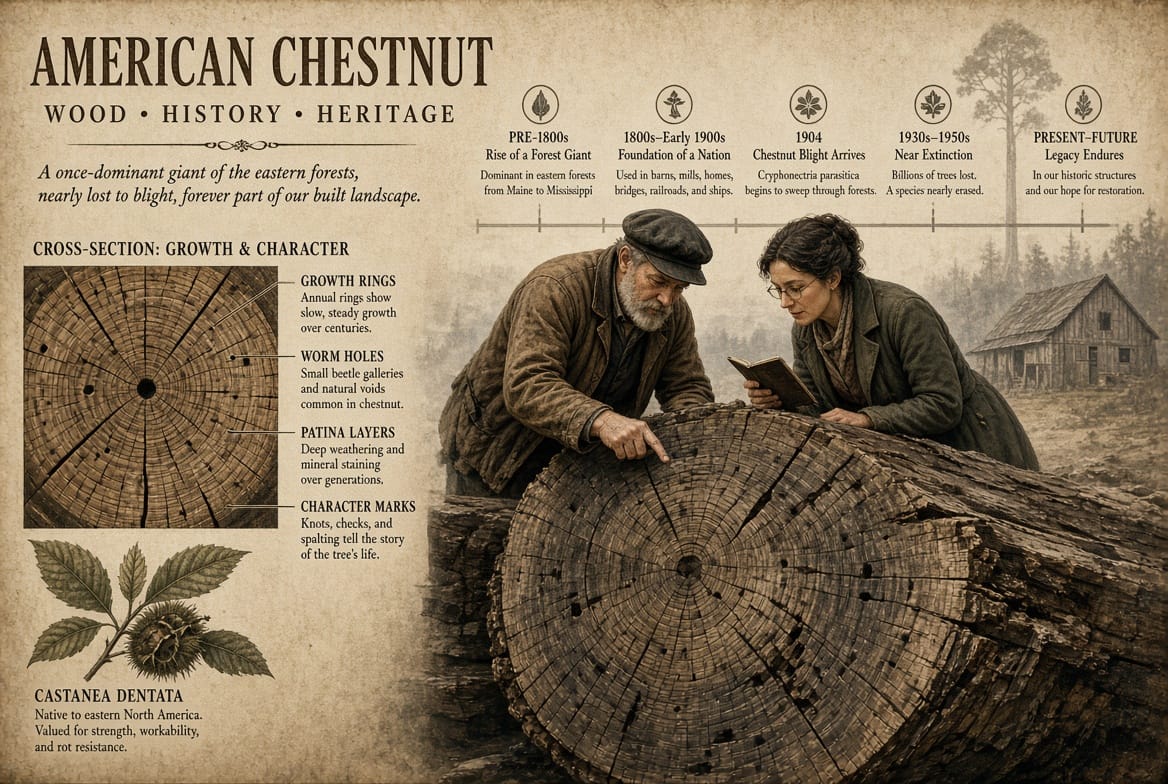
The American chestnut once stood as one of the most important hardwoods in the eastern United States. Before a devastating blight arrived in the early twentieth century, these towering trees formed a significant portion of the forest canopy from Maine to Georgia and west into the Mississippi Valley. Their straight trunks provided strong, straight-grained lumber prized for everything from barn framing to furniture and interior millwork. Then the chestnut blight, an invasive fungal pathogen, swept through the range with ruthless efficiency. Within a few decades the living population of mature American chestnut trees was reduced to scattered sprouts and a handful of isolated survivors. The species became nearly extinct in its original form, leaving only the wood already harvested and built into structures that have endured.
That surviving material—especially the heavy timber and wide boards used in agricultural buildings—has become the foundation of today’s reclaimed chestnut flooring. Barns constructed in the late nineteenth and early twentieth centuries still contain substantial quantities of this wood, protected from the elements by roofs and siding for generations. When these structures are carefully deconstructed, the chestnut can be milled into flooring that retains every mark of its previous service. The result is a surface that feels both new and deeply familiar at the same time.
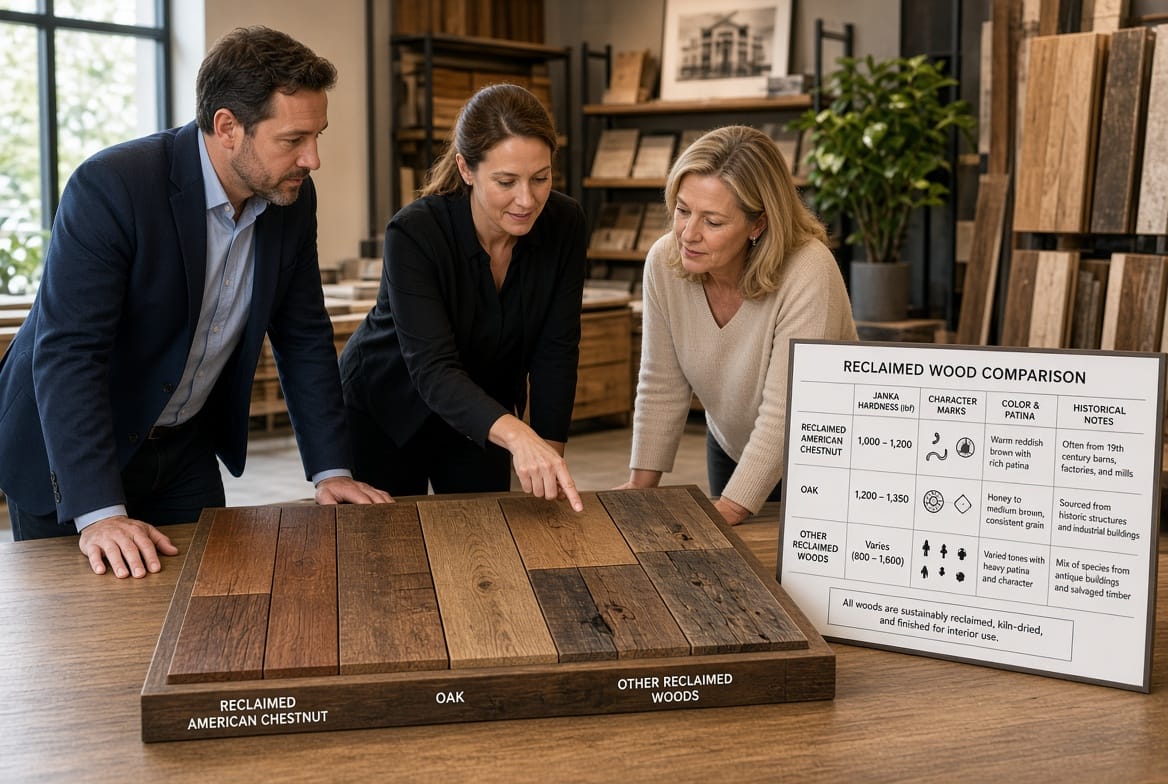
One of the defining technical characteristics of this wood is its Janka hardness rating of 540. This measurement places American chestnut on the softer side of common flooring species. For comparison, many oaks register well above 1,000 on the same scale. The lower hardness does not diminish the wood’s value; instead it contributes to a warmer, more yielding feel underfoot and allows the surface to develop a gentle sheen over years of use. Homeowners who appreciate a floor that softens rather than remains rigidly hard often find the 540 Janka rating ideal for living areas, bedrooms, and spaces where comfort matters as much as durability. Proper finishing and thoughtful placement in lower-traffic zones further ensure long-term performance.
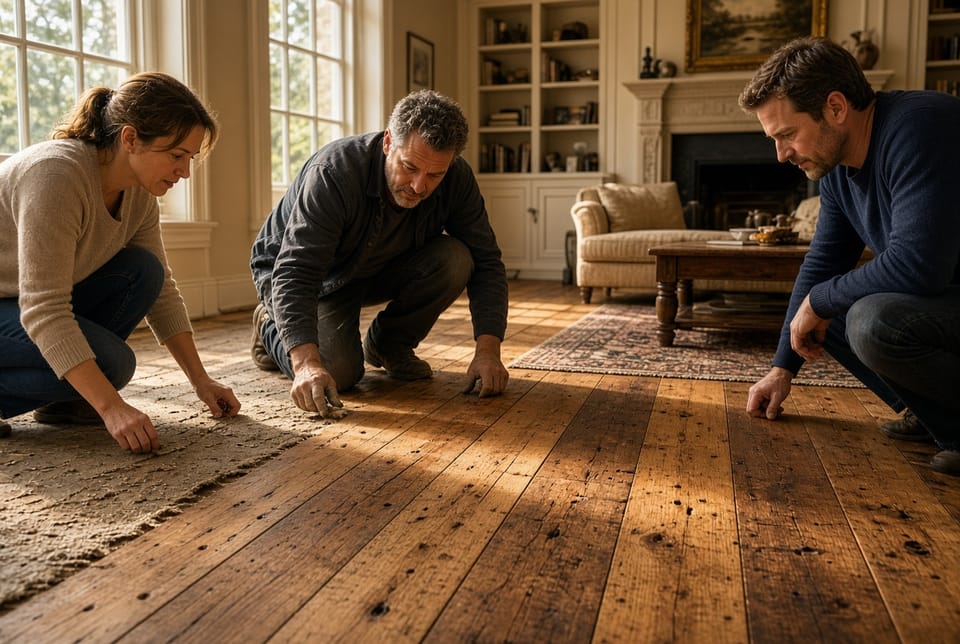
Beyond hardness numbers, the true appeal of reclaimed chestnut lies in its unique character. Decades spent as structural members leave unmistakable signatures. Worm holes appear as small, irregular tunnels left by insects that once inhabited the barn environment. These openings are not defects; they are evidence of natural processes that occurred long before the wood was reclaimed. Nail holes, checking, and subtle surface texture add further visual depth. Over time the wood develops a rich patina—a soft, glowing surface coloration that ranges from warm honey tones to deeper amber and muted browns depending on the original exposure and finishing choices. No two boards are identical, and the overall effect is a floor that feels alive rather than manufactured.
The historical significance of American chestnut extends far beyond aesthetics. In the era before steel and concrete became widespread, chestnut timber framed countless barns, homes, and outbuildings across rural America. Its natural resistance to decay and its ability to take a fine finish made it a preferred choice for interior applications as well. When you install reclaimed chestnut flooring, you are literally walking on material that once supported the daily work of farming families, stored hay through harsh winters, and sheltered livestock. That continuity creates an emotional connection few modern materials can equal. Designers and homeowners seeking authenticity increasingly turn to this option precisely because it carries verifiable provenance rather than simulated aging.
Selecting reclaimed chestnut flooring involves understanding both its strengths and the practical considerations that come with any character-grade material. Because the wood originates from structural members of varying ages and exposures, board widths, lengths, and color variations are naturally broader than those found in newly harvested stock. This variability is part of the charm, yet it also means careful sorting and professional milling are essential. Reputable suppliers inspect every piece for structural integrity while preserving the desirable marks that define the material. The resulting flooring can be supplied as solid planks or as engineered boards, depending on the subfloor conditions and the desired installation method.
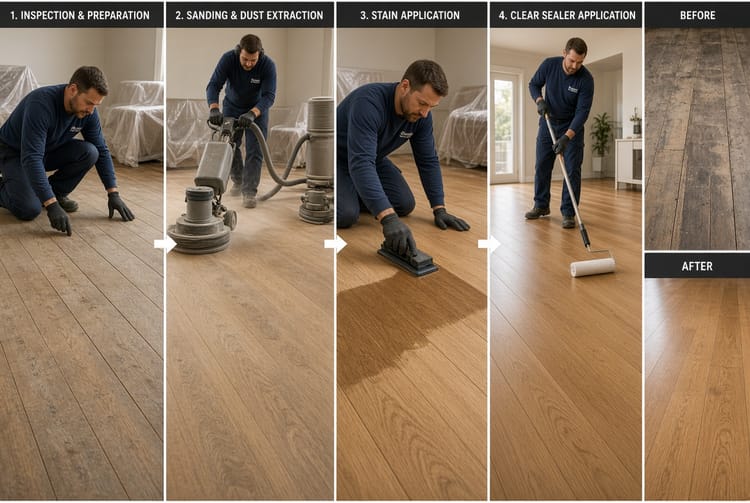
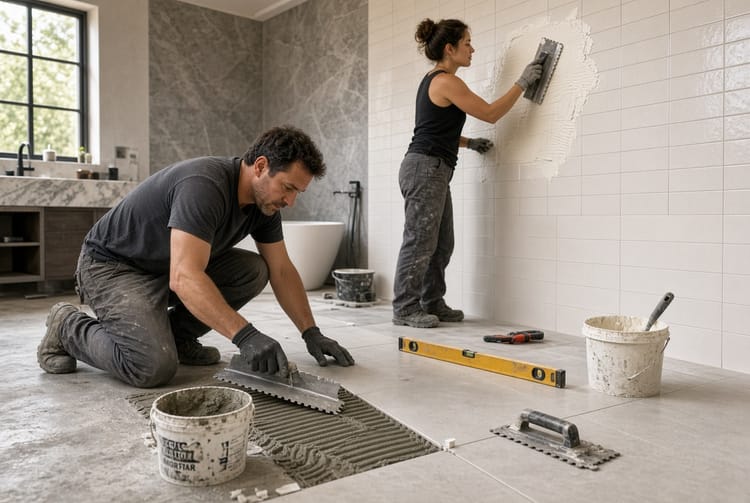
Installation of this material rewards attention to detail. The relatively softer Janka hardness of 540 means the surface responds well to high-quality finishes that enhance rather than mask the existing patina. Oil-based or hard-wax finishes often complement the warm tones and allow the worm holes and surface texture to remain tactile. In high-moisture environments or over radiant heat systems, engineered construction can provide added stability while still showcasing the authentic face of the reclaimed wood. Professional installers experienced with character-grade reclaimed material know how to accommodate the natural movement of the boards and how to highlight the most interesting features in visible areas.
Homeowners frequently ask how reclaimed chestnut compares with more common species. The differences become clearest when examining grain, hardness, and the story each material tells. Traditional oak flooring offers greater hardness and a more uniform appearance, making it suitable for high-traffic commercial settings. Freshly harvested woods lack the decades of natural aging that produce chestnut’s distinctive patina. Other reclaimed options—such as oak or pine salvaged from similar barns—carry their own histories, yet few match the specific combination of warm color, moderate hardness, and cultural resonance found in American chestnut. The choice ultimately depends on the atmosphere a homeowner wishes to create. Those seeking a floor that feels quietly storied rather than boldly assertive often find chestnut the most satisfying solution.
Beyond the technical and visual qualities, reclaimed chestnut flooring supports a broader commitment to thoughtful material use. By giving new purpose to wood that has already served for a century or more, homeowners participate in a form of conservation that reduces demand for newly harvested timber. The limited remaining supply of genuine American chestnut makes each installation meaningful. Once the existing stock of barn timber is exhausted, true reclaimed chestnut of this quality will become even rarer. Choosing it now preserves both a material resource and a tangible link to a vanished forest landscape.
Maintenance of a finished chestnut floor is straightforward when the right products are selected. Regular sweeping or vacuuming with a soft brush attachment removes grit that could otherwise abrade the softer surface. Periodic application of manufacturer-recommended cleaners and refresh coats keeps the patina glowing without building up excessive film. In areas of heavier use, area rugs can protect high-wear paths while still allowing the beauty of the surrounding boards to remain visible. Many owners report that the floor grows more attractive with age as the finish mellows and the character marks become part of the home’s lived-in story.
Interior designers appreciate the versatility of this material across a range of styles. In a traditional farmhouse setting the wide planks and visible worm holes reinforce a sense of continuity with the past. In more contemporary spaces the same boards can be finished to a smoother surface and paired with clean-lined furnishings, allowing the subtle color variations and grain to serve as the primary visual interest. The moderate Janka hardness of 540 also makes the floor compatible with underfloor heating systems when proper acclimation and installation protocols are followed, expanding its usefulness in modern energy-efficient homes.
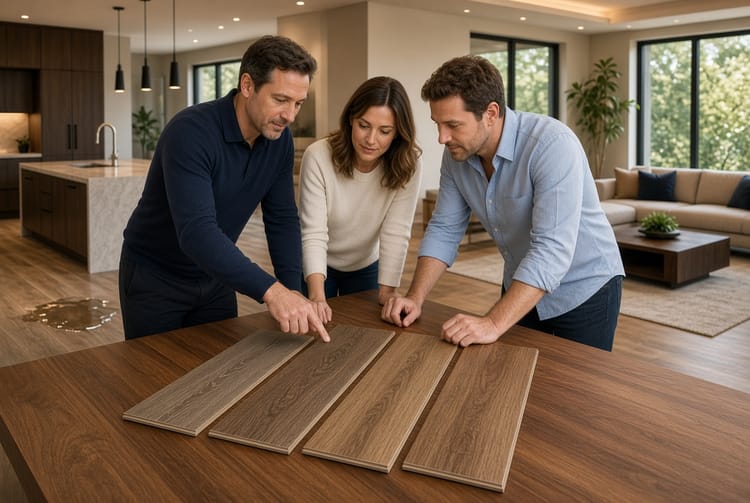
For those planning a renovation or new construction project, the decision to specify reclaimed chestnut flooring often begins with a conversation about priorities. Is the goal maximum hardness, or is the desire for authentic character stronger? Does the design scheme call for uniform color, or will the natural variation of aged wood enhance the overall composition? Experienced suppliers can provide samples that demonstrate the range of tones and marks available, allowing clients to see and feel the material before committing. Because each batch of reclaimed wood is unique, viewing actual boards remains the most reliable way to understand what the finished floor will look like.
The emotional resonance of walking on American chestnut should not be underestimated. In a time when many building materials are engineered for uniformity and speed of production, a floor composed of wood that once formed the backbone of rural American architecture offers a different kind of satisfaction. It connects daily life to a longer timeline. Children who grow up in a home with these floors absorb, even if only subconsciously, a sense that materials can endure and be renewed. Guests notice the depth of color and the quiet irregularities and often ask about the origin of the wood. The conversation that follows becomes part of the home’s ongoing story.
As interest in authentic, history-rich materials continues to grow, reclaimed chestnut flooring occupies a distinctive place. It is neither the hardest nor the most abundant option available, yet it delivers a combination of warmth, visual complexity, and cultural significance that is difficult to replicate. The nearly extinct status of the living tree only heightens the value of the remaining material. Every square foot installed represents a second life for wood that might otherwise have been lost when old barns reached the end of their structural usefulness.
When the time comes to select flooring that will define the character of a home for decades, the choice of reclaimed chestnut stands as a confident affirmation of quality and continuity. The moderate Janka hardness of 540, the presence of natural worm holes, the glowing patina, and the deep historical significance of the American chestnut all contribute to a surface that feels complete from the first day it is walked upon. Properly specified, carefully installed, and thoughtfully maintained, this flooring becomes more than a functional layer—it becomes a lasting expression of respect for the materials and the history that shaped the American landscape.
Discover Historic Character – Call About Chestnut Flooring