The Ceiling Fan Remote Control: Pairing, Programming, and Troubleshooting
In today’s homes, ceiling fan remote controls have become an essential convenience, offering effortless speed adjustments, lighting control, and timer functions without reaching for wall switches. Whether you’ve just installed a new fan or are dealing with an unresponsive remote, understanding how to properly pair, program, and troubleshoot your ceiling fan remote ensures reliable performance and long-term satisfaction.
Fix Your Ceiling Fan Remote Problems – Call Now!
This comprehensive guide walks you through every step with clear instructions, practical tips, and expert insights. When handled correctly, your remote becomes a dependable partner in maintaining year-round comfort.
Understanding Your Ceiling Fan Remote System
Modern ceiling fan remote controls typically consist of a handheld transmitter and a receiver unit installed inside or near the fan’s canopy. The system uses radio frequency (RF) signals for reliable communication, unlike older infrared models that required line-of-sight.
Key benefits include:
- Independent fan and light control
- Multiple speed settings and reverse functions
- Programmable timers and memory settings
- Enhanced safety by eliminating the need for pull chains
A properly paired remote delivers instant response and prevents common frustrations like delayed operation or complete failure.
Step-by-Step Guide to Pairing Your Ceiling Fan Remote
Pairing establishes a secure connection between the remote and the fan’s receiver. Most systems follow a similar process, though always consult your specific model’s manual for variations.
Preparation Before Pairing
- Turn off power at the circuit breaker for safety.
- Ensure fresh batteries are installed in the remote.
- Verify the receiver is correctly wired inside the fan canopy.
- Clear the area of potential interference sources like cordless phones or Wi-Fi routers temporarily.
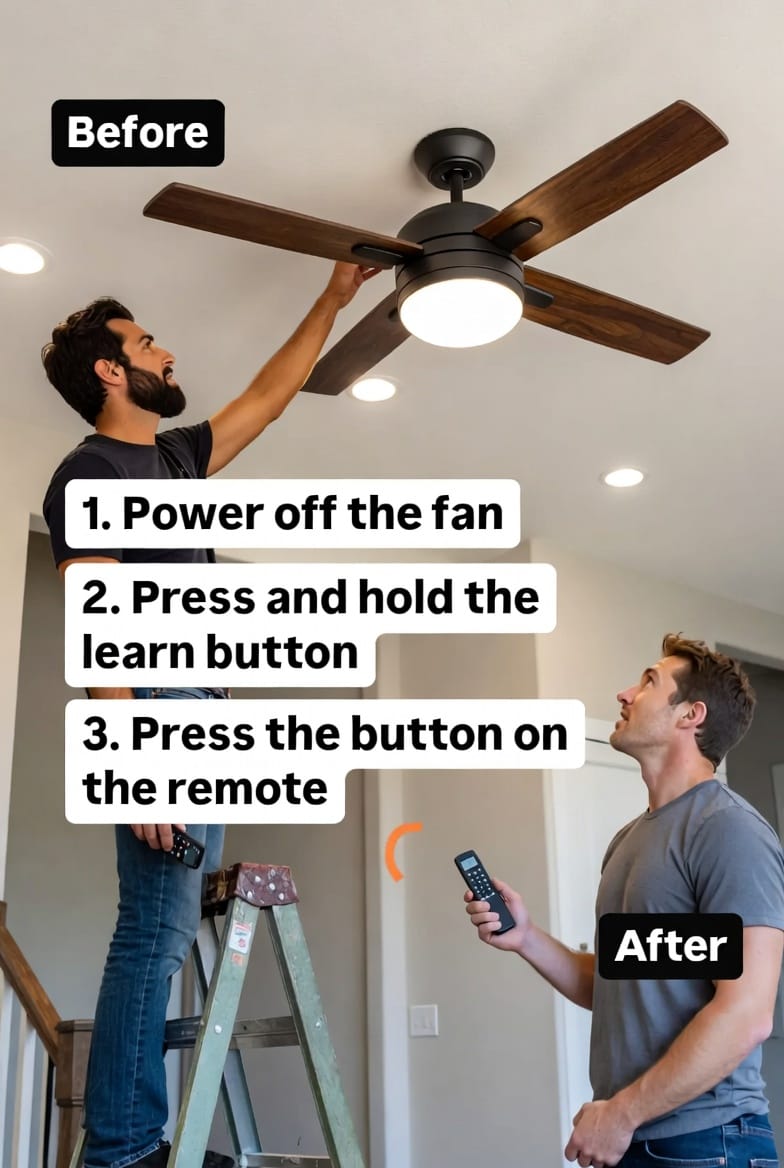
The Standard Pairing Procedure
- Restore power to the fan by turning the circuit breaker back on.
- Within 30 seconds, press and hold the “Learn” or “Pair” button on the receiver (usually a small button on the receiver unit).
- While holding the Learn button, press a button on the remote (often the “Fan Off” or a specific pairing key).
- Listen for a confirming beep or watch for the fan to respond with a short spin or light flicker, indicating successful pairing.
Pro Tip: If your model uses dip switches, match the codes on both remote and receiver before pairing. Most modern units are code-free or auto-learning for simplicity.
Repeat the process if the first attempt fails. A successful pairing creates a unique communication link that minimizes signal conflicts with neighboring fans.
Programming Advanced Features
Once paired, programming unlocks the full potential of your ceiling fan remote control.
Common programmable options:
- Speed settings — Customize default start speed.
- Light dimmer levels — Set preferred brightness memory.
- Timer functions — Program automatic shut-off after 1, 2, 4, or 8 hours.
- Reverse mode — Seasonal airflow direction for summer cooling or winter heat distribution.
To program, enter the setup mode (usually by holding specific button combinations) and follow on-screen or audible prompts. These features enhance energy efficiency and tailor comfort to your lifestyle.
Common Issues with Ceiling Fan Remotes
Even well-maintained systems can experience problems. Recognizing early signs helps prevent bigger inconveniences.
Frequent symptoms include:
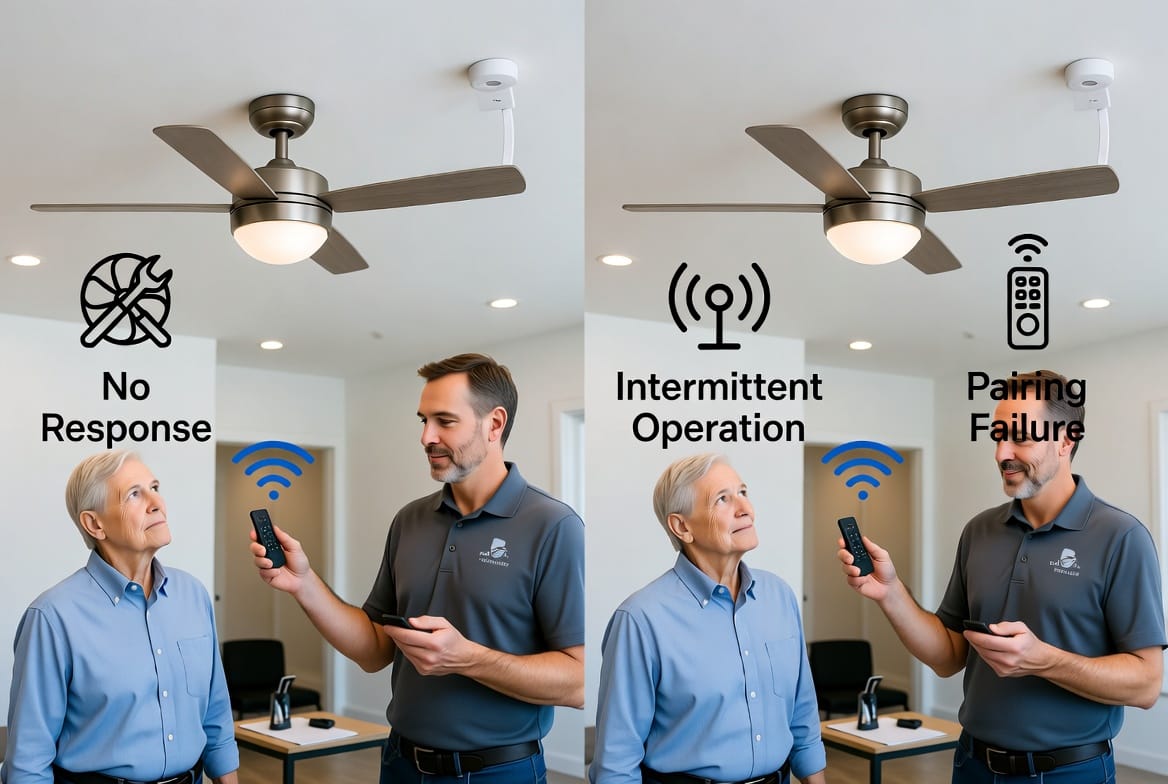
- No response when pressing buttons
- Intermittent operation — works sometimes but not consistently
- Fan operates but lights do not (or vice versa)
- Remote requires very close proximity to function
- “Code not learned” error or complete failure after power surges
These issues often stem from simple causes rather than equipment failure.
Effective Troubleshooting Solutions
Approach problems methodically. Start with the simplest fixes before moving to more involved steps.
Basic Reset Procedures
- Remove batteries from the remote for 60 seconds, then reinsert.
- Cycle power at the breaker: off for 30 seconds, then back on.
- Press the Learn button again to re-establish the connection.
Addressing Signal Interference
Wireless interference is a leading cause of unreliable performance. Relocate nearby devices or change the remote’s frequency code if dip switches are present. In rare cases, upgrading to a newer RF model with better range resolves persistent issues.
Battery and Power Concerns
Always use high-quality alkaline batteries. Weak power causes intermittent behavior even when the remote appears functional. Check fan wiring connections for loose wires that might disrupt receiver power.
Receiver Replacement
If repeated pairing attempts fail, the receiver unit may need replacement. This component is relatively affordable and accessible for DIY enthusiasts with basic electrical knowledge, but professional installation is recommended for safety and warranty compliance.
When to seek expert help:
- Persistent issues after basic resets
- Visible damage to wiring or components
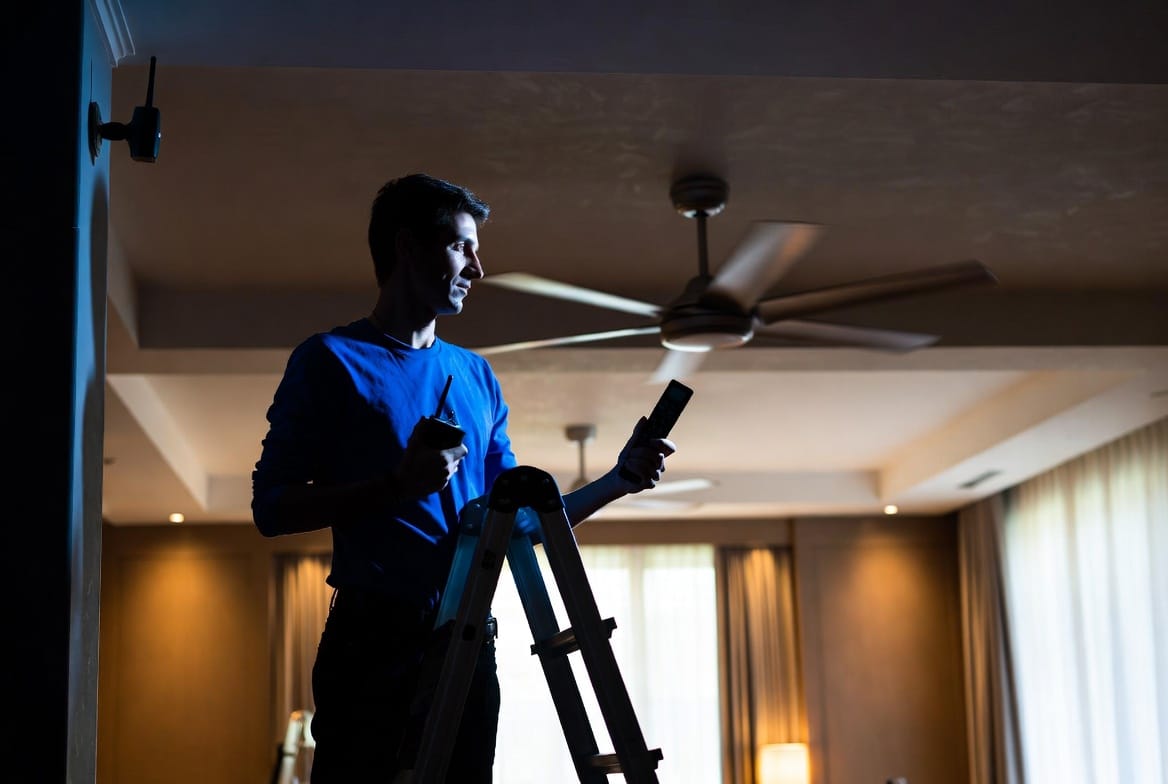
- Fans in hard-to-reach or vaulted ceilings
- Uncertainty about electrical safety
Maintenance Tips for Long-Term Reliability
Proper care extends the life of your ceiling fan remote system:
- Clean the remote regularly with a soft, dry cloth.
- Store the remote away from extreme temperatures.
- Perform periodic re-pairing every few years or after major power events.
- Inspect fan blades and motor annually for balanced operation, as vibration can affect sensitive electronics.
Following these practices ensures consistent performance season after season.
Safety Considerations and Best Practices
Electrical work involving ceiling fans carries inherent risks. Always prioritize safety by turning off power at the breaker and using proper tools. If you’re uncomfortable with any step, professional fan service provides peace of mind and prevents costly mistakes.
Warning: Incorrect wiring or improper pairing attempts can lead to malfunction or safety hazards. Pair your remote correctly the first time to avoid frustration.
Enjoying the Convenience of Modern Ceiling Fans
Mastering your ceiling fan remote control transforms an ordinary fixture into a smart, responsive part of your home environment. With reliable pairing, thoughtful programming, and proactive troubleshooting, you’ll experience effortless comfort whenever you need it.
Whether adjusting speeds on a warm evening or setting timers for energy savings, a properly functioning remote enhances daily living.
For expert assistance with pairing, programming, installation, or repair of ceiling fans and their remote systems, don’t hesitate to call our professional team. We provide prompt, reliable service to restore comfort quickly.
Troubleshoot & Program Your Fan Remote – Call Now