The Bathroom Skirted Tub: Easy Cleaning and Modern Look
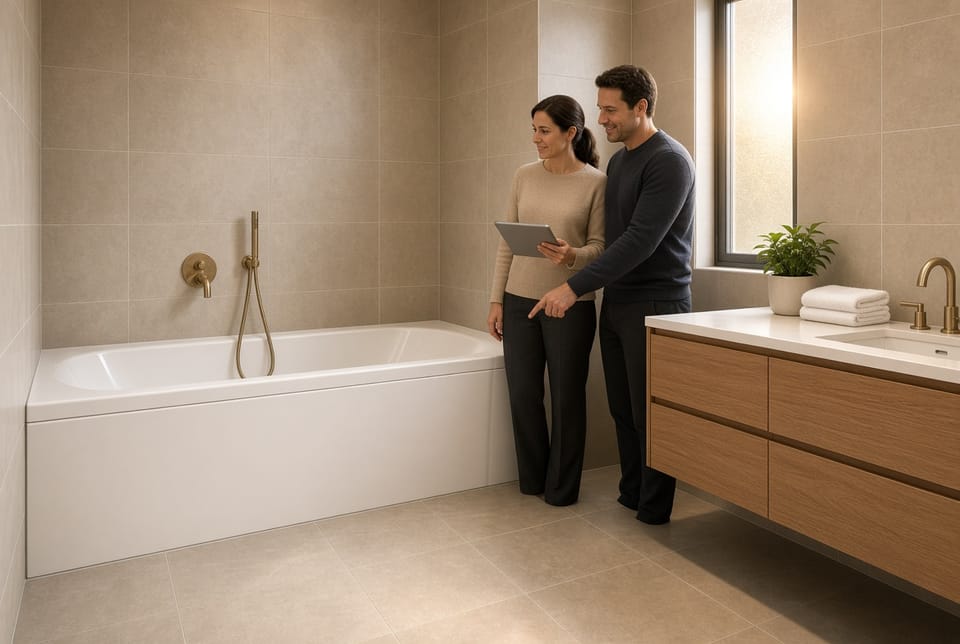
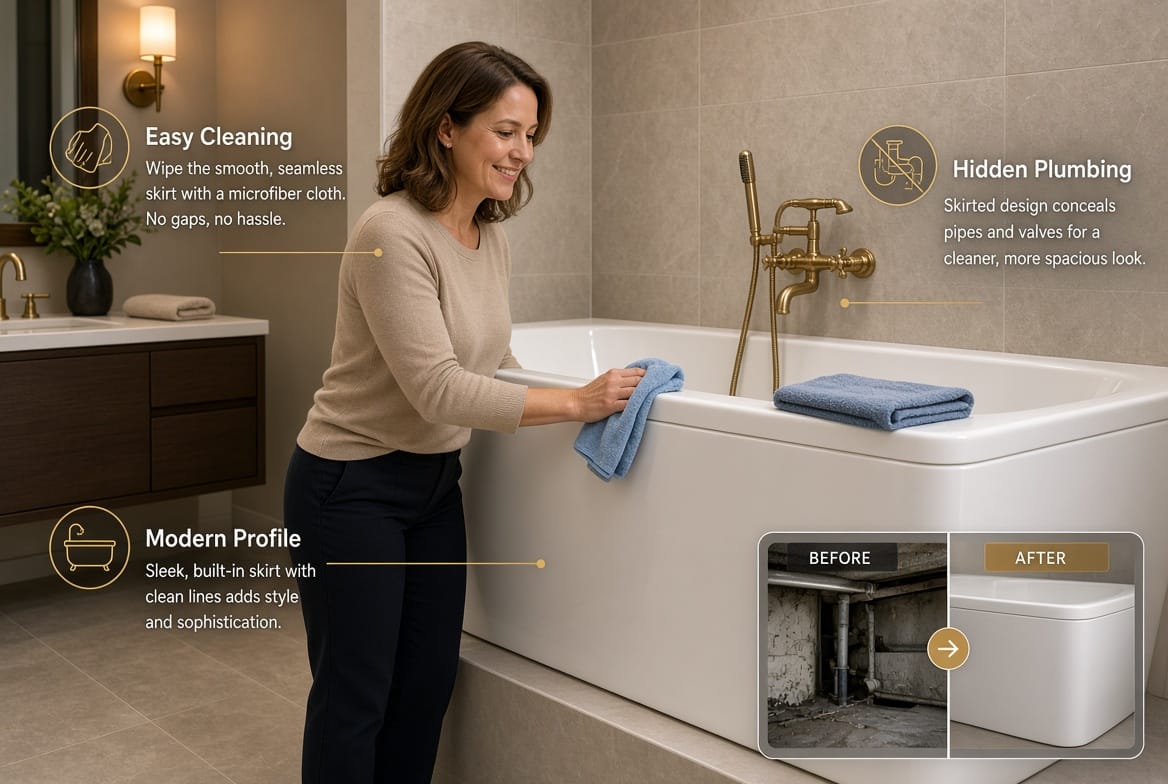
A successful bathroom remodel balances beauty with daily practicality. Few fixtures illustrate that balance as clearly as the skirted tub. This alcove-style bathtub includes a finished front panel—often called an apron or skirt—that covers the side facing the room. The panel hides plumbing, support framing, and the underside of the tub, creating a built-in appearance that looks intentional rather than unfinished.
Call Today for a Skirted Tub That Hides Plumbing and Wipes Clean
Homeowners choosing this design usually want two things at once: a modern look and easy cleaning. A skirted tub delivers both when it is specified and installed correctly. The following guide explains what the design actually is, why it performs well in real households, and the installation details that protect your investment.
What a Skirted Tub Really Is
A skirted tub is typically an alcove bathtub designed to sit against three walls. The fourth side—the one you see when you enter the room—has a factory-finished or site-built vertical panel that runs from the tub rim down to the floor.
That panel is the defining feature. It conceals:
- Drain and overflow piping
- Supply lines and shut-off valves (in many layouts)
- The structural support or mortar bed beneath the tub
- The unfinished underside of the shell
The result is a clean, furniture-like profile instead of an exposed “box” sitting on the floor. Most skirted models are one-piece units made from acrylic or fiberglass; some premium options use enamel-coated steel or cast iron with an attached apron. Certain designs include a removable access panel so future plumbing service remains possible without tearing out tile.
This configuration differs from a drop-in tub, which sits in a custom deck and often leaves a gap or requires extra finishing around the base. It also differs from a freestanding tub, which is meant to be viewed from all sides and therefore cannot hide its plumbing as neatly.
The skirted approach is especially popular in standard-size bathrooms where wall-to-wall coverage looks tailored and maximizes usable floor space.
Skirted Versus Non-Skirted Designs
Understanding the contrast helps you decide whether the style fits your project.
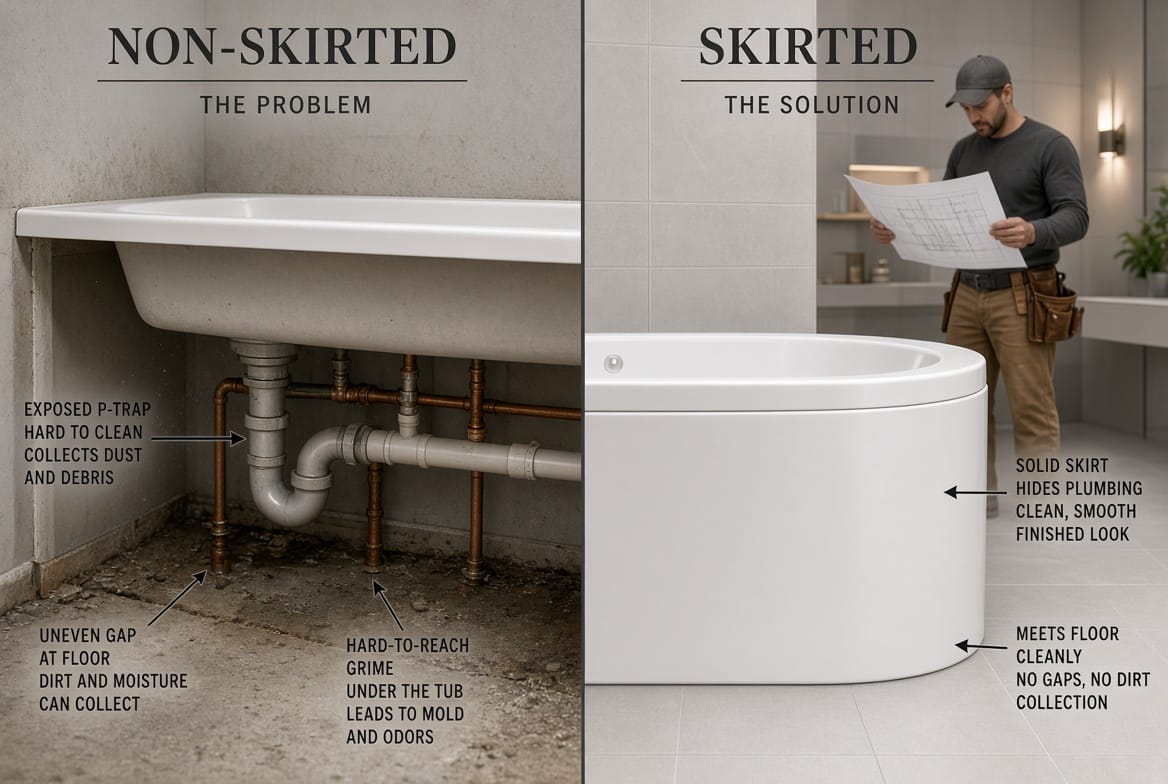
A non-skirted or open-base installation can collect dust, hair, and cleaning-product residue in the cavity beneath and around the tub. Reaching those areas usually requires kneeling, moving bottles, or using awkward tools. A properly installed skirted tub eliminates most of that hidden zone on the visible side.
The visual difference is equally important. An unfinished or partially exposed base can make even expensive tile look incomplete. The integrated panel gives the bathroom a resolved, contemporary line that many designers now treat as a baseline for alcove installations.
Why Easy Cleaning Matters Every Day
Bathrooms stay wet. Soap film, mineral deposits, and airborne moisture settle on every horizontal and vertical surface. The fewer irregular gaps and shadowed recesses you have, the faster a weekly clean becomes.
A skirted tub improves cleaning in several practical ways:
- The front face is a large, relatively flat plane. A microfiber cloth or non-abrasive sponge covers it in a few passes.
- There is no open crawl space along the room-facing side for hair and dust to accumulate.
- The junction between tub and floor can be sealed neatly, reducing the grimy line that often forms under exposed tubs.
- Many acrylic skirts have a smooth gel-coat finish that resists staining when wiped promptly.
These advantages compound over years. Families with children, pets, or frequent guests notice the difference quickly. Instead of dreading the “under the tub” chore that never quite ends, you maintain a surface that stays presentable with ordinary bathroom cleaner and consistent wiping.
Easy cleaning is not a marketing slogan here; it is a direct result of removing inaccessible volume from the room.
The Modern Look Homeowners Want
Contemporary bathrooms favor continuous planes, hidden mechanics, and materials that read as intentional architecture rather than assembled parts. A skirted tub supports that language.
The front panel creates a horizontal band that can align with nearby vanities, benches, or tile modules. Designers often choose a tub whose skirt color matches or quietly contrasts the surrounding wall tile, producing a tailored rather than bulky effect. In smaller rooms the built-in profile keeps visual weight low; the eye travels across a finished surface instead of stopping at pipes or an unfinished apron.
Lighting also works better. Recessed or wall-mounted fixtures graze a smooth panel cleanly. There are fewer dark pockets under the rim to make the space feel dated.
A modern look does not require an ultra-minimalist aesthetic. Skirted tubs appear in transitional, spa-inspired, and even classically detailed bathrooms when the panel is treated as a design element rather than an afterthought. The key is proportion, finish quality, and a crisp meeting with the floor.
Additional Everyday Benefits
Beyond cleaning and style, several supporting advantages appear once the tub is in daily use:
- Hidden plumbing reduces visual clutter and protects pipes from accidental knocks.
- Alcove placement often uses existing wall structure efficiently, which can simplify layout in a remodel.
- Many models include integral tiling flanges that help the installer create a watertight transition to surrounding walls.
- The finished front can be coordinated with storage niches or a nearby bench for a unified composition.
None of these benefits appear automatically. They depend on correct product selection and careful installation—the subjects of the next sections.
Installation Considerations That Protect Performance
A skirted tub looks simple once finished. The work behind the walls is not. Treat the following points as non-negotiable rather than optional extras.
Alcove Framing and Support
Most skirted units require a three-wall alcove with accurate dimensions. The studs must be plumb, the opening square, and the floor structurally capable of carrying the tub plus water plus bather. Acrylic and fiberglass shells need continuous support—typically a mortar bed or manufacturer-specified leveling system—so the base does not flex. Flexing leads to cracked finishes and noisy movement years later.
Cast-iron skirted tubs are heavier and demand verified floor framing. Never assume an older joist system is adequate without inspection.
Drain Location and Rough-In
Confirm the drain position (left, right, or center) matches the existing or planned plumbing. Changing a drain after the tub is set is expensive. Overflow and waste assemblies must align with the skirt so the panel can be installed or accessed later without conflict.
Waterproofing and Tile Transitions
The walls above the tub need a proper wet-area assembly: backer board or equivalent, membrane or liquid waterproofing, and correctly detailed corners. The tub’s tiling flange should sit behind the finished wall surface so water running down the tile cannot reach wood framing.
At the floor, the skirt-to-tile joint requires a durable sealant that can be maintained. Cheap caulk that shrinks or mildews quickly undermines the easy-cleaning promise.
Access for Future Service
Hiding plumbing is valuable only if you can still reach it. Many quality installations include a discreet access panel in an adjacent closet, hallway, or the skirt itself. Discuss this with your plumber before tile goes up. A beautiful tub that cannot be repaired without demolition is a long-term liability.
Professional Versus DIY Reality
Experienced installers understand slope for drainage, shimming without stressing the shell, and sequencing so the skirt sits flush. Homeowners who have never set an alcove tub often underestimate how small errors in level or square become visible once the panel is on. For most remodels, professional setting of the tub and waterproofing is the safer path; finish work can still be coordinated with your design vision.
Material Choices and What They Mean
Not every skirted tub performs the same way.
- Acrylic is common because it is warm to the touch, relatively light, and available in many sizes. Quality varies; thicker reinforcement resists flex and wear.
- Fiberglass can be economical but may feel thinner and show wear sooner if the gel coat is light.
- Cast iron or steel with enamel offers exceptional durability and a solid feel. Weight and cost rise accordingly; the skirt must be designed for the mass.
- Color and texture should be chosen with cleaning in mind. High-gloss white remains popular because soap film is easy to see and remove. Heavily textured or very dark finishes can hide residue until it becomes stubborn.
Ask for the manufacturer’s care instructions before purchase. A finish that requires special cleaners may cancel some of the easy-cleaning advantage.
Design Ideas That Keep the Look Cohesive
A skirted tub works in compact powder-adjacent baths and in larger primary suites. In tight rooms, a standard 60-inch alcove model with a quiet skirt often feels more spacious than a bulky freestanding piece. In larger rooms, the same tub can be paired with a generous shower, a window, or a contrasting tile “frame” that turns the alcove into a feature.
Consider aligning the top of the skirt visually with nearby horizontal lines—vanity height, window sill, or a tile band. Consistent metal finishes on the tub filler, drain, and nearby faucets reinforce the modern look. If you want warmth, pair a white tub with wood-look tile or a stained vanity rather than introducing extra decorative objects around the base.
Storage can live in the walls beside the tub rather than on the rim, keeping the skirt visually calm.
Maintenance After Installation
Once the tub is in place, upkeep stays simple if you follow a few habits:
- Wipe the skirt and rim after heavy use so soap does not dry into film.
- Use non-abrasive cleaners recommended for the finish.
- Inspect the floor seal annually and refresh it when it loses elasticity.
- Keep the overflow and drain clear so standing water does not stress seals.
- Avoid dropping heavy objects on acrylic surfaces.
These steps are ordinary bathroom care. The design simply removes the worst hidden surfaces from the routine.
Risks and How Professionals Reduce Them
No fixture is risk-free. The main concerns with skirted tubs are structural support, moisture management, and future access. Cheap units can flex or stain. Poor waterproofing can send water into walls. Missing access can turn a minor leak into a major repair.
Reputable products, licensed plumbing, and a documented waterproofing plan address the majority of these issues. Request references, confirm warranty terms, and walk the alcove with the installer before the tub is ordered. That process is far more reassuring than hoping a bargain unit will perform for a decade.
Choosing With Confidence
A skirted tub is not automatically the right choice for every bathroom. Freestanding models suit some layouts; custom drop-in decks suit others. When the room is an alcove, when you want a finished look without a built deck, and when easy cleaning ranks high on your list, the skirted design is often the most logical and attractive solution.
Measure twice. Confirm drain orientation. Decide how you will reach the pipes later. Select a material whose finish you are willing to maintain. Then let the front panel do what it does best: hide the mechanics and present a calm, modern surface to the room.
Choose a skirted tub for easy cleaning. Ask about options that fit your space, schedule. A short conversation can clarify sizes, materials, and installation sequencing so your remodel delivers both the look you want and the low-maintenance performance you expect for years to come.
Call Now for a Modern Alcove Tub Built for Daily Easy Care