The Bathroom Shower Valve: Pressure Balance vs. Thermostatic
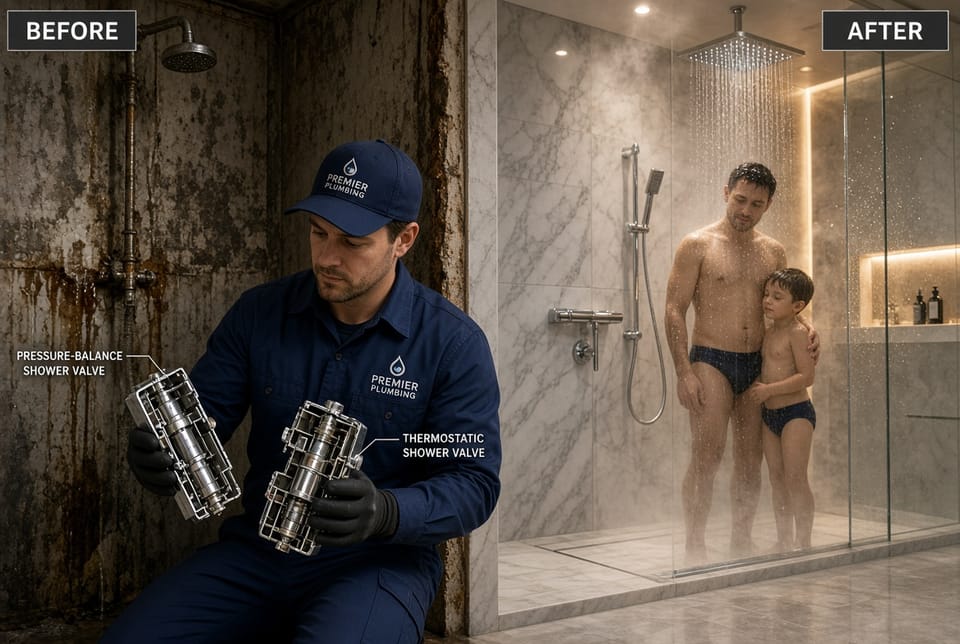
Choosing the right shower valve during a bathroom remodel is one of the most important decisions you will make for daily comfort and household safety. The valve sits behind the wall and silently controls how hot and cold water mix before they reach you. Two leading technologies dominate modern installations: the pressure-balance valve and the thermostatic valve. Understanding the difference between them helps you protect your family from sudden temperature swings, meet current plumbing standards, and create a shower that feels consistent every time someone steps in.
Call Now for Safe Pressure-Balance & Thermostatic Options
A poorly chosen or aging valve can allow scalding water to reach the showerhead when another fixture in the house suddenly draws cold water. That risk is real for children, older adults, and anyone with reduced mobility or sensation. The right valve reduces that danger while delivering a better bathing experience. This guide explains how each type works, lists clear advantages and limitations, and helps you decide which option best fits your home and remodel goals.
Why the Shower Valve Matters in Every Bathroom Remodel
The shower valve is not merely a handle on the wall. It is the mixing device that blends incoming hot and cold supplies and sends the result to the showerhead, handheld sprayer, or body jets. Incoming water pressure and temperature are rarely perfectly steady. A toilet flush, dishwasher cycle, or washing-machine fill can drop cold-water pressure in seconds. Hot-water temperature can also change as a tank recovers or a tankless unit cycles.
Without proper compensation, those changes produce an unexpected blast of hotter or colder water. Scalding can occur in a few seconds at typical household hot-water temperatures. Building codes in many areas now require anti-scald protection for this reason. Both pressure-balance and thermostatic valves address the problem, yet they do so in different ways and to different degrees of precision.
Selecting the correct valve early in the remodel also affects rough-in plumbing, wall thickness, trim style, and long-term maintenance. Investing a little extra time in this decision prevents costly wall openings later and delivers years of reliable performance.
What a Pressure-Balance Valve Does
A pressure-balance valve (sometimes called a pressure-balancing or anti-scald pressure valve) reacts to changes in water pressure. Inside the cartridge a piston, spool, or diaphragm moves when the pressure on one side drops or rises. If cold-water pressure suddenly falls, the mechanism restricts the hot-water inlet so the mix ratio stays closer to the original setting. The result is that the shower temperature does not spike as dramatically as it would with an older, non-compensating valve.
The technology is relatively straightforward and has been used successfully for decades. It meets many current code requirements for scald protection and works well in homes where incoming hot- and cold-water temperatures remain fairly stable.
How the Pressure-Balance Mechanism Operates
- Incoming hot and cold lines enter the valve body.
- A movable element senses the pressure difference.
- The element shifts to throttle the higher-pressure side.
- The mixed water leaving the valve keeps a more consistent ratio even when another fixture is used.
The valve cannot, however, correct for changes in the actual temperature of the incoming supplies. If the hot-water tank begins to run cooler or an unusually cold municipal supply arrives, the outlet temperature will still drift.
Advantages of Pressure-Balance Valves
- Lower purchase and installation cost compared with most thermostatic models.
- Proven reliability in typical single-family homes.
- Compact size that fits standard valve boxes and existing rough-ins in many remodels.
- Sufficient scald protection for households without extreme supply-temperature swings.
- Widely available cartridges and replacement parts.
Limitations of Pressure-Balance Valves
- Temperature can still vary several degrees when incoming water temperatures change.
- Less precise “set-and-forget” control; users often need to make small adjustments.
- Performance depends more heavily on consistent household plumbing conditions.
- Usually combines temperature and volume control in a single handle, which some people find less convenient.
For many standard remodels these trade-offs are acceptable. The valve still represents a major safety improvement over older non-balancing mixers.
What a Thermostatic Valve Does
A thermostatic valve (also called a thermostatic mixing valve or TMV when used in showers) goes further. It contains a temperature-sensitive element—commonly a wax capsule or a sophisticated cartridge—that expands and contracts with heat. The element continuously adjusts the proportion of hot and cold water to hold the outlet temperature at the user’s selected setting.
Because the valve measures actual mixed-water temperature rather than pressure alone, it compensates for both pressure fluctuations and incoming-temperature changes. Within its operating range it can keep the shower within one or two degrees of the chosen temperature even when other fixtures run or the water heater output varies.
Many thermostatic models also include a safety stop that limits the maximum temperature unless the user deliberately overrides it. Separate controls for temperature and volume are common, giving a more refined user experience.
How the Thermostatic Mechanism Operates
- Hot and cold supplies enter the valve.
- A thermostat element sits in the mixed-water path.
- The element expands or contracts and moves a shuttle or pistons that alter the mix.
- The valve constantly corrects to the pre-set temperature regardless of modest pressure or supply-temperature shifts.
The result is a shower that feels remarkably steady from the first second to the last.

Advantages of Thermostatic Valves
- Precise, consistent temperature that stays close to the selected setting.
- Superior protection against both pressure changes and supply-temperature swings.
- Enhanced safety for children, seniors, and anyone with limited mobility.
- Often separate temperature and volume controls for greater convenience.
- Premium feel that matches high-end bathroom remodels.
- Many models include an easy-to-use safety override for hotter water when needed.
Limitations of Thermostatic Valves
- Higher initial cost for the valve, trim, and sometimes labor.
- More internal parts that may require occasional maintenance, especially in hard-water areas.
- Slightly larger or differently configured rough-in in some brands.
- Not every budget remodel requires this level of precision.
The extra investment frequently pays for itself in comfort and peace of mind, particularly in households with young children or aging family members.
Direct Comparison: Pressure Balance versus Thermostatic
Both valves improve safety over older technology. The choice comes down to how much precision and consistency you want and what your remodel budget and household needs allow.

Key points of difference include:
- Temperature stability — Pressure-balance valves keep the mix ratio reasonably steady when pressure changes; thermostatic valves hold the actual temperature far more tightly even when incoming water temperatures shift.
- Scald protection — Both reduce sudden hot-water spikes. Thermostatic valves add an extra layer by actively measuring and correcting temperature.
- User experience — Thermostatic models usually feel more luxurious and require fewer mid-shower adjustments.
- Cost — Pressure-balance valves are more affordable up front. Thermostatic valves cost more but deliver higher performance.
- Maintenance — Both benefit from occasional cartridge inspection. Thermostatic units can be more sensitive to mineral buildup yet are designed for service.
- Best fit — Pressure-balance suits many standard homes. Thermostatic is preferable when maximum consistency and safety are priorities.
In practice, a quality pressure-balance valve is a responsible, code-compliant choice for a typical family bathroom. A thermostatic valve is the stronger long-term solution when the remodel aims for spa-like reliability or when vulnerable users will share the shower.
Safety, Household Needs, and Code Considerations
Scalding risk remains the primary reason modern valves exist. Water at 140 °F can burn skin in seconds; even 120 °F is unsafe for prolonged contact with young or sensitive skin. Both valve types help keep outlet temperature in a safer range, yet thermostatic control offers tighter limits and a built-in maximum-temperature stop on most models.
Households with:
- young children,
- older adults,
- anyone with neuropathy or limited reaction time,
- or frequent simultaneous use of multiple fixtures
generally benefit most from thermostatic technology.
Local plumbing codes often specify anti-scald devices. A licensed plumber will confirm that the selected valve meets or exceeds those requirements and is installed at the correct depth and orientation. Professional installation also protects manufacturer warranties and ensures the valve operates within its designed flow and temperature range.
Installation, Cost, and Remodel Planning
Valve choice should be locked in during the design phase of a bathroom remodel. The plumber needs to know the exact model before rough-in so that piping, valve-box depth, and blocking are correct. Changing from one type to the other after tile is installed usually means opening the wall.
Typical installed costs vary by brand, finish, and labor rates, but the valve itself is only a fraction of the total shower budget. The difference between a good pressure-balance unit and a high-quality thermostatic unit is often modest compared with tile, glass, and labor. Factoring the valve decision early avoids surprises.
Both types require a competent professional. Incorrect piping, missing stops, or improper commissioning can defeat the safety features. After installation the plumber should verify temperature limits and demonstrate operation to the homeowner.
Maintenance and Long-Term Performance
Hard water, sediment, and infrequent use can affect any mixing valve. Periodic inspection of the cartridge, cleaning of screens, and checking of the temperature limit keep performance high. Thermostatic valves may need slightly more attention to the temperature element, yet most manufacturers design them for straightforward service.
A well-chosen and properly maintained valve should last many years. When replacement eventually becomes necessary, the same rough-in often accepts a new cartridge or a compatible upgraded valve, especially if the original installation followed standard dimensions.
Choosing the Right Valve for Your Project
Begin by listing the people who will use the shower and the other fixtures that share the same water lines. Consider your tolerance for temperature variation and your overall remodel budget. If the goal is a dependable, code-compliant shower at a reasonable cost, a quality pressure-balance valve is a sound selection. If the goal is the most consistent, safest, and most comfortable experience possible, a thermostatic valve is the better investment.
An experienced plumber can evaluate your existing piping, water-heater type, and household patterns and recommend the model that balances performance, durability, and value. That conversation is far more useful than simply picking the least expensive option or the most expensive one.
The shower valve you select today will influence every shower taken in that bathroom for the next decade or longer. Taking time to understand pressure-balance versus thermostatic technology ensures the finished remodel delivers both beauty and reliable protection.
Choose the right shower valve for safety. A short conversation with a qualified professional can confirm which valve type fits your home, your family, and your remodeling plans so you can enjoy a safer, more comfortable shower every day.
Call Today to Prevent Scalding – Choose Your Valve Wisely