The Bathroom Vanity Top: Granite vs. Quartz vs. Marble
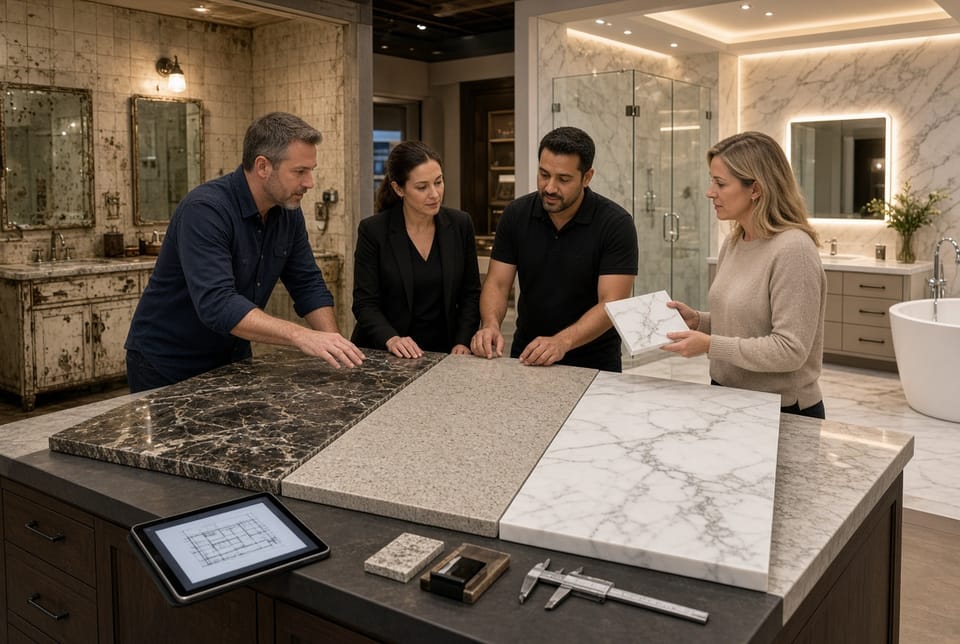
Choosing the right bathroom vanity top is one of the most important decisions in a bathroom remodel. The surface you select must handle daily moisture, toiletries, makeup, hair products, and constant cleaning while still looking refined for years. Three materials dominate quality projects: granite, quartz, and marble. Each has a distinct character. Understanding how they differ in origin, performance, maintenance, and appearance helps you select a surface that matches both your lifestyle and your design goals.
Find Your Best Vanity Surface – Call Now
This guide compares granite vs. quartz vs. marble in clear, practical terms so you can make a confident choice.
Why the Vanity Top Matters More Than You Think
A vanity top is not only a counter. It is a work surface, a splash zone, and a visual focal point. A poorly chosen material can stain, etch, crack, or look dated within a few years. A well-chosen one stays beautiful with reasonable care and supports the value of the entire remodel.
The three leading options fall into two families:
- Natural stone — granite and marble, quarried from the earth
- Engineered stone — quartz, manufactured from crushed stone and resin
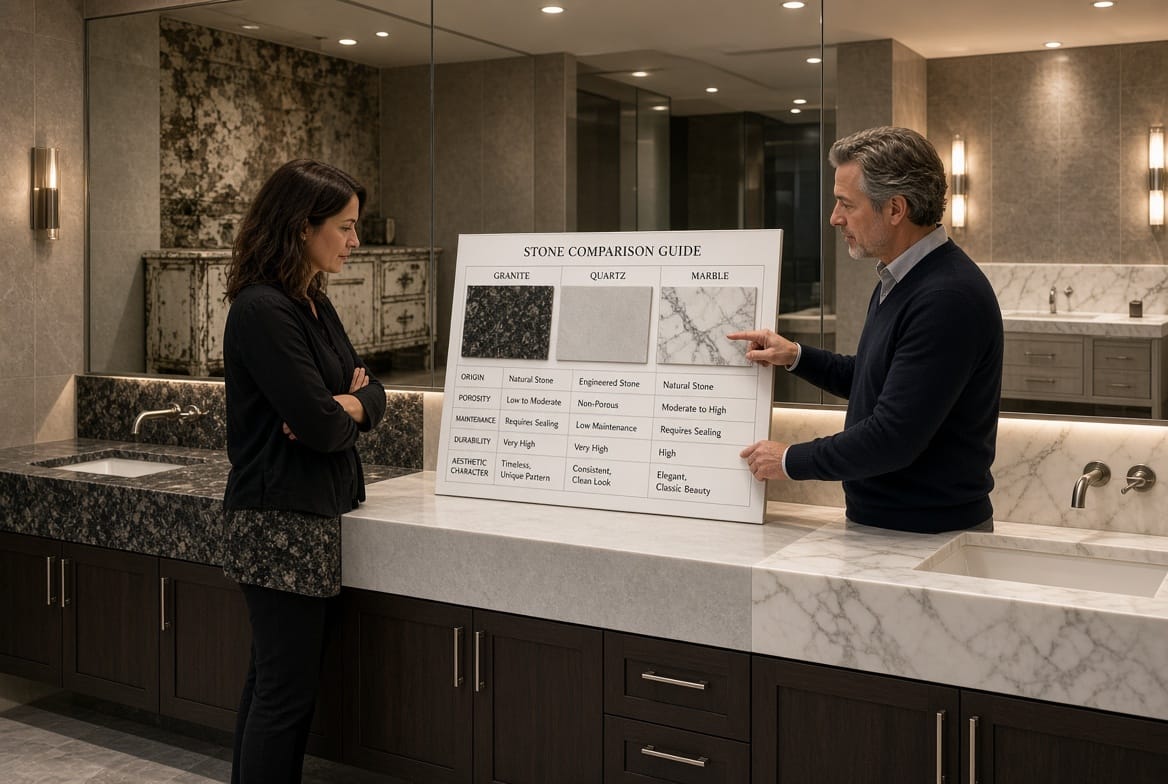
Granite is natural, durable, and porous.
Quartz is engineered, non-porous, and consistent.
Marble is elegant, relatively soft, and prone to staining and etching.
Those short descriptions capture the core trade-offs. The sections below expand them with honest pros and cons.
Granite Vanity Tops: Natural Beauty and Proven Strength
Granite is an igneous rock formed deep in the earth under heat and pressure. Every slab is unique. Colors range from deep blacks and browns to warm golds, greens, and subtle grays, often with mineral flecks that catch the light.
How Granite Performs in a Bathroom
Granite is hard and heat-resistant. It resists scratches from everyday use better than many people expect. Because it is a natural stone, it is porous. Without proper sealing, water, toothpaste, hair dye, and makeup can penetrate the surface and leave marks.
A quality fabricator seals granite after installation and recommends periodic resealing. When sealed correctly, granite performs very well in bathrooms.
Pros of granite vanity tops
- Unique natural patterns—no two slabs look identical
- Excellent hardness and scratch resistance
- High heat resistance
- Strong visual depth and character
- Long track record in high-end homes
Cons of granite vanity tops
- Requires sealing and periodic resealing
- Can stain if sealant fails or spills sit too long
- Color and pattern vary from slab to slab (can complicate matching)
- Heavier than some alternatives, which affects cabinet support
- Edges and cutouts need skilled fabrication
Granite rewards owners who appreciate organic variation and are willing to follow a simple maintenance routine. It is an excellent choice when you want a one-of-a-kind surface that still feels substantial and lasting.
Quartz Vanity Tops: Engineered Consistency and Low Maintenance
Quartz countertops are engineered stone. Manufacturers combine approximately 90 percent ground natural quartz with resins and pigments, then form the mixture under heat and pressure into slabs. The result is a dense, uniform surface.
How Quartz Performs in a Bathroom
The resin binder makes quartz non-porous. Liquids sit on the surface instead of soaking in. That single property is why many designers and homeowners prefer quartz for bathrooms. It does not require sealing. Everyday cleaning with mild soap and water is usually enough.
Color and pattern are highly consistent from slab to slab. You can specify a look that closely matches a design plan, from subtle marble-inspired veining to solid contemporary colors.
Quartz is very hard, but it is not as heat-tolerant as granite. Direct contact with very hot styling tools should be avoided. Some formulas can also show wear from harsh chemicals if they are used repeatedly.
Pros of quartz vanity tops
- Non-porous—resists stains and bacteria without sealing
- Highly consistent color and pattern
- Low daily maintenance
- Wide range of colors and realistic stone looks
- Excellent for busy family bathrooms
Cons of quartz vanity tops
- Can be damaged by extreme heat
- Some patterns look more “manufactured” than natural stone
- Quality varies by brand and resin formula
- Repair of chips or cracks is more noticeable than on some natural stones
- Generally heavier than laminate and some other man-made options
Quartz is often the most practical everyday choice when you want reliability, easy care, and a polished look that stays predictable over time.
Marble Vanity Tops: Timeless Elegance with Higher Care Needs
Marble is a metamorphic stone prized for its soft movement of color and distinctive veining. Classic white marbles with gray veining remain the most requested look for bathrooms that aim for a spa or heritage feel.
How Marble Performs in a Bathroom
Marble is softer than granite and quartz. It can scratch more easily. It is also calcite-based, which means acidic substances—lemon juice, certain cleaners, some toiletries—can etch the surface and leave dull spots. Like granite, marble is porous and needs sealing.
Many owners accept these traits because the aesthetic is unmatched. A well-maintained marble vanity can look extraordinary. A neglected one can show etching and staining relatively quickly.
Pros of marble vanity tops
- Unmistakable elegance and classic luxury
- Beautiful, flowing veining
- Cool, refined surface that photographs and feels premium
- Can be honed for a softer, less glossy look
- Strong design statement in traditional and contemporary baths
Cons of marble vanity tops
- Softer—more susceptible to scratches
- Etches from acids
- Stains more readily if not sealed and wiped promptly
- Higher maintenance than quartz
- Color can vary; some slabs are more delicate than others
Marble is best for homeowners who love its look and will treat it as a living surface rather than an indestructible worktop.
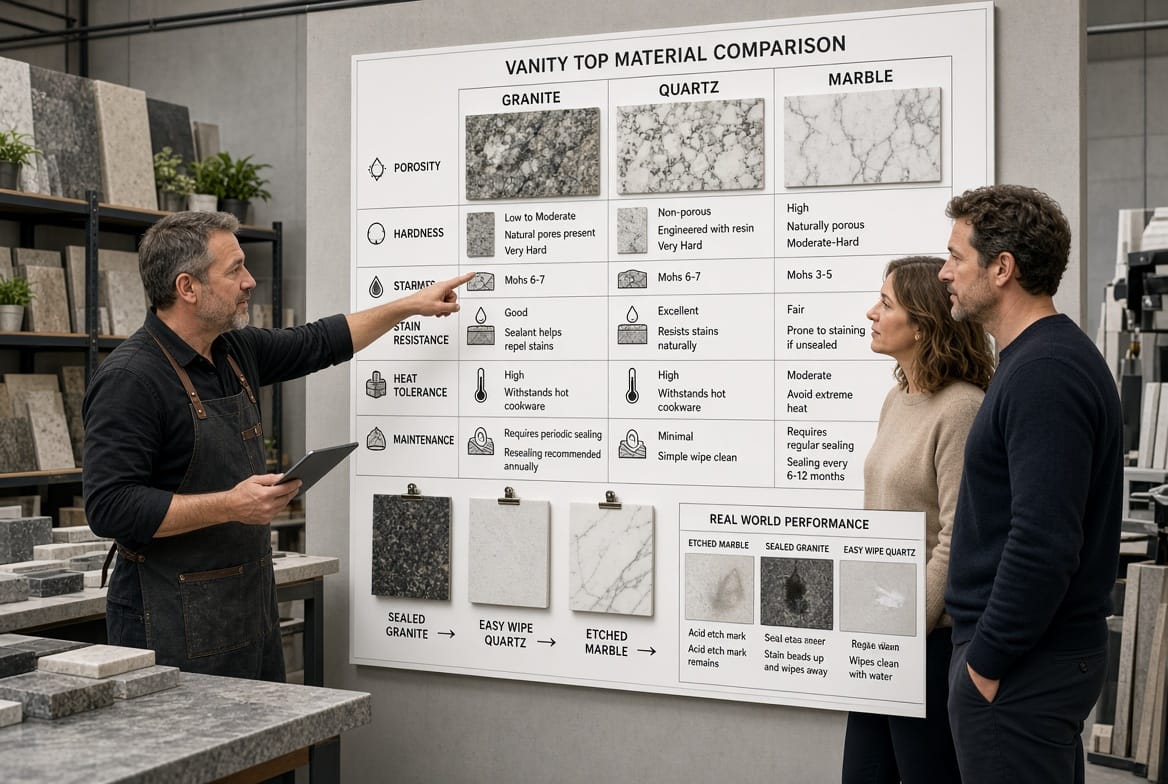
Side-by-Side Comparison: What Actually Matters Day to Day
The best material is the one that fits how you live. Use the points below as a decision filter.
Durability and Daily Wear
- Granite: Very hard; good scratch and heat resistance; sealing protects against stains.
- Quartz: Very hard; excellent stain resistance; more caution needed with high heat.
- Marble: Softer; more vulnerable to scratches and etching; beauty comes with extra care.
Porosity and Staining Risk
This is one of the biggest practical differences.
- Granite and marble are porous until properly sealed.
- Quartz is non-porous by design.
If your household includes hair dye, dark cosmetics, or frequent product spills, quartz reduces risk. If you love natural stone and will reseal on schedule, granite or marble can still perform well.
Appearance and Uniqueness
- Granite offers authentic mineral sparkle and variation.
- Quartz offers controlled, repeatable design—including marble-look patterns.
- Marble offers the classic, high-end stone movement many people picture when they think “luxury bath.”
If matching two vanities or coordinating with tile is critical, quartz is usually easier. If you want a slab that feels one-of-a-kind, granite or marble will feel more alive.
Maintenance Reality
Maintenance is not complicated, but it is different for each surface.
Granite care
- Clean with pH-neutral stone cleaner or mild soap
- Reseal as recommended (often annually, depending on use and product)
- Wipe spills promptly
Quartz care
- Daily wipe with soft cloth and mild cleaner
- Avoid abrasive pads and harsh chemicals
- Use trivets or mats for very hot tools
Marble care
- Gentle, non-acidic cleaners only
- Immediate wipe-up of cosmetics, perfume, and acidic products
- Regular sealing
- Accept that some etching may become part of the stone’s character unless professionally addressed
Homeowners who want the lowest ongoing effort usually choose quartz. Homeowners who enjoy the ritual of caring for natural stone often prefer granite or marble.
Weight, Cabinets, and Installation
All three materials are heavy compared with cultured marble or laminate. Cabinets must be solid, level, and properly supported. Cutouts for sinks and faucets should be templated and fabricated by experienced shops. Poor support or sloppy seams cause problems later, regardless of which stone you choose.
A professional installer also checks overhangs, sink mounting style (undermount vs. drop-in), and splash details. These construction choices affect both look and longevity.
Design Considerations Beyond the Material Name
Color is only the start. Finish, edge profile, and thickness change the entire impression of the vanity.
- Polished finishes look formal and reflective.
- Honed finishes look softer and more contemporary; they also hide etching on marble slightly better than high polish.
- Eased, ogee, or waterfall edges change how substantial the top feels.
- Thickness (often 2 cm or 3 cm, sometimes with a laminated edge) affects presence and cost.
Lighting matters. Granite flecks sparkle under vanity lights. Marble veining reads differently in warm versus cool LEDs. Quartz patterns can look flatter or more stone-like depending on the formula and the room’s light.
Think about the sink as well. An undermount sink showcases the stone edge and makes wiping crumbs and toothpaste into the basin easier. That pairing works with all three materials when fabrication is precise.
Common Risks and How to Avoid Them
Every material has risks. Knowing them in advance prevents disappointment.
- Unsealed or poorly sealed natural stone leads to staining. Always confirm sealing at install and follow a reseal schedule.
- Acidic cleaners on marble cause etching. Keep vinegar, harsh bathroom sprays, and citrus away from the surface.
- Hot tools on quartz can scorch or discolor resin. Use a heat-safe pad.
- Inconsistent slabs can surprise you if you approve a small sample and later receive a very different full slab. View the actual slab when possible, especially with granite and marble.
- Inadequate cabinet support can cause stress cracks over time. This is an installation issue, not a material flaw.
A reputable remodeling team reduces these risks through templating, proper support, quality sealing, and honest material education.
Which Vanity Top Should You Choose?
There is no single winner. There is a best fit.
Choose granite if you want natural variation, proven hardness, and a substantial stone look, and you are comfortable with periodic sealing.
Choose quartz if you want a non-porous, consistent, low-maintenance surface that still looks refined and modern.
Choose marble if elegance is the priority and you accept a softer, more care-intensive stone in exchange for unmatched classic beauty.
Many successful bathrooms also mix strategies: quartz in a kids’ or guest bath where spills are frequent, and marble or granite in a primary suite where the look is more important and use is more controlled.
Budget, lead time, slab availability, and cabinet condition also influence the final recommendation. An on-site review is the most reliable way to match material to the actual room.
Final Thoughts: Beauty That Works in Real Life
A bathroom vanity top should look beautiful on day one and still look considered five and ten years later. Granite brings natural character and toughness. Quartz brings consistency and easy care. Marble brings elegance that few other surfaces can copy.
The smartest projects treat the vanity top as part of a system: cabinets, sink, lighting, ventilation, and daily habits. When those pieces work together, the surface you choose will feel effortless rather than fragile.
If you are planning a remodel, look at full slabs in person, ask about sealing and fabrication details, and be honest about how your household actually uses the bathroom. That combination of design taste and practical assessment produces the best result.
Choose the right vanity top. A specialist can review your space, explain current slab availability, and help you select the material that balances beauty, durability, and maintenance for your home.
Compare Granite, Quartz & Marble – Call Today