The Bathroom Shower Curtain vs. Glass Door: Pros and Cons
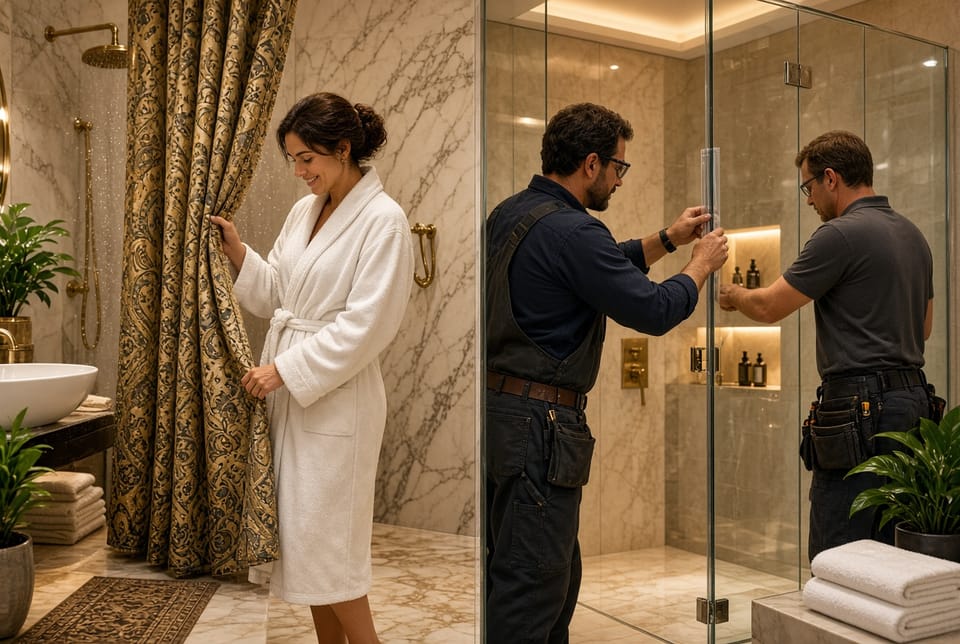
Selecting the right shower enclosure stands as one of the most consequential choices during any bathroom remodeling project. This decision influences not only the visual character of the space but also daily comfort, water management, long-term upkeep, and even the perceived value of the home. Two primary options dominate the conversation: the traditional shower curtain and the contemporary glass door. Each brings distinct advantages in affordability, aesthetics, and performance, along with specific considerations for design integration and maintenance.
Choose the Right Shower Enclosure – Call Now!
Homeowners often feel uncertain about which enclosure will serve their household best. The good news is that both solutions can deliver excellent results when matched to lifestyle, budget, and bathroom layout. Understanding the full picture—materials, water containment, visual impact, and ongoing care—empowers confident selection. This guide examines the shower curtain and glass door in depth, highlighting practical differences so you can move forward with clarity.
Understanding Shower Curtains as an Enclosure Option
A shower curtain typically consists of a decorative outer fabric or vinyl panel paired with a waterproof inner liner, suspended from a rod or track. This setup creates a flexible barrier that contains most spray while allowing easy access. Modern versions include weighted hems, rust-resistant grommets, and antimicrobial treatments that address earlier shortcomings.
The core strengths of this approach lie in its affordability and adaptability. Replacement remains simple and inexpensive, enabling seasonal refreshes or quick responses to wear. Many households appreciate the ability to introduce color, pattern, or texture without committing to permanent fixtures. Because the curtain can be pulled fully aside, the enclosure feels less imposing in compact bathrooms.
Strengths of Choosing a Shower Curtain
- Lower initial investment makes it accessible for budget-conscious remodeling.
- Effortless style updates by swapping panels or liners as tastes change.
- Relatively straightforward cleaning compared with fixed glass surfaces.
- Minimal structural requirements; most rods install with basic hardware.
- Forgiving of imperfect walls or unique shower dimensions.
These qualities explain why curtains remain popular in family bathrooms, rental properties, and spaces where frequent aesthetic updates matter.
Limitations and Risks Associated with Shower Curtains
Despite their flexibility, curtains present certain drawbacks. Water can escape around the edges if the liner is not properly tucked or weighted, potentially leading to floor moisture and slip hazards. Fabric and vinyl materials may develop mold or mildew in humid environments without consistent ventilation and drying. Over time, liners can become stained or brittle, requiring periodic replacement.
The visual effect also differs from more architectural solutions. Even high-quality curtains can appear less refined in a spa-inspired or minimalist bathroom. Privacy and containment depend on proper hanging and user habits, which vary across household members.
The Modern Appeal of Glass Shower Doors
Glass shower doors use tempered safety glass panels, often framed or frameless, mounted on hinges, sliders, or pivots. They form a more permanent, architectural enclosure that emphasizes light transmission and spatial openness. Frameless designs in particular create a nearly invisible barrier that highlights tile work and fixtures.
The primary attractions include a modern look and superior water control. A well-installed glass door provides a watertight seal that keeps moisture contained within the shower area. This performance supports cleaner floors and reduced humidity in the rest of the bathroom. The transparency also makes compact spaces feel larger and more luxurious.
Advantages of Glass Shower Doors
- Clean, contemporary aesthetic that complements high-end tile and fixtures.
- Excellent water containment when properly sealed and maintained.
- Increased natural and artificial light flow throughout the bathroom.
- Durable construction with tempered glass that resists everyday impact.
- Potential to enhance perceived home value through a finished, custom appearance.
These features make glass doors a frequent choice in master bathrooms and whole-house remodeling projects where a cohesive, upscale result is desired.
Considerations and Challenges with Glass Doors
The most notable factor is higher cost, encompassing both materials and professional installation. Custom sizing, hardware quality, and sealing work add to the investment. Maintenance demands regular attention to prevent soap scum and hard water stains from dulling the surface. Heavy panels require sturdy walls or additional support, which may involve extra construction in older homes.
There is also a small but real risk of glass breakage if the door is struck with significant force, although tempered glass is designed to crumble safely rather than shatter into dangerous shards. Sliding mechanisms can collect debris over years of use if not kept clean.
Design Differences That Shape the Bathroom Experience
Design impact extends beyond surface appearance. A shower curtain introduces softness and movement. Patterns and colors can coordinate with towels, rugs, or wall hues, creating a layered, residential feeling. Because the curtain can be drawn completely open, the shower area integrates with the rest of the room when not in use. This quality benefits smaller bathrooms where visual weight must be managed carefully.
In contrast, a glass door emphasizes architecture and permanence. Frameless models disappear visually, allowing tile patterns and stone surfaces to remain the focal point. The enclosure feels more like a built-in feature than an accessory. Light bounces through the glass, brightening adjacent areas and making the entire bathroom appear more spacious. Hardware choices—brushed nickel, matte black, or polished chrome—further refine the look.
Privacy considerations also differ. Curtains provide complete visual blockage when closed. Glass, even when frosted or textured, typically allows more light and silhouette visibility. Homeowners seeking maximum seclusion often add an additional inner curtain or select heavily patterned glass.
Space planning plays a role as well. Curtains require only a rod and adequate swing or pull space. Glass doors need clearance for swinging panels or tracks for sliders, plus a properly sloped threshold to direct water inward. In tight layouts, a curtain may prove more practical; in larger or well-proportioned showers, glass can shine.
Maintenance Realities and Long-Term Care
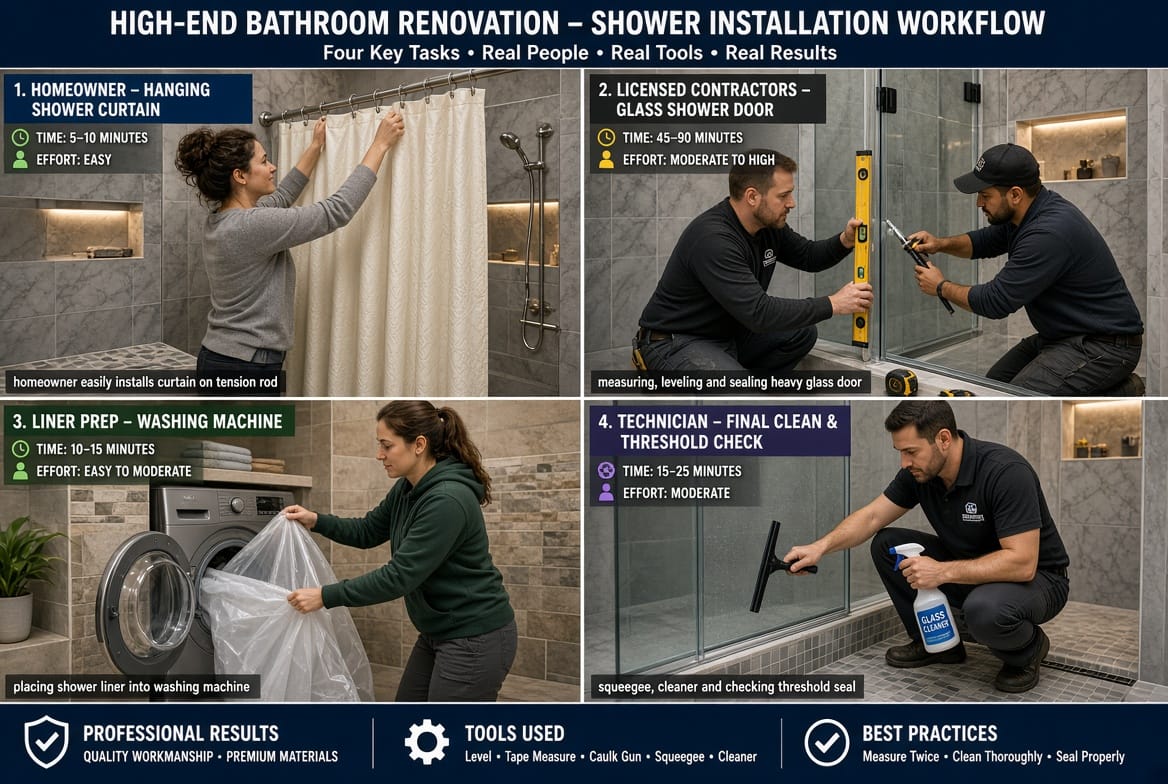
Upkeep routines diverge significantly. Shower curtains and liners can often be machine-washed or replaced at modest cost. Regular ventilation and occasional wiping reduce mold growth. Many households simply swap the liner every few months as part of routine cleaning. The outer decorative panel may last years with gentle care.
Glass doors demand a different discipline. After each use, a quick squeegee pass prevents mineral deposits from bonding to the surface. Periodic application of specialized cleaners addresses soap scum. Seals and hinges benefit from inspection to maintain the watertight performance that justifies the investment. Neglect can lead to etching or cloudy appearance that is difficult to reverse.
Longevity also varies. A quality curtain system can serve for several years with liner replacements. A well-installed glass enclosure frequently lasts a decade or more when maintained. The trade-off is the higher upfront effort versus the lower daily replacement cycle of curtains.
Ventilation remains essential for both. An exhaust fan used during and after showers protects walls, ceilings, and enclosure materials regardless of the chosen style. Proper airflow is one of the simplest ways to extend the life of either option and protect the surrounding bathroom remodeling investment.
Installation Process and Structural Considerations
Installation complexity marks another clear distinction. Most shower curtains can be hung by a homeowner using a tension rod or basic mounted hardware. The process typically takes minutes and requires no specialized tools. Adjustments for height or width are straightforward.
Glass doors usually involve professional measurement, custom fabrication, and precise setting. Walls must be plumb, the shower base correctly sloped, and anchoring points structurally sound. Silicone sealing and hardware alignment demand experience to achieve a reliable watertight result. Attempting this work without proper skills can create leaks or alignment issues that undermine performance.
In renovation contexts, existing plumbing and tile conditions influence feasibility. Curtains adapt more readily to irregular spaces. Glass often performs best when planned as part of a coordinated tile and fixture package.
Cost Perspective Across the Project Lifecycle
Initial pricing favors the shower curtain. A complete rod, liner, and decorative panel set remains far less expensive than even a basic framed glass door. Custom frameless glass, premium hardware, and installation labor increase the gap substantially.
Long-term economics tell a more nuanced story. Frequent liner replacements and occasional full curtain updates add modest recurring expense. Glass carries higher first cost but fewer consumable replacements when cared for properly. Energy and water considerations are similar for both, though better containment with glass can slightly reduce cleanup time and associated moisture-related issues.
Budget planning should include not only purchase price but also professional labor, potential wall reinforcement, and future maintenance supplies. Many homeowners find value in viewing the enclosure as part of the overall bathroom remodeling budget rather than an isolated line item.
Lifestyle, Household, and Practical Fit
Household composition often guides the final choice. Families with young children may prefer the lower replacement cost and softer materials of a curtain. Households that entertain or prioritize a hotel-like atmosphere frequently gravitate toward glass. Pets that shake off water after baths can test the containment of either system; glass generally performs better in these situations.
Accessibility needs matter as well. Curtains allow wide, unobstructed entry. Certain glass configurations, particularly sliding doors, can accommodate grab bars and transfer benches when specified correctly. Consultation during the design phase ensures the enclosure supports current and future mobility requirements.
Climate and water quality influence maintenance burden. Homes with hard water will notice deposits on glass more quickly and may need more frequent squeegeeing or water-softening measures. Curtains show mineral effects differently but still benefit from good ventilation.
Weighing Options for Your Specific Bathroom
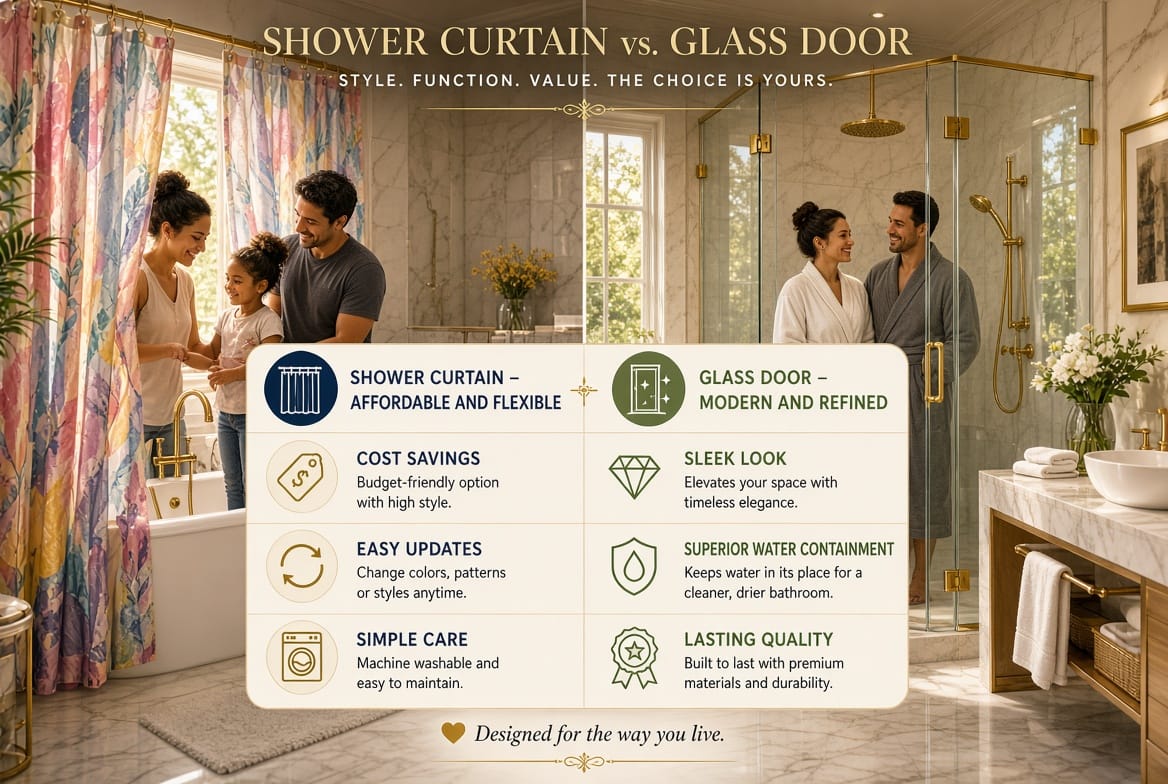
The decision ultimately rests on aligning priorities. If budget flexibility, easy updates, and straightforward care rank highest, a well-chosen shower curtain delivers satisfying results. If a clean architectural statement, maximum water control, and a sense of permanence matter most, a quality glass door justifies the additional investment.
Many successful remodels combine elements thoughtfully—using a curtain in a secondary bathroom and glass in the primary suite, for example. Others select hybrid solutions such as a glass panel with a complementary curtain for extra splash protection. The key is matching the enclosure to how the space will actually be used rather than following trends alone.
Professional guidance helps translate these considerations into a workable plan. Experienced remodelers evaluate wall conditions, drainage, lighting, and traffic patterns to recommend the most suitable approach. They can also address related details such as niche placement, lighting inside the enclosure, and coordination with flooring transitions.
Conclusion: Confidence in Your Shower Enclosure Choice
Both the shower curtain and the glass door can serve as excellent solutions when selected with full awareness of their characteristics. Curtains excel in affordability, adaptability, and relatively simple upkeep. Glass doors provide a modern look, reliable containment, and a refined presence that many associate with completed luxury bathrooms. Design differences affect light, space perception, and style cohesion. Maintenance routines differ in frequency and method but remain manageable with consistent habits.
There is no universally superior option—only the right match for your household, bathroom layout, and remodeling goals. Taking time to consider daily routines, long-term plans, and aesthetic vision leads to an enclosure that enhances rather than complicates life in the home.
Choose the right shower enclosure that supports both beauty and practicality in your bathroom. Speak with experienced remodeling specialists who can review your space, discuss material options, and outline a clear path forward.
Get Expert Advice on Curtain vs. Glass – Call Today!