The Bathroom Shower Bench: Adding Comfort and Accessibility
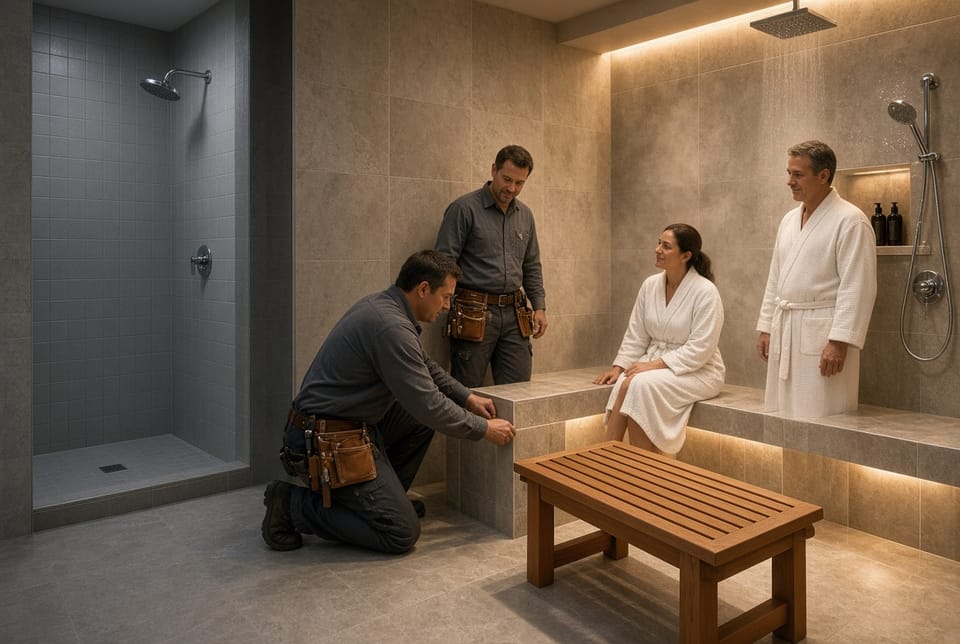
A shower should do more than rinse. In a well-planned bathroom remodel, it should also support balance, rest, and everyday independence. One of the most effective functional upgrades is a shower bench. When it is designed as part of the enclosure—not dropped in as an afterthought—it adds safety, comfort, and long-term accessibility without making the room feel clinical.
Make Your Shower Safer and Easier – Call Today
This guide explains the three main shower bench types—built-in, teak, and folding—the real benefits they deliver, and the installation details that matter most: waterproofing and weight support. The goal is a bench that looks intentional, performs every day, and lasts as long as the shower itself.
Why a Shower Bench Changes How the Room Works
Standing on wet tile for the full length of a shower is tiring and, for many households, risky. Fatigue, limited mobility, young children who need help, or simply the wish to sit while washing or shaving all point to the same solution: a stable place to sit.
Temporary plastic stools slide, stain, and rarely look finished. A professionally planned bench becomes part of the architecture. It carries real body weight, sheds water correctly, and gives every user a predictable surface inside a slick environment. Done well, it disappears into the design while quietly doing its most important job.
Three Shower Bench Types to Consider
The right style depends on space, style, budget, and how often the seat will be used.
Built-In Shower Benches
A built-in shower bench is framed and finished with the rest of the enclosure. Common layouts include a corner seat, a bench along one wall, or a recessed seat that reads as architecture rather than furniture.
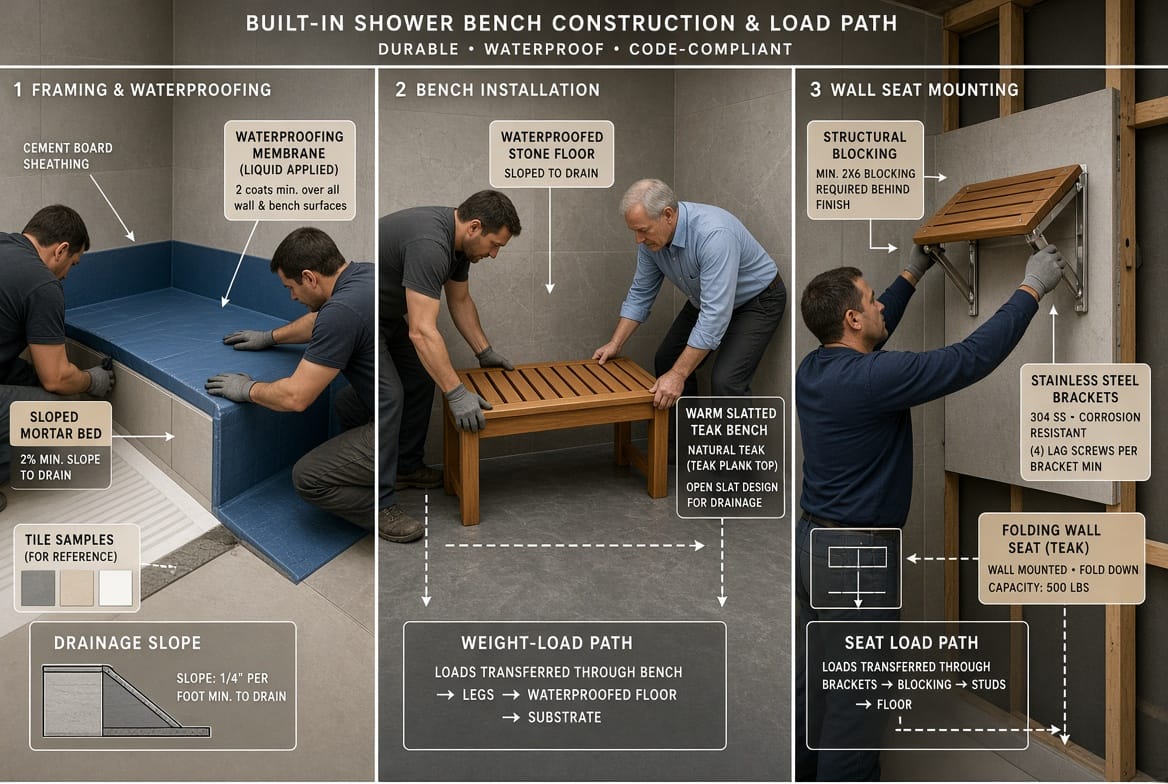
Typical seating height is about 17–19 inches, with a usable depth of 14–16 inches so a person can sit securely without crowding the floor. The structure is usually built from treated framing or metal studs, covered with cement board or foam-core panels, then fully wrapped in a waterproofing membrane before tile.
The strength of a built-in bench is permanence and visual continuity. When the same tile wraps the seat, the bench feels designed, not added. Framed correctly, it also offers the highest load capacity of the three types—often well above everyday body weight—making it a strong choice for multi-generational homes.
Teak Shower Benches
A teak shower bench uses dense, naturally oily hardwood long valued in wet environments. Quality teak resists rot and mildew better than most woods. Slatted tops let water drain at once and allow air to dry the surface after each use.
Teak benches may be freestanding, wall-supported, or a hybrid that sits on the floor and is anchored for stability. Many homeowners choose teak for the warm contrast it creates against stone or porcelain. Because the wood itself does not need a tiled membrane, installation can often happen after the shower is already finished.
Care is simple: rinse after use and apply teak oil when the surface looks dry. Left untreated, teak weathers to a silver patina that many people like. Load ratings vary by construction, but a well-joined bench commonly supports 250–400 pounds.
Folding Shower Benches
A folding shower bench mounts to the wall and flips down when needed. When closed, it frees floor space—an advantage in compact stalls and in homes where standing room matters most of the time.
Better models use marine-grade stainless or coated aluminum frames with slatted wood, teak, or solid composite seats and a lock that holds the bench open or closed. Because the load transfers into the wall, the installer must hit structural blocking, not just tile or drywall.
Folding benches suit smaller bathrooms, rental properties, and households that want flexibility. They also make floor cleaning easier because the seat lifts out of the way.
Benefits That Matter Every Day
A shower bench is not only a design detail. It changes how safely and comfortably people use the room.
Safety in a Wet Space
Wet tile is slippery. A fixed bench gives users a stable surface to sit or brace against while entering, washing, or leaving. For older adults, people recovering from injury, and anyone with balance concerns, that single surface can reduce fall risk. Parents also gain a secure place for a child to sit, which is easier than kneeling on a hard, wet floor.
Comfort That People Actually Use
Sitting while showering is simply less tiring. Legs can be washed without awkward bending. Hair care, shaving, and applying products become easier. After a long day—or during pregnancy—the option to sit for several minutes is a genuine comfort upgrade. Once the bench exists, most households use it regularly, not only in an emergency.
Accessibility Without a Clinical Look
Paired with a low or curbless entry, grab bars, and a handheld shower, a bench supports aging-in-place goals while remaining attractive. A tiled or teak seat can match the rest of the remodel instead of looking like medical equipment. That combination—function plus design—is what makes the feature worth specifying early.
Installation Considerations You Should Not Skip
Even a beautiful bench fails if two requirements are ignored: waterproofing and weight support.
Waterproofing Protects the Structure
Water that reaches framing or drywall leads to rot, mold, and expensive repairs. Treat every bench as part of the wet zone.
For a built-in bench:
- Wrap the top, sides, and wall/floor junctions with a continuous liquid or sheet membrane.
- Carry the membrane several inches up adjacent walls and across the floor with proper overlaps.
- Slope the seat slightly so water runs to the shower floor instead of pooling.
- Seal niches, fasteners, and every change of plane before tile goes on.
A teak bench still needs a fully waterproofed, sloped floor beneath it. Wall contacts and anchors must be detailed so water cannot travel behind finishes.
A folding bench requires the wall behind the mounting plate to be waterproofed before brackets go in. Fastener penetrations must be sealed so moisture cannot enter the cavity.
Rushing this step is the most common cause of later failure. Tile should never cover a bench until waterproofing is complete and inspected.
Weight Support Must Match Real Use
People sit down hard, shift their weight, and sometimes stand on the edge. The structure has to accept that load.
- Built-in benches need close framing, extra blocking under the seat, and solid connections at the walls.
- Teak benches need stout joinery and, if wall-supported, lag fasteners into blocking—not tile alone.
- Folding benches need horizontal blocking at the exact mounting height and hardware rated for the intended load. The open seat must sit level.
A professional installer confirms structure and, when appropriate, checks the finished bench before the job is signed off. That verification is part of doing the work correctly.
Other practical points include keeping the bench out of the door swing, coordinating it with the shower spray, and placing grab bars so they work with the seat rather than competing with it.
Design, Care, and Who Gains the Most
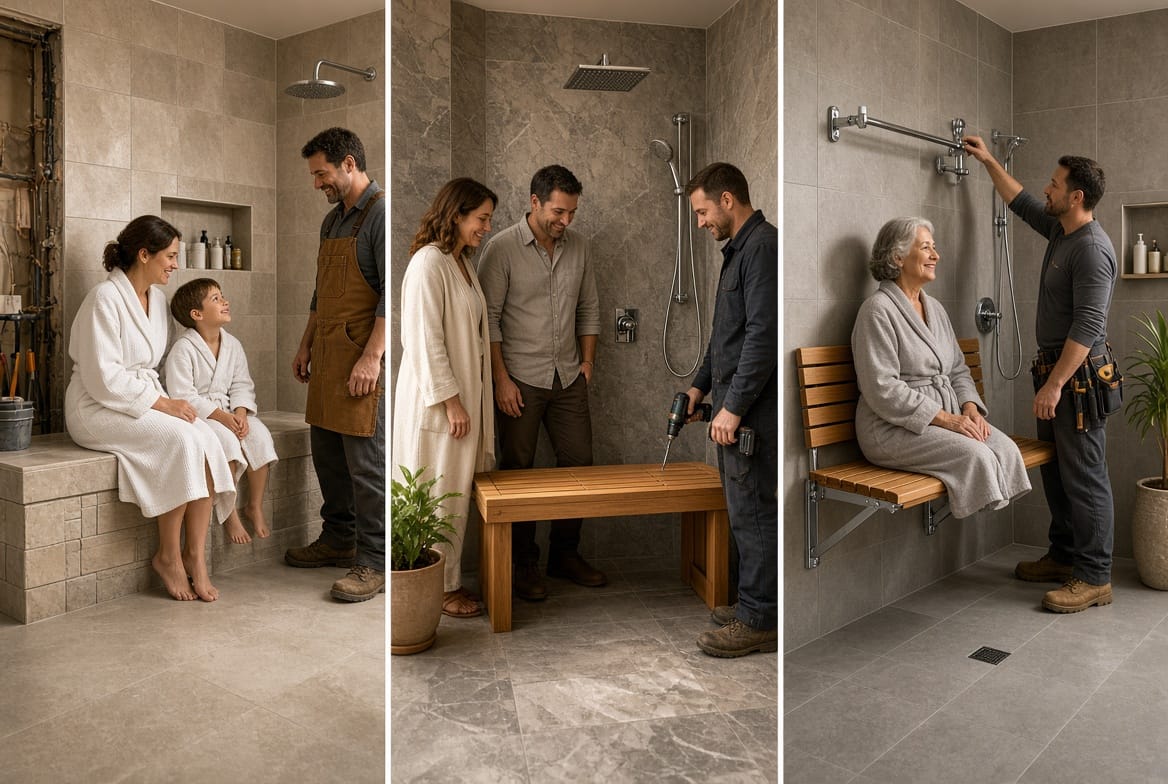
The bench should feel inevitable. Matching wall tile creates a calm, continuous look. Teak adds warmth. A folding seat can be finished to coordinate with fixtures so it recedes when closed.
Daily care is simple:
- Rinse the surface after use
- Allow air to circulate so the bench dries
- Use a pH-neutral cleaner on tile
- Refresh teak oil when the wood looks dry
- Check grout, sealant, and hardware once a year
Families with children, households planning to age in place, and anyone who wants a more restful shower all benefit. The feature is most successful when it is specified during design—not squeezed in after the tile is chosen.
A Functional Upgrade Worth Doing Right
A shower bench is one of the highest-value functional additions in bathroom remodeling. Built-in, teak, and folding styles can all work when the choice matches the space and the two non-negotiables—thorough waterproofing and reliable weight support—are handled by people who understand wet-area construction.
The result is a shower that is easier, safer, and more comfortable for everyone who uses it, now and years from now.
Start Your Accessible Bathroom Remodel – Call Now