The Bathroom Radiant Floor Warming: Electric Mats vs. Hydronic Loops
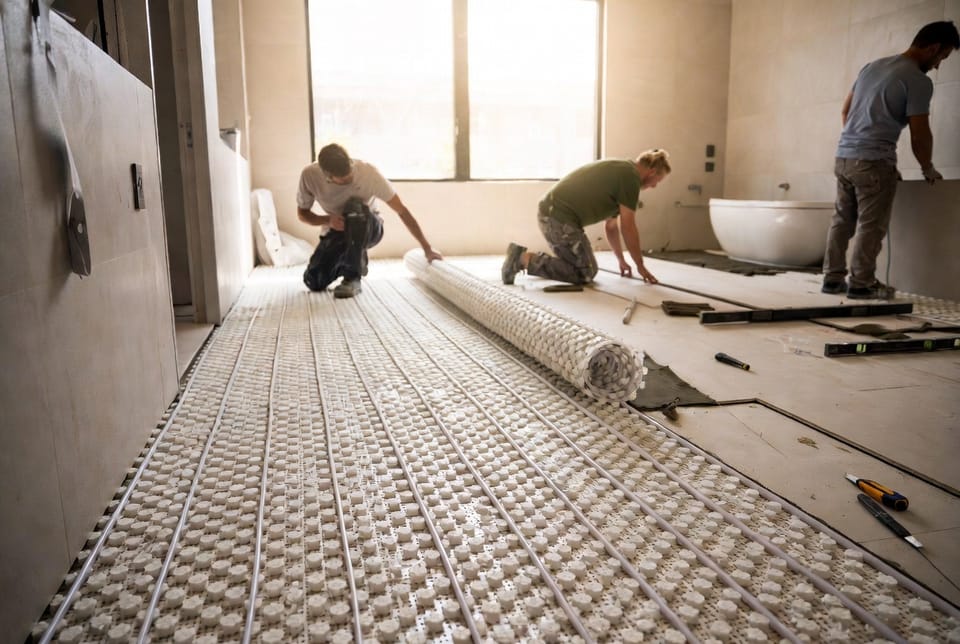
When planning a bathroom remodeling project, few upgrades deliver the same level of daily comfort as radiant floor heating. Imagine stepping out of the shower onto warm, inviting floors instead of cold tile. This luxurious feature has become a sought-after addition in modern bathrooms, boosting both comfort and property value.
Get Warm Floors Today – Call Now!
In this comprehensive guide, we compare the two primary systems: electric radiant mats and hydronic loops. Both deliver effective underfloor heating, yet they differ significantly in installation, performance, operating costs, and suitability for bathroom renovations. Understanding these differences helps homeowners make informed decisions that balance comfort, budget, and long-term efficiency.
Understanding Radiant Floor Heating Technology
Radiant floor heating works by warming the floor surface, which then radiates gentle, even heat throughout the room. Unlike forced-air systems, it eliminates drafts and hot spots while operating silently.
This technology proves especially valuable in bathrooms where moisture and cold surfaces create discomfort. Both electric and hydronic systems install beneath tile, stone, or other flooring materials, providing consistent warmth exactly where needed.
Key benefits include:
- Even heat distribution
- Improved energy efficiency in well-insulated spaces
- Enhanced comfort during cold months
- No visible heating elements or vents
Now, let’s examine how the two systems stack up.
Electric Radiant Floor Mats: Simplicity and Speed
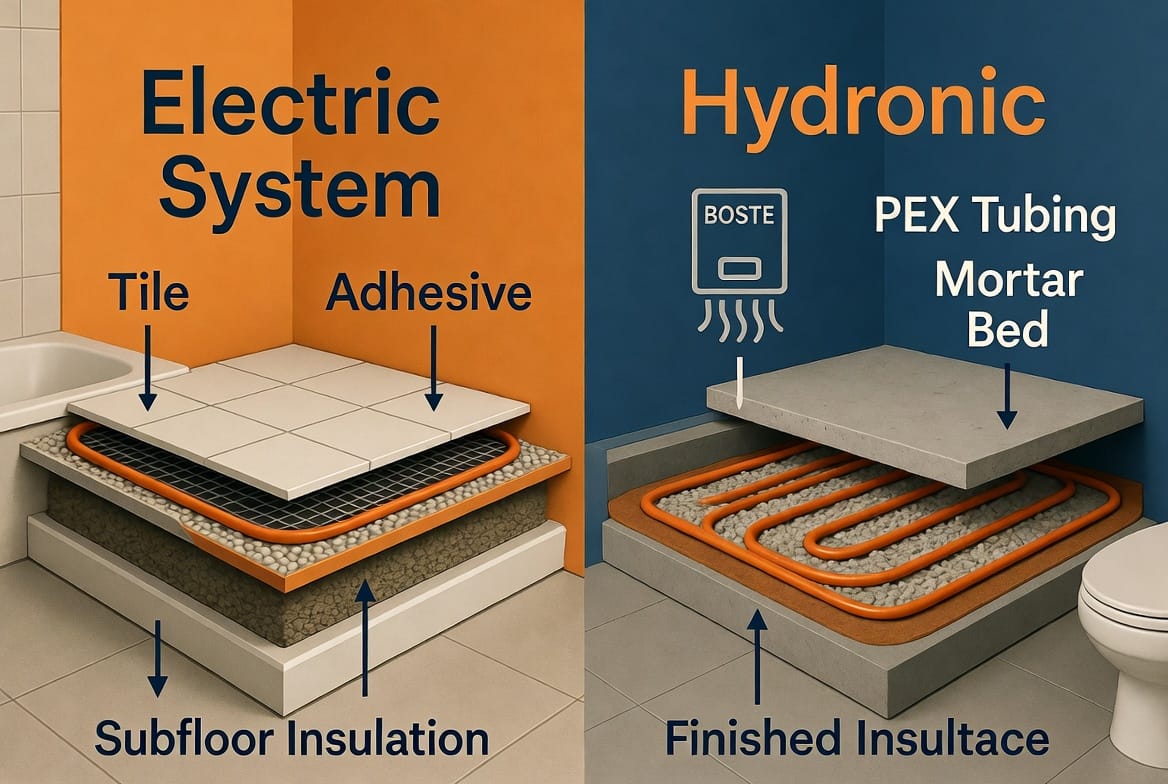
Electric radiant floor heating mats consist of thin heating cables arranged on a self-adhesive mesh. Installers lay these mats directly on the subfloor before setting tiles.
Advantages of Electric Systems
- Easier retrofit — Ideal for bathroom remodeling projects where raising the floor height significantly isn’t practical.
- Quick installation process, often completed in a single day.
- Precise temperature control with programmable thermostats.
- No need for boilers, pumps, or extensive plumbing modifications.
Electric mats excel in smaller spaces like bathrooms, powder rooms, and kitchens. They heat up relatively quickly, typically within 30-60 minutes, making them responsive to your schedule.
Bold performance note: Operating costs tend to be higher with electric systems because electricity rates generally exceed natural gas or propane costs in most regions. However, modern systems with smart controls and efficient insulation minimize energy consumption.
Installation Process for Electric Mats
- Prepare and level the subfloor
- Lay and secure the heating mats
- Install temperature sensors
- Apply thin-set mortar and lay tiles
- Connect to a dedicated thermostat
This straightforward process makes electric mats particularly attractive for bathroom remodeling projects with tight timelines or budget constraints on structural changes.
Hydronic Radiant Floor Heating: Efficiency at Scale
Hydronic systems circulate warm water through PEX tubing embedded in a concrete slab or specially designed panels. A boiler or heat pump supplies the heated water.
Key Strengths of Hydronic Loops
- Lower operating costs when paired with an existing high-efficiency boiler or heat pump.
- Excellent long-term energy efficiency, especially in larger bathrooms or whole-house applications.
- Gentle, consistent heat output that feels more natural.
Hydronic systems require more complex planning. Installation often involves embedding tubes within a mortar bed or lightweight thermal mass, increasing both time and labor requirements.
Important consideration: Hydronic systems shine in new construction or major renovations where floor height adjustments are feasible. They become more cost-effective if your home already has a compatible heating source.
Installation Considerations for Hydronic Systems
- Requires professional plumbing integration
- May need additional floor height (typically 1-2 inches)
- Longer heat-up and cool-down periods
- Higher upfront installation complexity
These systems deliver superior performance in regions with colder climates or where homeowners prioritize long-term operating savings.
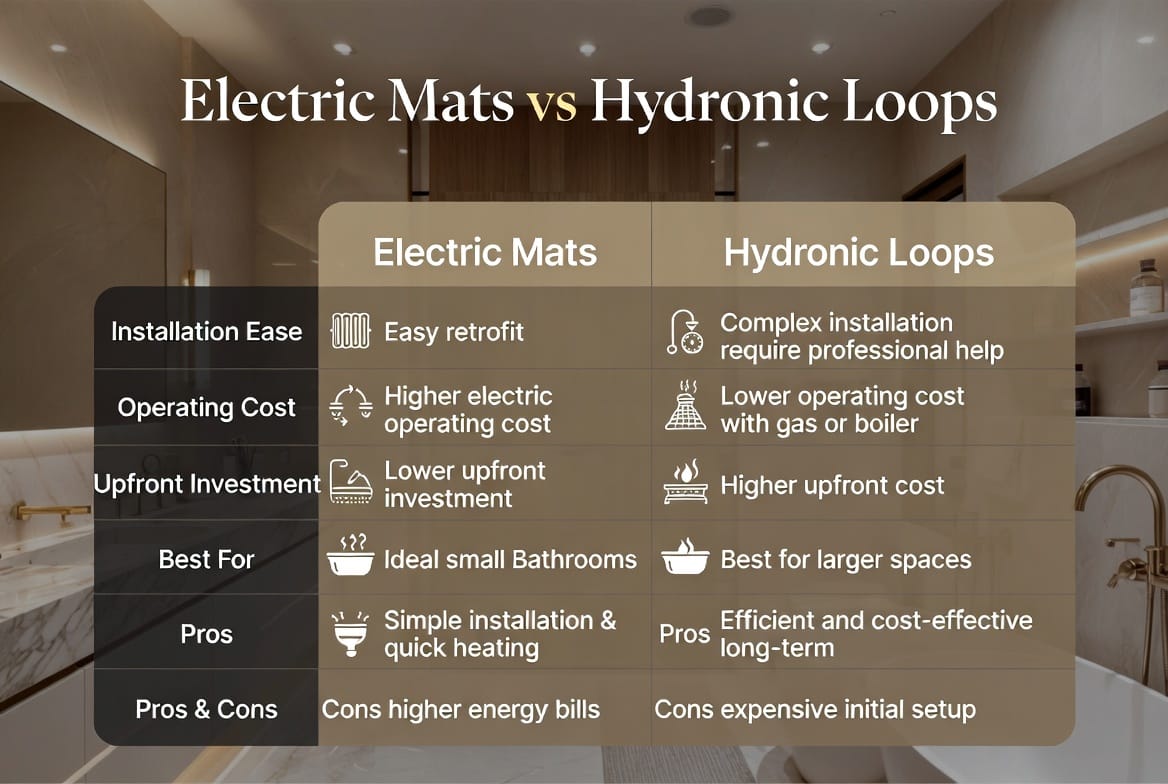
Detailed Side-by-Side Comparison
Installation Difficulty
Electric Mats: Easier and faster. Perfect for retrofits. Minimal disruption to existing structure.
Hydronic Loops: More complex. Requires plumbing expertise and potential structural modifications.
Upfront Costs
Electric systems generally have lower initial installation costs for bathroom-sized areas. Hydronic systems carry higher material and labor expenses, particularly if a new boiler is needed.
Operating Costs
Electric: Higher ongoing electricity costs, though smart thermostats and zoned controls help manage expenses.
Hydronic: Typically lower monthly costs when using efficient gas or heat pump sources.
Performance and Comfort
Both systems provide excellent comfort, but hydronic offers more even, sustained heat. Electric systems respond faster to temperature adjustments.
Maintenance and Longevity
Electric mats are virtually maintenance-free once installed. Hydronic systems may require occasional checks on pumps and boilers but can last decades with proper care.
Best Applications in Bathroom Remodeling
- Choose electric mats for smaller bathrooms, quick renovations, or homes with all-electric utilities.
- Select hydronic loops for larger spaces, homes with existing boilers, or projects prioritizing maximum efficiency.
Factors to Consider Before Choosing
Room size matters. Small to medium bathrooms (under 100 sq ft) often benefit most from electric systems. Larger bathrooms or master suites may justify hydronic investment.
Existing heating infrastructure plays a crucial role. Homes already equipped with efficient boilers find hydronic systems more attractive. All-electric homes usually favor electric mats.
Energy prices in your area should influence your decision. Review local electricity and gas rates to project long-term costs accurately.
Flooring choices affect performance. Both systems work best with tile or stone. Carpet or thick wood reduces efficiency.
Budget and timeline remain primary concerns. Electric systems typically allow faster project completion with less invasive construction.
Maximizing Efficiency in Your Bathroom Remodel
Proper insulation beneath the heating system dramatically improves performance and reduces operating costs for both types. High-quality vapor barriers and subfloor insulation prevent heat loss downward.
Smart thermostats with scheduling, geofencing, and adaptive learning optimize energy use. Many modern systems integrate with home automation platforms for seamless control.
Professional installation ensures optimal performance and safety. Certified technicians understand local building codes and can recommend the most suitable system for your specific situation.
Pro tip: Combine radiant floor heating with good bathroom ventilation and insulation upgrades for maximum comfort and efficiency.
Potential Challenges and Solutions
Electric Systems Challenge: Higher operating costs in cold climates.
Solution: Use programmable thermostats and high-quality insulation.
Hydronic Systems Challenge: Complex installation and higher initial investment.
Solution: Plan during major remodeling phases and leverage existing heating infrastructure.
Both systems carry minimal risks when professionally installed. Modern safety features include ground fault protection for electric systems and pressure monitoring for hydronic setups.
Making the Right Choice for Your Home
The decision between electric radiant mats and hydronic loops depends on your specific bathroom remodeling goals, budget, and home infrastructure.
Electric systems offer simplicity, faster installation, and excellent performance for most standard bathroom projects. Hydronic systems deliver superior long-term efficiency when conditions align perfectly with their strengths.
Many homeowners find electric mats provide the ideal balance of comfort, cost, and convenience for bathroom applications. Their ease of installation minimizes disruption while delivering the warm floors everyone loves.
Transform Your Bathroom Experience Today
Warm your floors without breaking the bank. Professional guidance ensures you select the system that best matches your needs, budget, and lifestyle.
Ready to explore your options? Ask about system choices and discover the perfect radiant floor heating solution for your bathroom remodeling project.
Our experts provide personalized recommendations, detailed cost comparisons, and professional installation services tailored to your home.
Invest in comfort that lasts. Experience the difference radiant floor warming brings to your daily routine.
Transform Your Bathroom with Radiant Heat – Call Now