The Bathroom Medicine Cabinet Depth: Standard vs. Recessed Considerations
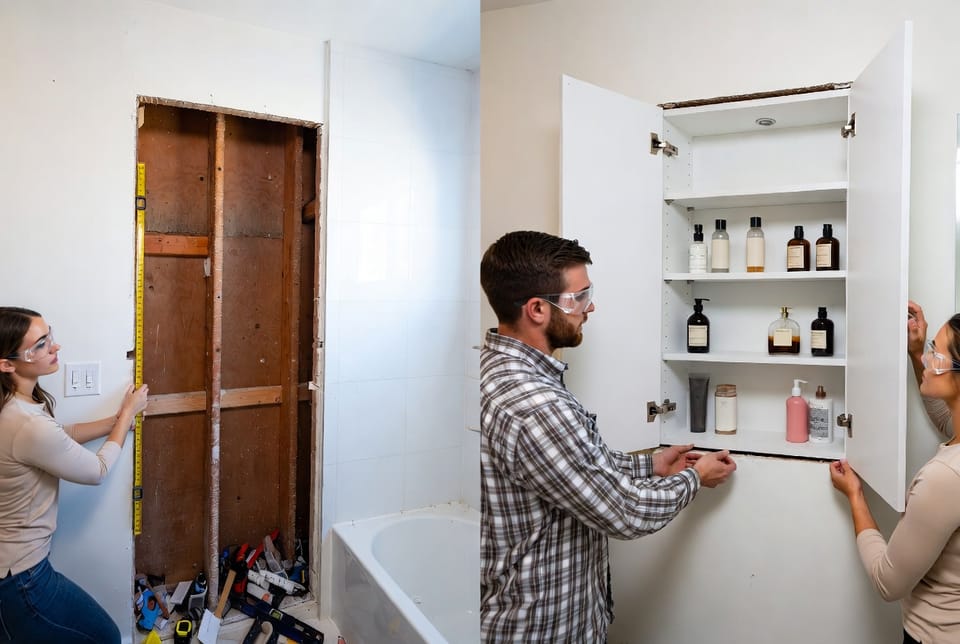
In bathroom remodeling, few details impact daily convenience as much as medicine cabinet depth. Homeowners often focus on style and finish, yet the choice between a recessed medicine cabinet and a standard surface-mounted unit determines how effectively you can store essentials without sacrificing floor space or aesthetics. Proper storage planning ensures your bathroom feels organized, spacious, and tailored to your lifestyle.
Maximize Your Bathroom Storage Today – Call Now!
Whether you are refreshing a small powder room or overhauling a primary suite, understanding cabinet depth prevents common regrets. Recessed medicine cabinets nestle neatly between wall studs, delivering a built-in look that maximizes usable room area. Surface-mounted options install quickly without structural changes but extend into the room. This guide walks you through every consideration so you can choose confidently and enjoy a clutter-free bathroom for years to come.
Why Medicine Cabinet Depth Matters in Storage Planning
Depth directly influences what you can store and how the cabinet integrates with your bathroom layout. A shallow cabinet might force you to keep large lotion bottles or prescription containers on the countertop, creating visual clutter. Deeper units accommodate taller items vertically, freeing up counter space and promoting a serene, spa-like environment.
In bathroom remodeling projects, we consistently see clients gain up to 30% more practical storage simply by selecting the right depth. The decision also affects installation complexity, cost, and long-term maintenance. Rest assured, with thoughtful planning you can avoid cramped counters and achieve the efficient, elegant storage every modern bathroom deserves.
Understanding Recessed Medicine Cabinets
Recessed medicine cabinets are designed to sit inside the wall cavity, aligning flush with the drywall for a seamless appearance. They require cutting an opening between studs but deliver a custom-built look that professional remodelers love. Because they utilize unused wall space, these cabinets keep the bathroom footprint open and accessible.
The primary advantage lies in their ability to disappear into the wall. Homeowners report that this flush installation makes small bathrooms feel noticeably larger. Plus, the hidden depth allows for robust shelving that holds everything from daily skincare routines to emergency first-aid supplies without protruding awkwardly.
Standard Depth for Recessed Cabinets
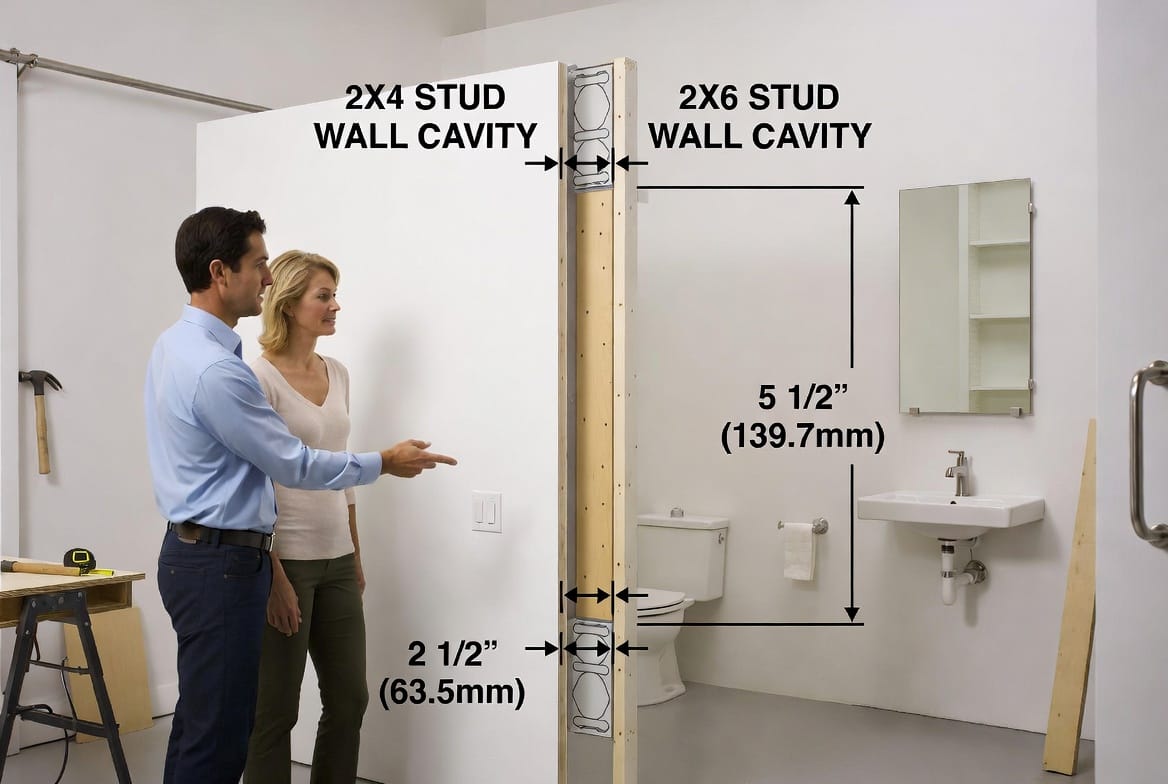
Most residential walls use 2x4 framing, creating a standard cavity depth of approximately 3.5 inches. This measurement is the sweet spot for the majority of recessed medicine cabinets. For 2x6 walls — common in newer construction or exterior walls — the cavity expands to about 5.5 inches, opening the door to even deeper storage solutions.
When planning your remodel, measure your wall thickness early. A 3.5-inch recessed unit comfortably holds standard medicine bottles, toothpaste tubes, and small jars. If your family uses bulkier items such as oversized shampoo bottles or electric toothbrush chargers, consider upgrading to a deeper model or 2x6 framing reinforcement during the remodel.
Key benefits of standard 3.5-inch depth:
- Fits perfectly between typical studs without additional framing
- Maintains structural integrity of the wall
- Provides ample room for everyday bathroom essentials
- Delivers a clean, modern flush profile
Rest assured that this depth meets building codes in most regions while offering practical storage that grows with your needs.
Surface-Mounted Cabinets: The No-Cut Alternative
If cutting into walls feels daunting, surface-mounted medicine cabinets provide an excellent solution. These units attach directly to the drywall, requiring no structural modifications. Installation takes minutes rather than hours, making them ideal for quick bathroom updates or rental properties.
While they do extend outward, quality designs minimize visual bulk through slim profiles and mirrored doors that reflect light and create an illusion of space. Depth typically ranges from 4 to 6 inches, often matching or exceeding recessed options. The trade-off is minor protrusion in exchange for effortless installation and future flexibility.
Many clients choose surface-mounted cabinets during bathroom remodeling when time or budget constraints exist. They still support smart storage planning — just plan counter clearance accordingly.
How Cabinet Depth Affects What You Can Store
Depth is the hidden hero of storage planning. Consider your household’s specific needs:
- Small-depth cabinets (under 3 inches): Best for lightweight items like cotton swabs, dental floss, and travel-sized products. Ideal for minimalist bathrooms but may require countertop overflow.
- Standard 3.5-inch recessed depth: Perfectly accommodates prescription bottles, deodorant sticks, and skincare jars. Most families find this depth sufficient for daily routines.
- Deeper 5+ inch options: Accommodate tall spray cans, electric razors, hair tools, and family-sized toiletries. Excellent for households with children or multiple users.
Bold storage planning tip: Create an inventory of items you currently store in the bathroom. Group by height and width, then match to cabinet depth. This simple exercise prevents post-installation frustration and ensures every inch works efficiently.
Key Considerations for Stud Spacing and Wall Depth
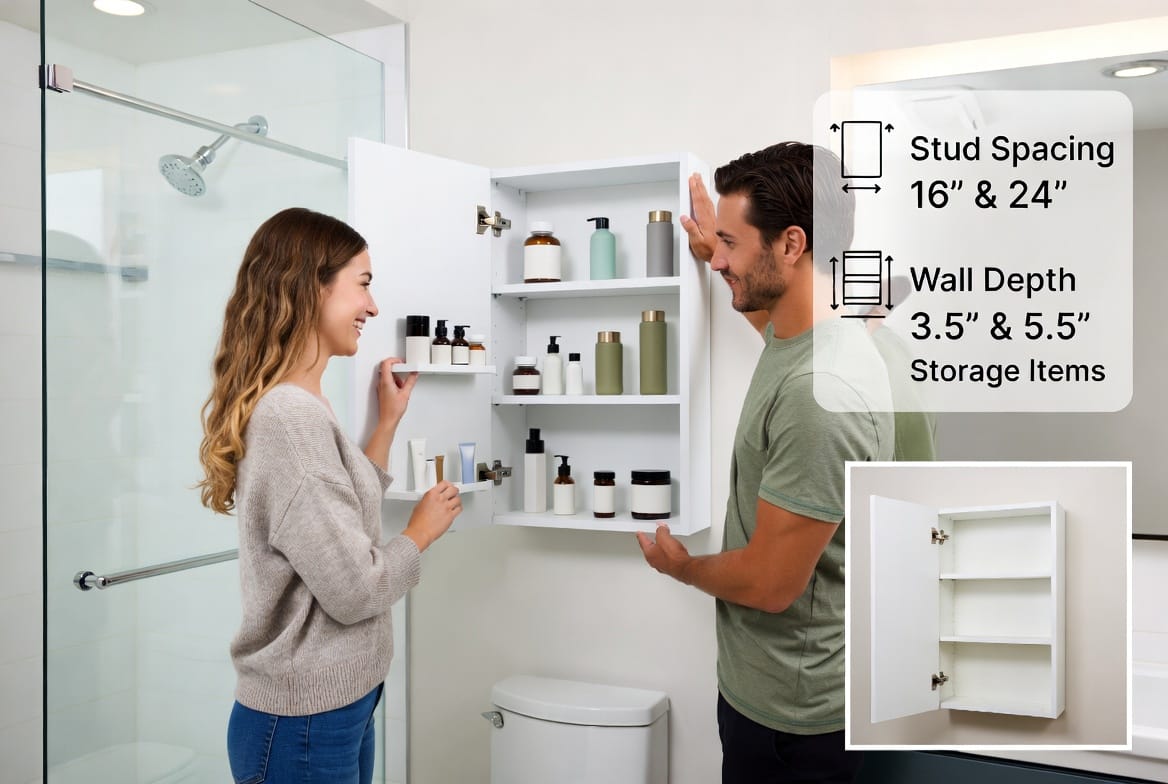
Successful recessed installation depends on accurate measurements. Standard studs sit 16 inches or 24 inches on center, so your cabinet must fit within these dimensions. Professional remodelers always verify clearance before cutting to avoid surprises.
Essential pre-remodel checklist:
- Measure existing wall cavity depth (2x4 vs. 2x6 framing)
- Confirm stud spacing matches cabinet width
- Check for plumbing or electrical lines behind the intended location
- Evaluate moisture resistance needs for your climate
- Plan shelf adjustability for future storage changes
By addressing these factors early, you eliminate risks and enjoy a perfectly integrated cabinet that feels custom-built for your space.
Pros and Cons of Recessed vs. Surface-Mounted Options
Recessed advantages:
- Maximizes floor and counter space
- Creates a premium built-in aesthetic
- Reduces dust accumulation on top surfaces
- Enhances perceived room size
Recessed considerations:
- Requires precise cutting and patching
- Slightly higher initial labor cost
- Less flexible for future relocation
Surface-mounted advantages:
- Simple DIY-friendly installation
- No wall modification needed
- Easy to replace or upgrade later
- Often more affordable upfront
Surface-mounted considerations:
- Takes up valuable room depth
- Can feel bulkier in tight spaces
- May require extra cleaning around edges
Weighing these factors against your lifestyle ensures the chosen depth and mounting style deliver lasting satisfaction.
Installation Tips and Best Practices from the Pros
During bathroom remodeling, proper installation protects your investment. For recessed units, use moisture-resistant backing and seal all edges to prevent water intrusion. Surface-mounted cabinets benefit from heavy-duty anchors and level mounting for stability.
Always hire experienced professionals when in doubt. They understand framing nuances and can recommend the optimal depth based on your exact wall construction. The result? A cabinet that functions flawlessly and looks showroom-perfect.
Real-World Storage Success Stories
One recent client transformed a cramped guest bath by switching to a 3.5-inch recessed cabinet. What was once a cluttered countertop became a clean, inviting space. Another family with young children chose a deeper 5.5-inch model to store safety locks and medications out of reach yet easily accessible for adults — proving depth choices directly support family safety and organization.
These examples demonstrate that thoughtful storage planning around cabinet depth creates bathrooms that work harder for you every single day.
Frequently Asked Questions About Medicine Cabinet Depth
Q: Can I install a recessed cabinet in any wall?
A: Most interior walls work well, but always verify stud locations and avoid plumbing lines.
Q: Does deeper always mean better?
A: Not necessarily. Balance depth with room size — excessive protrusion in surface-mounted units can feel overwhelming in small bathrooms.
Q: How does depth affect resale value?
A: Well-planned recessed cabinets signal quality remodeling and often increase buyer appeal through perceived luxury storage.
Maximize Your Bathroom Storage Today
Choosing the right bathroom medicine cabinet depth — whether standard recessed at 3.5 inches or a deeper custom option — transforms how your space functions. With proper storage planning, you eliminate countertop chaos and create a bathroom that feels intentionally designed.
Ready to upgrade? Our team specializes in custom medicine cabinets that perfectly match your wall depth, stud spacing, and storage needs.
We’ll help you select the ideal recessed or surface-mounted solution that delivers maximum storage and timeless style.
Transform Clutter into Smart Storage – Call for Custom Cabinets