The Bathroom Heated Towel Rack: Hydronic vs. Electric Options
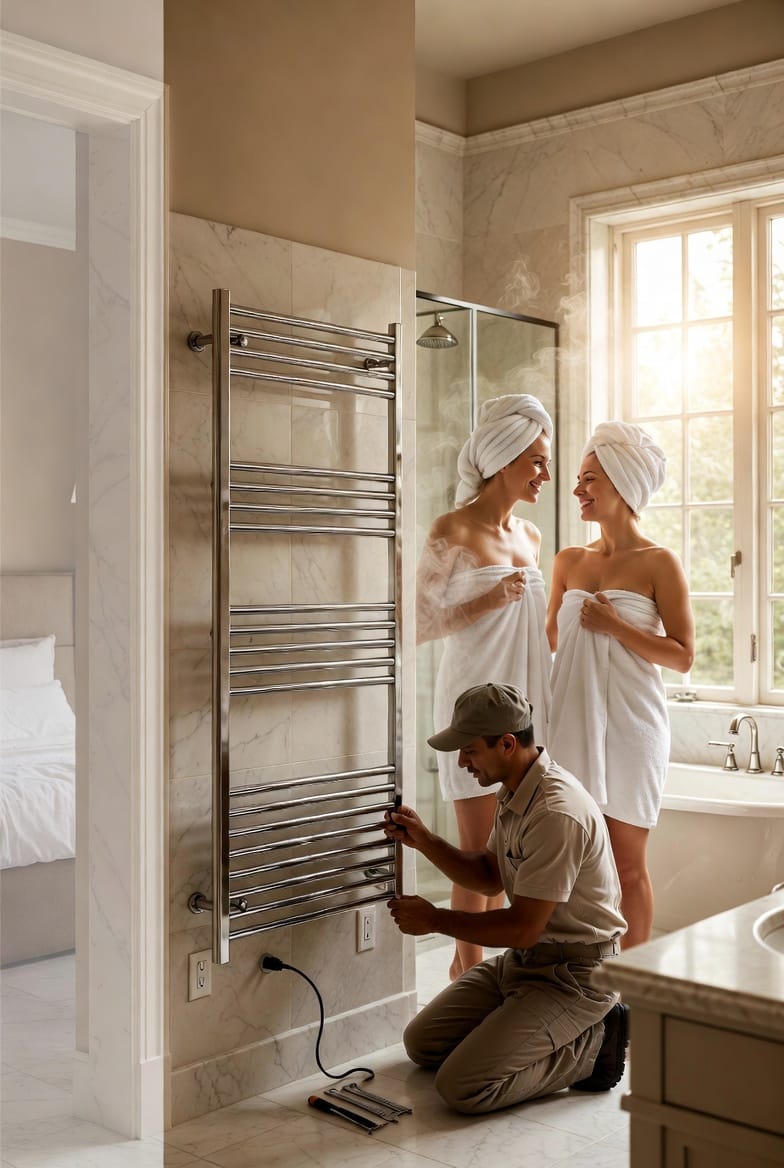
In today’s bathroom remodeling projects, comfort and efficiency are no longer optional — they are expected. One upgrade that consistently delivers both is the heated towel rack. These sleek fixtures turn ordinary towels into warm, spa-like luxuries while helping towels dry faster and reducing musty odors. Yet homeowners often face a critical choice: electric or hydronic?
Get Warm Towels Every Morning – Call Now!
Both systems provide reliable warmth, but they differ significantly in installation, operating costs, performance, and long-term value. This guide compares the two options side by side so you can select the solution that perfectly matches your home, budget, and remodeling goals. Whether you are updating a single bathroom or planning a full luxury renovation, understanding these differences ensures you invest wisely and enjoy consistent comfort for years to come.
Why a Heated Towel Rack Belongs in Every Modern Bathroom Remodel
A heated towel rack is more than a convenience — it is a practical upgrade that solves real daily frustrations. Damp towels left to air-dry can harbor bacteria and create unpleasant smells. A properly chosen rack eliminates these issues while adding a high-end designer touch that elevates the entire space.
Homeowners who install one report feeling a noticeable difference in their morning routine: stepping out of the shower to a toasty towel feels indulgent yet practical. In colder climates or homes with older heating systems, this feature becomes especially valuable. Best of all, both electric and hydronic models integrate seamlessly into almost any design style — contemporary, traditional, or transitional.
How Electric Heated Towel Racks Work
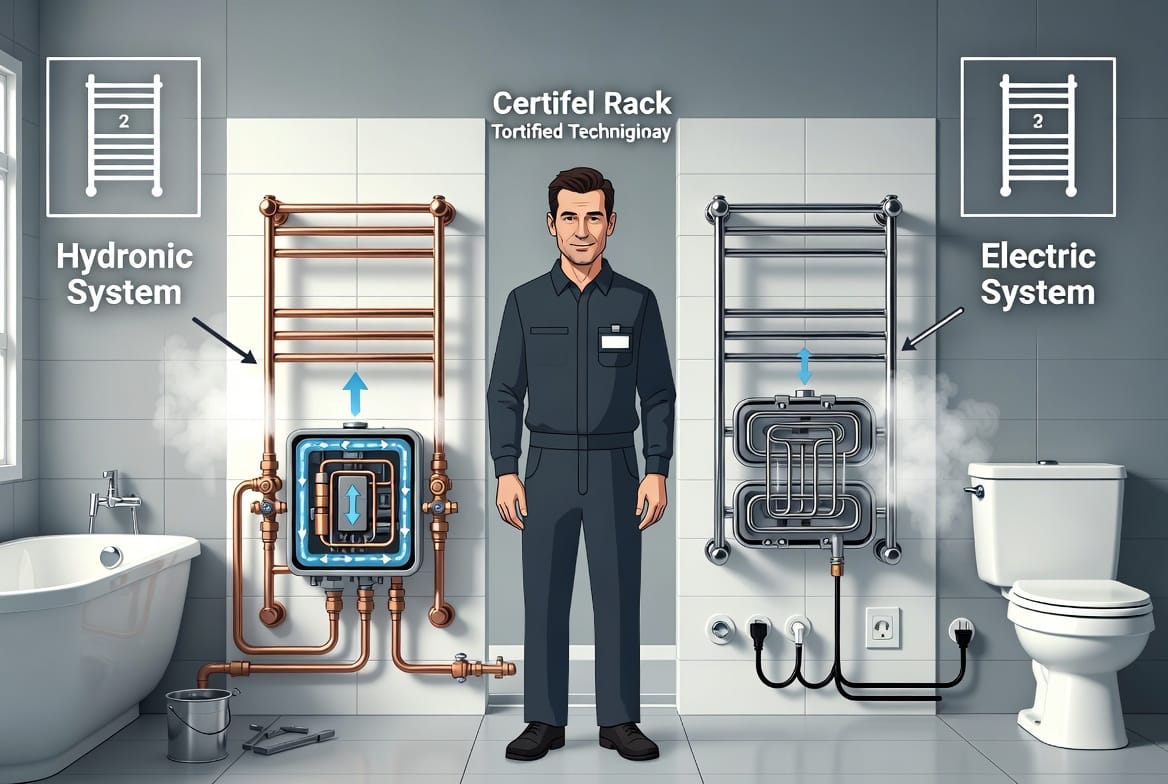
Electric heated towel racks are standalone units powered by standard household electricity. They contain internal heating elements (usually low-wattage coils) that warm the bars directly. Installation is remarkably straightforward: most models simply plug into a nearby GFCI outlet or can be hardwired by an electrician. No plumbing modifications are required.
Key Advantages of Electric Models
- Simple retrofit capability — ideal for existing bathrooms during a cosmetic remodel.
- Quick heat-up time — reaches operating temperature in 15–30 minutes.
- Flexible placement — can be installed almost anywhere with access to power.
- Lower upfront installation cost — often completed in a single day.
Electric systems shine in homes without an existing central boiler or in rooms far from plumbing lines. They are also perfect for rental properties or vacation homes where long-term efficiency is less critical than immediate convenience.
How Hydronic Heated Towel Racks Work
Hydronic heated towel racks operate using your home’s hot-water heating system. Hot water from the boiler or hot-water heater circulates through concealed pipes inside the rack, transferring gentle, even heat to the towels. These systems must be professionally plumbed into the existing hot-water loop, which makes them more involved to install.
Key Advantages of Hydronic Models
- Superior long-term energy efficiency when your boiler is already running.
- Lower operating costs — often uses waste heat already generated by your central system.
- Consistent, gentle warmth that feels more natural and even across the entire rack.
- Quiet, vibration-free operation with no electric elements.
Hydronic racks are the preferred choice in new construction or whole-home renovations where plumbing lines are already being modified. If your home already relies on a high-efficiency boiler, a hydronic towel rack essentially “piggybacks” on that system with minimal additional energy use.
Head-to-Head Comparison: Performance, Cost, and Practicality
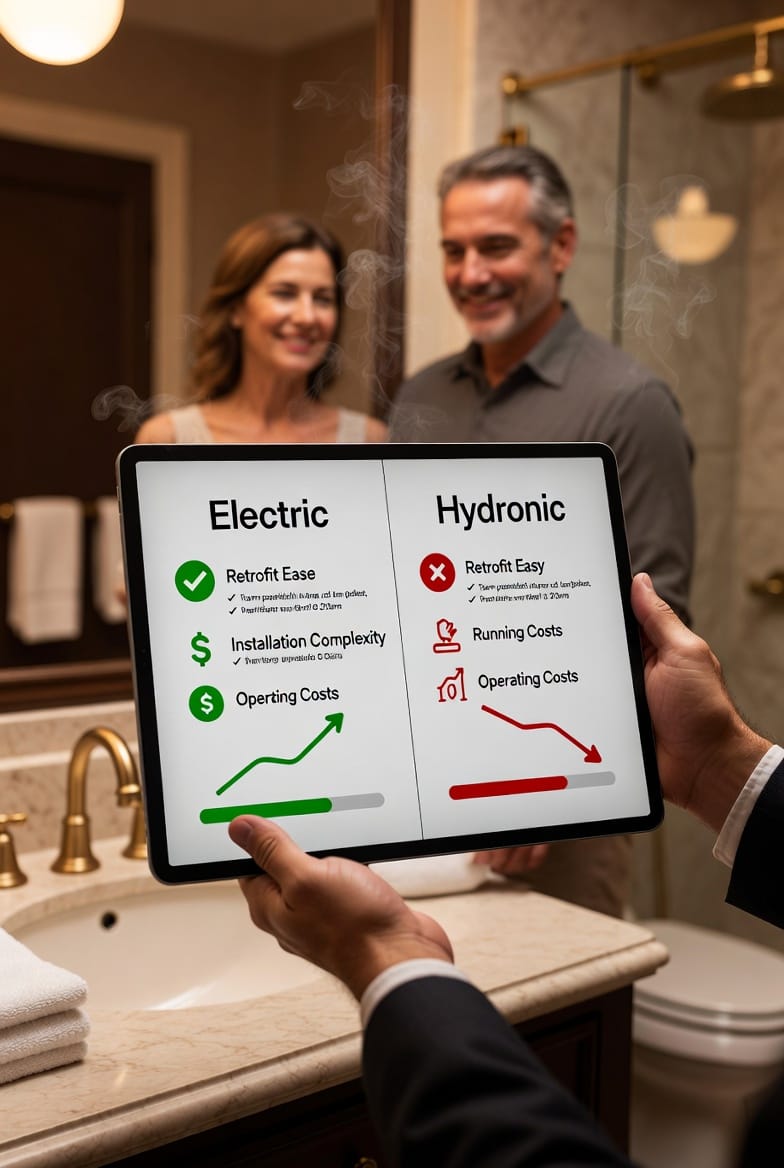
Choosing between electric and hydronic comes down to three main factors: installation complexity, daily operating cost, and how well the system matches your current home infrastructure.
Installation
Electric models win for speed and simplicity. Most require only an electrical connection and can be mounted in under two hours. Hydronic installations involve cutting into water lines, adding shut-off valves, and pressure testing — typically requiring a licensed plumber and 1–2 days of work.
Operating Costs
Electric racks use 100–250 watts when active. For a household using the rack 4–6 hours daily, the monthly cost is modest but measurable. Hydronic models draw almost no extra electricity because they circulate existing hot water. When your boiler is already heating the house, the additional cost per towel rack is often negligible.
Heat Output and Recovery
Electric systems heat up faster but may cycle on and off to maintain temperature. Hydronic systems provide steadier, lower-intensity heat that keeps towels warmer longer once the water reaches temperature.
Maintenance and Longevity
Both types are durable when properly installed. Electric units need occasional dusting and element checks every few years. Hydronic racks require bleeding air from the lines during annual boiler service but otherwise demand very little attention.
Factors to Consider Before You Decide
Every bathroom remodel is unique. Ask yourself these questions to determine the best fit:
- Do you have an existing boiler or hot-water baseboard system? If yes, hydronic is often more economical long-term.
- Is this a quick cosmetic update or a full gut renovation? Electric makes sense for faster timelines.
- What is your budget for the project? Factor in both purchase price and professional labor.
- How important is energy efficiency to your household? Hydronic edges out in homes that heat with gas or oil.
- Are you planning future resale? Both options add perceived luxury, but hydronic may appeal more to buyers with similar heating systems.
Professional Installation: Why It Matters
While some electric models look simple enough for DIY, professional installation ensures safety, code compliance, and optimal performance. A qualified technician will verify proper GFCI protection, correct voltage, and secure mounting to prevent any future issues. For hydronic systems, expert plumbing prevents leaks and guarantees even water flow.
At our remodeling service, we walk every client through the decision process with a site visit, load calculations, and realistic cost projections. This personalized approach eliminates guesswork and delivers results that last.
Energy Efficiency and Long-Term Savings Explained
Many homeowners worry about adding another appliance to their utility bill. In reality, both systems are surprisingly efficient. An electric rack running a few hours a day adds less to your bill than a single incandescent light bulb left on overnight. Hydronic racks, when paired with a high-efficiency boiler, can actually improve overall system balance by using heat that would otherwise be wasted.
Over ten years, the lower operating cost of a hydronic model often offsets its higher installation expense — especially in homes that already heat with hot water. Electric models, however, usually pay for themselves quickly through minimal labor and faster project completion.
Design Integration and Aesthetic Choices
Heated towel racks come in countless finishes — polished chrome, brushed nickel, oil-rubbed bronze, and matte black. Electric models offer more slim-profile designs perfect for contemporary spaces. Hydronic versions can accommodate larger, more sculptural racks that become focal points in luxury bathrooms.
Both integrate beautifully with underfloor heating or radiant systems. Many clients choose to match the rack finish to their faucets and shower hardware for a cohesive, high-end look that feels custom.
Maintenance Tips to Maximize Performance
- Wipe bars weekly with a soft cloth to remove water spots.
- For electric models, keep the area around the outlet dry and dust-free.
- Schedule annual boiler service to keep hydronic systems air-free and efficient.
- Avoid overloading the rack — even spacing ensures uniform heating.
Proper care keeps your investment performing like new for decades.
Choosing the Right Heated Towel Rack for Your Remodel
There is no universal “best” option — only the best option for your home. Electric systems deliver speed and simplicity. Hydronic systems reward homes with compatible heating infrastructure by offering lower long-term costs and consistent performance.
Our team has helped hundreds of homeowners navigate this exact decision. We evaluate your existing mechanical systems, review your remodeling timeline, and present clear options with transparent pricing.
Final Thoughts: Warm Towels for Your Daily Ritual
A heated towel rack is one of those rare upgrades that feels like pure luxury yet pays practical dividends every single day. Whether you select the straightforward convenience of an electric model or the long-term efficiency of a hydronic system, you are investing in daily comfort and a more enjoyable bathroom experience.
Warm towels for your daily ritual await. Our expert team is ready to guide you through every step of the process — from selection to professional installation — ensuring your new heated towel rack performs beautifully for years to come.
Let us help you choose the perfect heated towel rack solution tailored to your bathroom remodeling vision. Your warmer, more luxurious mornings are just one call away.
Transform Your Bathroom with Heated Towel Racks – Free Consultation