The Bathroom Heated Floor System: Retrofit vs. New Construction
When it comes to luxury bathroom upgrades, few features deliver comfort quite like a bathroom heated floor system. Imagine stepping out of the shower onto gently warmed tiles that chase away the morning chill. This radiant heating solution has become increasingly popular for both homeowners seeking modern comfort and those planning major renovations.
Get Cozy Heated Floors Installed – Call for a Free Consultation!
Whether you are updating an existing bathroom or building from the ground up, understanding the differences between retrofit and new construction approaches is essential for making the right choice. This comprehensive guide explores both options, their installation processes, costs, complexities, and long-term benefits.
Warm, inviting floors are no longer a luxury reserved for new builds. With today’s advanced systems, you can enjoy them in almost any bathroom.
Understanding Bathroom Heated Floor Systems
Radiant floor heating works by circulating warmth directly through your floor, providing even, efficient heat that rises naturally. Unlike forced-air systems, it eliminates cold spots and drafts while operating quietly and cleanly.
Two main types dominate the market:
- Electric systems — using thin heating mats or cables
- Hydronic systems — using warm water tubes
Both deliver exceptional comfort, but the best choice depends heavily on whether you are retrofitting an existing bathroom or installing during new construction.
Key benefits include:
- Superior energy efficiency compared to traditional heating
- Allergy-friendly operation with no circulating dust
- Increased property value through premium comfort features
- Consistent warmth exactly where you need it most
Now, let’s compare the two primary installation scenarios.
Retrofit Installation: Electric Mats Over Existing Slab
Retrofitting a heated floor system into an existing bathroom is often the practical solution for homeowners who love their current layout but want to add luxury underfoot heating.
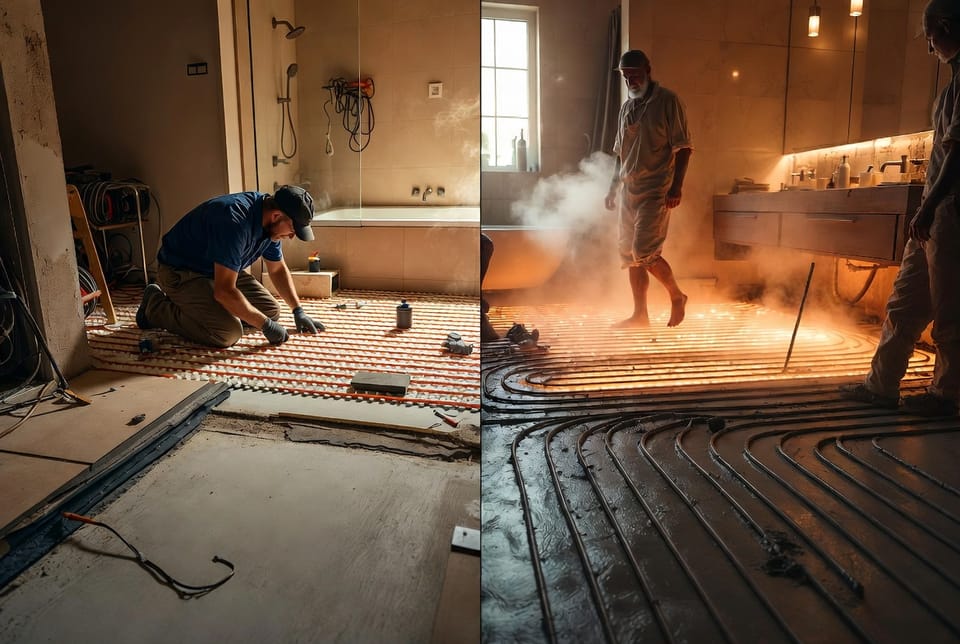
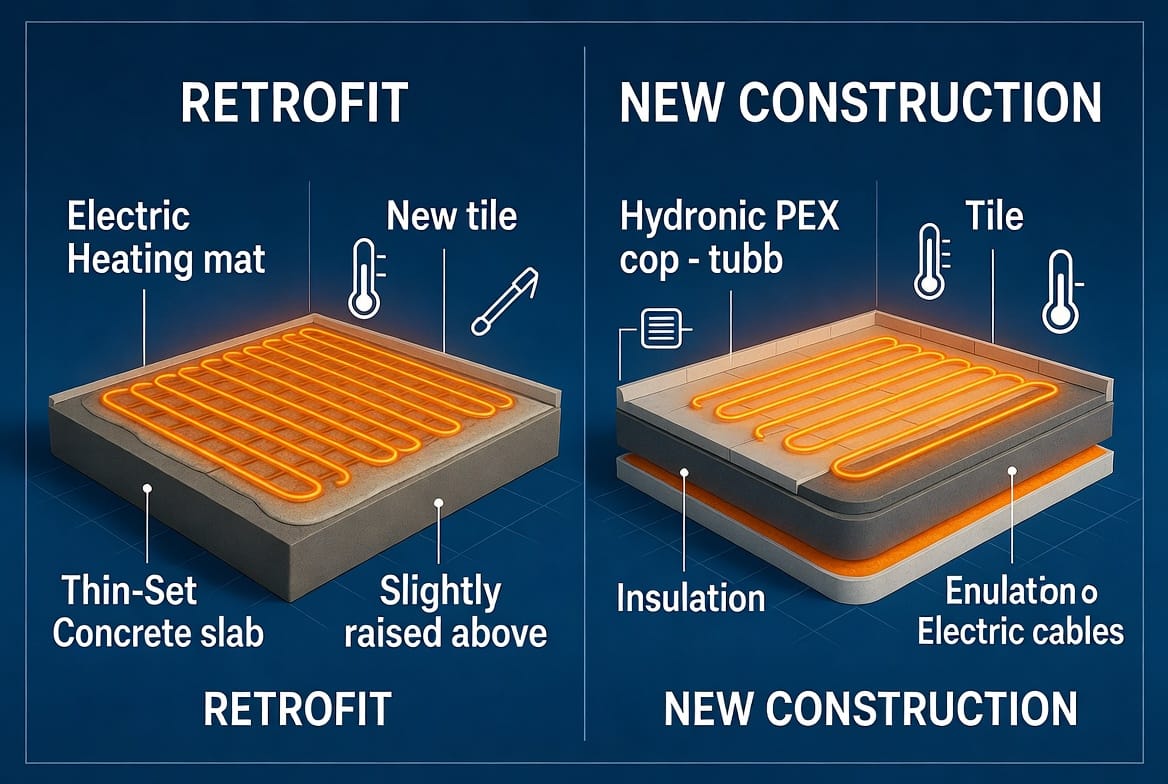
This approach typically involves installing electric heating mats directly over the existing concrete slab or subfloor. Professional installers prepare the surface, lay the mats, and then apply a new layer of thin-set mortar and tile.
Process and Considerations for Retrofit
The installation follows several careful steps:
- Thorough inspection of the existing slab for levelness and structural integrity
- Placement of electric heating mats with precise spacing
- Minimal disruption to surrounding fixtures
- Addition of a new flooring layer
One important factor in retrofit projects is the slight increase in floor height — typically 1/4 to 1/2 inch depending on the system and new tile thickness. Skilled contractors manage transitions smoothly at doorways and thresholds to maintain a seamless look.
Advantages of retrofit electric systems:
- Faster installation timeline — often completed in days rather than weeks
- Lower overall project disruption
- Excellent compatibility with most existing bathrooms
- Precise temperature control through programmable thermostats
- No need for major structural changes
Potential challenges include managing the added height and ensuring proper electrical capacity. However, experienced professionals address these seamlessly, delivering beautiful results homeowners love.
Cost considerations for retrofit projects generally range from moderate to investment-level depending on bathroom size and tile choices. While upfront costs exist, the long-term energy savings and daily comfort quickly make it worthwhile.
New Construction: Electric or Hydronic Options in the Slab
When building a new bathroom or completing a full gut renovation that reaches the subfloor level, you gain maximum flexibility for bathroom heated floor systems.
New construction allows installers to embed heating elements directly within the concrete slab or subfloor assembly before the final flooring goes down. This creates a clean, integrated solution with no added height.
Installation Approaches in New Builds
You have two strong choices during new construction:
- Electric mats or cables — Similar to retrofit but installed before the slab pour or within the floor assembly for a perfectly flush finish.
- Hydronic tubes — Warm water circulates through PEX tubing embedded in the slab, offering highly efficient whole-zone heating potential.
Hydronic systems particularly shine in larger bathrooms or when integrating with home-wide heating strategies. They require more upfront planning, including boiler or water heater compatibility, but deliver exceptional long-term performance.
Benefits Unique to New Construction
- Completely hidden installation with zero added floor height
- Option for more powerful hydronic systems
- Better integration with smart home controls from the start
- Opportunity to optimize insulation beneath the heating elements for maximum efficiency
Planning ahead during the design phase prevents costly changes later. Working with experienced contractors ensures proper tube or mat spacing, adequate insulation, and correct electrical or plumbing connections.
Direct Comparison: Retrofit vs. New Construction
Understanding the key differences helps you choose the path that best fits your project.
- Complexity: Retrofit tends to be simpler and less invasive. New construction, while more involved in planning, integrates more cleanly.
- Floor Height: Retrofit adds a small amount of height. New construction maintains original planned levels.
- System Options: Retrofit primarily uses electric systems. New construction opens doors to both electric and hydronic.
- Timeline: Retrofit projects complete faster within an existing space. New builds coordinate heating with overall construction schedule.
- Cost Structure: Retrofit often has lower labor costs but may involve surface preparation. New construction spreads costs within the larger project budget.
Both approaches deliver the same wonderful end result — luxuriously warm bathroom floors that enhance daily living.
Many homeowners find that retrofit electric systems provide the ideal balance of performance, cost, and convenience for existing bathrooms. For new homes or major additions, the expanded options of new construction prove valuable.
Factors to Consider When Choosing Your System
Making the right decision involves evaluating several important aspects:
- Bathroom size and layout — Larger spaces may benefit more from hydronic options in new construction
- Existing floor conditions — Structural assessment determines retrofit feasibility
- Budget and timeline — Both short-term project costs and long-term operating expenses matter
- Energy source availability — Electric vs. gas or other heating infrastructure
- Future maintenance — Both systems are reliable when professionally installed
Professional consultation remains the smartest first step. Experts can evaluate your specific situation and recommend the most suitable bathroom heated floor system.
Long-Term Benefits and Energy Efficiency
Investing in radiant floor heating pays dividends for years to come. These systems typically operate more efficiently than baseboard or forced-air alternatives because they deliver heat directly where needed.
Users frequently report:
- Lower monthly heating costs through zoned control
- Improved comfort during cold months
- Enhanced bathroom ambiance and perceived luxury
- Reduced allergens compared to traditional heating methods
Modern thermostats with Wi-Fi connectivity let you schedule warmth precisely — warming the floor before your morning shower while saving energy throughout the day.
Common Myths About Heated Bathroom Floors
Despite growing popularity, some misconceptions persist.
Reality check: These systems are safe, reliable, and proven in thousands of homes. Professional installation virtually eliminates risks, and quality components come with strong warranties.
Another fact: Operating costs remain reasonable, especially with today’s energy-efficient designs and smart controls.
Choosing Professional Installation for Best Results
Quality installation makes all the difference between good and exceptional performance. Experienced contractors understand the nuances of both retrofit and new construction scenarios.
They ensure:
- Proper system sizing for your bathroom
- Correct placement of heating elements
- Thorough testing before final flooring
- Seamless integration with your overall design
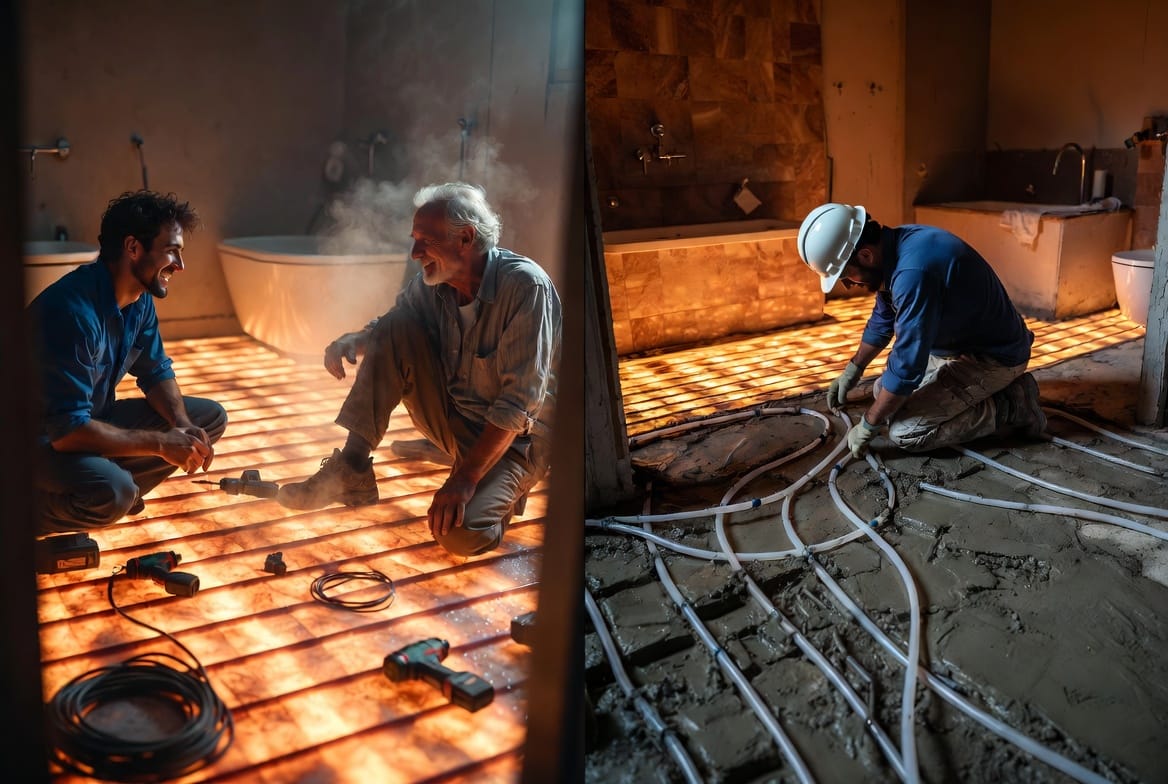
Don’t leave comfort to chance — partner with specialists who focus on delivering reliable, beautiful heated floor solutions.
Ready to Warm Your Bathroom Floors?
Transforming your bathroom with a heated floor system creates a daily luxury you’ll appreciate every single morning. Whether through a thoughtful retrofit or integrated new construction, the comfort and efficiency gains make it a worthwhile investment.
Warm your bathroom floors. Ask about options at (855) 321-3081. Our experts can evaluate your space and recommend the perfect solution for your needs and budget.
Transform Your Bathroom with Heated Floors – Call for Options!