The Bathroom Heated Floor Controls: Thermostat Programming and Scheduling

In today’s bathroom remodeling projects, radiant floor heating stands out as one of the most appreciated upgrades for daily comfort. Yet the real difference between a good system and an exceptional one lies in how you control it. Bathroom heated floor controls through intelligent thermostat programming and scheduling let you enjoy perfectly warm floors exactly when you need them while keeping energy use in check.
Master Your Heated Floors Today – Call Now!
Programmable thermostats designed specifically for radiant floors go far beyond simple on/off switches. They deliver precise comfort and measurable energy savings by responding to both floor temperature and room air temperature. Homeowners who master these controls consistently report softer mornings, lower utility bills, and a bathroom that feels like a personal spa every single day. This guide explains exactly how to program your system for maximum comfort and efficiency—no guesswork, just proven strategies that work.
The Science Behind Radiant Floor Heating Controls
Radiant floor systems warm the tiles or stone directly, creating gentle, even heat that rises naturally. Unlike forced-air systems, there are no drafts or hot spots. The key to unlocking this comfort lies in your programmable thermostat and its two critical sensors: floor sensors and air temperature sensors.
Floor sensors measure the actual temperature of the heating surface beneath the tile. They ensure the floor reaches your ideal warmth—typically 75–82 °F for barefoot comfort—without overheating. Air temperature sensors monitor the overall room temperature so the system doesn’t run unnecessarily when the bathroom is already warm from a shower or heater.
Together, these sensors give your thermostat the data it needs to make smart decisions. When properly programmed, the system anticipates your routine instead of reacting late. The result? You step onto warm tiles every morning, yet the floor isn’t wasting energy heating an empty room at night.
How Programmable Thermostats Deliver Comfort and Efficiency
Modern thermostats built for radiant floors offer setback schedules that automatically lower the temperature during times when the bathroom is unused. A well-designed schedule can reduce energy consumption by 20–30 % while still delivering instant comfort when you need it.
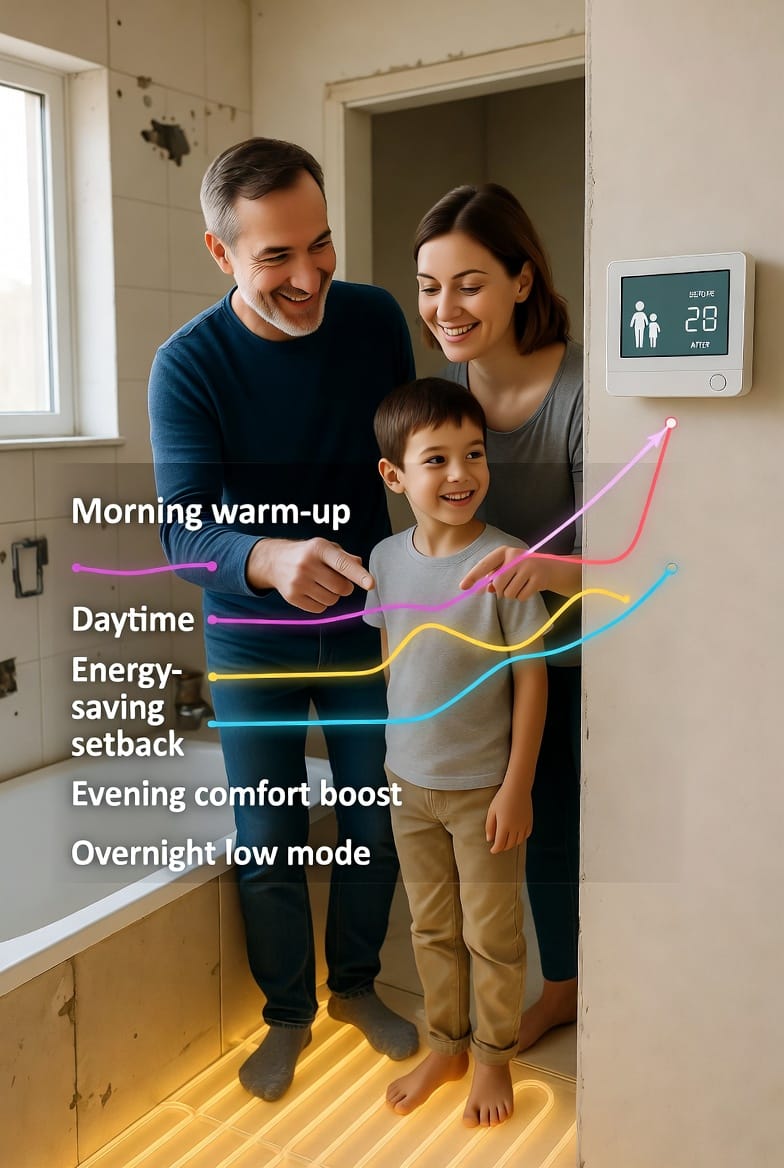
For example, the system can begin warming the floor at 5:45 a.m. so it reaches 78 °F by the time your alarm sounds. It then gently sets back to 64 °F once everyone leaves for the day. In the evening it ramps up again for a relaxing bath, then drops low overnight. This intelligent cycling keeps the bathroom comfortable exactly when occupied and efficient when it’s not.
Setback schedules work beautifully with radiant floors because the thermal mass of the concrete or tile holds heat longer than air. Even after the system dials back, residual warmth lingers, preventing sudden chills.
Creating Your Ideal Daily and Weekly Schedule
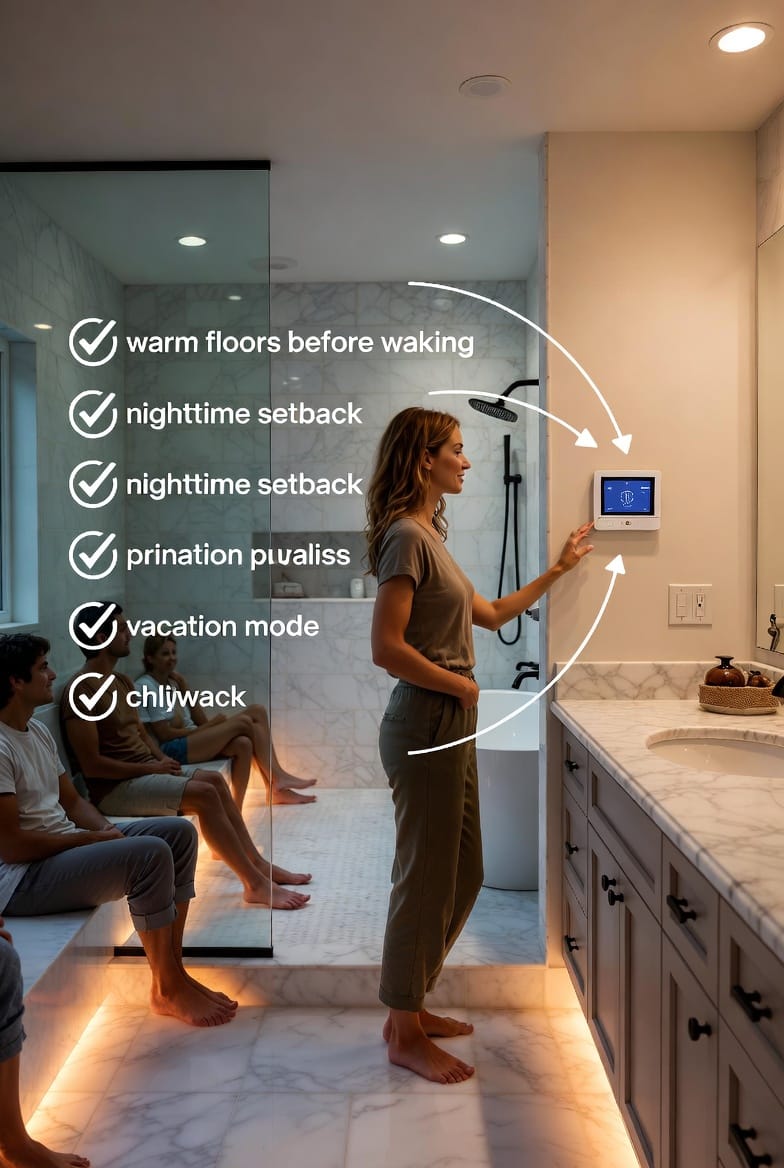
The most effective thermostat programming follows your family’s natural rhythm. Here’s a proven framework that balances comfort and efficiency:
- Wake-up comfort (5:45–8:00 a.m.) – Floor temperature ramps to 78 °F so the bathroom greets you with luxurious warmth.
- Daytime setback (8:00 a.m.–4:30 p.m.) – Floor drops to 64 °F while the house is empty, saving energy without letting the room feel cold upon return.
- Evening relaxation (4:30–10:00 p.m.) – Floor returns to 78 °F for baths, showers, and bedtime routines.
- Nighttime setback (10:00 p.m.–5:45 a.m.) – Floor lowers to 62 °F for deep energy savings while everyone sleeps.
Weekend schedules can stay warmer longer since the bathroom sees more use. Most thermostats allow separate “weekday” and “weekend” programs, making customization effortless.
Vacation mode is another powerful feature. When activated, the system maintains a minimal floor temperature (around 50–55 °F) to protect pipes and prevent condensation while dramatically cutting energy use. You return to a bathroom ready to warm up quickly with a single tap.
Step-by-Step Guide to Programming Your Radiant Floor Thermostat
Programming is simpler than most homeowners expect. Follow these steps for reliable results:
- Locate the floor sensor – Confirm it’s installed correctly under the tile (your installer can show you the exact placement).
- Set the clock and day – Accurate time ensures the schedule runs on schedule.
- Choose temperature limits – Set a maximum floor temperature (never exceed 85 °F for most tile) and a comfortable target range.
- Program each time block – Enter wake-up, daytime, evening, and sleep periods with desired floor and air temperatures.
- Activate dual-sensor mode – Enable both floor and air sensors so the system prioritizes floor comfort while preventing overheating the room.
- Test the schedule – Run a full day in manual mode first to verify the floor reaches temperature on time.
- Enable adaptive learning (if available) – Many models learn your home’s thermal characteristics and fine-tune automatically.
Once programmed, the system runs quietly in the background. You’ll only interact with it for seasonal tweaks or vacations.
Advanced Optimization Techniques
Floor sensors deliver the direct barefoot comfort people love most. Air temperature sensors add a layer of whole-room intelligence that prevents the system from fighting other heat sources. Using both together gives the best of both worlds.
Consider seasonal adjustments too. In winter, slightly higher morning targets feel luxurious. In summer, a modest 2–3 °F reduction can save energy when the bathroom already benefits from air conditioning.
Many newer thermostats connect to smart-home systems, allowing voice control or app-based adjustments from anywhere. A quick phone tap can warm the floor before you arrive home—perfect for unexpected guests or late-night relaxation.
Common Programming Mistakes and How to Avoid Them
Even experienced users sometimes overlook a few details. Avoid setting the floor temperature too high; excessive heat wastes energy and can damage certain floor coverings. Never ignore the setback schedules—running the system at full temperature 24/7 is the fastest way to inflate your bill.
Another frequent error is disabling sensors. Both floor and air sensors work together for optimal performance; turning one off defeats the purpose of a smart system. Finally, remember to update schedules after major life changes—new work hours, school schedules, or retirement all benefit from a quick reprogramming.
Proven Benefits Homeowners Experience
Families who optimize their bathroom heated floor controls enjoy consistent comfort and lower energy bills month after month. One typical household reported a 28 % reduction in bathroom-related heating costs while describing mornings as “transformative.” Children stay warmer during baths, arthritis sufferers find relief on heated tiles, and everyone appreciates stepping out of the shower onto a warm floor instead of cold ceramic.
These results come directly from intelligent thermostat programming—not guesswork, but data-driven scheduling tailored to real routines.
Final Tips for Long-Term Success
Review your schedule every season and after any major home change. Keep the thermostat’s digital display clean for easy reading. Most importantly, trust the system—once programmed correctly, it delivers reliable comfort with minimal intervention.
Transform Bathroom Comfort & Savings – Call Now!