The Bathroom Floor Heating: Electric vs. Hydronic Systems
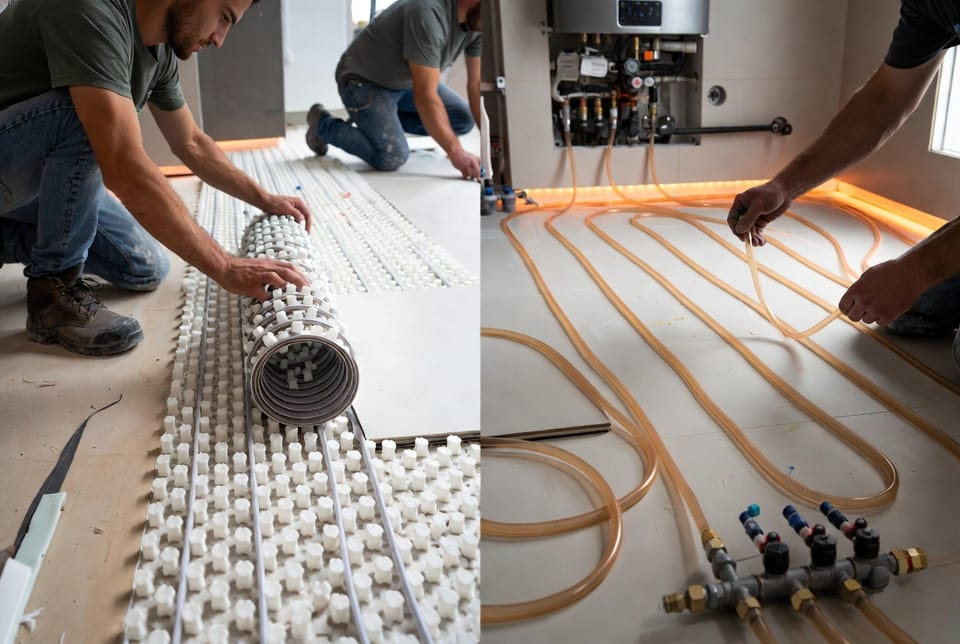
Stepping onto a cold bathroom floor first thing in the morning can quickly turn a relaxing start into an uncomfortable experience. Bathroom floor heating solves this common issue by delivering gentle, even warmth directly underfoot. Two primary systems dominate the market: electric radiant heating and hydronic radiant heating. Each offers distinct advantages in installation ease, long-term efficiency, operating costs, and suitability for different homes. Understanding these differences helps homeowners choose the solution that best matches their budget, existing plumbing or electrical setup, and comfort goals.
Warm Your Floors Today – Call Now for Expert Advice!
This comprehensive guide compares electric radiant floor heating (typically mats installed under tile) with hydronic systems (hot water circulating through tubing). We examine installation complexity, retrofit potential, energy performance, maintenance needs, and overall value so you can make an informed decision with confidence.
Understanding Radiant Floor Heating in Bathrooms
Radiant floor heating warms the floor surface itself, which then radiates heat upward into the room. Unlike forced-air systems that blow warm air and create drafts or temperature stratification, radiant heat provides consistent comfort from the ground up. In bathrooms, this technology is especially valuable because tile, stone, and porcelain surfaces feel particularly cold without supplemental heat.
Both electric and hydronic options fall under the radiant category, yet they generate and distribute heat through completely different methods. Choosing correctly depends on whether the project is a simple remodel, a full renovation, or new construction, as well as local energy costs and the presence of an existing boiler.
Electric Radiant Floor Heating Systems
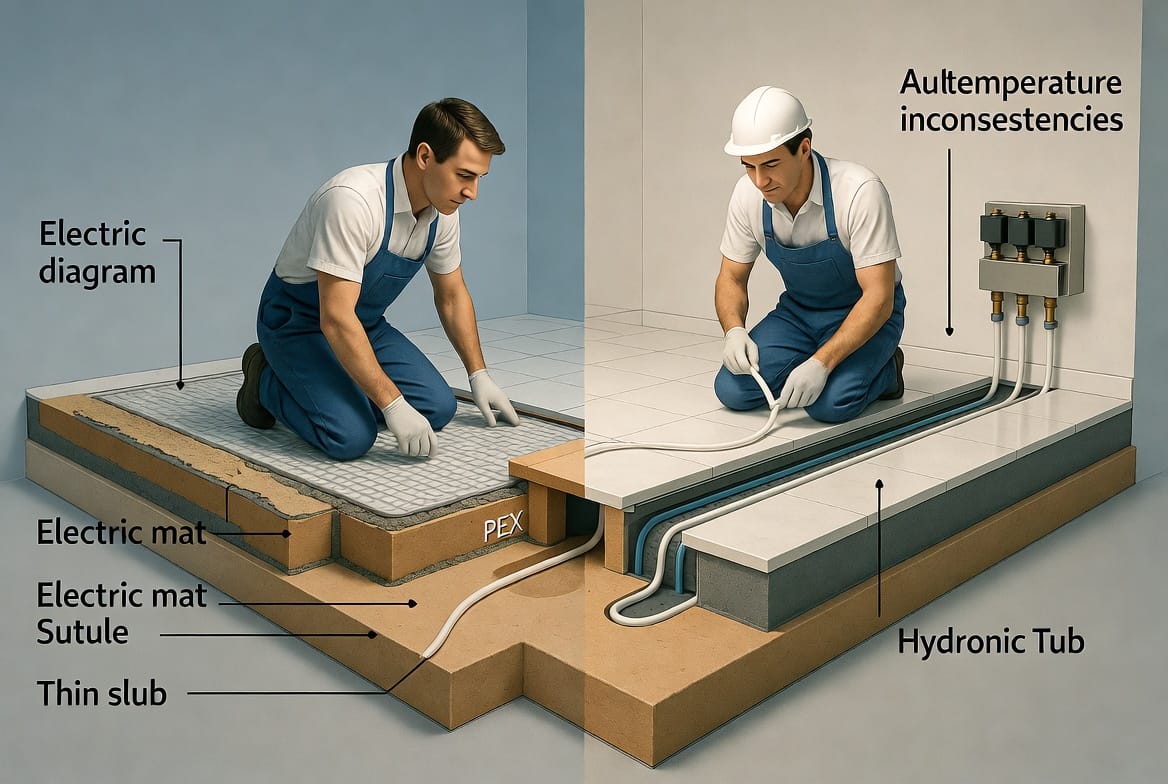
Electric radiant floor heating uses thin heating cables or pre-formed mats that generate heat when electricity passes through them. These mats are commonly embedded in thin-set mortar directly beneath tile or stone flooring, making them a popular choice for bathroom applications.
How Electric Systems Work
A thermostat connected to floor sensors controls the mats. When the floor temperature drops below the set point, the system activates and warms the surface within 20–45 minutes in most cases. Because the heating elements sit only a few millimeters below the finished floor, response times remain relatively quick.
Installation Advantages of Electric Mats
- Ideal for retrofit projects where raising the floor height significantly is undesirable
- Minimal disruption to existing plumbing or mechanical systems
- Straightforward electrical connection to a dedicated circuit
- Suitable for almost any bathroom size, including small powder rooms
Professional installers can typically complete electric mat installation in a single day once the subfloor is prepared. The low-profile design (often less than 1/8 inch thick) allows seamless integration under large-format tiles without noticeable floor-height changes.
Operating Costs and Energy Considerations
While electric systems offer lower upfront installation complexity, they generally carry higher operating costs because electricity prices exceed those of natural gas or propane in most regions. Running costs depend on local utility rates, insulation quality beneath the floor, and thermostat programming. Using programmable or smart thermostats that heat the floor only during peak usage hours can reduce energy consumption effectively.
Electric systems shine in smaller bathrooms or as supplemental heat rather than the primary heat source for an entire home. Their simplicity and reliability make them an excellent entry point for homeowners seeking immediate comfort without extensive mechanical work.
Hydronic Radiant Floor Heating Systems
Hydronic floor heating circulates warm water through a network of flexible tubing embedded in the floor assembly. The water is heated by a boiler, water heater, or heat pump and pumped through the loops according to thermostat demand.
How Hydronic Systems Operate
Tubing—usually cross-linked polyethylene (PEX)—is laid in carefully calculated patterns across the subfloor or within a concrete slab. Heated water flows through these loops, transferring thermal energy to the floor mass. Because water holds heat longer than electric elements, hydronic systems often maintain stable temperatures with less frequent cycling.
Efficiency and Performance Benefits
When paired with a high-efficiency boiler, hydronic systems deliver superior energy performance for larger spaces or whole-house applications. Water-based heat transfer is inherently more efficient than converting electricity directly into heat at the floor level. Many homeowners notice lower monthly utility bills once the system is properly balanced and insulated.
Hydronic setups also integrate well with other hydronic appliances such as towel warmers or baseboard radiators, creating a unified heating strategy.
Installation Complexity
Hydronic installation is more involved. It requires:
- Proper tubing layout and spacing calculations
- Connection to a boiler or dedicated water heater
- Installation of a manifold, pumps, and mixing valves
- Careful pressure testing before covering the tubing
Because the system involves plumbing and mechanical components, professional expertise is essential. Floor height increases can be greater than with electric mats, especially if a lightweight concrete or gypsum overlay is poured over the tubing. In retrofit situations, access to joist spaces or the need for a new mechanical room can add significant complexity and cost.
Cost and Installation Differences
Upfront investment and long-term expenses differ noticeably between the two approaches.
Electric System Costs
Electric radiant mats typically range lower in material and labor costs for individual bathrooms. Installation remains relatively quick, reducing labor hours. However, ongoing electricity usage means higher monthly operating expenses, particularly in colder climates or when the system runs for extended periods.
Hydronic System Costs
Hydronic installations demand higher initial outlays because of the boiler (if not already present), pumps, manifolds, and more extensive labor. Once installed, operating costs are generally lower, especially when the boiler serves multiple zones or the entire home. Over a 15–20 year lifespan, the energy savings can offset the greater upfront investment for many households.
Key Installation Factors to Evaluate
- Retrofit suitability: Electric mats adapt more easily to existing bathrooms
- Floor height impact: Electric systems add minimal thickness
- Mechanical requirements: Hydronic needs space for equipment and piping runs
- Zoning flexibility: Both systems allow individual room control, yet hydronic excels in multi-zone setups
- Insulation importance: Proper underfloor insulation improves performance and reduces costs for either system
Homeowners should also consider local building codes, electrical capacity, and gas availability when weighing options.
Pros and Cons at a Glance
Electric Radiant Advantages
- Faster, simpler installation
- Excellent for targeted bathroom upgrades
- Precise room-by-room control
- Minimal structural modification
Electric Radiant Considerations
- Higher long-term energy costs
- Less ideal as primary whole-house heat
- Dependent on reliable electrical service
Hydronic Advantages
- Superior energy efficiency with a modern boiler
- Lower operating costs over time
- Excellent thermal mass and even heat distribution
- Scalable for larger homes
Hydronic Considerations
- More complex and costly installation
- Requires mechanical space and professional plumbing expertise
- Longer heat-up times in some configurations
Choosing the Right System for Your Bathroom
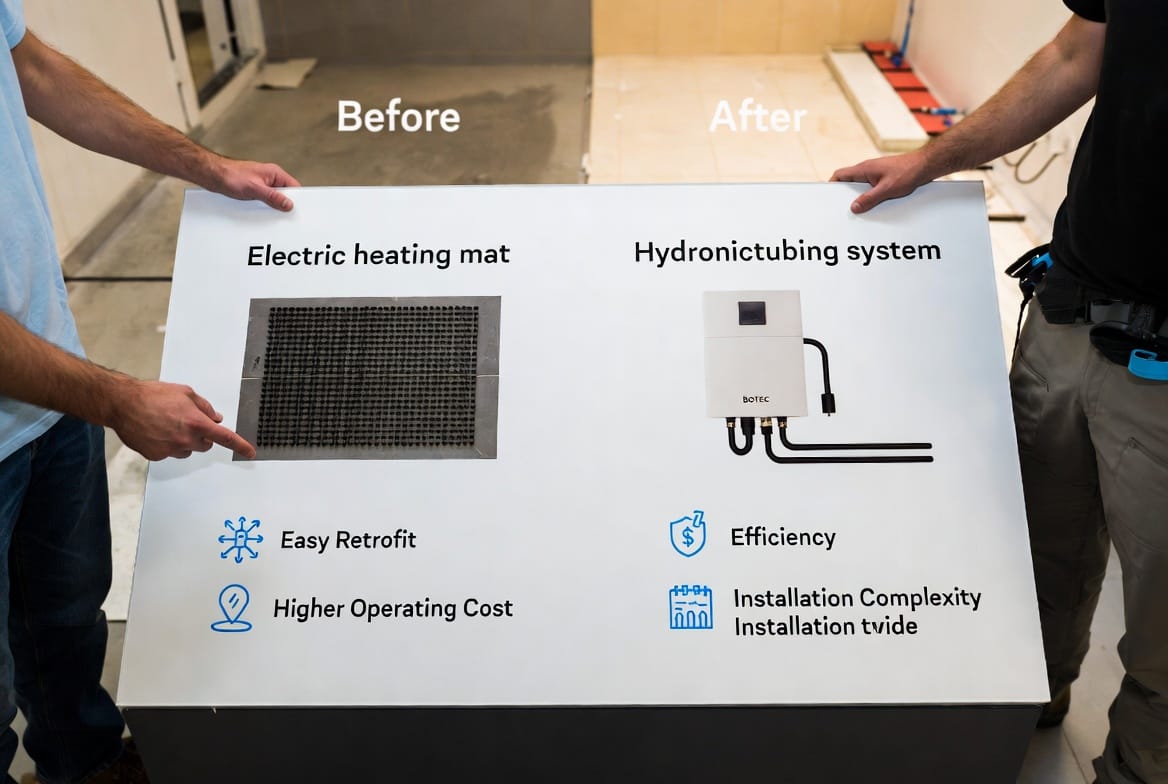
The decision ultimately rests on project scope and priorities. For a single bathroom remodel where speed and minimal disruption matter most, electric radiant floor heating usually provides the most practical path. Homeowners already planning a boiler replacement or building new construction often find hydronic systems deliver better lifetime value and comfort consistency.
Professional assessment remains essential. An experienced installer evaluates subfloor conditions, insulation levels, electrical panel capacity, and existing heating infrastructure before recommending a solution. Proper design prevents common issues such as uneven heating, excessive energy use, or installation failures.
Long-Term Performance and Maintenance
Both systems offer excellent durability when installed correctly. Electric mats typically carry 20–25 year warranties and require virtually no maintenance beyond occasional thermostat checks. Hydronic tubing is equally long-lasting; the primary upkeep involves annual boiler servicing and occasional system flushing to maintain water quality.
Smart thermostats and floor sensors enhance either system by preventing overheating and optimizing energy use. Homeowners who program schedules around actual bathroom usage patterns enjoy both comfort and efficiency gains.
Addressing Common Concerns
Many people worry about reliability or repair difficulty. Electric mats can be tested before tiling, and most manufacturers provide clear troubleshooting guidance. Hydronic systems include shut-off valves and accessible manifolds, allowing zone isolation if service is ever needed. In both cases, professional installation dramatically reduces future risks.
Moisture protection is another frequent question. Proper waterproofing membranes and correct tile installation techniques ensure the heating system remains safely isolated from bathroom humidity and water exposure.
Making Your Bathroom More Comfortable
Warm floors transform daily routines. Whether you select the straightforward convenience of electric mats or the efficient performance of hydronic tubing, radiant heating delivers reliable comfort that traditional heating methods cannot match. Careful planning, quality materials, and skilled installation ensure the system performs as expected for decades.
When evaluating options, request detailed proposals that outline material specifications, labor scope, energy projections, and warranty coverage. Comparing these elements side by side clarifies the true cost of ownership beyond the initial price tag.
Final Recommendations
Electric systems excel in simplicity and retrofit flexibility, making them the preferred choice for most individual bathroom projects. Hydronic systems reward homeowners willing to invest in greater complexity with superior efficiency and scalability. Both technologies, when properly designed and installed, eliminate cold floors and elevate bathroom comfort to a new standard.
Call Today for Comfortable, Warm Bathroom Floors