The Bathroom Exhaust Fan Replacement: Upgrading for Better Performance
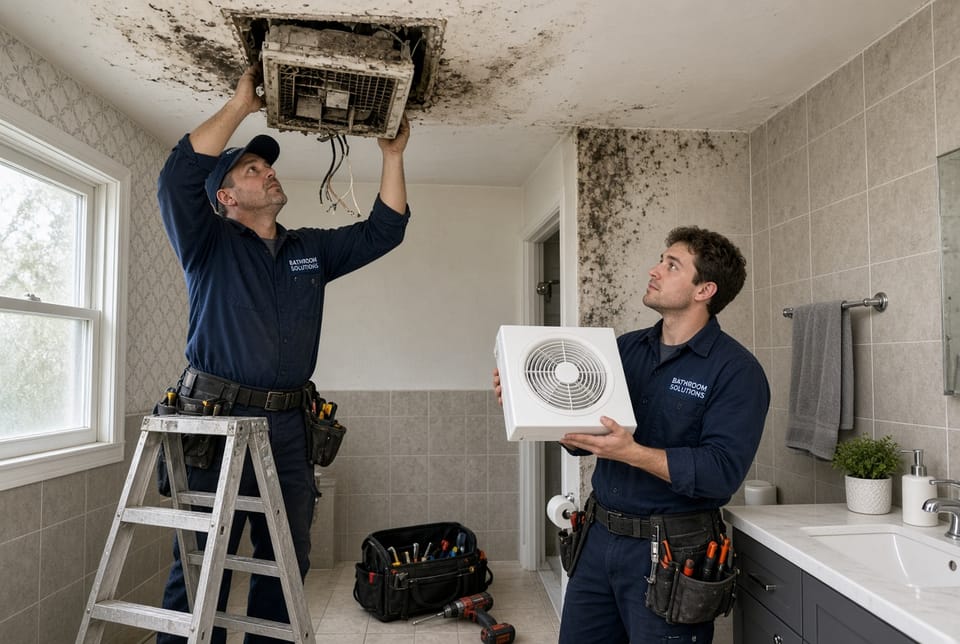
A properly functioning bathroom exhaust fan is one of the most important yet often overlooked elements of a healthy, comfortable home. When the fan begins to lose power, grow loud, or fail to clear humidity, the entire bathroom environment suffers. Replacing an underperforming unit is a straightforward functional upgrade that delivers immediate improvements in air quality, moisture management, and long-term protection of walls, ceilings, and fixtures. This guide explains exactly why replacement becomes necessary, how to select the right fan based on room size, and the critical installation considerations involving duct routing, electrical connections, and building code requirements. The goal is simple: help you achieve reliable, quiet, and effective ventilation that keeps your bathroom fresh and free from excess moisture.
Call for Expert Bathroom Exhaust Fan Installation
Why Bathroom Exhaust Fan Replacement Matters
Over time, even a well-installed fan can decline. The most common reasons for replacement fall into three clear categories: weak suction, excessive noise, and an undersized unit that was never matched to the space.
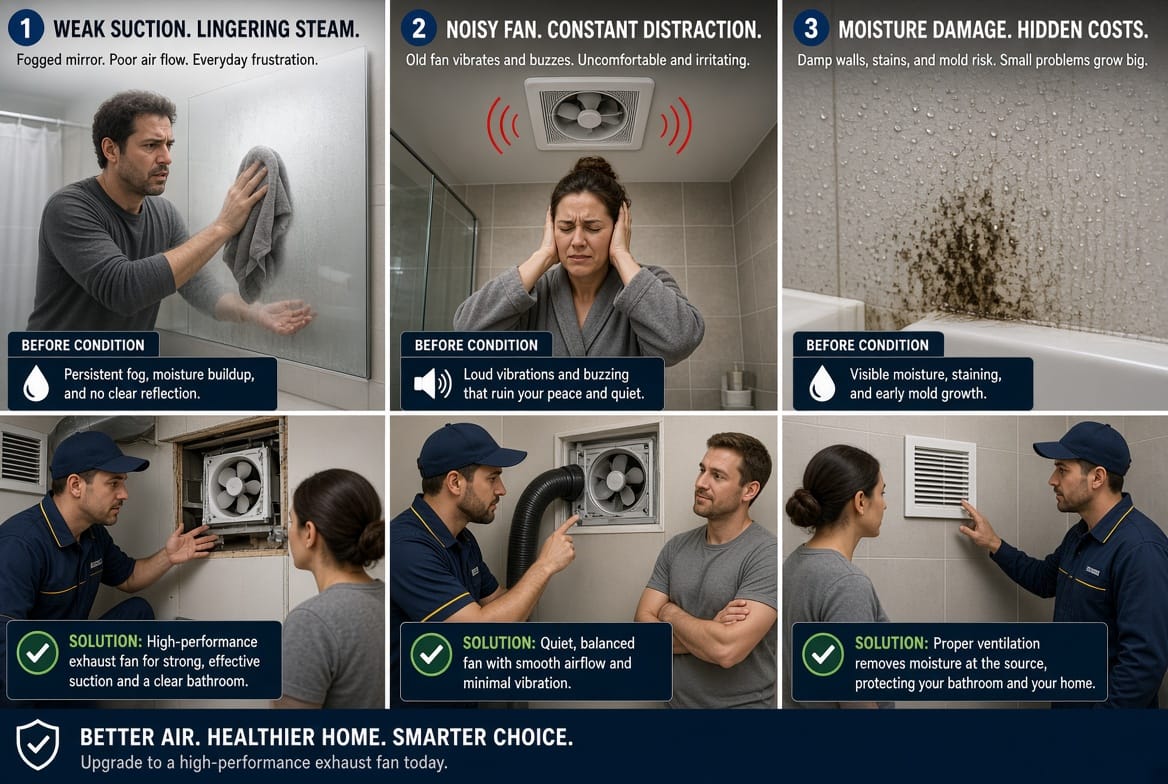
Weak suction is the first and most noticeable problem. A fan that once cleared steam after a hot shower now leaves the mirror fogged for many minutes and allows humidity to linger. Moisture settles on walls, ceilings, and window frames. Over months and years this creates ideal conditions for mildew and gradual paint deterioration. Homeowners often notice a musty odor that returns quickly after cleaning. These symptoms signal that the fan can no longer move the required volume of air.
Noisy operation is equally disruptive. Bearings wear, motors strain, and plastic housings vibrate. What began as a soft hum becomes a constant rattle or high-pitched whine. Many people simply stop using a loud fan, which only worsens moisture buildup. A quiet modern replacement restores the habit of running the fan during and after every shower without disturbance.
An undersized fan is a frequent hidden issue in older homes or poorly planned renovations. The original unit may have been selected for appearance or price rather than calculated airflow needs. When the bathroom is enlarged, a new shower is added, or the ceiling height increases, the existing fan falls short. The result is chronic humidity that no amount of window opening can fully correct.
Replacing the fan addresses all three problems at once. A correctly sized, high-quality unit restores strong suction, operates at a comfortable sound level, and protects the entire bathroom structure. The upgrade is both practical and preventive.
Recognizing the Clear Signs That Replacement Is Due
Homeowners can usually identify the need for a new fan through everyday observation. Persistent fog on mirrors long after a shower, visible moisture beads on walls, and a fan that sounds louder than conversation are reliable indicators. Additional clues include a burning or dusty smell when the fan first starts, visible dust or lint buildup on the grille that returns quickly after cleaning, and any vibration felt through the ceiling.
Addressing these signs promptly prevents more expensive repairs later. Moisture that reaches drywall or framing can lead to larger issues, while continued use of a failing motor risks electrical strain. Replacement restores confidence that the bathroom will stay dry and comfortable.
How to Choose the Right Fan: Matching CFM to Room Size
Selecting the proper fan begins with one essential measurement: cubic feet per minute (CFM). This rating tells you how much air the fan can move. Industry guidelines provide a simple and reliable method based on room dimensions.
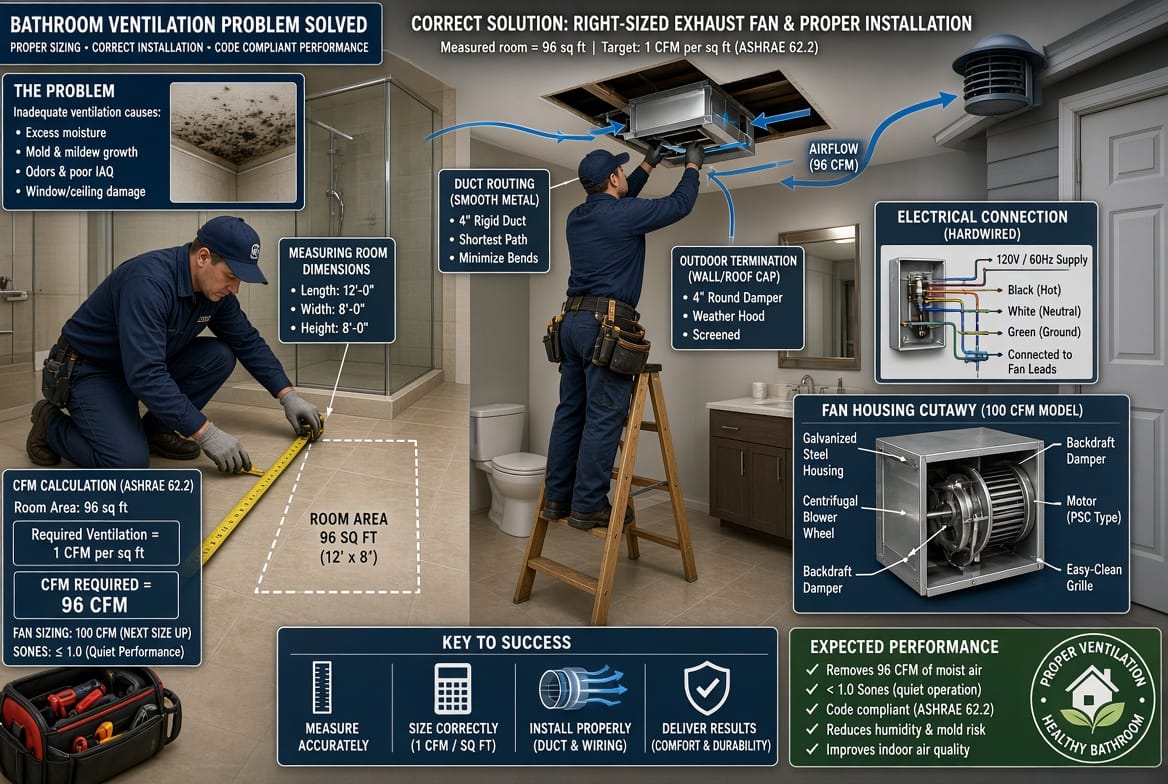
For most bathrooms, calculate the square footage of the floor area and match it to a minimum CFM rating. A common rule is 1 CFM per square foot. A bathroom measuring 5 feet by 8 feet equals 40 square feet and therefore needs at least a 40 CFM fan. Larger spaces require proportionally more. When the ceiling height exceeds 8 feet, increase the CFM to account for the greater air volume. Add extra capacity if the bathroom includes a whirlpool tub, steam shower, or multiple fixtures that generate significant humidity.
Additional factors refine the choice. Look for fans rated at 1.5 sones or lower for quiet operation; many modern models operate near 0.5 to 1.0 sones and are barely noticeable. Choose a unit with a humidity-sensing or timer feature so the fan continues running automatically until moisture levels drop. Energy-efficient motors and LED lighting options further improve daily convenience. Ensure the fan is designed for continuous or intermittent bathroom use and carries appropriate safety certifications.
Measuring the existing rough-in opening and duct diameter prevents installation surprises. Most replacements fit standard 4-inch or 6-inch ducts, but verifying these details in advance allows you to select a fan that slides into place with minimal modification. Taking accurate room measurements and matching them to CFM ratings is the single most important step toward lasting performance.
Installation Considerations: Duct Routing, Electrical, and Code Compliance
Proper installation determines whether the new fan delivers its full rated performance. Three areas require careful attention: duct routing, electrical connections, and adherence to building codes.
Duct routing must remain as short and straight as possible. Every bend or long horizontal run reduces airflow. Rigid metal duct is preferred over flexible plastic because it maintains diameter and resists collapse. The duct should terminate outdoors through a wall or roof cap equipped with a backdraft damper. Never vent into an attic, soffit, or crawl space; doing so simply relocates the moisture and can create condensation problems elsewhere. When replacing an older fan, inspect the existing duct for kinks, debris, or disconnected sections and correct them during the upgrade.
Electrical work involves safe disconnection of the old unit and connection of the new one. Most bathroom fans require a dedicated circuit or share lighting circuits according to local rules. Grounding must be correct, and any switch or timer should be rated for the fan’s load. If the existing wiring is outdated or the junction box is damaged, replacement of those components is advisable. Turning off power at the breaker and verifying with a tester are non-negotiable safety steps.
Building code requirements vary by location but commonly address minimum CFM, duct material, termination location, and fire-rated assemblies when the fan penetrates floors or ceilings. Some jurisdictions mandate humidity sensors in new or extensively remodeled bathrooms. A professional installer remains current with these standards and obtains any necessary permits, ensuring the finished work passes inspection and protects insurance coverage.
When these three elements—duct, electrical, and code—are handled correctly, the new fan moves air efficiently, operates safely, and meets every regulatory expectation. The result is reliable ventilation that performs as designed for years.
The Professional Replacement Process
A typical replacement follows a clear sequence. First the power is isolated and the old grille and housing are removed. The existing duct and wiring are inspected and prepared. The new housing is secured to framing members, the duct is connected with sealed joints, and electrical connections are completed. The motor and grille are installed last, followed by a performance test that confirms strong airflow and quiet operation. Throughout the process, care is taken to protect surrounding finishes and to leave the work area clean.
Homeowners who prefer not to handle electrical or ceiling work benefit from professional service. Experienced technicians complete the upgrade efficiently, often in a single visit, and stand behind the results. The investment yields immediate comfort and long-term protection of the bathroom environment.
Long-Term Benefits of a High-Performance Exhaust Fan
Once the new fan is in place, daily life improves in measurable ways. Showers no longer leave lingering steam. Walls and ceilings stay drier, reducing the frequency of cleaning and repainting. Odors clear faster. The quieter operation encourages consistent use, which further protects the space. Energy-efficient models consume less electricity while moving more air, contributing to modest utility savings over time. Most importantly, the risk of moisture-related damage declines dramatically, preserving the value and appearance of the bathroom for the years ahead.
Regular maintenance keeps performance high. Wipe the grille periodically, check that the damper opens freely, and listen for any change in sound. These simple habits extend the life of the new unit and maintain the benefits of the upgrade.
Avoiding Common Pitfalls During Replacement
Several mistakes can undermine an otherwise good project. Choosing a fan solely on price without verifying CFM often leads to continued weak suction. Installing flexible duct that sags or compresses reduces airflow. Leaving the old duct connected to an attic vent recreates the original moisture problem in a new location. Overlooking local code requirements can result in failed inspections or future liability. Working with a knowledgeable installer who understands both product selection and proper technique eliminates these risks and delivers a finished result that performs as expected.
Making the Decision to Upgrade
When a bathroom exhaust fan shows weak suction, becomes noisy, or proves undersized for the room, replacement is the most effective solution. Calculating the correct CFM based on square footage, selecting a quiet modern unit, and ensuring careful attention to duct routing, electrical safety, and code compliance produce a reliable system that keeps the bathroom dry, fresh, and comfortable. The upgrade is practical, relatively quick, and highly effective at protecting both the space and the people who use it.
Upgrade your bathroom fan for better ventilation.
Call Now to Upgrade Your Bathroom Ventilation System