The Apartment Renovation Dumpster: Coordinating Multiple Units
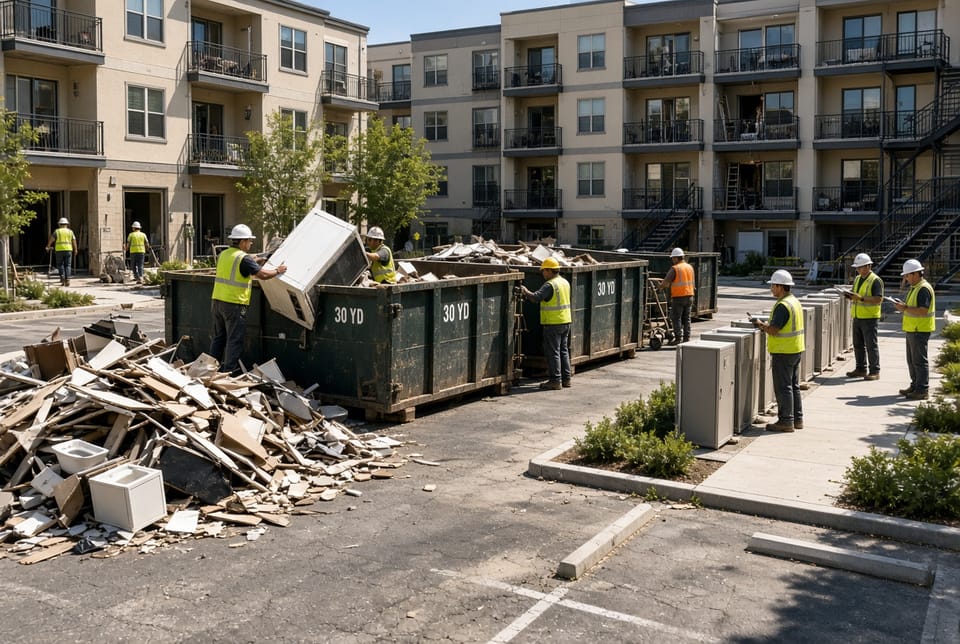
Apartment complexes rarely renovate one unit at a time. Property managers face the reality of multiple unit turnovers happening simultaneously—sometimes five, ten, or even twenty apartments cycling through updates within the same tight window. Flooring, cabinets, appliances, and fixtures come out; new materials go in. Without a precise plan for waste, the entire project stalls under mountains of debris, frustrated residents, and rising costs.
Coordinate Multi-Unit Dumpsters Today – Call Now!
The right apartment renovation dumpster strategy turns that chaos into controlled progress. This guide walks property managers through the practical steps of scheduling, space management, and responsible recycling so multi-unit renovations stay on time, on budget, and compliant.
Why Multi-Unit Turnovers Demand Specialized Dumpster Planning
Single-family home renovations can often get by with one roll-off container. Apartment complexes operate on a completely different scale. Hallways, elevators, shared parking, and occupied neighboring units create constraints that amplify every delay.
Key risks without proper dumpster coordination include:
- Overflowing debris blocking emergency exits or fire lanes
- Residents complaining about noise, dust, and restricted parking
- Contractors waiting on full containers instead of working
- Higher disposal fees from last-minute hauls or overloaded bins
- Potential code violations for improper waste handling
A well-executed multi-unit dumpster plan eliminates these risks. It treats waste removal as a core project phase rather than an afterthought. Property managers who master this process protect their timelines, their reputation, and their bottom line.
Mapping the Renovation Phases to Dumpster Needs
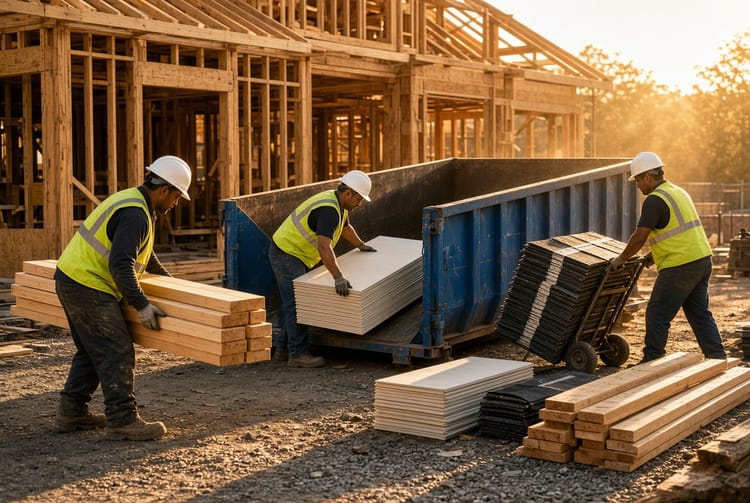
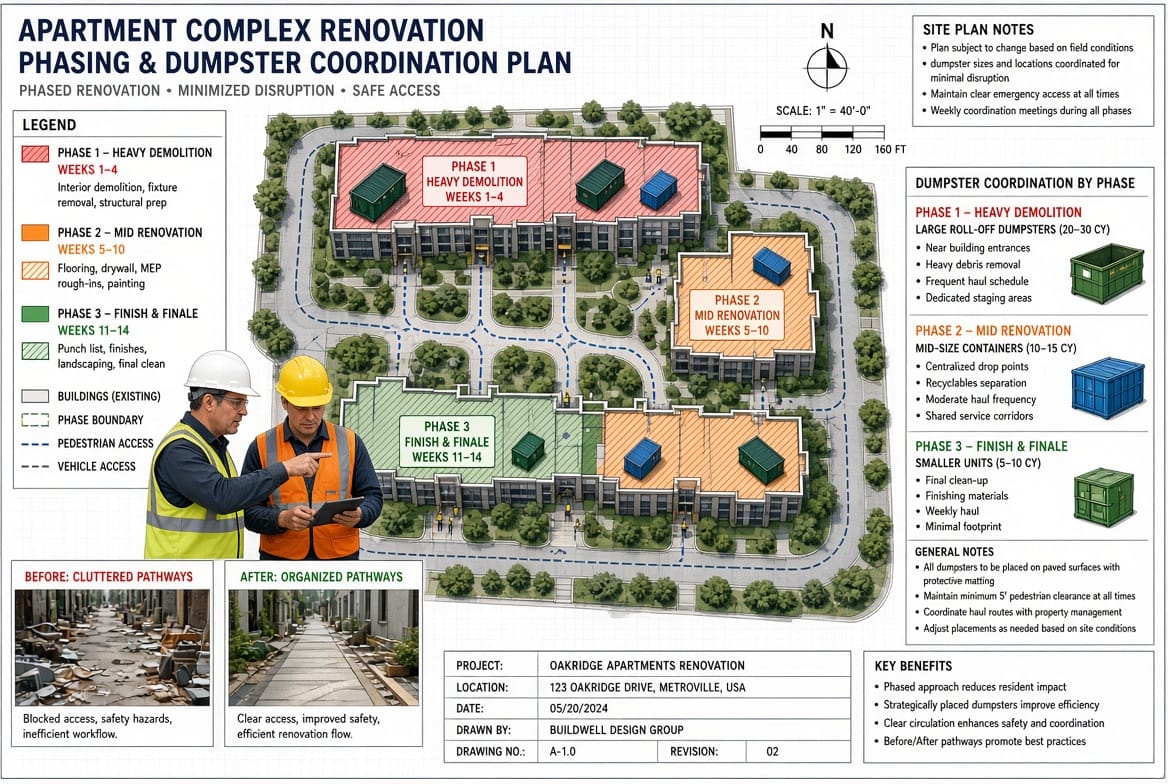
Successful multi-unit projects break the work into clear phases. Each phase generates a predictable volume and type of waste. Matching dumpster size, quantity, and placement to those phases prevents both shortages and costly idle time.
Typical phasing for apartment turnovers looks like this:
- Phase 1 – Strip-out and demolition
Highest volume. Old carpet, vinyl, cabinets, countertops, and appliances leave the units. Heavy, mixed debris requires larger containers (20- or 30-yard) positioned for quick access. - Phase 2 – Rough systems and structural updates
Drywall scraps, old plumbing, wiring, and framing remnants. Moderate volume but often mixed with recyclable metals. - Phase 3 – Finish work and punch lists
Packaging materials, leftover trim, and minor fixture packaging. Smaller or shared containers work well.
Property managers who schedule dumpster deliveries and swaps in advance of each phase keep crews productive. One effective approach is to stage two or three containers at the start of Phase 1, then rotate them as volumes drop. This avoids the classic bottleneck of a single full dumpster sitting while workers wait for the next drop.
Scheduling Dumpsters Across Multiple Units
Timing is everything. The goal is continuous capacity without permanent clutter. Here is a practical scheduling framework used by experienced property managers:
- Conduct a pre-renovation waste audit for each unit or group of units. Estimate cubic yards of flooring, cabinetry, and appliances separately.
- Book dumpsters with a provider experienced in multi-unit work. Request staggered delivery dates tied to your contractor schedule.
- Plan regular swap-outs—often every 2–4 days during peak strip-out—so no container sits full longer than necessary.
- Coordinate elevator and hallway access windows so debris moves only during approved hours.
- Build a shared calendar visible to property staff, contractors, and the dumpster company. Real-time communication prevents missed pickups.
Many complexes run renovations in “pods” or wings. Completing one pod before starting the next allows dumpsters to shift locations efficiently and minimizes disruption for remaining residents. This phased approach also makes it easier to maintain clean, safe pathways throughout the property.
Space Considerations That Protect Daily Operations
Apartment complexes have limited real estate for large containers. Poor placement creates more problems than it solves. Smart site planning keeps dumpsters productive while preserving resident access and safety.
Critical space factors include:
- Parking lot impact – Choose under-used stalls or designated construction zones. Mark them clearly and communicate the temporary change to residents in advance.
- Fire lane and emergency access – Never block these. Most municipalities enforce strict clearance rules.
- Proximity to units – Position dumpsters close enough for efficient hauling yet far enough to reduce noise and dust for occupied apartments.
- Ground protection – Use plywood or mats under containers on asphalt or landscaping to prevent damage and costly repairs later.
- Height and swing clearance – Confirm delivery trucks can access the spot without hitting trees, power lines, or building overhangs.
A quick site walk with the dumpster provider before the first delivery solves most of these issues. Providers familiar with multi-family properties already know the common constraints and can suggest layouts that balance convenience with compliance.
Recycling Old Fixtures and Appliances the Right Way
Modern property management includes environmental responsibility. Many old fixtures and appliances retain value or can be diverted from landfills. Building recycling into the dumpster plan reduces disposal costs and supports sustainability goals that residents and owners increasingly expect.
Common recyclable or reusable items from apartment turnovers:
- Appliances – Refrigerators, ranges, dishwashers, and washers/dryers often contain metals and can be processed through certified recyclers.
- Cabinets and countertops – Solid wood or quality laminate pieces may be donated or sold if still functional.
- Flooring – Some carpet manufacturers accept take-back programs; certain hardwood or tile can be recycled.
- Fixtures – Sinks, faucets, light fixtures, and hardware frequently contain scrap metal or can be refurbished.
- Metals and cardboard – Separate these streams whenever possible to lower overall hauling fees.
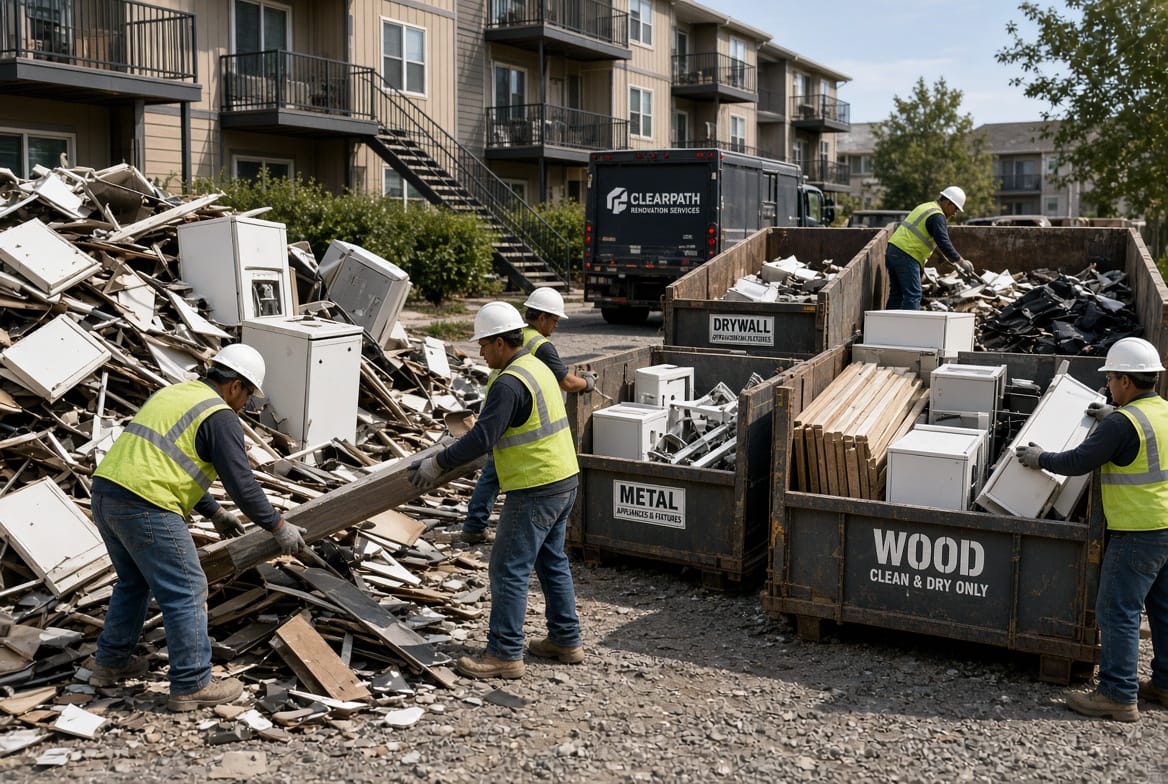
Best practice is to designate one dumpster or a portion of a container for mixed construction debris and maintain a second, clearly marked area or smaller container for recyclables and appliances. Many professional dumpster services offer mixed-load sorting or partner with local recycling centers. Confirm these options during the initial quote so the plan supports both efficiency and environmental standards.
Separating materials also protects against contamination penalties. A single load filled with mixed non-recyclables can increase fees or delay pickup. Clear labeling and brief contractor training sessions at the project kickoff prevent most issues.
Practical Tips for Smooth Multi-Unit Dumpster Operations
Property managers who consistently deliver on-time renovations follow a few proven habits:
- Assign one point person on site responsible for dumpster status updates and communication with the provider.
- Require contractors to break down large items (cabinets, appliances) before loading. This maximizes capacity and reduces the number of swaps needed.
- Schedule final sweeps of each completed unit so residual debris does not accumulate in hallways.
- Photograph full containers before pickup. Documentation helps resolve any volume or weight disputes quickly.
- Review invoices against the original estimate. Transparent providers will explain any adjustments related to weight, contamination, or extra trips.
These small operational disciplines compound into significant time and cost savings across a multi-unit project.
Cost Control Through Smart Dumpster Selection
Dumpster pricing for apartment renovations depends on size, rental duration, weight limits, and location. Choosing the right combination prevents both under-capacity delays and overpaying for unused space.
Common sizes for multi-unit work:
- 15-yard – Ideal for lighter finish phases or smaller pods
- 20-yard – Versatile middle option for mixed debris
- 30-yard – Preferred for heavy strip-out of multiple units at once
- 40-yard – Reserved for large-scale simultaneous turnovers when space allows
Ask providers about multi-container discounts, longer rental periods with included swaps, and any fuel or environmental fees upfront. A single conversation that clarifies total project needs often yields better overall pricing than piecemeal orders.
Keeping Residents Informed and Supportive
Even the best dumpster plan fails if residents feel blindsided. Transparent communication builds goodwill and reduces complaints.
Share:
- Approximate start and end dates for each renovation pod
- Temporary parking changes and dumpster locations
- Expected noise and debris movement windows
- Contact person for questions or concerns
A short email or posted notice goes a long way. When residents see organized, professional waste management, they gain confidence that the property is being improved thoughtfully rather than disrupted carelessly.
Safety and Compliance Essentials
Dumpsters on an active residential property introduce safety considerations. Maintain clear walkways, secure containers with proper lids or covers when not in active use, and ensure lighting around placement areas after dark. Confirm that the dumpster provider carries appropriate insurance and that their drivers follow site-specific access rules.
Local regulations may govern how long containers can remain, what materials are prohibited, and whether permits are required for street or certain lot placements. Experienced multi-unit providers handle these details routinely and can guide property managers through any necessary paperwork.
Putting It All Together for Predictable Results
Coordinating dumpsters across multiple apartment units is less about finding the biggest container and more about aligning capacity, timing, location, and material streams with the renovation schedule. Property managers who treat waste removal as a planned phase rather than a reactive chore consistently finish projects faster, spend less on disposal, and maintain higher resident satisfaction.
Start with a clear waste audit, choose a provider experienced in multi-family work, map dumpsters to renovation phases, protect shared spaces, and build recycling into the workflow. The result is a smoother project that protects both the physical property and the management team’s reputation.
Call Now for Seamless Multi-Unit Renovation Waste Solutions