The Air Mover Selection: Axial vs. Centrifugal Fans for Drying
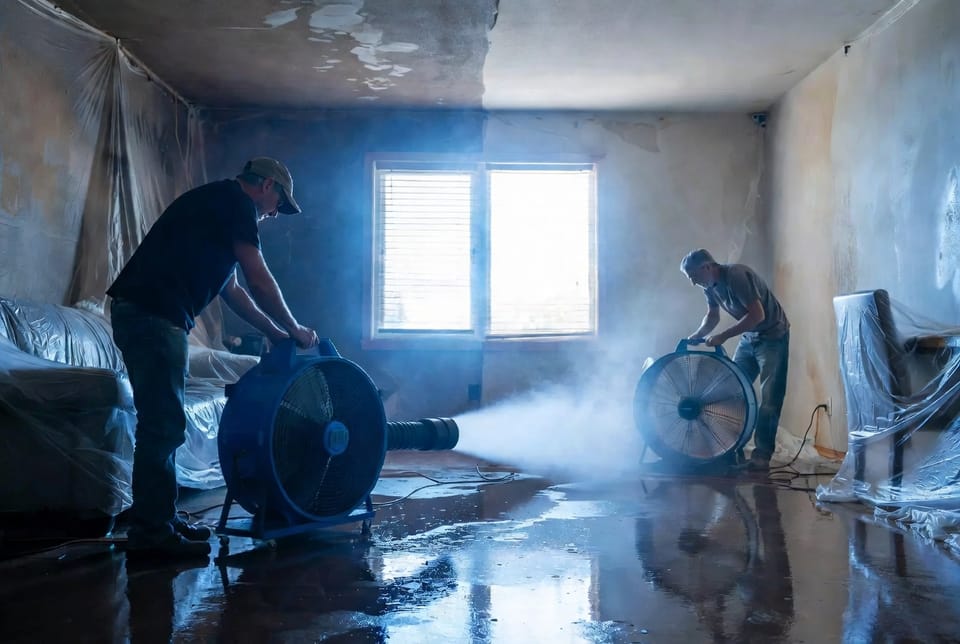
Water damage can strike unexpectedly, turning a peaceful home into a stressful situation filled with hidden moisture and potential long-term issues. When it happens, speedy and effective drying is essential to prevent mold growth, structural damage, and costly repairs. At the heart of professional restoration lies the proper air mover selection – specifically understanding axial vs centrifugal fans for drying.
Fast Water Damage Restoration – Call Today!
These powerful tools move air strategically to evaporate water and restore your property quickly and safely. Choosing the wrong type can slow progress or leave moisture trapped in hard-to-reach areas. In this comprehensive guide, we break down the key differences, applications, and best practices for axial and centrifugal air movers so you can appreciate why professionals select them with care.
Why air movers matter in water damage restoration
Air movers accelerate evaporation by continuously replacing moist air with drier air. They work alongside dehumidifiers to create optimal drying conditions. Selecting the right fan type ensures efficient airflow where it’s needed most, protecting your home’s integrity and your family’s health.
Understanding Axial Fans: High Volume, Low Pressure Powerhouses
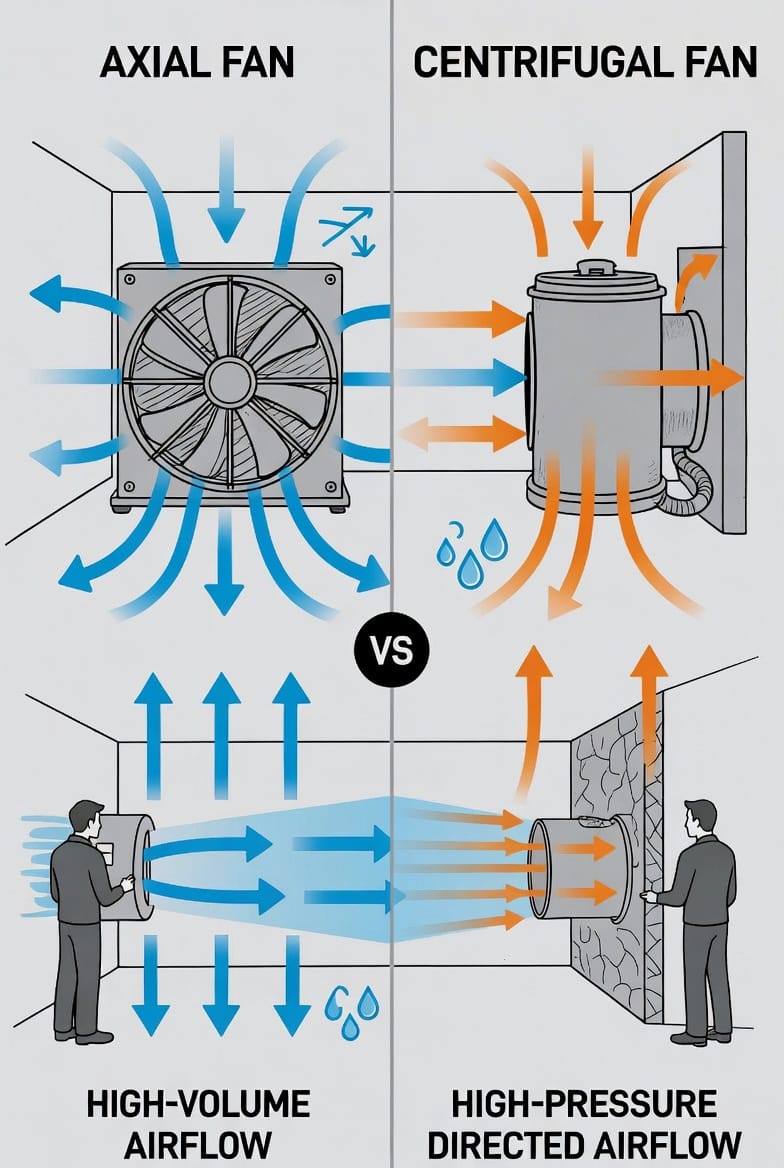
Axial fans are designed to move large volumes of air at relatively low pressure. Imagine a propeller-style blade that pulls air in and pushes it straight out in a broad, powerful stream.
Key Characteristics of Axial Air Movers
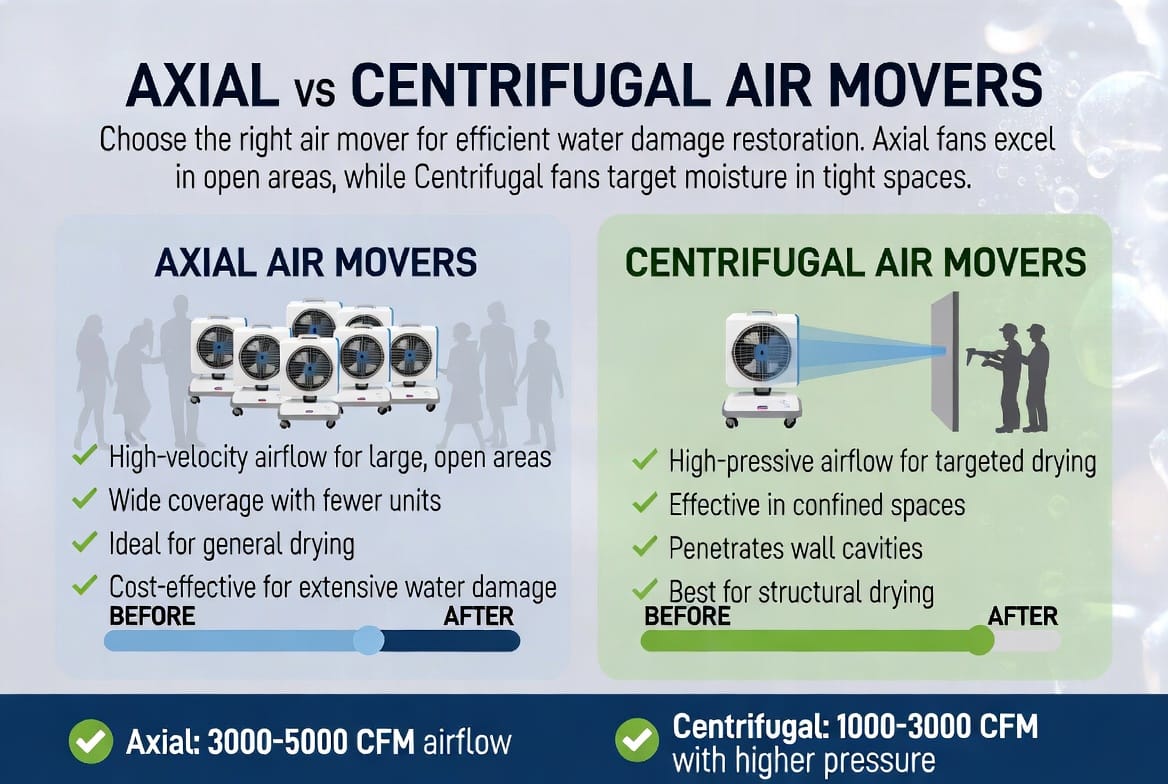
- High airflow volume – Often exceeding 2,000–5,000 CFM (cubic feet per minute)
- Low static pressure – Best for open, unobstructed spaces
- Energy efficient for general air circulation
- Compact and portable designs suitable for quick deployment
These fans excel at creating overall air movement across wide areas. They are ideal for drying floors, carpets, and large open rooms after flooding or pipe bursts.
Best Applications for Axial Fans
- Open living rooms and basements with standing water
- Carpet and hardwood floor drying
- Whole-room air circulation to support dehumidification
- Initial drying phases where maximum air exchange is needed
Professionals often position multiple axial fans to create a cross-flow pattern that maximizes evaporation across surfaces. Their straightforward design makes them reliable workhorses in many restoration jobs.
Pro Tip: Axial fans perform best when placed to blow air parallel to the wet surface, helping lift moisture into the air where dehumidifiers can capture it.
Centrifugal Fans: High Pressure for Targeted Drying
Centrifugal fans, sometimes called radial or blower fans, operate differently. Air enters the center of the impeller and is forced outward at a 90-degree angle, generating higher pressure but typically lower overall volume compared to axial models.
Key Characteristics of Centrifugal Air Movers
- Higher static pressure – Excellent for overcoming resistance
- Directed, focused airflow – Can be ducted or aimed precisely
- Stronger performance in confined spaces
- Effective at penetrating materials like walls and cavities
Centrifugal fans shine in situations where air must be forced into tight or obstructed areas. Their design allows them to maintain airflow even when pushing against filters, hoses, or structural elements.
Best Applications for Centrifugal Fans
- Wall cavity drying and injecting air behind baseboards
- Tight spaces such as crawlspaces or behind cabinets
- Drying under flooring or in floor joist areas
- Situations requiring positive or negative air pressure
When moisture seeps into drywall or insulation, centrifugal fans deliver the pressure needed to force dry air deep into these hidden zones, preventing hidden mold risks.
Axial vs Centrifugal Fans: Head-to-Head Comparison
Understanding the practical differences helps restoration teams select the optimal equipment for each unique drying scenario.
Airflow and Pressure Dynamics
Axial fans prioritize volume, moving massive amounts of air quickly across open areas. Centrifugal fans prioritize pressure, pushing air forcefully into confined or resistant spaces.
Energy Use and Noise
Axial models are often quieter and more energy-efficient for broad coverage. Centrifugal units may consume more power but deliver targeted results that justify the investment in complex jobs.
Portability and Setup
Both types are designed for job-site mobility, but centrifugal fans frequently include versatile ducting options that extend their reach into walls and under structures.
Drying Efficiency
- Axial fans reduce overall humidity faster in large volumes of space.
- Centrifugal fans excel at material-specific drying, ensuring moisture is removed from walls, subfloors, and cavities.
When to Combine Both Types
Most professional drying projects use a strategic mix. Axial fans handle the big picture while centrifugal units target problem areas. This combination approach often achieves the fastest, most thorough results while minimizing secondary damage.
Real-World Drying Scenarios
Consider a typical kitchen flood. Technicians might deploy several axial air movers across the open floor space while using centrifugal fans to dry inside wall cavities and under cabinets. This dual strategy prevents moisture migration and accelerates the entire restoration timeline.
In a flooded basement with finished walls, axial fans circulate air throughout the room while centrifugal units are positioned to inject dry air behind the drywall, addressing hidden saturation that could otherwise lead to long-term issues.
Factors Professionals Consider in Air Mover Selection
Choosing between axial and centrifugal fans involves more than just fan type. Experienced restorers evaluate:
- Extent and type of water damage (clean water vs. contaminated)
- Building materials involved (porous vs. non-porous)
- Room layout and accessibility
- Psychrometric conditions (temperature and humidity levels)
- Project timeline requirements
Proper monitoring with moisture meters and thermal imaging ensures fans are performing optimally throughout the drying process. Regular adjustments keep the project on track toward successful restoration.
Safety and Efficiency Benefits
Using the correct air movers reduces drying time, lowers energy costs, and minimizes disruption to your daily life. It also greatly reduces the risk of mold growth, which can begin within 24–48 hours in damp conditions.
Best Practices for Effective Fan Placement and Use
- Position axial fans to create consistent airflow patterns without dead zones
- Use centrifugal fans with ducting for precise injection into cavities
- Monitor progress with professional-grade meters
- Combine with dehumidifiers for balanced moisture removal
- Maintain proper equipment maintenance between jobs for peak performance
These practices ensure reliable, professional-grade results that give homeowners peace of mind.
Advanced Considerations in Modern Water Damage Restoration
Today’s restoration professionals leverage technology alongside traditional air movers. Some advanced axial and centrifugal models include variable speed controls, built-in sensors, and even remote monitoring capabilities. These features allow real-time adjustments for maximum efficiency.
Understanding equipment differences also helps homeowners recognize quality service when professionals explain their drying strategy. Knowledgeable teams confidently select the right tools for your specific situation.
Common Misconceptions
Many assume one fan type is universally superior. In reality, both axial and centrifugal air movers serve critical but distinct roles. The true expertise lies in knowing when and how to deploy each type effectively.
Protecting Your Home: The Importance of Professional Drying
While DIY fans might seem like a quick fix, professional-grade air movers and expert application make a significant difference. Improper drying can leave behind hidden moisture leading to:
- Mold and mildew growth
- Structural weakening
- Unpleasant odors
- Higher long-term repair costs
Trusting certified restoration experts ensures thorough drying using the optimal combination of axial and centrifugal fans, along with comprehensive moisture mapping and documentation.
The Right Fan Speeds Drying – Choose Professional Expertise
Selecting and positioning the proper air movers is both an art and a science. Axial fans deliver the broad, high-volume airflow needed for open areas, while centrifugal fans provide the focused high-pressure performance essential for tight spaces and wall drying. Together, they form the foundation of effective water damage restoration.
Don’t leave your home’s recovery to chance. The right equipment and expert application can save time, money, and prevent future complications.
Call our professional restoration team today for fast, reliable water damage drying using the latest axial and centrifugal air mover technology. We’re here to help restore your peace of mind.
Emergency Service Available – Call (855) 321-3350
Our experienced technicians arrive promptly, assess the situation thoroughly, and deploy the optimal drying equipment tailored to your specific needs. From initial extraction through final verification, we handle every step with care and precision.
Additional Benefits of Professional Restoration
- Comprehensive moisture detection and mapping
- Proper equipment selection and strategic placement
- Detailed documentation for insurance purposes
- Preventive recommendations to avoid future issues
- Guaranteed thorough drying with follow-up verification
Water damage doesn’t have to lead to long-term problems. With the correct air mover selection and professional techniques, your home can be restored efficiently and safely.
Remember, time is critical after water intrusion. The faster proper drying begins, the better the outcome. Trust the experts who understand the important differences between axial vs centrifugal fans and know exactly how to use them for your benefit.
We’re standing by ready to help protect your most important investment – your home.
Expert Axial & Centrifugal Fan Drying – Call Now