The Actual Cash Value vs. Replacement Cost: Understanding Your Payout

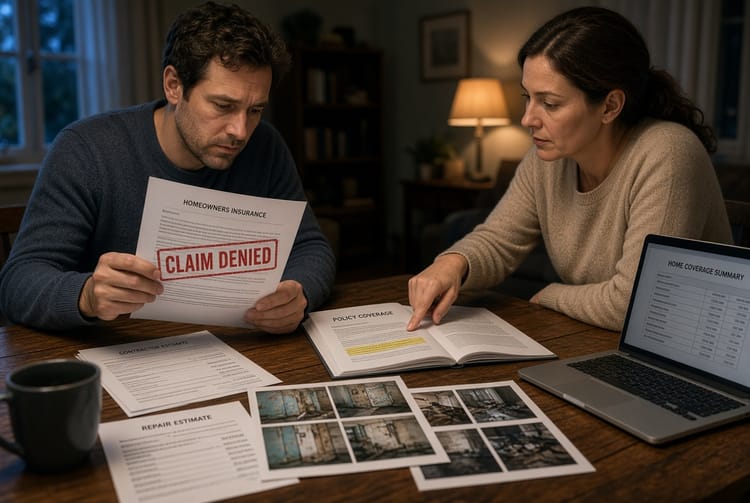
When disaster strikes your home—whether a sudden fire, a burst pipe, or severe weather—the last thing you want is an insurance settlement that leaves you short. Many homeowners discover too late that their policy pays far less than the true cost of putting their lives back together. The difference almost always comes down to one critical choice: Actual Cash Value (ACV) versus Replacement Cost.
Get Replacement Cost Coverage Today – Call Now!
This guide explains exactly how each valuation method works, why the gap between them can reach thousands of dollars, and why choosing replacement cost coverage is almost always the smarter long-term decision. You will leave with clear knowledge, practical examples, and the confidence to review your own policy.
What Actual Cash Value Really Means
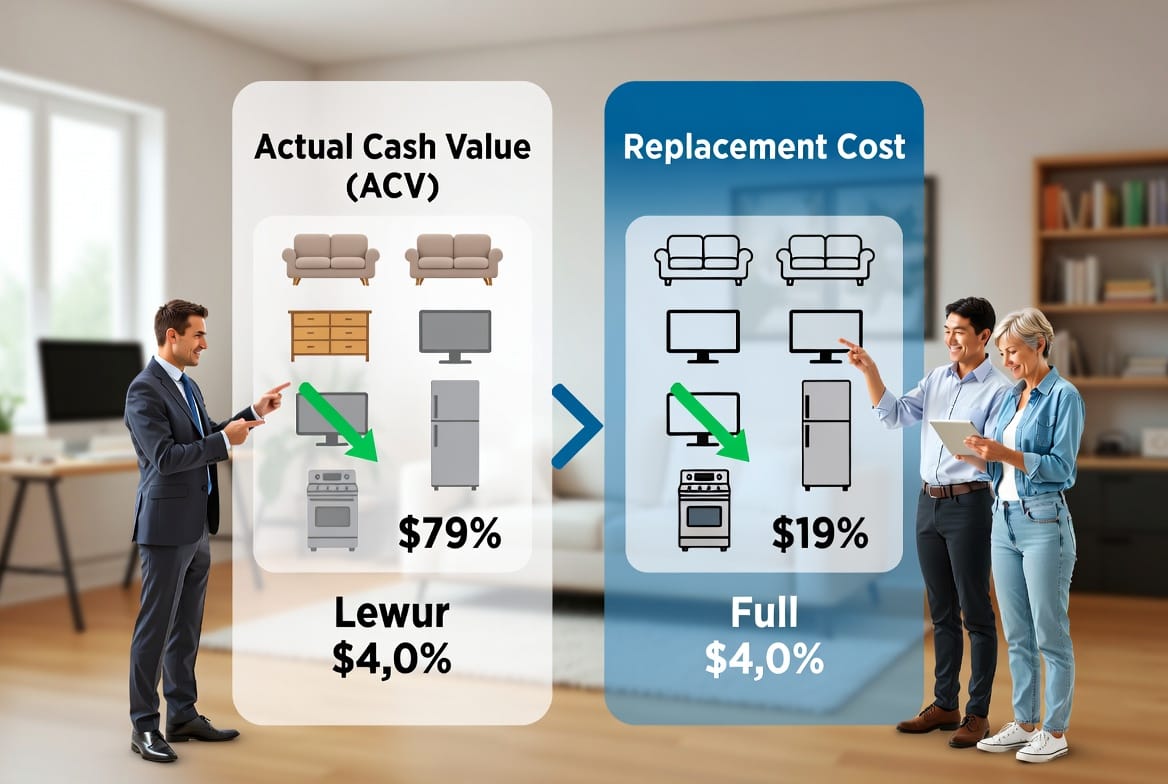
Actual Cash Value is the amount your insurance company calculates by taking the current cost of a similar item and subtracting depreciation. Depreciation accounts for age, wear, and tear. In simple terms, ACV pays what the item was worth the moment before the loss—not what it will cost you to buy a new one today.
Imagine your living-room sofa purchased ten years ago for $1,800. If a similar sofa now sells for $2,200 and the insurer applies 50 % depreciation for age and use, your ACV payout might be only $1,100. You receive a check for the depreciated value and must cover the remaining $1,100 yourself if you want a comparable new piece.
Key characteristics of Actual Cash Value:
- Pays the depreciated value of the damaged or destroyed item
- Factors in age, condition, and remaining useful life
- Results in lower premiums but higher out-of-pocket costs after a claim
- Commonly found on basic or older homeowners policies
ACV can feel acceptable when premiums are the only concern. The moment a claim occurs, however, the financial gap becomes painfully clear.
What Replacement Cost Coverage Delivers
Replacement Cost coverage pays the amount needed to replace the damaged item with a new one of similar kind and quality—without deducting for depreciation. Using the same sofa example, the insurer would pay the full current retail price of $2,200 (minus your deductible). You can walk into a store and purchase a comparable new sofa without dipping into savings.
Most modern homeowners policies offer replacement cost on personal property as an optional upgrade or as a standard feature on higher-tier plans. The premium is higher, yet the protection is dramatically stronger.
Advantages of Replacement Cost:
- Pays today’s full cost to buy a new equivalent item
- Eliminates the depreciation penalty
- Protects against inflation and rising material prices
- Restores your household to its pre-loss condition more completely
The extra premium is essentially a hedge against the real-world cost of starting over.
Side-by-Side Comparison: How the Numbers Differ
Understanding the math removes any remaining confusion. Consider three common household items that suffer a total loss:
- A 7-year-old 65-inch television originally purchased for $1,400; current replacement price $1,100
- A 12-year-old refrigerator that cost $1,800 new; today’s equivalent $2,100
- A 5-year-old living-room furniture set purchased for $3,500; current replacement $4,200
Under Actual Cash Value, depreciation schedules might reduce the television by 60 %, the refrigerator by 70 %, and the furniture by 40 %. Your total ACV settlement could easily fall $3,000–$4,000 short of what you need to buy new replacements.
Under Replacement Cost, the insurer reimburses the full current retail prices (subject to policy limits and your deductible). The difference is not theoretical—it is cash you either keep in your pocket or must spend from savings.
Why the Higher Premium for Replacement Cost Is Worth Every Dollar
Many homeowners hesitate at the modest premium increase required for replacement cost coverage. That hesitation usually disappears the first time they file a significant claim.
Inflation alone has pushed the price of furniture, electronics, and appliances upward for years. A sofa that cost $1,500 a decade ago may now retail for $2,400. Under ACV you absorb that entire increase plus depreciation. Under replacement cost the policy absorbs it for you.
Consider also the speed of recovery. When you receive a full replacement payout, you can order new items immediately. When you receive only ACV, you must either accept lesser-quality substitutes or wait until you can afford the difference. Emotional stress multiplies financial stress.
Replacement cost also protects against underinsurance on high-value categories:
- Electronics (televisions, computers, gaming systems, smart-home devices)
- Furniture (sofas, beds, dining sets, mattresses)
- Appliances (refrigerators, washers, dryers, ranges, dishwashers)
These categories depreciate quickly on paper yet remain essential to daily life. Replacing them at today’s prices without insurance help creates an unexpected budget crisis.
Real-World Claim Scenarios That Reveal the Gap
A family in the Midwest suffered water damage from a frozen pipe. Their living-room furniture set was eight years old. The ACV settlement offered $2,800. The cost to purchase a comparable new set was $6,100. The family paid the $3,300 difference out of pocket and delayed other necessary repairs.
In contrast, a coastal homeowner with replacement cost coverage experienced the same type of loss. Their settlement covered the full current price of new furniture, electronics, and flooring. They restored their home in weeks rather than months and avoided draining emergency savings.
These outcomes are not rare. Claims adjusters routinely see the same pattern: policyholders with ACV express surprise and frustration; those with replacement cost express relief.
How Depreciation Is Calculated and Why It Hurts
Insurers use standardized depreciation tables that assign a useful life to each category of personal property. A sofa might be given a 10-year life, a television 5–7 years, and major appliances 10–15 years. Once the item reaches the end of its assigned life, ACV can approach zero even if the item still functions perfectly.
This accounting method is logical from an insurer’s risk perspective, yet it rarely matches a homeowner’s lived reality. You do not replace a working refrigerator simply because a table says it is fully depreciated. When that refrigerator is destroyed, you still need a working refrigerator—and you will pay today’s full price.
Replacement cost removes this mismatch. The policy pays what it actually costs to solve the problem today.
Policy Language to Look For
When reviewing your declarations page or policy booklet, search for the exact valuation clause. Phrases such as “actual cash value,” “depreciated value,” or “market value at time of loss” signal ACV. Language stating “replacement cost without deduction for depreciation” or “cost to repair or replace with material of like kind and quality” signals the stronger coverage.
Many carriers allow you to upgrade from ACV to replacement cost at renewal or mid-term for a modest additional premium. Ask your agent for a side-by-side quote. The difference is often far smaller than the potential claim shortfall.
Additional Protections That Pair Well with Replacement Cost
While replacement cost solves the depreciation problem, several related endorsements strengthen overall protection:
- Extended replacement cost – pays a percentage above the dwelling limit if construction costs surge after a widespread disaster
- Ordinance or law coverage – covers extra expense to meet current building codes during repairs
- Scheduled personal property – provides higher limits and often agreed-value treatment for jewelry, art, or collectibles
Combining these options with replacement cost on contents creates a more complete safety net.

Practical Steps to Secure Better Protection Today
- Locate your current policy and identify the valuation method for personal property.
- Request a written comparison of ACV versus replacement cost premiums from your insurer or independent agent.
- Calculate a rough inventory of high-value items and estimate their current replacement prices.
- Review deductible options; a slightly higher deductible can offset part of the premium increase.
- Confirm that contents limits are adequate for your actual belongings.
Taking these steps requires less than an hour yet can save thousands of dollars and significant stress after a loss.
The Emotional Side of a Fair Payout
Insurance exists to restore financial stability and peace of mind. Receiving an ACV check that forces difficult choices—keeping an older temporary sofa, delaying appliance replacement, or borrowing money—undermines that purpose. Replacement cost keeps the focus on recovery rather than compromise.
Homeowners who upgrade consistently report greater confidence. They know that if the worst happens, the policy will help them rebuild their household at today’s prices, not yesterday’s depreciated values.
Common Misconceptions Clarified
Some believe ACV and replacement cost produce the same result after a few years. In reality the gap widens with time and inflation. Others assume the higher premium is only for luxury items. The coverage applies equally to everyday necessities. Still others think they can simply save the premium difference themselves. Most people never accumulate enough liquid savings to cover a multi-thousand-dollar shortfall on short notice.
Clear facts remove these misconceptions. Replacement cost is not an extravagance; it is practical risk management.
Final Thoughts on Choosing Wisely
The decision between Actual Cash Value and Replacement Cost is one of the most important choices inside a homeowners policy. ACV keeps premiums lower today. Replacement cost protects your financial future tomorrow. For the majority of families the modest extra premium delivers far greater value the moment a claim occurs.
Review your policy this week. Ask the direct question: “Does my personal property coverage pay replacement cost or actual cash value?” If the answer is ACV, request the upgrade numbers. Most carriers can implement the change quickly.
Don’t settle for depreciated payouts.
A single conversation can convert uncertainty into solid protection and give you the reassurance that your home and belongings are covered at the value they truly require.
Protect Against Depreciated Settlements – Call Now!