The Accident Forgiveness: How It Works and When to Use It
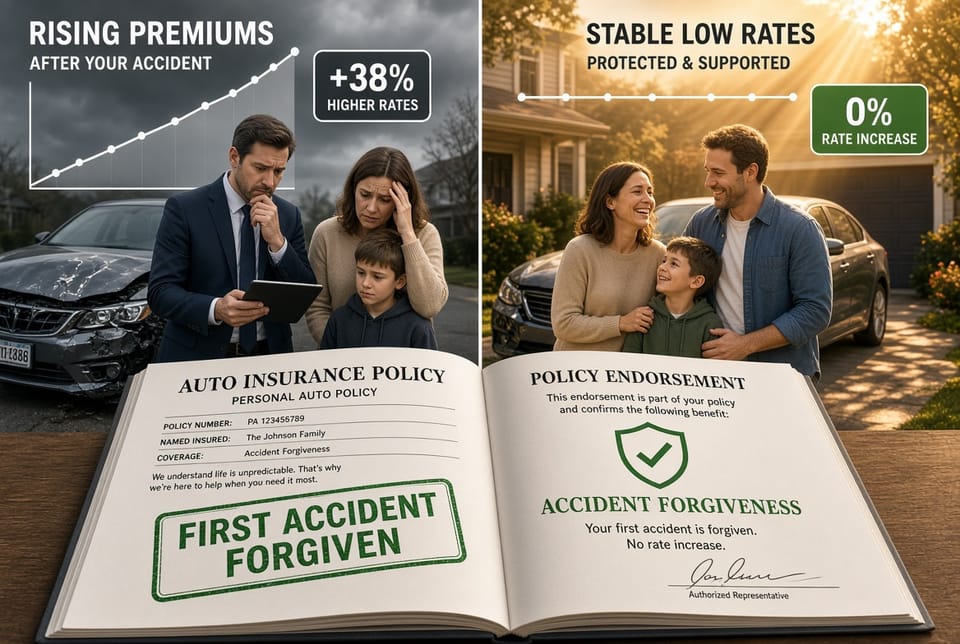
Safe driving is the foundation of affordable auto insurance, yet even the most careful drivers can face an unexpected moment of impact. A single at-fault accident has the power to raise rates for years. That is why accident forgiveness stands as one of the most valuable features available on many auto policies today. This protection can prevent your first qualifying at-fault accident from increasing your premium, giving you financial breathing room when you need it most.
Protect Your Rates with Accident Forgiveness – Call Now!
Understanding exactly how accident forgiveness works, who qualifies, and the best time to use it allows you to make informed decisions that protect both your wallet and your peace of mind. This guide explains the feature in clear terms so you can decide whether it belongs on your policy.
What Accident Forgiveness Actually Does
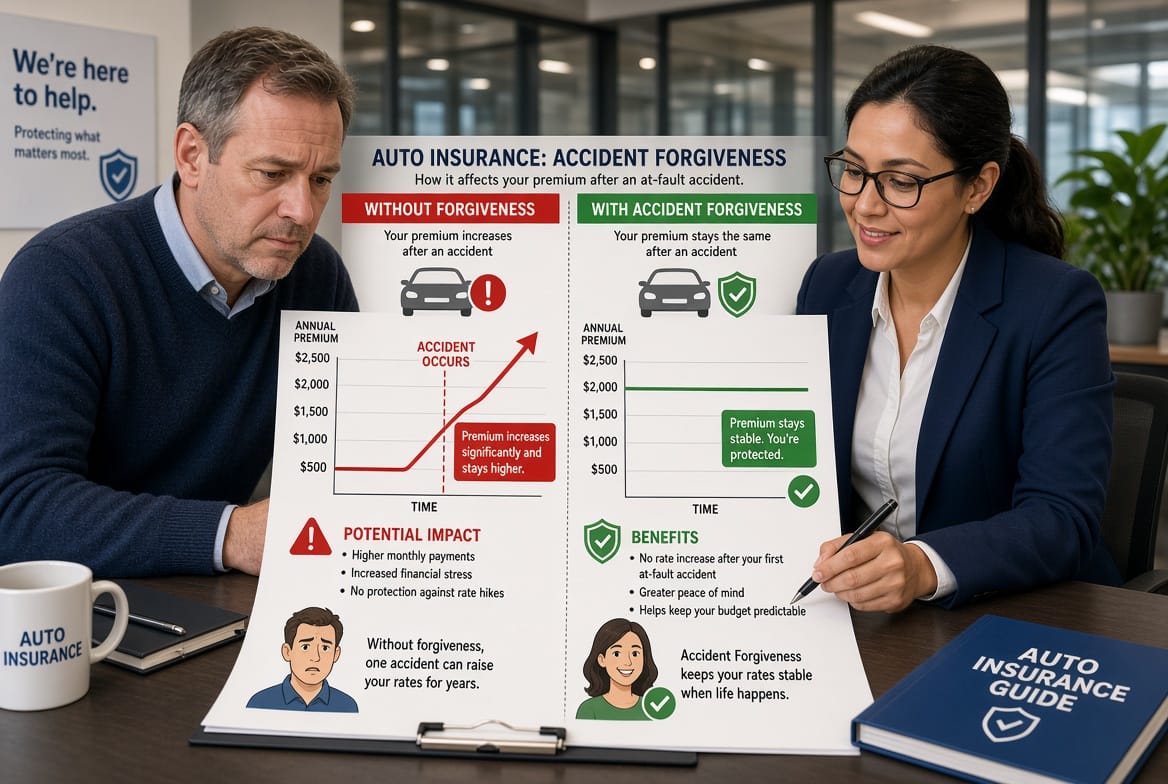
Accident forgiveness is a policy benefit that shields your rates from the impact of your first at-fault accident. When the feature is active and you meet the eligibility rules, the insurer agrees not to raise your premium solely because of that single qualifying claim.
In practical terms:
- Without the benefit, an at-fault accident often triggers a surcharge that can last three to five years.
- With accident forgiveness, that first surcharge is waived.
- Your rates remain based on your prior clean driving history rather than the new claim.
- Subsequent accidents are treated normally and may still affect premiums.
The protection is not unlimited. It typically applies only once, and only to the first eligible at-fault accident after the feature is added or earned. It does not erase the accident from your record for other purposes, nor does it prevent rate changes driven by other factors such as tickets, claims frequency across the industry, or annual base-rate adjustments.
Still, the financial difference can be substantial. Many drivers see hundreds of dollars in savings over the life of the surcharge that never gets applied.
How Eligibility Works
Not every driver receives accident forgiveness automatically. Insurers set clear requirements so the benefit rewards consistent safe driving.
Common eligibility criteria include:
- A clean driving record for a set period, usually three to five years without at-fault accidents
- Continuous coverage with the same insurer for a minimum length of time (often one to five years)
- No major violations such as DUI or reckless driving during the look-back period
- Policy must be active and in good standing when the accident occurs
Some carriers offer the feature as a free reward after a certain number of claim-free years. Others sell it as an optional endorsement that can be purchased for a modest additional premium. A few companies provide limited or “one-time” forgiveness even to newer customers under specific conditions.
Because rules vary by insurer and by state, the exact combination of clean-record years and tenure requirements can differ. The most reliable way to confirm your status is to review your declarations page or speak directly with your agent.
When and How to Use Accident Forgiveness
Knowing the feature exists is only half the value. Using it correctly matters.
Accident forgiveness activates automatically in most cases once you file a claim that qualifies. You do not usually need to submit a special request. The claims adjuster notes the presence of the benefit, applies the waiver, and your renewal premium reflects the protected rate.
Best practices for using the benefit:
- Report the accident promptly and accurately. Delays can complicate the claims process.
- Confirm with your insurer that the incident meets the definition of a “qualifying first at-fault accident.”
- Ask whether the forgiveness applies to the specific type of claim (some policies exclude certain minor incidents or glass-only claims).
- After the claim closes, request written confirmation that the surcharge was waived so you have documentation for future renewals.
Because the protection is typically available only once, many drivers choose to save it for a more significant claim rather than using it on a very minor fender-bender. That decision is personal and depends on the potential surcharge amount versus the cost of the small claim.
The Real Value of Keeping Rates Stable
An at-fault accident surcharge can raise premiums 20 percent to 40 percent or more, depending on the insurer, the severity of the claim, and your location. Over three to five years, that increase often totals thousands of dollars. Accident forgiveness removes that financial penalty for the first eligible event, preserving the lower rate you earned through years of careful driving.
The benefit also reduces stress. Knowing that one mistake will not automatically trigger years of higher payments allows drivers to focus on safety and recovery rather than immediate rate anxiety.
Common Questions Drivers Ask
Does accident forgiveness erase the accident from my record?
No. The accident still appears on your claims history and may be visible to future insurers. The benefit only prevents the rate increase with your current carrier.
Can I get the feature if I already have an accident on my record?
Usually not. Most programs require a clean period of three to five years before the benefit becomes available.
Is it worth paying extra for the endorsement?
For many drivers the answer is yes. The cost of the optional endorsement is often far lower than the multi-year surcharge it can prevent.
What happens after I use it?
Once used, the feature is typically no longer available until you re-qualify by maintaining another clean period. Some insurers restore it after a set number of additional claim-free years.
Building a Stronger Auto Insurance Strategy
Accident forgiveness works best as part of a broader approach to keeping coverage affordable and reliable. Consider pairing it with:
- A solid defensive-driving record
- Bundling auto and home policies for multi-policy discounts
- Maintaining continuous coverage without lapses
- Choosing appropriate deductibles that balance premium and out-of-pocket risk
- Periodic policy reviews to confirm all available discounts and features remain active
Regular conversations with your agent help ensure the benefit stays in force and that you understand any changes in eligibility rules.
Why Timing Matters
The ideal time to add or confirm accident forgiveness is before an accident occurs. Once a claim is filed, it is usually too late to purchase the protection for that specific event. Drivers who wait until after a crash often discover the feature was either unavailable or not yet earned.
Reviewing your policy during renewal season or after a period of clean driving gives you the opportunity to lock in the benefit while rates are still based on your strong record.

Taking the Next Step Toward Premium Protection
Accident forgiveness is more than a nice-to-have feature. It is a practical financial safeguard that rewards responsible drivers and softens the impact of an unexpected first at-fault accident. By understanding how it works, confirming your eligibility, and knowing the right moment to rely on it, you keep more control over your long-term insurance costs.
A single conversation can clarify whether the benefit is already on your policy, whether you qualify to add it, and how it would apply in a real claim situation. That clarity turns uncertainty into confidence.
Protect your premium with accident forgiveness. A brief policy review today can confirm your protection status and help you keep rates stable for years to come.
Keep Your Premium Stable After a First Accident – Call Now