Roofing Investment: Selecting Materials and Ensuring a Flawless Installation
Your roof is more than just a covering—it's your home's first line of defense against the elements. Choosing the right roofing materials and ensuring a professional installation can save you thousands in repairs while enhancing your property's value. In this comprehensive guide, we'll explore the pros, cons, and lifespans of popular options like asphalt shingles, metal roofing, tile, and slate. We'll also delve into essential factors such as underlayment, ventilation, and the importance of hiring certified installers. By the end, you'll feel confident making an informed decision that protects your investment for decades.
Invest Wisely in Your Roof – Schedule Your Consultation
Understanding Roofing Materials: A Smart Choice for Longevity
Selecting roofing materials isn't just about aesthetics; it's a strategic investment in your home's durability and energy efficiency. Each material offers unique benefits tailored to different climates, budgets, and architectural styles. Let's break down the four primary types, focusing on their advantages, drawbacks, and expected lifespans.
Asphalt Shingles: Affordable and Versatile
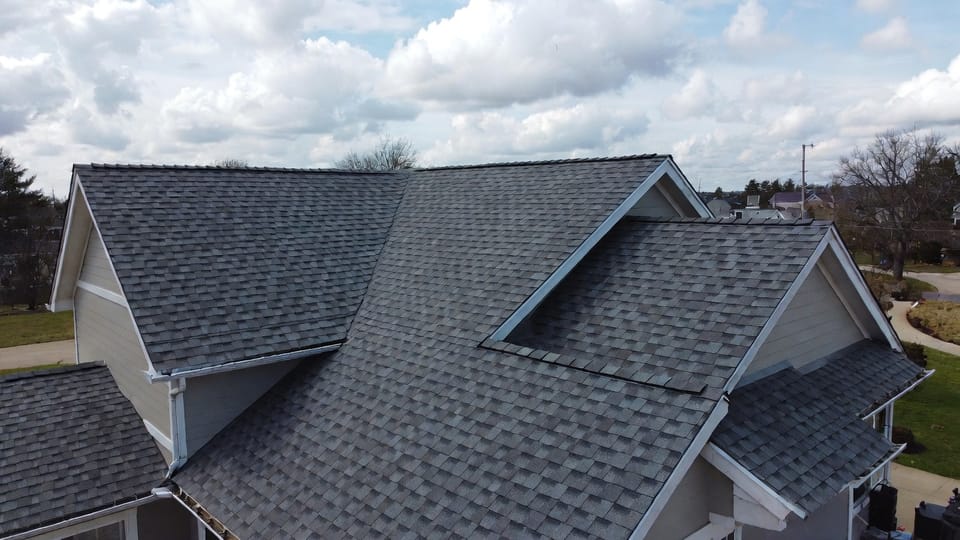
Asphalt shingles remain the most popular choice for residential roofing in the United States, accounting for a significant portion of installations due to their balance of cost and performance.
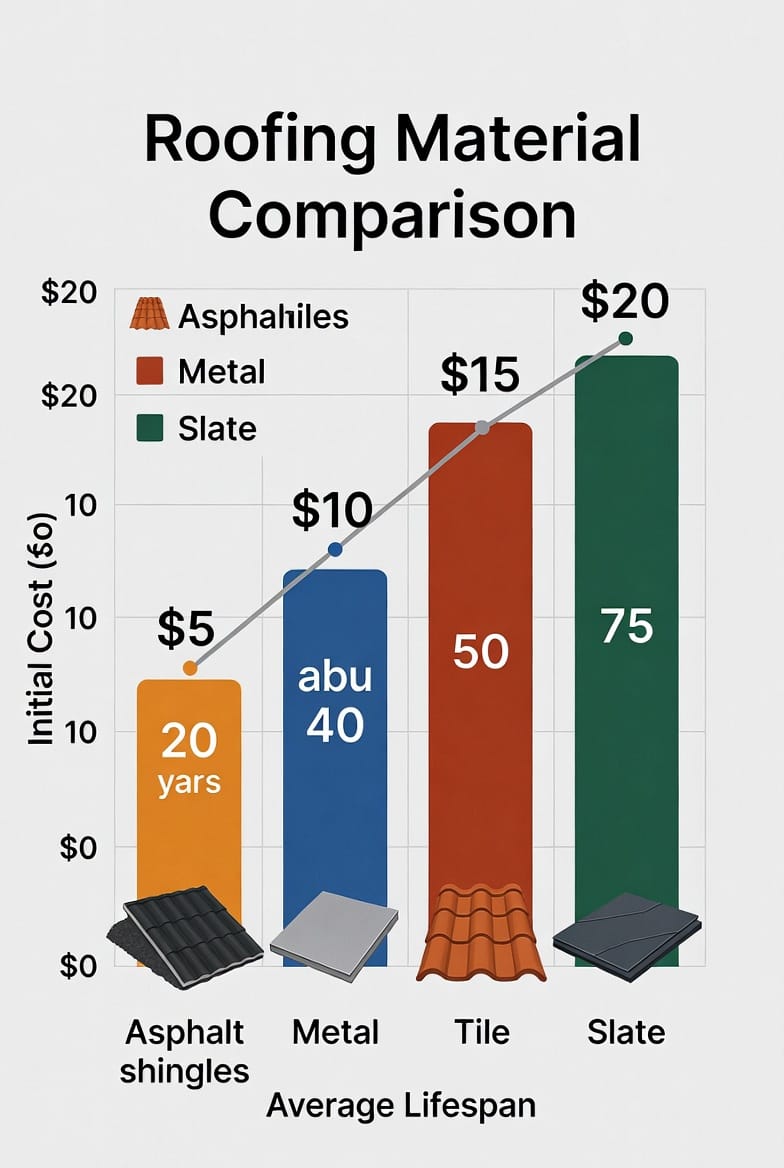
- Pros: These shingles are budget-friendly, with installation costs ranging from $3 to $7 per square foot. They're available in various styles, including three-tab and architectural designs, allowing homeowners to match their home's aesthetic. Asphalt shingles are relatively easy to install and repair, making them ideal for quick projects. They also provide good fire resistance when treated with Class A ratings.
- Cons: In harsh climates, they may crack or curl under extreme heat or cold. Algae and moss growth can occur in damp areas, requiring periodic cleaning. They're not as eco-friendly as some alternatives, as they contribute to landfill waste upon replacement.
- Lifespan: With proper maintenance, asphalt shingles last 20 to 30 years. Architectural varieties often extend closer to the upper end, offering better wind resistance up to 130 mph.
Homeowners in moderate climates appreciate asphalt shingles for their reliability without breaking the bank. Regular inspections can mitigate risks like granule loss, ensuring your roof performs optimally.
Metal Roofing: Durable and Eco-Friendly
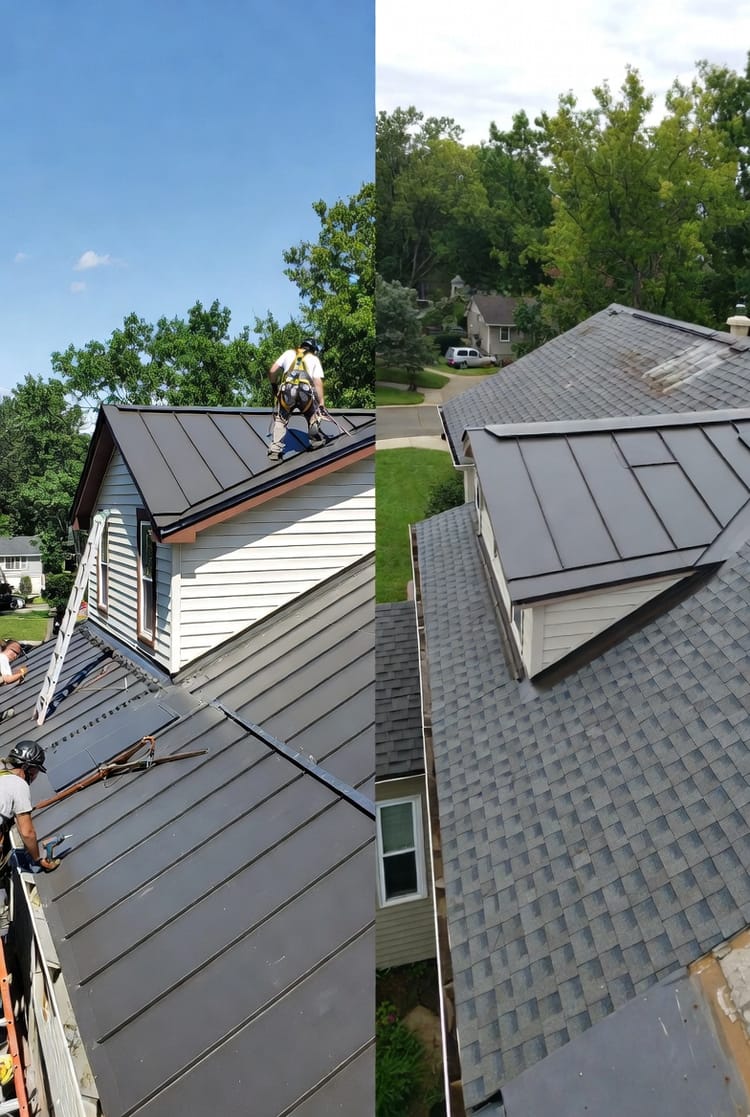
Metal roofing has surged in popularity for its modern appeal and sustainability, often seen on contemporary homes and commercial buildings.
- Pros: Exceptionally durable, metal roofs resist fire, wind (up to 140 mph), and impact from hail. They're lightweight, reducing structural stress, and reflect solar heat, potentially lowering cooling costs by 10-25%. Many metal roofs are made from recycled materials and are fully recyclable at the end of their life.
- Cons: Initial costs are higher, typically $8 to $14 per square foot. Noise during rain or hail can be an issue without proper insulation. Expansion and contraction with temperature changes may lead to fastener issues if not installed correctly.
- Lifespan: Metal roofs boast an impressive 40 to 70 years, depending on the type (e.g., steel, aluminum, or copper). With minimal maintenance, they outlast many alternatives, making them a wise long-term investment.
For eco-conscious homeowners, metal roofing offers peace of mind, knowing it's built to endure while minimizing environmental impact.
Tile Roofing: Timeless Elegance with Strength
Tile roofing, often associated with Mediterranean or Spanish-style homes, brings a classic look combined with robust protection.
- Pros: Tiles excel in hot climates, providing excellent thermal insulation and natural ventilation. They're highly resistant to rot, insects, and fire, with some varieties rated Class A. Aesthetic variety includes clay, concrete, and terracotta options in diverse colors and shapes.
- Cons: Heavier than other materials (up to 10 pounds per square foot), tiles require reinforced roof structures, increasing upfront costs ($10 to $18 per square foot). They're prone to cracking in freezing temperatures or from heavy impacts, and installation is labor-intensive.
- Lifespan: Quality tile roofs can last 50 to 100 years or more, especially clay tiles, which age gracefully and develop a patina over time.
If your home's architecture calls for enduring beauty, tile roofing delivers both style and substance, reassuring you of its proven track record in various regions.
Slate Roofing: Premium Durability and Luxury
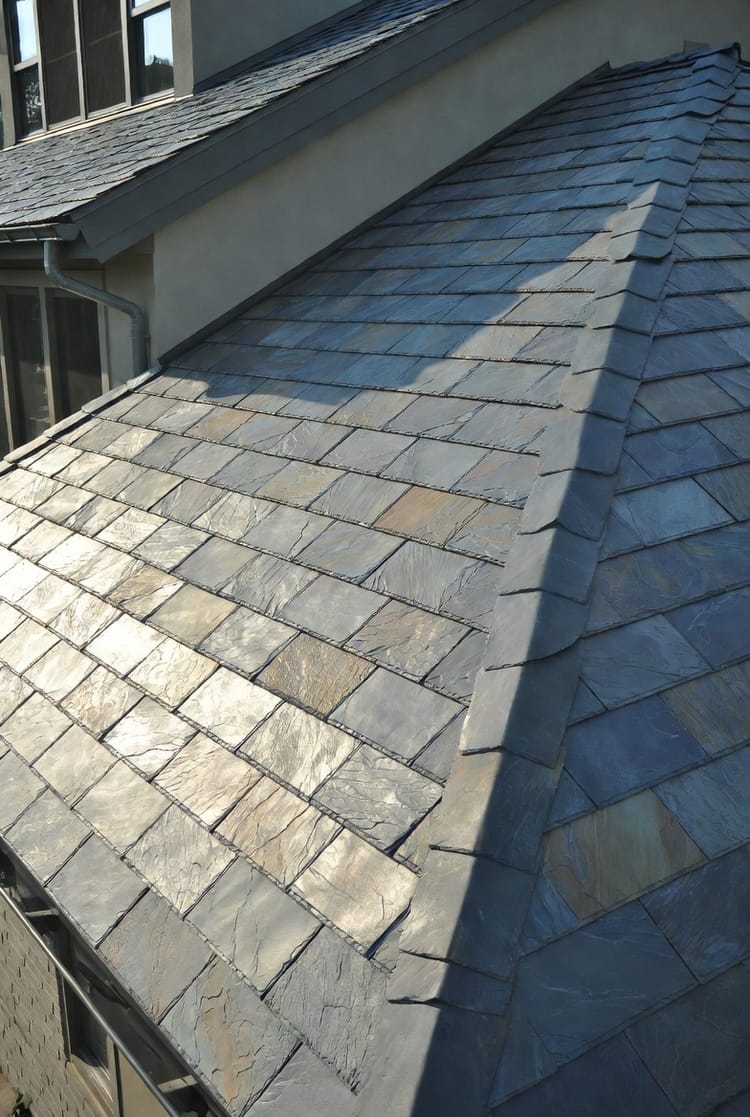
Slate roofing represents the pinnacle of luxury and longevity, favored for historic and high-end properties.
- Pros: Natural slate is incredibly durable, resisting fire, wind, and extreme weather. It's environmentally friendly, sourced from quarries, and adds significant curb appeal with its unique textures and colors. Slate roofs require little maintenance and can enhance property value substantially.
- Cons: The highest cost among options ($15 to $30 per square foot) makes it less accessible. Its weight (8-10 pounds per square foot) demands structural reinforcements, and improper installation can lead to breakage. Availability may be limited in some areas.
- Lifespan: True slate roofs endure 75 to 200 years, outlasting generations and often the home itself.
Choosing slate is a commitment to excellence, providing authoritative protection that stands the test of time.
The Role of Underlayment: Your Roof's Hidden Hero
No matter the material, underlayment is crucial for a watertight seal and extended roof life. This layer, installed beneath the shingles or tiles, acts as a secondary barrier against moisture, wind-driven rain, and ice dams.
- Types of Underlayment: Synthetic options like polyethylene are lightweight and tear-resistant, while felt underlayment offers traditional affordability. For high-risk areas, self-adhering membranes provide superior protection.
- Benefits: Proper underlayment prevents leaks that could lead to mold, rot, or structural damage. It also enhances energy efficiency by reducing air infiltration.
- Installation Tips: Ensure full coverage without gaps, especially around valleys and chimneys. In cold climates, ice and water shields are essential along eaves.
By prioritizing quality underlayment, you're safeguarding your home against unforeseen weather challenges, maintaining a dry and comfortable interior.
Ventilation: Breathing Life into Your Roof System
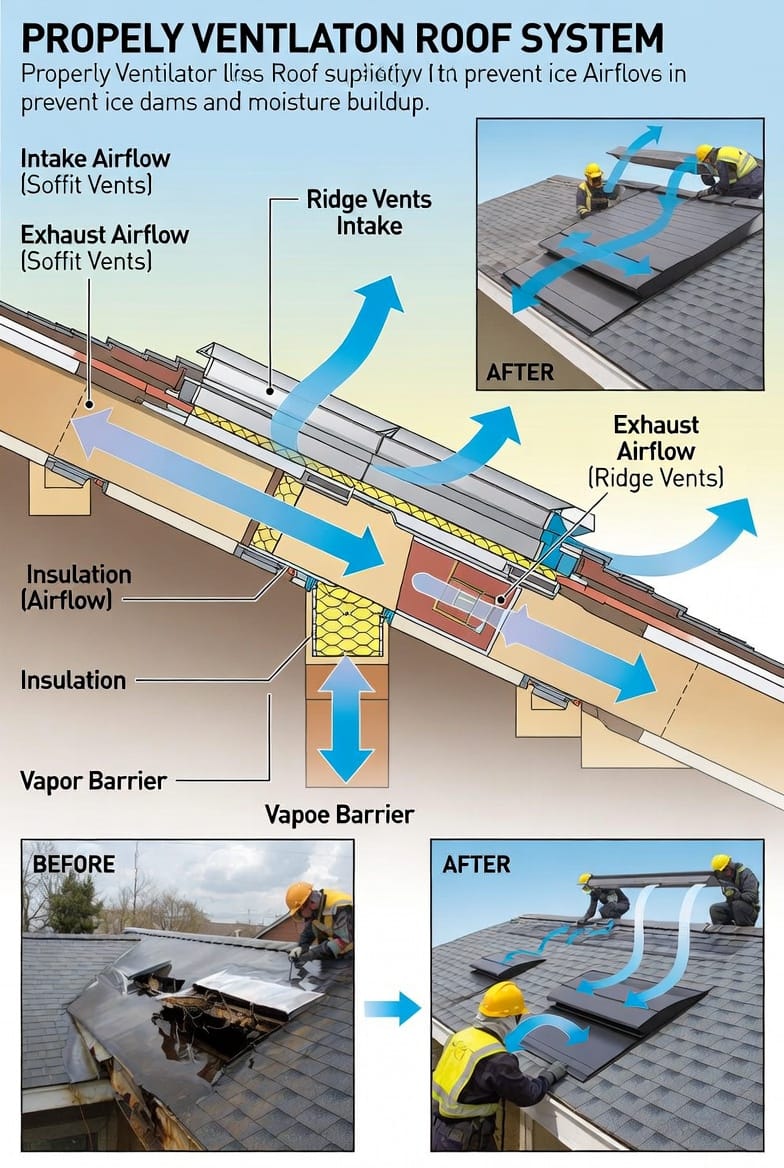
A well-ventilated roof isn't just an add-on—it's essential for preventing costly issues like premature material degradation and energy loss. Proper ventilation balances intake and exhaust air, regulating attic temperatures and moisture levels.
- Key Components: Intake vents (soffit or eave) draw in cool air, while exhaust vents (ridge or gable) expel hot, moist air. This airflow combats heat buildup in summer and condensation in winter.
- Advantages: Reduces the risk of ice dams, which can cause water backups and leaks. It extends material lifespan by minimizing thermal stress and prevents mold growth for healthier indoor air.
- Common Mistakes: Blocking vents with insulation or debris leads to trapped moisture. Aim for a balanced system with at least 1 square foot of ventilation per 150 square feet of attic space.
Investing in ventilation reassures you that your roof will perform efficiently, lowering utility bills and avoiding expensive repairs.
Hiring Certified Installers: The Key to Flawless Execution
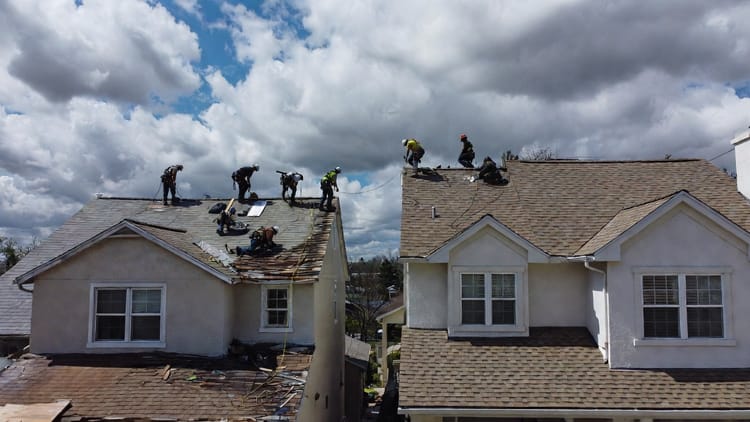
Even the best materials fail without expert installation. Certified installers bring the knowledge and precision needed to avoid common pitfalls, ensuring your roof meets manufacturer warranties and local codes.
- Why Certification Matters: Look for credentials from organizations like the National Roofing Contractors Association (NRCA) or manufacturer-specific programs. Certified pros undergo rigorous training on best practices.
- Red Flags to Avoid: Beware of low-bid contractors without references or insurance. Insist on written contracts detailing scope, materials, and timelines.
- Benefits of Professionals: They handle complex tasks like flashing around penetrations and ensuring slope for drainage. This minimizes risks such as leaks or wind uplift failures.
By choosing certified experts, you're not just installing a roof—you're securing peace of mind through proven craftsmanship.
Maintenance and Long-Term Care: Protecting Your Investment
To maximize your roofing investment, proactive maintenance is non-negotiable. Regular checks can identify issues early, extending lifespan and preventing emergencies.
- Annual Inspections: Examine for missing shingles, damaged flashing, or granule buildup in gutters. In wooded areas, clear debris to prevent moss.
- Climate-Specific Tips: In snowy regions, remove heavy accumulations safely. For coastal homes, rinse salt residue to combat corrosion.
- Warranty Considerations: Most materials come with 20-50 year warranties, but they require documented maintenance. Keep records of installations and repairs.
With diligent care, your roof remains a reliable shield, enhancing your home's resilience.
Cost Considerations and ROI: Balancing Budget and Value
Understanding the financial aspects helps align your choice with long-term goals. While initial costs vary, factor in lifespan and savings.
- Budget Breakdown: Asphalt offers quick ROI through low upfront expenses. Metal and tile provide better returns via energy efficiency and durability.
- Value Addition: A new roof can boost resale value by 60-70% of installation costs, per real estate data.
- Financing Options: Explore loans or incentives for energy-efficient materials to ease the burden.
Making a calculated investment ensures your roof pays dividends in comfort and equity.
Environmental Impact: Sustainable Roofing Choices
Today's homeowners prioritize eco-friendliness. Opt for materials with recycled content or those that reduce urban heat islands.
- Green Benefits: Metal and tile reflect heat, lowering carbon footprints. Slate's longevity minimizes replacements.
- Certifications: Seek ENERGY STAR-rated products for tax credits.
Sustainable choices not only protect the planet but also future-proof your home against rising energy costs.
Common Roofing Myths Debunked
Misinformation can lead to poor decisions. Let's clarify:
- Myth: All roofs last the same. Reality: Materials vary widely in durability.
- Myth: DIY installation saves money. Reality: Errors void warranties and cause leaks.
Armed with facts, you can avoid pitfalls and choose confidently.
Final Thoughts: Secure Your Home's Future
Investing in the right roofing materials and installation is a decision that reverberates for years. By weighing pros, cons, and lifespans of asphalt shingles, metal roofing, tile, and slate, and emphasizing underlayment, ventilation, and certified installers, you're building a fortress overhead.
Secure Your Home’s First Line of Defense – Call Now