The Window Insect Screen Frame: Aluminum vs. Fiberglass Repair
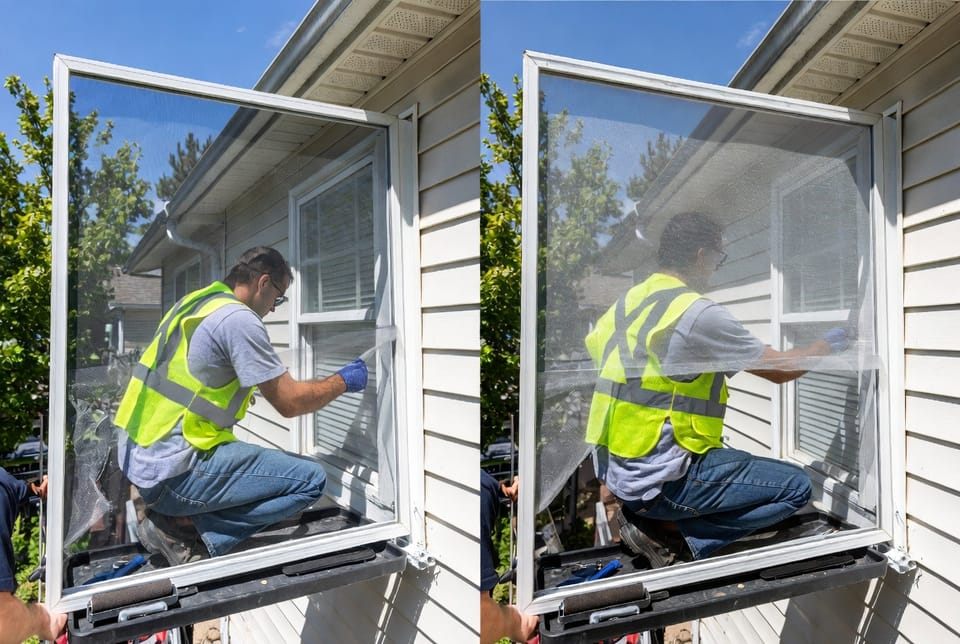
Window insect screen frames play a silent but vital role in every home. They keep pests out, allow fresh air to flow, and protect your family from unwanted intruders while maintaining energy efficiency. When these frames suffer damage—whether from pets, weather, or everyday wear—knowing how to address the issue can save you time and money.
Fix Your Torn Window Screens Today – Call Now!
In this comprehensive guide, we explore aluminum vs. fiberglass screen frames, focusing entirely on practical screen maintenance. You will learn exactly how to repair torn screens, replace spline, and repair bent frames. We highlight the key differences: aluminum frames are exceptionally durable yet can bend under impact, while fiberglass frames offer flexibility but may warp from heat or prolonged sun exposure.
Rest assured, these repairs are straightforward when approached correctly. With the right techniques and a reassuring step-by-step process, you can restore your screens to peak performance and enjoy a bug-free, well-ventilated home once again.
Understanding Aluminum vs. Fiberglass Screen Frames
Aluminum screen frames stand out for their strength and longevity. Crafted from lightweight yet rigid metal, they resist everyday knocks and provide a clean, modern look that complements most window styles. However, their rigidity means they can bend or dent when struck by a ball, branch, or enthusiastic pet. The good news? A bent aluminum frame can often be straightened without full replacement.
Fiberglass screen frames, by contrast, are engineered for flexibility. This material absorbs minor impacts better and rarely dents permanently. Yet, over time, exposure to temperature fluctuations and UV rays can cause warping, leading to gaps that allow insects to slip through. Fiberglass frames require gentler handling during repairs to avoid further distortion.
Both frame types use the same core components: the frame channel, spline (the rubber cord that locks the mesh), and the mesh itself—typically fiberglass mesh for its rust-free durability or aluminum mesh for added strength. Choosing the right material for your home depends on your climate, window exposure, and usage patterns. Proper screen maintenance begins with understanding these differences so you can select repair methods that match the frame’s natural behavior.
Common Issues That Require Screen Repair
Most homeowners encounter the same handful of problems. Torn screens top the list, often caused by claws, branches, or children pressing against the mesh. Next come loose or missing spline, which allows the mesh to sag and create entry points for bugs. Finally, bent or warped frames disrupt the screen’s fit inside the window track, leading to drafts and pest infiltration.
Recognizing these issues early prevents small problems from becoming costly replacements. A quick visual check every season—looking for holes larger than a pencil eraser, sagging mesh, or frames that no longer sit flush—keeps your home protected and your repair tasks simple.
Essential Tools and Supplies for Professional Results
Before you begin any screen maintenance, gather these items:
- Spline roller with convex and concave wheels
- Replacement fiberglass or aluminum mesh (cut 2–3 inches larger than the frame)
- New spline in the exact diameter of your original (usually 0.125–0.140 inches)
- Utility knife or screen mesh cutter
- Screwdriver or spline removal tool
- Rubber mallet and needle-nose pliers
- Clean rags and mild soap solution
- Safety gloves and eye protection
Having everything ready ensures a smooth, frustration-free repair and delivers results that look factory-fresh.
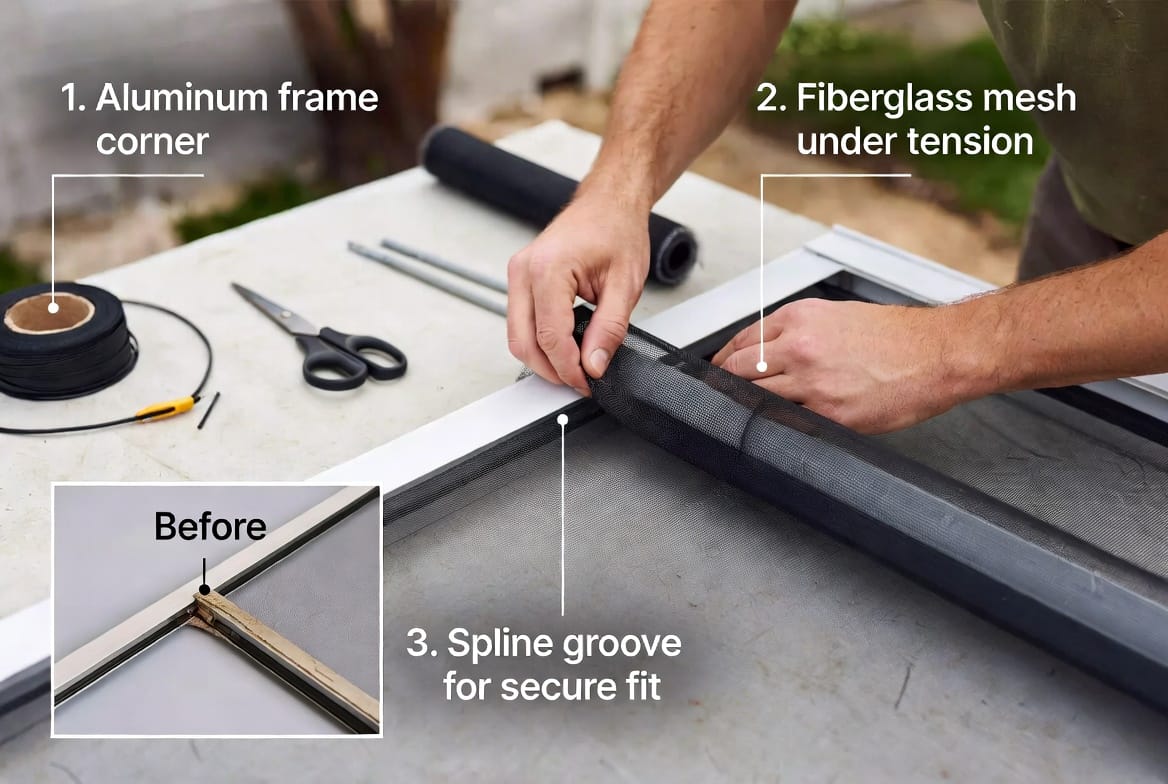
Step-by-Step Guide to Repairing Torn Screens
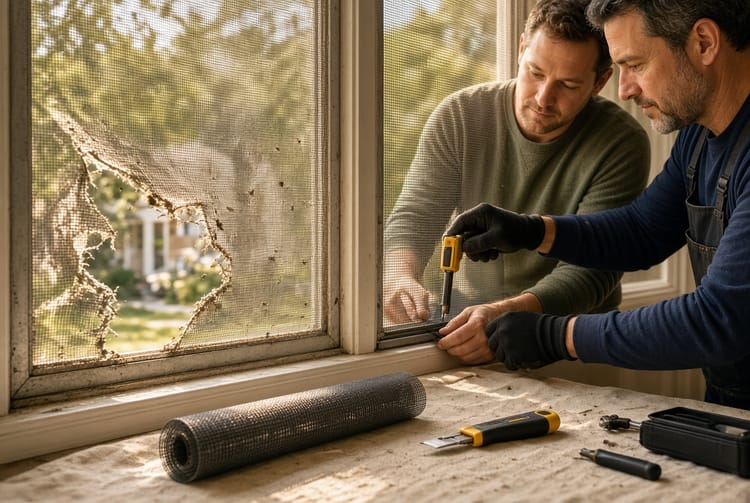
Repairing a torn screen is one of the most common and rewarding DIY screen maintenance tasks. Follow these steps for both aluminum and fiberglass frames.
- Remove the screen from the window and lay it flat on a large, clean surface.
- Extract the old spline using the removal tool or screwdriver. Work gently—aluminum frames tolerate firmer pressure, while fiberglass frames need lighter touch to prevent warping.
- Lift out the damaged mesh and discard it. Thoroughly clean the groove with a rag and mild soap to remove dirt and old rubber residue.
- Cut new mesh slightly oversized. For aluminum frames, align it squarely; for fiberglass frames, allow a bit more slack to accommodate natural flex.
- Roll the spline into the groove starting at one corner. Use the convex wheel first to seat the mesh, then the concave wheel to lock the spline. Maintain even pressure—aluminum frames hold tension firmly, while fiberglass frames may require slight adjustments to avoid pulling the frame out of square.
- Trim excess mesh with a sharp utility knife, leaving a clean ⅛-inch edge.
The result? A taut, insect-proof screen that restores full ventilation and peace of mind. This process typically takes 30–45 minutes per screen and costs a fraction of professional replacement.
Replacing Spline: The Secret to a Secure Fit
Spline replacement is essential whenever the rubber cord becomes brittle, cracked, or stretched. Old spline loses its gripping power, causing the mesh to loosen over time.
Start by measuring the groove width precisely—mismatched spline diameter is a leading cause of repair failure. Cut the new spline to length, leaving a 1-inch overlap for a secure corner joint.
For aluminum frames, press the spline firmly; the rigid structure holds it perfectly. For fiberglass frames, roll slowly and check for warping after every few inches—gentle heat from a hair dryer can soften the frame slightly if needed, but never overheat.
A properly installed spline creates a weather-tight seal that lasts years. Homeowners who master this step report dramatically fewer pest issues and longer screen life.
Repairing Bent or Warped Frames
Bent frames in aluminum material respond beautifully to simple correction. Place the frame on a flat surface, protect the corners with a cloth, and gently tap with a rubber mallet or use pliers to realign. The durable nature of aluminum allows reshaping without cracking.
Fiberglass frames that warp present a different challenge. Minor warping can sometimes be corrected by warming the frame evenly and pressing it flat under weight overnight. Severe warping, however, often requires partial or full frame replacement to ensure the screen fits the window track perfectly.
In both cases, inspect corner connectors. Loose or damaged corners weaken the entire structure—replace them immediately for lasting stability.
Proactive Screen Maintenance Tips for Year-Round Protection
Prevention beats repair every time.
- Inspect screens twice yearly, especially before storm season and after winter.
- Clean gently with a soft brush and mild detergent—avoid harsh chemicals that degrade fiberglass mesh.
- Store removable screens upright in a dry area during off-season to prevent bending or warping.
- Apply UV protectant spray annually to fiberglass frames to reduce warping risk.
- Keep sharp objects away from screens and train pets to avoid jumping on windows.
These habits extend the life of both aluminum and fiberglass frames, keeping your home comfortable and secure with minimal effort.
When to Call a Professional for Screen Repair
While most torn screen and spline replacement jobs are ideal for confident DIYers, certain situations call for expert help. Large multi-panel windows, high second-story installations, or frames with extensive damage benefit from professional tools and experience. If your screens no longer fit properly after repair or you notice recurring warping, a quick call ensures the job is done right the first time.
Restoring Comfort and Confidence with Proper Screen Care
Your window insect screen frames deserve the same attention you give the rest of your home. Whether you choose the durability of aluminum or the flexibility of fiberglass, understanding their unique characteristics empowers you to perform effective screen maintenance that lasts.
By learning to repair torn screens, replace spline, and repair bent frames, you protect your family, save money, and maintain beautiful, functional windows for years to come. The process is straightforward, the results are immediate, and the satisfaction of a job well done is genuinely rewarding.
Fix torn screens yourself with confidence using the techniques above, or let our experienced team handle it for you. For fast, reliable screen repair. Your windows—and your peace of mind—will thank you.
Professional Window Screen Fixing – Call Today!