The Trauma Recovery Therapy: Healing the Root of Addiction

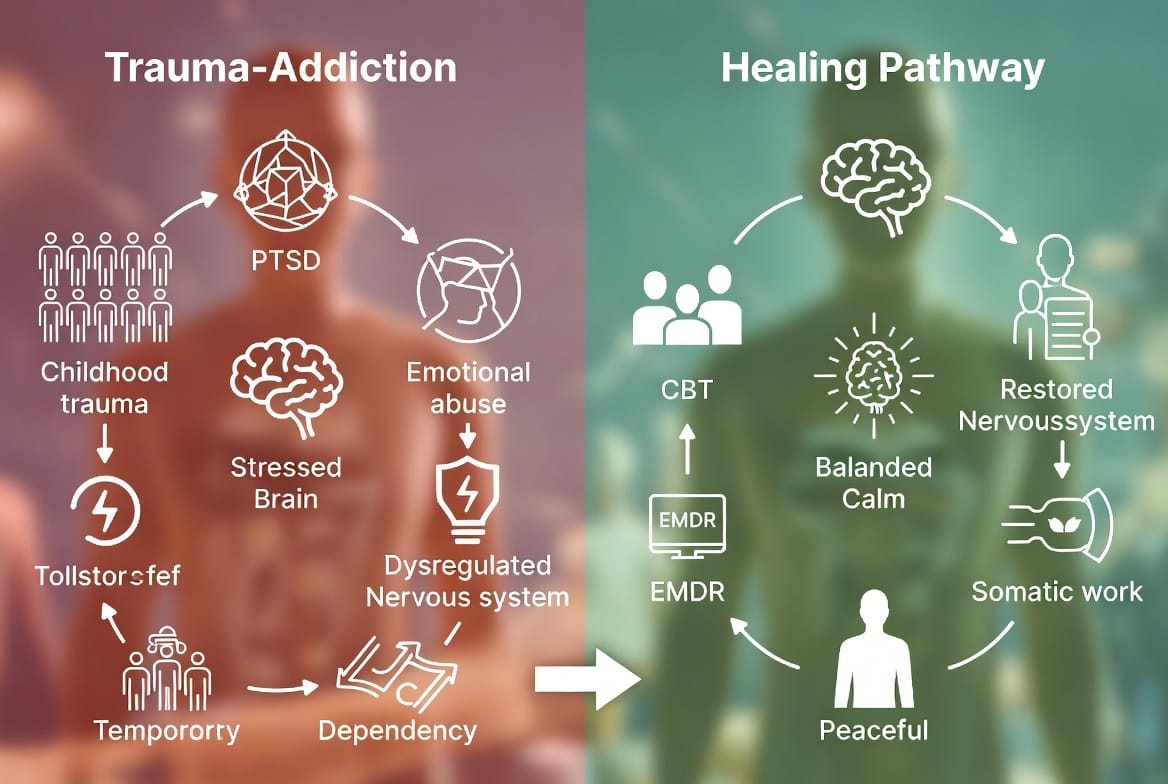
Addiction rarely begins with a simple choice. For countless individuals, the path into substance use starts far earlier—often in the quiet, unhealed spaces of past trauma. Childhood wounds, the lingering effects of PTSD, or the deep scars of emotional abuse can create an internal landscape so painful that substances become a temporary escape. Trauma recovery therapy offers a foundational approach that goes beyond managing symptoms. It reaches the root causes, helping people rebuild from the inside out so that recovery becomes sustainable rather than fragile.
Heal Trauma to Heal Addiction – Call Now
This article explores how unresolved trauma fuels addiction and how specialized, trauma-focused methods create lasting change. The goal is not merely abstinence. The goal is genuine healing—restoring a sense of safety, self-worth, and emotional balance that no longer requires chemical relief.
Understanding Trauma as the Hidden Foundation of Addiction
Trauma is any experience that overwhelms a person’s ability to cope and leaves lasting imprints on the nervous system, beliefs, and behavior. These imprints do not disappear with time. They shape how a person responds to stress, relationships, and everyday life.
When trauma remains unaddressed, the brain and body stay locked in survival mode. Heightened alertness, emotional numbness, or intense shame become constant companions. Substances can temporarily quiet that internal storm. Alcohol may dull hypervigilance. Opioids may silence emotional pain. Stimulants may counteract the flatness of dissociation. What begins as relief quickly becomes dependence because the original wound has never been treated.
Childhood trauma stands out as one of the strongest predictors. Neglect, physical or sexual abuse, household instability, or chronic emotional invalidation teach a child that the world is unsafe and that their needs do not matter. These early lessons become automatic patterns in adulthood. A person may struggle to trust others, regulate emotions, or feel worthy of care. Substances fill the void left by missing safety and connection.
PTSD creates another powerful pathway. Flashbacks, nightmares, and hyperarousal keep the nervous system in a near-constant state of threat. Many people discover that certain substances temporarily interrupt these symptoms. Over time the brain learns to associate the substance with survival, reinforcing the cycle.
Emotional abuse—subtle yet corrosive—erodes self-esteem and creates chronic self-doubt. Constant criticism, gaslighting, or emotional abandonment leaves a person believing they are fundamentally flawed. Substances can temporarily silence the inner critic or create a fleeting sense of power and belonging.
In each case, addiction is not the core problem. It is a sophisticated, if destructive, attempt to manage the pain of unhealed trauma. Treating only the addiction without addressing the trauma is like repeatedly mopping a flooded floor while the pipe continues to leak. The water will return. Trauma recovery therapy turns off the source.
How Trauma-Focused Approaches Create Lasting Change
A foundational trauma recovery approach recognizes that lasting freedom from addiction requires more than willpower or behavioral control. It requires helping the nervous system complete the unfinished survival responses that trauma interrupted. It requires rewriting the painful beliefs that keep a person stuck. And it requires building new capacities for emotional regulation, connection, and self-compassion.
Three well-established methods form the backbone of this work: Cognitive Behavioral Therapy (CBT), Eye Movement Desensitization and Reprocessing (EMDR), and somatic experiencing. Each targets different layers of the trauma response while supporting recovery from substance use.
CBT helps people identify and reshape the distorted thoughts and beliefs that trauma creates. A common belief might be “I am broken” or “I will always be unsafe.” These beliefs drive both emotional suffering and the urge to use. Through structured exercises, clients learn to examine evidence, challenge automatic assumptions, and develop more balanced, realistic perspectives. When the inner narrative softens, the emotional intensity that fuels cravings often decreases.
EMDR works more directly with traumatic memories themselves. Using bilateral stimulation—typically guided eye movements—EMDR helps the brain reprocess stuck memories so they lose their emotional charge. Clients remain grounded in the present while the nervous system digests what was previously overwhelming. Many people report that memories which once triggered intense distress become more distant and less powerful. As the charge diminishes, the need for substances to manage that charge also diminishes.
Somatic experiencing focuses on the body’s stored trauma responses. Trauma lives not only in thoughts and memories but in muscle tension, breathing patterns, and autonomic nervous system dysregulation. By gently tracking physical sensations and supporting the completion of interrupted fight, flight, or freeze responses, somatic work helps restore a sense of safety inside the body. Clients learn to notice early signs of activation and to use grounding techniques that reduce the urgency to use.
Together these approaches create a comprehensive path. Thoughts become less distorted. Memories become less overwhelming. The body becomes a safer place to inhabit. When all three layers shift, the compulsive drive toward substances loses much of its power.
Core Trauma Therapies That Support Addiction Recovery
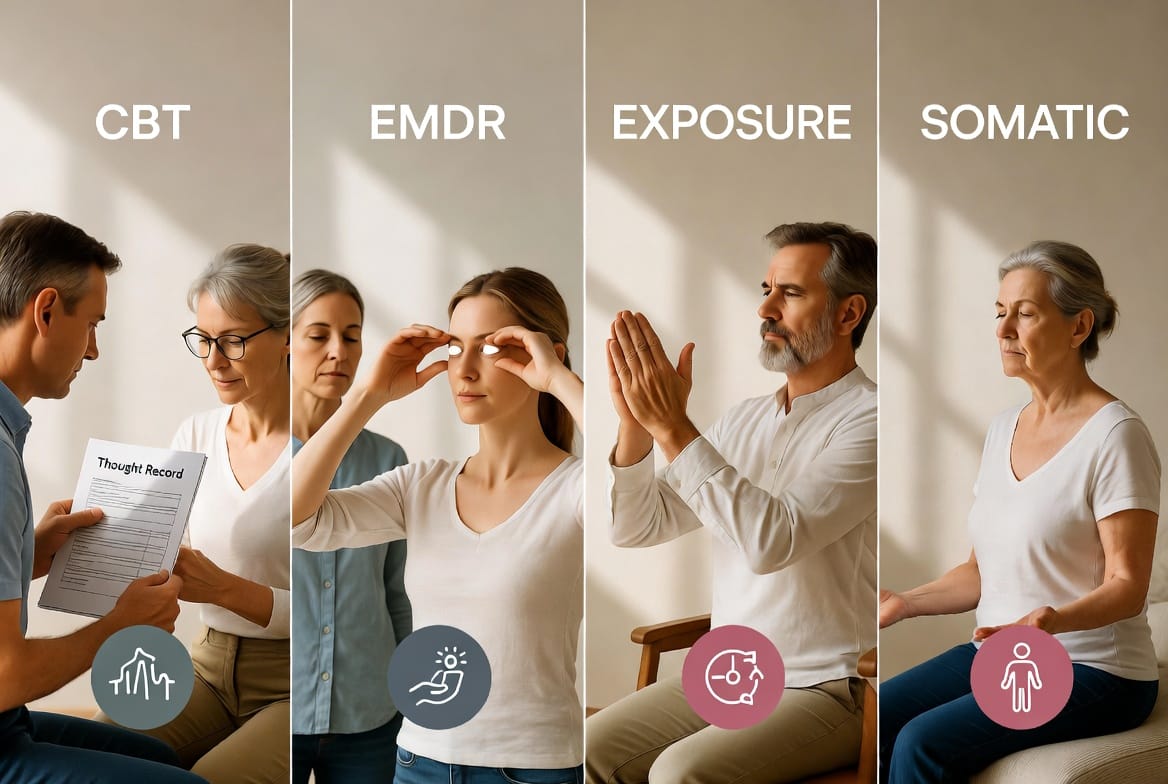
While CBT, EMDR, and somatic experiencing form the foundation, additional evidence-based methods often complement the process. A well-designed trauma program may also include prolonged exposure and broader somatic therapy approaches. Each method offers unique strengths.
- Cognitive Behavioral Therapy (CBT) remains highly effective for identifying the thought patterns that maintain both trauma symptoms and addictive behaviors. Clients practice new coping statements, behavioral experiments, and relapse-prevention skills that directly address high-risk situations.
- Eye Movement Desensitization and Reprocessing (EMDR) accelerates the reprocessing of specific traumatic memories that continue to trigger substance use. Many clients experience rapid reductions in distress after carefully paced sessions.
- Prolonged Exposure helps individuals gradually confront trauma-related memories and situations they have been avoiding. By facing these triggers in a safe, structured way, the intensity of fear and the associated urge to escape through substances decreases over time.
- Somatic Therapy expands the focus on body awareness. Beyond formal somatic experiencing, it may include breathwork, gentle movement, or mindfulness practices that restore nervous system flexibility and increase tolerance for difficult emotions without needing external numbing.
These methods are rarely used in isolation. A skilled clinician weaves them together according to each person’s history, symptoms, and readiness. The pace is always collaborative. Safety and trust come first. No one is pushed into material they are not yet equipped to handle.
What to Expect in a Trauma-Informed Recovery Program
Entering trauma recovery therapy can feel both hopeful and intimidating. Many people worry that talking about the past will make things worse. A well-run program addresses this concern from the first session by prioritizing safety, choice, and collaboration.
The early phase focuses on stabilization. Clients learn practical skills for managing intense emotions, grounding during flashbacks or cravings, and building a support network. Only when a solid foundation of regulation exists does the work move into deeper trauma processing.
Throughout the process, the connection between trauma and substance use remains explicit. Therapists help clients notice how certain memories, body sensations, or relational triggers increase the urge to use. They also help clients experiment with new responses that meet the underlying need without substances. Over time, the old automatic pathway weakens and new, healthier pathways strengthen.
Progress is rarely linear. Some weeks feel lighter. Others bring temporary increases in distress as material surfaces. A skilled clinician treats these fluctuations as expected parts of healing rather than signs of failure. Relapse, if it occurs, is viewed as information about remaining unmet needs rather than moral failure. The focus stays on returning to the work with greater understanding.
The Deeper Benefits of Healing the Root
When trauma is adequately addressed, many secondary gains appear. Sleep often improves. Relationships become less fraught because the person no longer projects past danger onto present connections. Self-criticism softens. The capacity for joy and ordinary pleasure returns. These changes reduce the emotional vulnerability that once made substances so appealing.
Perhaps most importantly, people develop a new relationship with themselves. Instead of seeing themselves as broken or weak, they begin to recognize the adaptive intelligence of their earlier survival strategies. The same nervous system that once needed substances to cope can learn new ways to find safety and comfort. That shift in self-perception is profoundly protective against future relapse.
Recovery becomes less about constant vigilance and more about living a life that feels worth protecting. The energy previously spent managing cravings and shame becomes available for meaningful goals, relationships, and self-expression.
Building a Life Beyond Trauma and Addiction
Healing the root does not mean the past disappears. It means the past no longer dictates the present. Memories remain, but they lose the power to overwhelm. Triggers may still arise, yet the person has tools and internal resources to meet them without returning to old patterns.
This deeper form of recovery also creates space for post-traumatic growth. Many people discover strengths, values, and a sense of purpose that were previously obscured by pain and substance use. They become living evidence that profound suffering can be transformed into wisdom and resilience.
The journey requires courage, skilled support, and time. It is not a quick fix. Yet for those who commit to addressing the trauma beneath the addiction, the results can be life-changing. Freedom becomes possible not because the pain never existed, but because it has finally been met with care, understanding, and effective tools.
Heal trauma to heal addiction. When the underlying wounds receive the attention they deserve, the compulsive need for substances loses its grip. Lasting recovery is not only possible—it is the natural outcome of thorough, compassionate trauma work.
If you or someone you care about is ready to move beyond surface-level treatment and address the true roots of addiction, specialized support is available. A trained team is prepared to walk with you through the process of genuine healing, one careful step at a time.
Call Now for Lasting Addiction Recovery