The Teak vs. Ipe Flooring: Two Water-Resistant Woods Compared
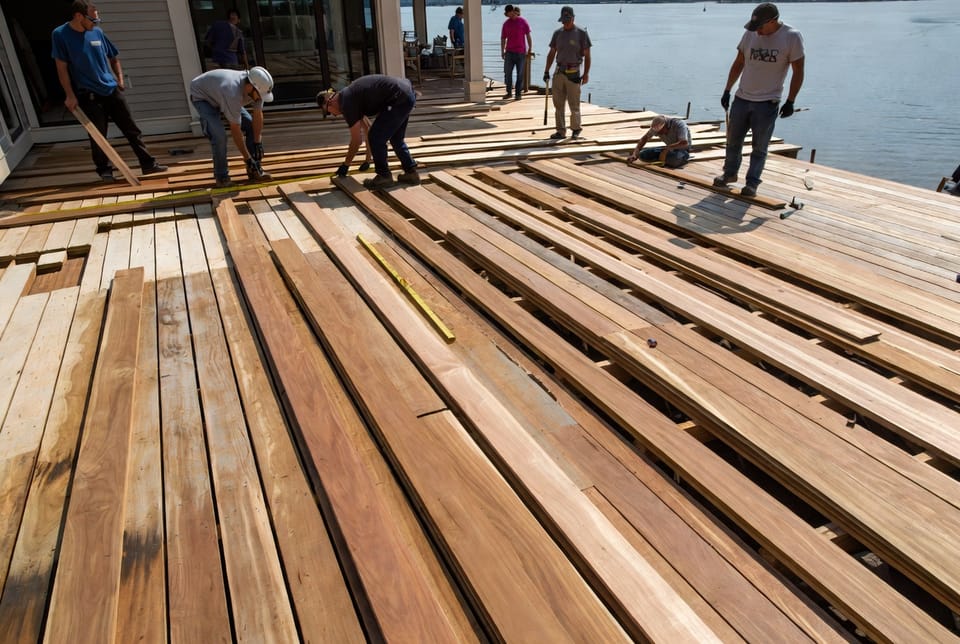
When designing durable outdoor spaces, selecting the right hardwood is crucial for long-term performance. Teak and Ipe stand out as two premier water-resistant options prized by homeowners and professionals alike. Both woods excel in decks, patios, and wet environments, yet they differ significantly in hardness, appearance, cost, and maintenance needs.
Transform Your Deck with Premium Flooring – Call Now
This comprehensive guide compares Teak vs. Ipe flooring to help you make an informed decision. Whether you're planning a backyard deck or a poolside installation, understanding these differences ensures your project delivers beauty, safety, and longevity.
Why Water-Resistant Hardwoods Matter for Outdoor Projects
Outdoor flooring faces constant exposure to moisture, UV rays, temperature fluctuations, and foot traffic. Inferior materials can warp, rot, or fade quickly, leading to costly repairs.
Teak and Ipe offer natural oils and dense structures that resist water absorption and decay. Their proven track record in marine and tropical applications makes them reliable choices. Choosing between them depends on your priorities: classic elegance versus extreme durability.
Key benefits of both woods include:
- Exceptional resistance to moisture and insects
- Natural beauty that enhances outdoor aesthetics
- Long lifespan with proper care
- Eco-friendly options when sourced responsibly
Understanding Teak Flooring: The Classic Choice
Teak (Tectona grandis) has earned its reputation as a premium hardwood over centuries. Originating from Southeast Asia, it features a golden-brown color that ages gracefully to a silvery patina.
Notable characteristics of Teak:
- Janka hardness rating of 1070 – durable yet workable
- High natural oil content that provides built-in water resistance
- Moderate density making it easier to handle and install
- Beautiful straight grain with occasional wavy patterns
Homeowners love Teak flooring for its warm, inviting tone and proven performance in yacht decks and luxury outdoor spaces. Its moderate cost makes it accessible for larger projects without compromising quality. The natural oils reduce the need for frequent sealing, offering a lower-maintenance option that still delivers sophistication.
Exploring Ipe Flooring: The Ultra-Durable Powerhouse
Ipe (Handroanthus species), also known as Brazilian Walnut, is renowned for its extraordinary strength. Native to South American rainforests, this wood sets the standard for demanding outdoor applications.
Standout features of Ipe:
- Janka hardness rating of 3680 – significantly harder than Teak
- Exceptional density and weight for superior stability
- Rich dark brown to olive tones with tight, interlocked grain
- Outstanding resistance to scratching, denting, and wear
Ipe flooring excels where heavy use is expected. Its density makes it ideal for high-traffic decks, commercial boardwalks, and areas prone to extreme weather. While heavier and more challenging to install, the investment pays off through decades of reliable service.
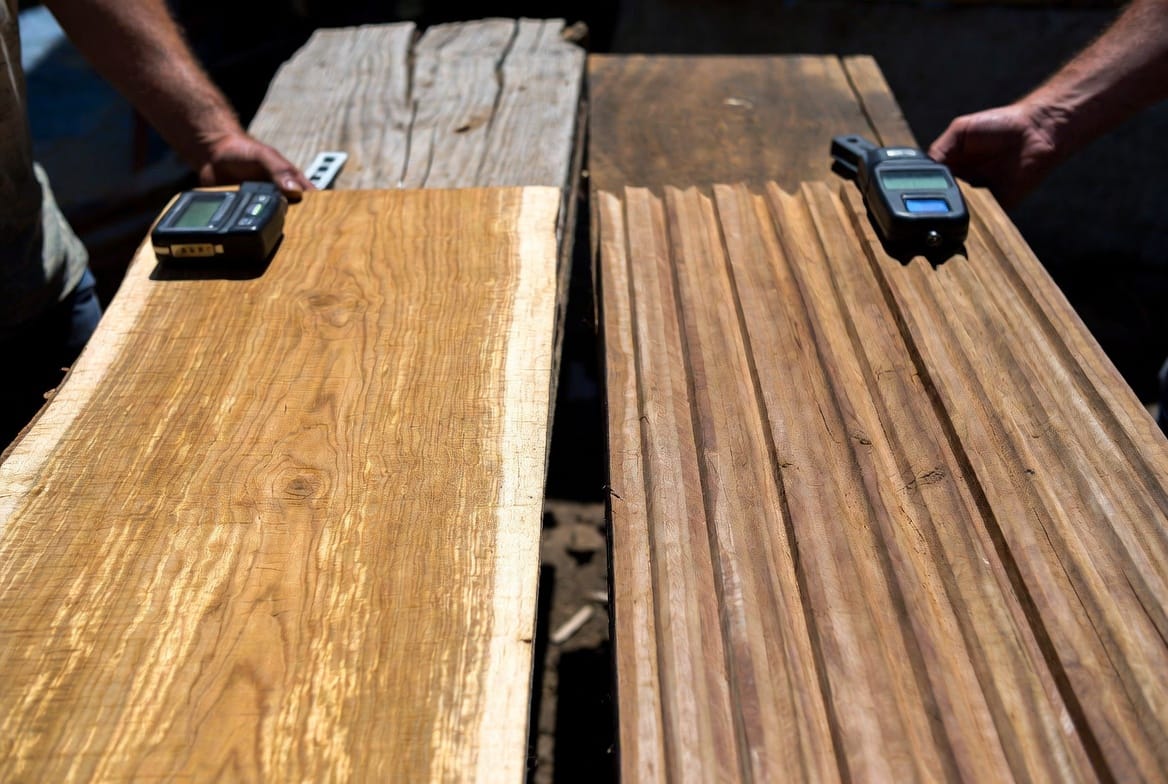
Head-to-Head Comparison: Teak vs. Ipe
Hardness and Durability
Ipe dominates in raw hardness with its Janka rating of 3680, making it nearly 3.5 times harder than Teak's 1070 rating. This translates to better resistance against dents from furniture, heavy foot traffic, and impacts.
Teak offers sufficient durability for most residential decks while being easier to cut and shape during installation. Both woods resist rot exceptionally well due to natural oils, but Ipe edges out in extreme conditions.
Appearance and Aesthetics
Teak provides a lighter, golden-brown hue that creates a bright, welcoming outdoor space. It develops a classic silver-gray patina over time if left untreated.
Ipe features deeper, richer tones ranging from dark brown to nearly black. Its tight grain pattern offers a more modern, elegant look. Both woods can be stained or oiled to maintain original colors.
Weight and Workability
Ipe is notably heavier, which enhances stability but increases installation effort. Teak is lighter and more forgiving for DIY or complex designs.
Cost Considerations
Teak typically comes at a moderate price point, making it budget-friendly for expansive areas. Ipe commands a premium due to its superior hardness and sourcing, but its longevity often justifies the higher upfront investment.
Maintenance Requirements
Both are low-maintenance compared to softwoods, but:
- Teak benefits from occasional cleaning and optional oiling to preserve its golden tone.
- Ipe requires minimal intervention thanks to its density, though periodic cleaning prevents surface buildup.
Applications for Decks and Wet Areas
Both woods shine in outdoor flooring scenarios:
Ideal uses for Teak:
- Residential decks and patios
- Pool surrounds and docks
- Luxury outdoor furniture and accents
- Areas where warm aesthetics are prioritized
Ideal uses for Ipe:
- High-traffic commercial decks
- Boardwalks and public spaces
- Coastal properties facing harsh salt exposure
- Projects demanding maximum longevity
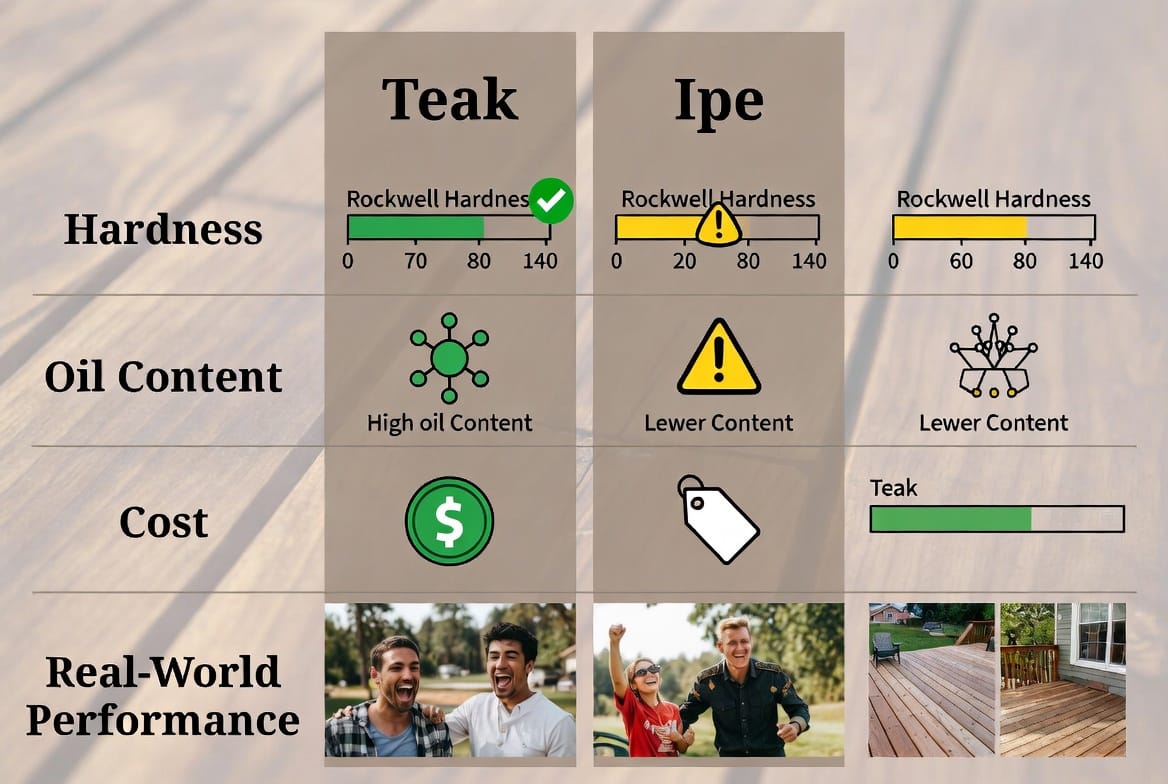
Pros and Cons of Each Wood
Teak Advantages:
- More affordable and easier to install
- Beautiful natural aging process
- Excellent natural water resistance
- Lighter weight for versatile designs
Teak Considerations:
- Less resistant to heavy physical wear than Ipe
- May require more frequent color maintenance if desired
Ipe Advantages:
- Unmatched hardness and longevity
- Superior scratch and dent resistance
- Deep, luxurious color palette
- Minimal long-term maintenance
Ipe Considerations:
- Higher initial cost
- Heavier material requiring stronger substructures
- More labor-intensive installation
Making the Right Choice for Your Project
Consider your specific needs when choosing between Teak vs. Ipe flooring:
- Budget and timeline – Teak often wins for quicker, more economical installations.
- Traffic and usage – Ipe is preferable for heavy-duty applications.
- Aesthetic goals – Teak for warm, traditional looks; Ipe for bold, contemporary statements.
- Environmental factors – Both perform well in wet areas, but verify sustainable sourcing.
Professional consultation ensures proper installation and maximizes performance. Expert teams can assess your site conditions and recommend the optimal solution.
Sustainable Sourcing and Responsible Choices
Today’s premium suppliers prioritize FSC-certified or responsibly harvested woods. This supports forest regeneration while delivering high-quality materials. Reputable providers can guide you toward ethical options that align with your values.
Long-Term Value and Investment Protection
Investing in Teak or Ipe flooring protects your outdoor living space for decades. These woods maintain structural integrity and beauty far longer than composite or softwood alternatives, reducing replacement frequency and total ownership costs.
Homeowners report high satisfaction with both materials, noting increased property value and enjoyment of their enhanced spaces.
Ready to Transform Your Outdoor Space?
Choosing the right water-resistant wood elevates your deck from ordinary to extraordinary. Whether you prefer the classic warmth of Teak or the formidable strength of Ipe, both options deliver outstanding performance.
Contact our flooring specialists today to discuss your project. Ask about Teak and Ipe options and receive expert guidance tailored to your needs.
Make the confident choice for lasting beauty and durability in your outdoor living areas.
Find the Best Water-Resistant Flooring for Your Home – Call Today